Key Takeaways
| Hermann Buhl pioneered the bike to climb ethos in 1952 long before modern sustainability trends. |
| Buhl cycled from Innsbruck to Pizzo Badile to solo climb the famous Cassin route in just 4.5 hours. |
| The extreme athlete was the first to summit both Nanga Parbat and Broad Peak in solo or small-group efforts. |
| His minimalist approach to high-altitude mountaineering fundamentally changed the global alpine style. |
The modern trend of bike to climb was being practiced by Hermann Buhl nearly seventy years before it became a viral sensation for sustainability-focused athletes. You might view the bicycle as a modern tool for lowering your carbon footprint, but for this legendary Austrian alpinist, it was a gritty necessity born from the post-war economic struggle. Long before GPS-tracked adventures filled your social media feeds, Buhl turned the journey toward the mountain into an essential component of the climb itself.
In the summer of 1952, Hermann Buhl embarked on a journey that would eventually redefine the limits of human endurance. He pedaled his bicycle all the way from his home in Innsbruck to the base of the Pizzo Badile. After completing the grueling ride, he tackled the formidable Cassin Route solo in a blistering four and a half hours, only to bike back home just in time for work on Monday. This was not a marketing stunt; it was the raw reality of a climber who lived with absolute commitment to his passion.
The Legacy Of Hermann Buhl Bike To Climb
Today, the bike to climb movement is often viewed through a lens of environmental consciousness, yet Hermann Buhl possessed a different, more primal motivation. For him, the bike was simply the most accessible way to bridge the distance between his labor and the peaks of the Alps. His approach stripped away the industrial, military-style logistics of expedition mountaineering that defined his era. By reducing the distance between the climber and the objective, he pioneered a philosophy of self-reliance that remains the gold standard in high-altitude exploration.
Buhl’s journey back from Pizzo Badile was far from romantic, often leaving him so exhausted he would risk nodding off at the handlebars. He famously once ended up in the Inn River due to pure sleep deprivation, a testament to the brutal reality of his lifestyle. There were no ultra-light carbon bikes or sponsorship deals, only the sheer grit required to return to his daily responsibilities. This story serves as a stark reminder that true adventure often demands a sacrifice that goes beyond the climb itself.

The transition from alpine cycling to 8,000-meter peaks represents the most significant chapter in his career. In 1953, he achieved the historic first ascent of Nanga Parbat, a mountain that had claimed countless lives in previous decades. His solo push from the final camp lasted 41 hours, involving a legendary standing bivouac without proper gear. This feat cemented his status as a titan of mountaineering, illustrating a style of movement that favored agility over the traditional, cumbersome expedition models.
The Evolution Of Alpine Style
- Elimination of high-altitude porters and oxygen tanks.
- Emphasis on small, elite teams rather than large groups.
- Direct engagement with the mountain’s most dangerous faces.
- Integration of the approach as part of the total challenge.
The Technical Feats By The Numbers
If you examine the professional career of Hermann Buhl, the data shows a trajectory of rapid, high-impact success that ended prematurely. His ability to perform on the world’s most daunting peaks, often with little more than raw survival instinct, remains a subject of intense study for modern adventure enthusiasts. The following table summarizes his primary milestones in the Himalayas and the Karakorum.
| Peak | Year | Achievement |
|---|---|---|
| Nanga Parbat | 1953 | First Ascent (Solo) |
| Broad Peak | 1957 | First Ascent |
| Chogolisa | 1957 | Attempted Ascent |
The Broad Peak expedition in 1957 is particularly noted by Forbes’ analysis of high-risk mountain sports as a defining moment in team dynamics. Alongside Kurt Diemberger and others, Buhl proved that small, nimble groups could achieve what massive state-sponsored teams could not. This approach not only saved costs but increased the speed and safety of the climb in a way that remains fundamental to modern professional mountain climbing.
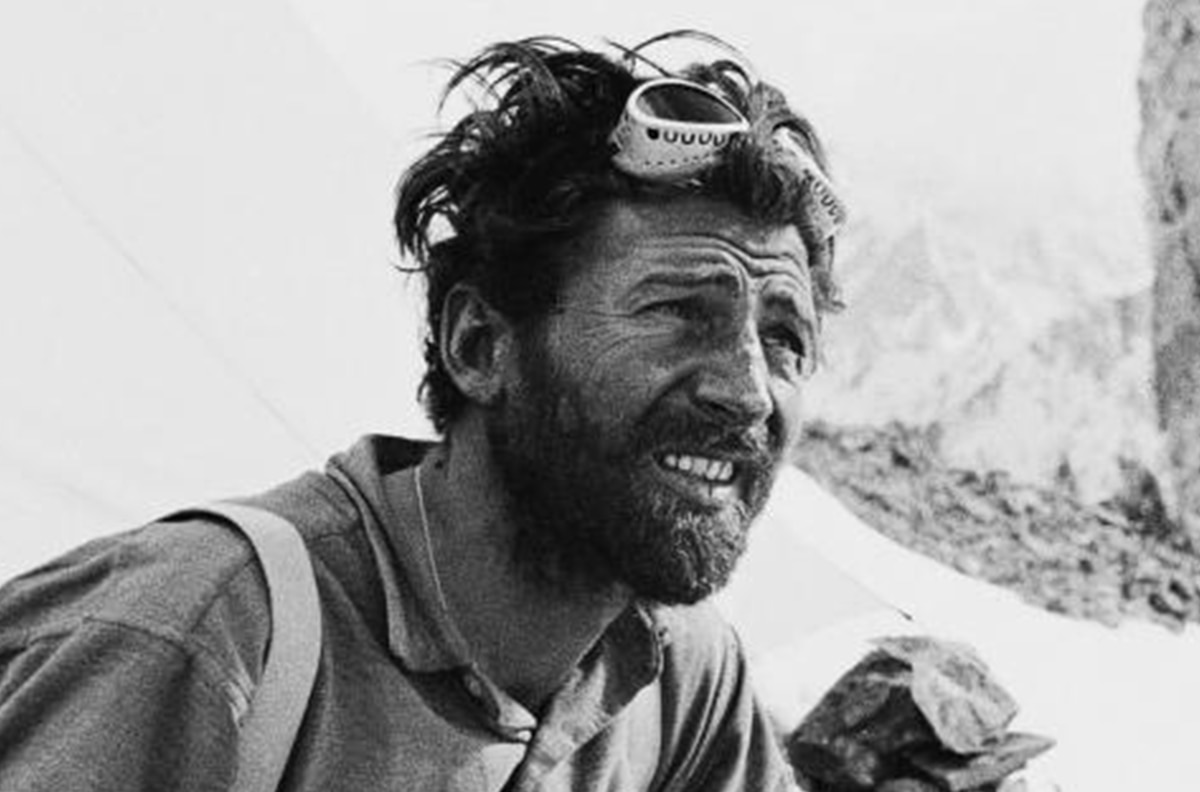
Historical Context And Extreme Endurance
The tragic loss of Hermann Buhl on the slopes of Chogolisa at the age of 32 remains one of the most poignant moments in alpinism. Just eighteen days after his historic success on Broad Peak, he slipped while navigating a treacherous snow cornice while shrouded in heavy fog. This event halted a meteoric rise that had already reshaped the entire philosophy of mountain traversal. His story is now permanently intertwined with the very peaks he sought to conquer.
Experts often point to his 1952 Pizzo Badile bicycle adventure as the blueprint for his later high-altitude endurance. It wasn’t about the bike or the environment; it was about the continuous flow of the human experience from the home doorstep to the summit. Whether it was the cobblestone streets of Innsbruck or the icy ridges of the Karakorum, Buhl sought to eliminate the artificial barriers that separated the climber from the climb. This singular, essential focus is what elevates his legacy above that of his contemporaries.
People Also Ask
Why is the bike to climb trend gaining traction?
The bike to climb movement is gaining popularity as athletes seek more sustainable, low-impact ways to reach remote mountain trailheads. It shifts the focus of the trip from the destination to the total experience of the journey.
How did Hermann Buhl change alpinism?
Hermann Buhl revolutionized mountaineering by favoring light, fast, and independent climbing styles over the large-scale military expeditions common in the 1950s. His solo successes on Nanga Parbat demonstrated that individual capability could overcome massive logistical obstacles.
What happened to Hermann Buhl on Chogolisa?
During his descent of the 7,665-meter Chogolisa in 1957, Buhl was caught in poor visibility and fell when a snow cornice collapsed. His body was never recovered, marking the end of his influential career at age 32.
Did Buhl identify as an environmentalist?
No, Hermann Buhl did not consider himself an environmentalist in the modern sense. His reliance on the bicycle was driven by post-war economic necessity and the need for simple, available transportation to access climbing sites.
Enduring Influence On Modern Sport
Remembering the life of Hermann Buhl is more than a trip down memory lane; it is a re-examination of the core motivations behind extreme sport. His legacy persists not because he possessed the latest gear, but because he possessed the clearest vision of what human movement could be. Whether you are hitting the trails today with a bike or heading toward a summit in the Karakorum, the principles of self-reliance and total immersion that Buhl embodied are more relevant than ever. The true measure of an athlete remains their ability to bridge the gap between their daily life and the wild, untamed peaks, proving that for those with the right spirit, the adventure always starts well before you reach the mountain.
More Like This
For more updates, check out our latest entertainment and sports news.