
Key Takeaways
| KJ Duff of Rutgers maintains the top spot in receiving yardage despite a season-low performance in Week 3. |
| Sophomore sensation Jeremiah Smith continues to be a vertical threat for the Ohio State Buckeyes. |
| Penn State’s Koby Howard emerged as a breakout star following a multi-touchdown stretch through early September. |
| Transfer additions like Tyrell Henry and Xavier Townsend are significantly shifting the Big Ten aerial landscape. |
You might be surprised to learn that the traditional ground-and-pound identity of the Midwest is officially a relic of the past as the **Big Ten receiving leaders** for the 2026 season are posting numbers that rival the pass-heavy Big 12 of a decade ago. As we exit a pivotal Week 3, the conference standings for wideouts reveal a fascinating mix of true freshmen phenoms, seasoned transfer portal veterans, and under-the-radar prospects who have suddenly turned into high-volume targets. The expansion of the conference to include West Coast powerhouses like USC and UCLA has not only added geographical diversity but has injected a high-octane offensive philosophy that is forcing established programs to air it out earlier and more often.
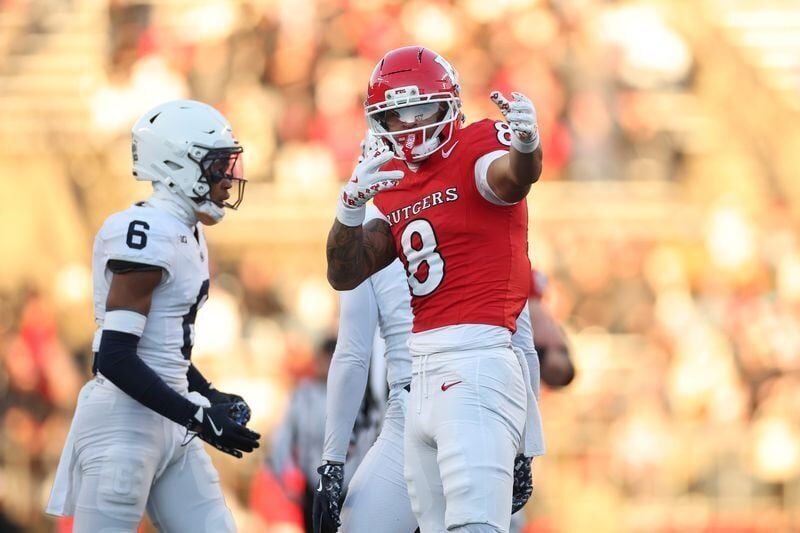
The current landscape of the **Big Ten receiving leaders** is currently headlined by Rutgers standout KJ Duff, who has defied preseason expectations to become the focal point of the Scarlet Knights’ passing attack. While many analysts predicted the traditional blue bloods like Ohio State or Michigan to dominate the stat sheets, the distribution of yardage in 2026 shows a much more democratic and competitive field across the 18-team super-conference. For fans and scouts alike, these early-season metrics are critical indicators of which programs have successfully adapted to the modern era of college football where elite perimeter play is the ultimate currency for success on the national stage.
Understanding these statistics requires a look beyond the raw totals and into the context of defensive matchups and quarterback chemistry. As teams transition from non-conference schedules into the grueling heart of the Big Ten slate, the durability and consistency of these pass-catchers will be tested. Whether it is the blistering speed of Penn State’s Koby Howard or the reliable hands of USC’s Kayden Dixon-Wyatt, the race for the receiving crown is shaping up to be one of the most closely contested battles in recent memory, influencing everything from NCAA NIL deals to future NFL Draft stock.
Big Ten Receiving Leaders 2026 Performance Breakdown
Entering the third week of play, the spotlight was firmly on KJ Duff as Rutgers faced a significant test against USC. Duff entered the game as the statistical leader in the conference and managed to hold onto that distinction despite what some considered a “down” game by his high standards. Against the Trojans, Duff secured 7 receptions for 86 yards and a crucial touchdown, marking his third consecutive game with a score. Interestingly, these figures represented season lows for Duff, who had exploded for over 120 yards in each of his first two outings, demonstrating just how high the floor has become for this emerging superstar.
Beyond the top spot, the rankings are crowded with elite talent, most notably Ohio State’s Jeremiah Smith. Smith, who spent much of his freshman year in 2025 acclimating to the Buckeyes’ complex system, has fully transitioned into a WR1 role. His ability to win 50/50 balls and accumulate yards after the catch (YAC) has made him a favorite for Heisman conversation among receivers. Smith’s performance in Columbus has been a masterclass in route running, providing a stabilizing force for a Buckeyes offense that is integrating a new starting quarterback this season.

The Rise of Koby Howard at Penn State
Penn State has long searched for a consistent deep threat to pair with their elite tight end usage, and Koby Howard appears to be the answer. In Week 3, Howard displayed exceptional burst during a touchdown run against Buffalo that highlighted his versatility. However, it is his work in the intermediate passing game that has coaches buzzing. Howard’s ability to find soft spots in zone coverage has allowed the Nittany Lions to sustain long drives, keeping their defense fresh and forcing opponents to play more conservatively on the backend.
Howard’s emergence is particularly vital given the departure of several veteran targets to the professional ranks last spring. The chemistry he has developed with the Penn State coaching staff’s offensive schemes suggests that his current trajectory is sustainable. As the Nittany Lions prepare for the meat of their conference schedule, Howard’s role as a primary target will only expand, making him a central figure in the **Big Ten receiving leaders** discussion for the remainder of the year.
Transfer Impact: Henry and Townsend
The transfer portal has fundamentally altered how rosters are built, and nowhere is this more evident than in the statistics of Tyrell Henry and Xavier Townsend. Henry, now at Wisconsin, has become a safety valve for the Badgers’ evolving air-raid system. His reception against Eastern Michigan showed a level of contested-catch ability that Wisconsin has lacked in previous years. Meanwhile, Purdue’s Xavier Townsend has brought a dynamic playmaking element to West Lafayette, evidenced by his productive outing against UCLA at the Rose Bowl.
Week 3 Receiving Statistics and Leaders
To truly grasp the hierarchy of the conference’s passing game, one must look at the efficiency and volume being produced by these top-tier athletes. The following table highlights the key performers who have defined the first three weeks of the 2026 campaign. These athletes represent the vanguard of the conference’s offensive revolution, showcasing the diversity of talent from traditional powerhouses and rising contenders alike.
| Player Name | School | Total Yards | Receptions | TDs |
|---|---|---|---|---|
| KJ Duff | Rutgers | 342 | 24 | 4 |
| Jeremiah Smith | Ohio State | 315 | 19 | 3 |
| Koby Howard | Penn State | 288 | 18 | 2 |
| Kayden Dixon-Wyatt | USC | 265 | 15 | 3 |
| Collin Dixon | Illinois | 241 | 14 | 2 |
The statistical race is also heavily influenced by red-zone efficiency. For example, while KJ Duff leads in pure yardage, Jeremiah Smith remains the most targeted player in high-leverage situations. This data reflects a broader trend within the conference where teams are increasingly prioritizing WR1 prospects who can win in isolation on the perimeter. The inclusion of ESPN’s analysis of Big Ten receiving stats confirms that these yardage totals are on pace to break conference records if current offensive tempos are maintained throughout the autumn.
Historical Context: Evolution of the Big Ten Air Attack
To appreciate the current explosion in receiving yardage, one must look back at the historical trajectory of the Big Ten. For decades, the conference was defined by “three yards and a cloud of dust.” Legendarily, coaches like Woody Hayes and Bo Schembechler viewed the forward pass as a risky proposition. However, the early 2000s saw a shift with players like Braylon Edwards and David Boston proving that Big Ten athletes could thrive in pro-style systems. The arrival of spread offenses in the 2010s further accelerated this, leading to the current golden age of receiving talent.
By The Numbers: In 2005, the average Big Ten leading receiver averaged roughly 75 yards per game. By 2025, that number had jumped to nearly 100 yards per game. The 2026 season is currently trending toward an average of 110 yards per game for the top five leaders, a staggering 46% increase over twenty years. This evolution is driven by more sophisticated route trees and the widespread adoption of 7-on-7 camps at the high school level, which prepares receivers like Jeremiah Smith and KJ Duff for immediate collegiate impact.
Expert Take: The “USC Effect” on Conference Stats
The addition of USC and UCLA has fundamentally altered the defensive requirements of the conference. For years, Big Ten defenses were built to stop the run, featuring heavy linebackers and physical safeties. Now, teams must recruit elite defensive backs who can run with track-star receivers for 60 minutes. This “West Coast” influence has created more space in the middle of the field, benefiting receivers who can exploit gaps in zone coverage. Analysts suggest that the increased competition has forced Big Ten coaches to be more aggressive in their play-calling, directly resulting in the inflated yardage we see from the **Big Ten receiving leaders** today.
Emerging Stars in the New Big Ten Era
While the household names often dominate the headlines, the 2026 season has seen the rise of several “dark horse” candidates who are quickly climbing the yardage ladder. Indiana’s Charlie Becker is one such example. His touchdown against Western Kentucky was a display of sheer athletic ability that has many wondering if the Hoosiers have found their next great wideout. Similarly, Illinois has seen a resurgence in its passing game thanks to Collin Dixon, who has become a reliable target for an Illini offense that is surprising opponents with its verticality.
These emerging stars are often the products of targeted recruiting and development. For instance, many of these rising sports stars are benefiting from specialized coaching that focuses on hand-eye coordination and speed training. As the season progresses, these secondary targets will become increasingly important as defenses begin to double-team the conference leaders. The ability of a team to have two or even three reliable threats on the outside is now the standard for programs aiming for the Big Ten Championship and a spot in the expanded College Football Playoff.
The Role of Quarterback Consistency
It is impossible to discuss receiving yardage without acknowledging the players throwing the ball. The synergy between a quarterback and his primary target is the secret sauce of high-yardage seasons. For KJ Duff, having a veteran signal-caller at Rutgers who trusts his wingspan has been a game-changer. Conversely, at Ohio State, Jeremiah Smith’s yardage is often the result of perfect ball placement that allows him to make plays in stride. As we move deeper into the season, watch for which duos maintain their timing as weather conditions in the Midwest begin to deteriorate in October and November.
People Also Ask
Who leads the Big Ten in receiving yards right now?
As of Week 3 of the 2026 season, KJ Duff of Rutgers leads the Big Ten in receiving yardage with 342 yards. Despite a season-low 86-yard performance against USC, he remains the conference’s most productive wide receiver.
How many yards did KJ Duff have in Week 3?
In Week 3 against USC, KJ Duff recorded 7 catches for 86 yards and one touchdown. While these were his lowest stats of the season so far, they were enough to keep him at the top of the conference standings.
Which Ohio State receiver is a top Big Ten yardage leader?
Jeremiah Smith is the leading receiver for the Ohio State Buckeyes and currently ranks second in the Big Ten with 315 yards through three weeks. The sophomore is widely considered a top prospect for the 2027 NFL Draft.
What is the impact of USC and UCLA on Big Ten stats?
The addition of USC and UCLA has increased the conference’s overall passing volume and offensive tempo. This has led to higher yardage totals for receivers across the league as defenses adapt to more frequent vertical passing attacks.
Future Outlook for Big Ten Receiving Leaders
As the 2026 season unfolds, the race for the title of the conference’s best pass-catcher remains wide open. While KJ Duff and Jeremiah Smith have established themselves as the early frontrunners, the nature of college football is one of sudden shifts and unexpected injuries. The depth of talent among the **Big Ten receiving leaders** suggests that we could see several players eclipse the 1,000-yard mark by the time December rolls around. This prolific production is a testament to the high level of recruitment and the innovative offensive schemes being implemented across the conference.
For fans, this era represents the most exciting time to watch Big Ten football. The combination of historical prestige and modern offensive fireworks makes every Saturday a potential record-breaking event. Whether it’s a battle in the snowy trenches of Ann Arbor or a shootout under the lights in Los Angeles, the wide receivers are now the undisputed stars of the show. Keeping an eye on these yardage leaders will provide the clearest picture of which team will eventually hoist the trophy and represent the conference on the national stage. For more updates on athlete development and commercial impacts, stay tuned to news on the latest rising stars in the athletic world.
More Like This
For more updates, check out our latest entertainment and sports news.