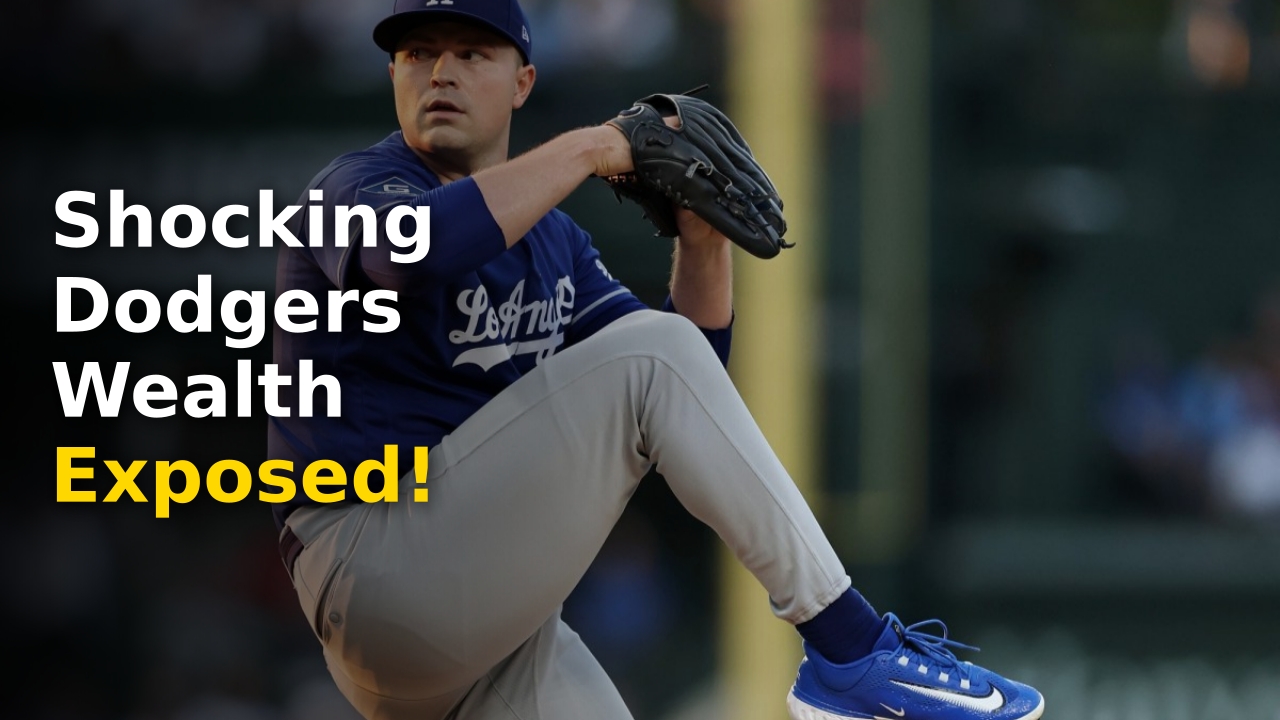
Baseball spending has officially shattered the boundaries of sanity, leaving sports fans across the nation wondering if the game can ever be saved. You might want to point fingers at the Los Angeles Dodgers for turning the league into their personal playground, but the real culprit is Major League Baseball itself.
The iconic franchise is simply playing by the rules of a broken system that offers no financial caps or guardrails. If you had the keys to an infinite vault of cash, you would unlock every superstar on the market too.
Let’s peel back the curtain on how the system went so catastrophically wrong and why your favorite team is paying the price.
Analyzing elite baseball spending
You cannot look at the current state of Major League Baseball without recognizing that the gap between the super-rich and the rest is widening. The Los Angeles Dodgers have mastered the art of leveraging their immense market power. While critics cry foul, the truth is that the club is operating entirely within the legal bounds of MLB’s governance.
The bankruptcy history loop
The unique rules of Major League Baseball allow astronomical baseball spending to go completely unchecked due to bizarre historical precedents. The Dodgers are the only club in league history to declare bankruptcy, which counterintuitively resulted in extreme financial leniency from the league office.
This historical anomaly allowed them to reconstruct their organization under a highly favorable judicial lens. Today, they operate as an exclusive club whose exorbitant dues are simply too rich for anyone else to pay.
Because they survived this financial restructuring, they emerged with a blank check and the smartest administrative minds in the room.
The salary cap vacuum
In the world of professional sports, massive baseball spending has created a system where payroll size directly correlates to postseason appearances. Why does MLB lack a salary cap when every other major American sports league has one?
The answer lies in decades of labor wars where the owners caved and the players’ union stood firm. Without a hard cap, teams are left to police themselves, leading to a massive disparity where small-market franchises simply cannot compete.
The players’ union will never willingly surrender this leverage, meaning the current system is here to stay for the foreseeable future.
The legendary Dodgers farm
The reality is that heavy baseball spending only works when paired with world-class scouting and player development. It is not just about writing massive checks; it is about building a sustainable pipeline of talent without having to rely solely on external baseball spending.
The Dodgers possess more top 100 prospects down on the farm than almost any other franchise. They have successfully combined infinite capital with premium scouting, making them a dual-threat powerhouse.
This flawless execution makes them the smartest room of executives in professional sports today, regardless of how much rival fanbases detest their success.
The Padres spending push
Even rival teams trying to keep up with the Dodgers have realized that sustainable baseball spending requires a flawless farm system. Take San Diego Padres GM A.J. Preller, who worked tirelessly at the trade deadline to overhaul his starting rotation.
While stars like Fernando Tatis Jr. continue to make headlines by hitting 465-foot home runs in Arizona that literally create dust storms, fans are still feeling the squeeze. San Diego supporters will be paying significantly higher ticket prices next season for what might just be expensive mediocrity.
If the team cannot secure a solid postseason run, management decisions under figureheads like Craig Stammen or Bud Black will face intense public scrutiny.

The Dodgers loop-hole empire
The modern landscape of Major League Baseball was shaken to its core during the latest trade deadline. While ordinary franchises scrambled for minor roster upgrades, the Dodgers executed moves that left rival executives completely paralyzed.
The Skubal shockwave
This move signaled a new era of aggressive baseball spending that caught everyone off guard. The Dodgers acquired back-to-back Cy Young winner Tarik Skubal from the Detroit Tigers in exchange for what rival analysts mockingly compared to pork rinds.
The superstar pitcher actively wanted to go to Los Angeles, proving that top talent will always gravity-well toward elite organizational structures. The acquisition showed that the Dodgers do not just buy players; they create an ecosystem where the best athletes practically beg to play.
While the rest of the world went crazy over the transaction, Los Angeles simply added another nuclear option to their roster.
The Ohtani contract anomaly
This deferred payment strategy has completely revolutionized modern baseball spending. When Shohei Ohtani signed his historic contract, it redefined how sports business operates globally.
He will make a mere $2 million in salary this year, with a staggering $680 million deferred for the future. This wacky judicial loophole allows the Dodgers to bypass traditional spending penalties while fielding a roster of superheroes.
Thanks to Ohtani’s massive appeal in Japan, the Dodgers recently became the first franchise to generate over $1 billion in annual revenue.
Pitching depth in October
Heading into the postseason, the Dodgers boast a rotation featuring six of the highest-paid pitchers in all of baseball, proving that smart baseball spending is about depth, not just star power. This single group’s payroll exceeds the total active rosters of 13 separate Major League franchises combined.
This unparalleled depth gives manager Dave Roberts the ultimate luxury and his biggest headache: deciding who actually gets the ball. With basically ten viable starting pitchers, the Dodgers are built to survive the grueling modern playoff structure.
Although they nearly lost the 2025 World Series to the resilient Toronto Blue Jays, their pitching arsenal ensures they remain the perennial favorites.
Failing to promote icons
Despite all the money flowing through the game, Major League Baseball has consistently failed at marketing its brightest stars to the general public. You could walk past some of the game’s greatest athletes on the street and never even realize it.
The invisible Mike Trout
While massive baseball spending draws eyeballs to team payrolls, it does surprisingly little to elevate individual player popularity. For over a decade, Mike Trout was undisputedly the greatest player on the planet while playing in the massive Los Angeles market.
Yet, his national profile remained shockingly low, to the point where casual sports fans barely knew his name. If the league cannot turn a generational talent like Trout into a global icon, the system is fundamentally broken.
You can explore more about how modern icons navigate fame at exclusive celebrity insights.
NFL versus MLB star power
Other sports leagues effortlessly command the cultural spotlight, which stands in stark contrast to the insular world of baseball spending. For instance, the engagement of Chargers quarterback Justin Herbert to pop star Madison Beer instantly dominated lifestyle headlines.
Meanwhile, NFL icons like Aaron Rodgers remain permanent fixtures in the news cycle, whether debating their retirement plans or facing sharp criticism from legends like Kareem Abdul-Jabbar. Even mid-tier NFL quarterbacks like Jacoby Brissett command $15.5 million guarantees from the Arizona Cardinals, capturing massive public attention.
Young players like Eagles defender Nolan Smith Jr. generate non-stop headlines, showing that football dominates the cultural conversation 365 days a year.
Nostalgia and local icons
Baseball’s cultural disconnect becomes even more obvious when compared to the rich, dramatic histories of collegiate and professional football. From LSU football introducing air-conditioned helmets under Lane Kiffin to Notre Dame revealing its new $100 million facility, football feels alive and legendary.
In contrast, baseball often forgets its own heroes, much like how the late, great special teams star Hank Bauer continues to be denied entry into his former team’s Hall of Fame. We live in a world where legendary figures like Billy Ray Smith leave lasting legacies of steel-grip handshakes, yet their sports struggle to retain the spotlight.
Even volatile baseball managers like Billy Martin, famous for throwing the next four punches, are relics of a colorful past that modern corporate MLB has thoroughly sanitized.

Staggering baseball payroll details
To truly understand the massive gap created by unchecked spending, we must look directly at the financial figures. The top tier of the league operates on a completely different planet compared to small-market franchises.
The regional TV goldmine
While some owners plead poverty, these staggering local broadcasting contracts directly fund massive baseball spending. The Dodgers pull in $334 million annually from local TV rights alone, which is $150 million more than the second-place New York Yankees.
This figure is projected to reach an astronomical $500 million per year by 2038 when the current deal expires. This unparalleled cash flow ensures they can defer billions in player payments without breaking a sweat.
Let’s look at the actual numbers that define this modern era of unprecedented baseball inequality.
| Metric / Detail | Los Angeles Dodgers | MLB Average / Closest Rival |
|---|---|---|
| Annual TV Rights Revenue | $334 Million (Projected $500M by 2038) | $184 Million (Yankees at No. 2) |
| Deferred Player Payments | $1.1 Billion | Under $100 Million |
| Annual Revenue Milestone | $1 Billion (First in MLB History) | $580 Million (League Median) |
Poverty claims vs reality
Critics argue that unchecked baseball spending destroys competitive balance across the league. While franchises like the Oakland Athletics or the Miami Marlins claim they cannot afford competitive rosters, the revenue sharing system proves otherwise.
These smaller clubs often pocket the shared revenue rather than reinvesting it into player payroll. This practice has created a stark divide where top-tier clubs actively try to win, while others treat the sport as a real estate and tax write-off venture.
Without systemic intervention from Major League Baseball leadership, the financial landscape will continue to favor the ultra-rich.
The future of baseball spending
Ultimately, the debate surrounding baseball spending is not about a single team behaving badly. The real crisis is that the sport’s central authority has allowed this financial divide to become an accepted reality.
You cannot blame the Dodgers for wanting to win, nor can you blame their ownership group for maximizing their massive resources. They are simply playing the game better than anyone else, both on the field and in the front office.
Until fans demand a more balanced playing field, or the owners and union reach a historic compromise, the status quo will remain untouched. Enjoy the greatness on display, but prepare yourself for an era where money speaks louder than ever before.
More Like This
For more updates, check out our latest entertainment and sports news.