
Key Takeaways
| Asier Etxeandia and Claudia Salas lead a new Audible adaptation of Bram Stoker’s Dracula. |
| The project was presented at the 83rd Venice International Film Festival with an October 1 release. |
| Asier Etxeandia describes the recording session as a physical and mental possession leading to total exhaustion. |
| Claudia Salas explores her character Mina through psychological immersion rather than external gesticulation. |
| The production utilizes advanced sonic engineering to replace traditional visual cinema. |
Asier Etxeandia y Claudia Salas are redefining the art of voice acting as they fully surrender to the dark allure of ‘Dracula’ in this 83rd Venice International Film Festival exclusive. You might think you know the classic tale by Bram Stoker, but this immersive audio experience launching on Audible this October 1st promises to shift your perception of horror storytelling forever. Both actors, renowned for their intense physical presence on screen, have traded the camera lens for the microphone, resulting in a performance that has pushed their professional boundaries into uncharted, supernatural territory.
For the uninitiated, the leap from visual acting to “fiction sonora”—or sound fiction—is not merely a change in medium; it is a total reinvention of their craft. Asier Etxeandia, a long-time enthusiast of the gothic icon, describes the experience as nothing short of a personal obsession. By stripping away costumes and lighting, he has been forced to internalize the character’s transformation, moving from a charismatic manipulator to a primal, reptilian force using only his breath and vocal chords.
Asier Etxeandia y Claudia Salas: A Masterclass in Vocal Transformation
When you listen to the upcoming production, you are not hearing two actors reading a script; you are hearing a visceral, almost terrifying transformation. Asier Etxeandia candidly admitted during the Venice event that his portrayal of the Count resulted in physical injuries, including severe contractures. He insists that he cannot conjure a voice without the physical manifestation of the character following suit, leading to what he calls a state of “trance” and “hyperventilation” that mirrors the intensity of a real-life exorcism.
Claudia Salas, equally formidable in her approach, has approached the role of Mina from a place of deep psychological readiness. She noted that she avoided excessive pre-planning, preferring to let the environment and the sonic landscape dictate her character’s trajectory in real-time. This methodology has allowed her to find a balance between the stillness required by studio recording and the high-octane emotional output she is known for in her other high-profile industry projects. 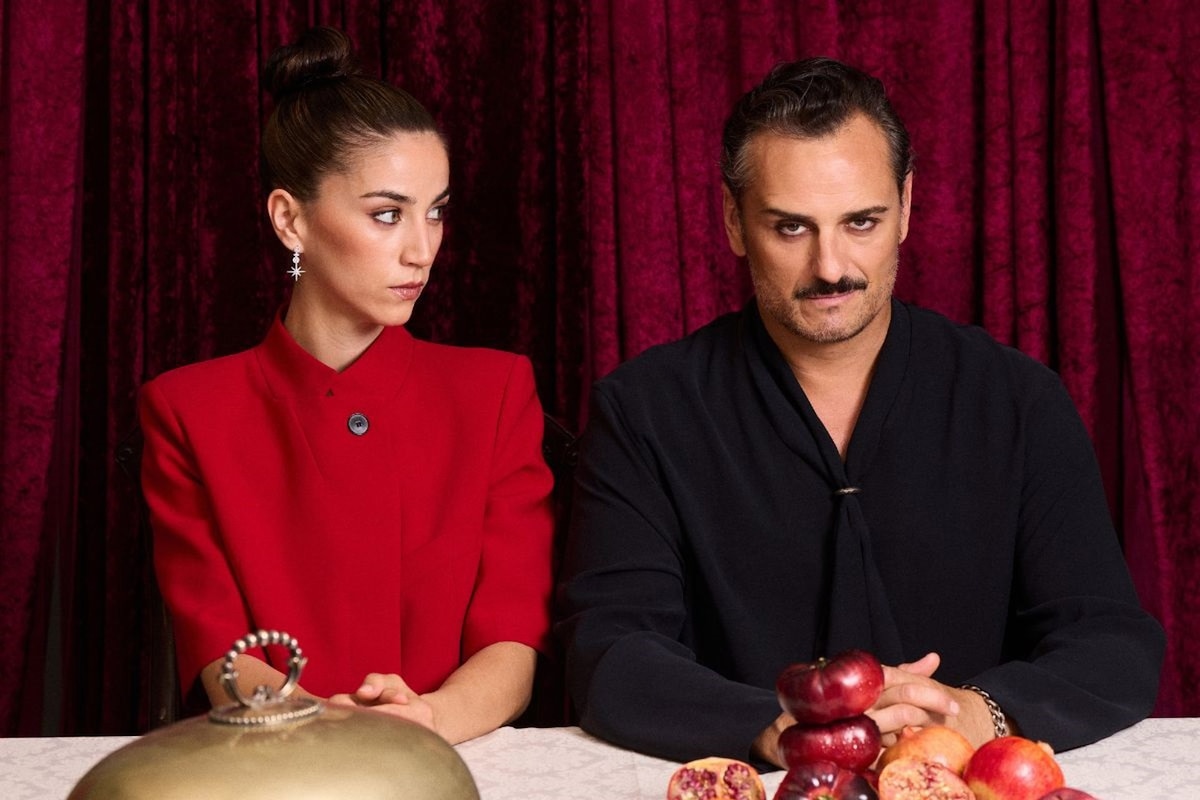
The Technical Challenge of Sonic Horror
- Absence of visual cues requires hyper-expressive vocal modulation.
- Recording sessions spanned several days to capture the evolving state of the Count.
- Sonic engineering creates a three-dimensional soundscape that bypasses the need for traditional set design.
- Actors rely on ‘sónica’ (sound-based stimuli) to trigger instinctive responses.
The Venice Film Festival Impact on Artistic Prestige
| Actor | Role | Methodology |
|---|---|---|
| Asier Etxeandia | Dracula | Total Physical Possession |
| Claudia Salas | Mina | Psychological Immersion |
| Production | Audible Original | Immersive Sonic Fiction |
Venice provides the perfect, moody backdrop for this unveiling, a city where history and legend collide in every canal. Claudia Salas shared that her return to the festival felt like a culmination of her recent professional trajectory. After attending as a guest last year, she stated that she wanted to return with a purpose—with a project that carried deep creative weight. Her presence at the festival serves as a testament to her growing influence in the European cinematic circuit, bridging the gap between mainstream popularity and serious artistic endeavors.
Asier, meanwhile, continues to balance his acting with his musical projects, specifically citing the upcoming release of his documentary related to the Mastodonte band and their spectacular performance at the Palacio Euskalduna. His ability to move between the stage, the studio, and the screen is a rare feat, reflecting a career defined by risk-taking and artistic evolution. You can find more updates on their upcoming filmography at Bright Celebrity.
The Psychology of Leaving the Character Behind
How do two performers detach from such heavy, potentially toxic material after the red light in the studio turns off? Asier Etxeandia notes that for him, it is the “craft”—the sheer repetition and professional discipline that allows a person to step out of the character’s skin. When you perform at the same time every day, your body essentially enters a state of memory that requires a conscious, professional effort to dismantle.
Claudia Salas takes a more tactile approach, utilizing sensory resets like cold-water showers and domestic routines to ground herself back in reality. This contrast between their methods highlights the diverse ways actors navigate the psychological toll of dark, demanding roles. Whether it is through rigorous technique or personal rituals, both stars emphasize that the delivery of a performance like this is not just talent, but an act of immense, sustained willpower. 
People Also Ask
What is the release date for the Audible Dracula with Asier Etxeandia and Claudia Salas?
The audio fiction production of ‘Dracula’ featuring Asier Etxeandia and Claudia Salas is scheduled to land on the Audible platform on October 1st.
Why did Asier Etxeandia describe the recording process as a possession?
Etxeandia described the process as a possession because the intensity of his vocal delivery and the physical exertion required to portray the shifting nature of the Count led him into states of hyperventilation and trance.
How does this production differ from a standard audiobook?
This production is classified as ‘fiction sonora’ or immersive sound fiction, meaning it utilizes advanced sonic engineering and sound design to create a cinematic experience without the use of visual screens.
What recent projects has Claudia Salas been working on?
Beyond this audio project, Claudia Salas recently completed a film in Kenya directed by Nacho García Belía and another collaboration with director David Suárez.
Final Reflections on a New Sonic Era
The transition toward high-end audio fiction marks a pivot in how we consume narratives in the modern digital age. By focusing on the raw, unadulterated power of the human voice and the evocative capabilities of sound, productions like this Audible adaptation of ‘Dracula’ are proving that the most terrifying and beautiful images are the ones we create inside our own minds. As Asier Etxeandia y Claudia Salas have demonstrated, the future of acting lies not just in what we see, but in what we dare to hear.
More Like This
For more updates, check out our latest entertainment and sports news.