Key Takeaways
| Broadcaster Al Michaels incorrectly attributed Michael Penix Jr.’s collegiate career to Oregon instead of Washington during a live broadcast. |
| The error occurred during a high-stakes Thursday Night Football matchup between the Atlanta Falcons and the Green Bay Packers. |
| Social media backlash was immediate, with fans citing the rivalry between Oregon and Washington as the catalyst for their intense frustration. |
| Michaels, 81, has defended his broadcasting style against critics who claim he lacks the enthusiasm expected for modern NFL coverage. |
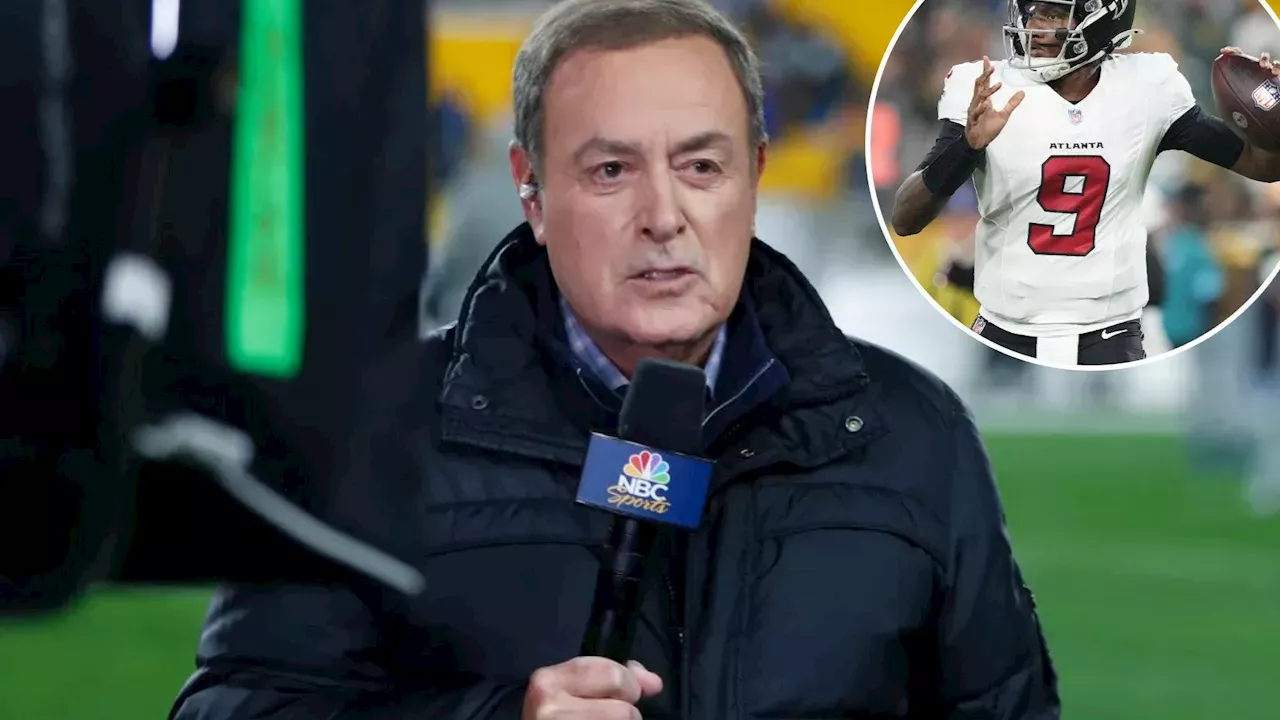
You have likely witnessed the viral fallout surrounding the latest Al Michaels Michael Penix Jr. mistake that has sent shockwaves through the NFL broadcasting community. During a recent Thursday Night Football telecast, the legendary play-by-play announcer mistakenly identified the Atlanta Falcons quarterback’s alma mater, claiming he spent his collegiate years at the University of Oregon rather than the University of Washington. This high-profile blunder did not go unnoticed, sparking a heated debate among viewers regarding accuracy in modern sports journalism.
As you digest the details of this on-air gaffe, it is essential to consider the historical weight of the rivalry between the Oregon Ducks and the Washington Huskies. For fans of the Big Ten programs, confusing these two institutions is not merely a slip of the tongue; it is a cardinal sin of college football commentary. This incident underscores the increasing pressure on veteran announcers to maintain perfect accuracy in an age where social media users are primed to capture and circulate every minor slip-up instantly.

Analyzing the Al Michaels Michael Penix Jr. Controversy
The incident serves as a flashpoint for a larger discussion regarding the aging demographic of top-tier sports broadcasting. Al Michaels, an icon with decades of experience calling monumental games, now finds himself under the microscope of a digital-native audience. When the veteran commentator incorrectly linked the star quarterback to the wrong program, the reaction from the audience was swift and unforgiving.
For many, this was not an isolated event but rather a symptom of a broader issue regarding Amazon Prime’s approach to the Thursday Night Football broadcast booth. Critics have pointed to a perceived lack of preparation or an inability to stay tethered to the complexities of modern college-to-pro transitions. The fact that Michael Penix Jr. famously led the Huskies to a 2023 national championship appearance—a journey that captivated the nation—makes the geographical error feel particularly egregious to loyal followers of the sport.
The Rivalry Context
The tension between Oregon and Washington fans is deeply rooted in decades of Pacific Northwest gridiron excellence. By misidentifying the university, Michaels inadvertently tapped into a well of regional pride that exists outside the standard NFL narrative. ESPN’s detailed player profiles often highlight these collegiate foundations as pillars of a player’s professional identity.
The intensity of the criticism on platforms like X (formerly Twitter) suggests that viewers demand a higher level of precision. Whether this stems from an genuine expectation of perfection or the desire to witness the decline of a legendary career, the discourse surrounding the announcer’s performance remains loud. You can find more insights into evolving media standards on the main site.
Statistical Breakdown of the Broadcast Performance
To understand the scope of the frustration, one must look at the specific milestones that define the current NFL landscape. Below is a comparison of the key identifiers associated with this high-stakes Thursday Night Football error.
| Category | The Truth | The Error |
|---|---|---|
| College Affiliation | University of Washington | University of Oregon |
| 2023 Record | 13-0 Start | Not Relevant |
| Broadcaster Age | 81 | N/A |

Expert Perspective on Broadcasting Longevity
In the world of professional broadcasting, experience is a double-edged sword. While Michaels brings the gravitas of a legendary career, the rapid evolution of sports data has changed what fans expect from their commentators. Expert analysts often note that the shift toward real-time, data-heavy analysis makes it harder for traditional announcers to balance flow with factual precision.
Michaels has previously addressed his critics, noting that his approach is not designed to mirror the high-octane delivery of younger peers. As reported by official historical records of media figures, he maintains that his longevity in the booth is proof of his method’s validity. However, when facts like a player’s college history are swapped in real-time, the defense of his ‘style’ becomes much harder to sustain in the face of public outcry.
For fans curious about how these media narratives impact the industry, checking out expert media commentary on Bright Celebrity provides an alternative viewpoint. The balance between maintaining a legacy persona and meeting the hyper-accurate demands of digital audiences remains the central conflict of the 2026 NFL season.
People Also Ask
What happened with the Al Michaels broadcast today?
During a Thursday Night Football game, Al Michaels mistakenly stated that Atlanta Falcons QB Michael Penix Jr. played college football at the University of Oregon instead of the University of Washington.
Why is this Al Michaels error trending right now?
The error is trending because of the intense rivalry between Oregon and Washington fans, who viewed the mistake as a lack of preparation by the veteran announcer.
How does this affect the perception of NFL commentators?
This incident has reignited debates about whether aging legendary broadcasters can keep up with the rigorous factual accuracy demanded by modern, social-media-savvy NFL audiences.
Will Al Michaels retire soon?
While there have been repeated calls from fans for his retirement in recent years, Michaels has consistently defended his role and stated he remains fit for the major packages he calls.
Final Thoughts
The Al Michaels Michael Penix Jr. incident is a clear indicator that the expectations for NFL coverage are higher than ever in 2026. Whether it was a momentary lapse or a sign of deeper fatigue, the public response highlights a growing rift between legacy broadcasting styles and the demands of the modern era. As the season progresses, viewers will undoubtedly continue to watch both the game on the field and the performance in the booth with a watchful, critical eye.
More Like This
For more updates, check out our latest entertainment and sports news.