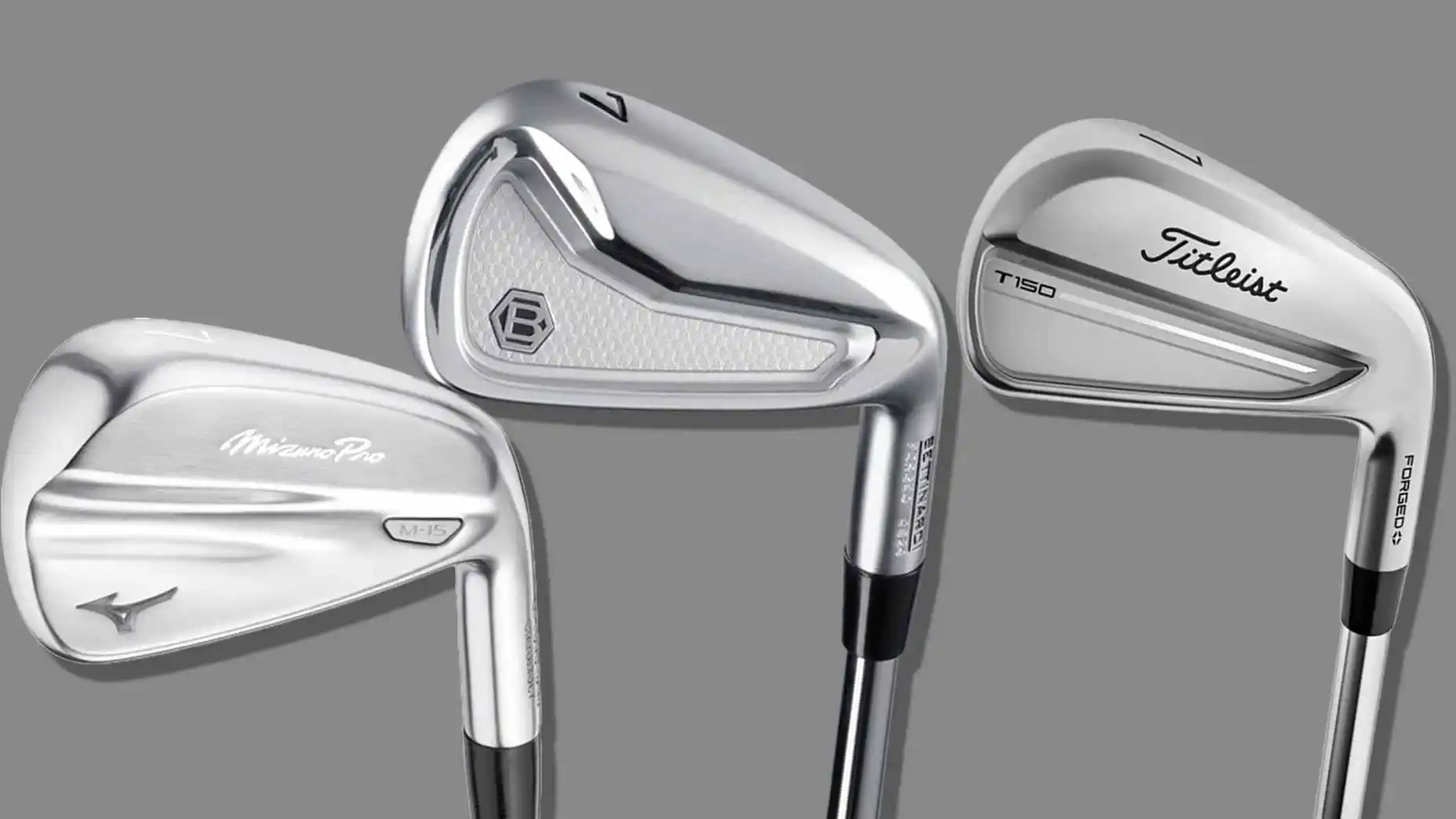
⚡ Key Takeaways
- Bettinardi’s CB24 has officially dethroned legacy brands to take the top sales spot for August 2026.
- Mizuno’s Pro M-15 maintains a historic eight-month streak on the best-seller list due to its hybrid aesthetic.
- Titleist’s T150 narrowly beat its T250 sibling, signaling a market preference for faster player’s irons.
- Technological convergence between ‘feel’ and ‘forgiveness’ is the primary driver for high consumer dwell time.
You might think the golf season is winding down as the calendar turns toward autumn, but Golf irons are currently flying off the shelves at a record-breaking pace that has blindsided industry analysts. While typical seasonal trends suggest a cooling market, the late-summer surge of 2026 is proving that golfers are more willing than ever to invest in high-ticket performance upgrades mid-season. According to recent retail data, three specific models have captured the lion’s share of the market, blending boutique craftsmanship with mass-market appeal.
The current landscape of the equipment world is undergoing a seismic shift where brand loyalty is being tested by raw performance metrics. Manufacturers are no longer just selling a name; they are selling measurable gains in ball speed, launch angle, and descent steepness. For the average amateur, these Golf irons represent a bridge between aspirational Tour-level play and the practical reality of needing more forgiveness on off-center strikes.
As we dive into the data provided by major retailers and fitting centers like True Spec, it becomes clear that August was a month of transition. The top-selling models aren’t just incremental updates; they represent the pinnacle of multi-material construction and precision engineering. Whether you are a scratch player or a mid-handicapper, the current trends in Golf irons offer a fascinating look at where the sport is heading as we approach the final quarter of the year.
Golf irons and the Bettinardi Surge
The biggest story of the month is undoubtedly the meteoric rise of the Bettinardi CB24, a model that has effectively disrupted the status quo of the iron market. Known traditionally for their world-class putters, the Illinois-based manufacturer has successfully pivoted into the full-bag category with a product that challenges the biggest names in the business. The CB24 is not just a commercial success; it is a statement of intent that shows boutique brands can compete on a global scale.
What makes these clubs so desirable is their progressive cavity design, which allows for a seamless transition from the long irons to the scoring clubs. Bettinardi has utilized a specific perimeter weighting system that maximizes the Moment of Inertia (MOI) without the bulky profile often associated with game-improvement sets. This balance of precision and power has struck a chord with golfers who refuse to compromise on the visual aspect of their equipment.

The Engineering Philosophy of the CB24
By utilizing high-density tungsten in the toe and heel, Bettinardi engineers have managed to lower the center of gravity significantly. This design choice helps players achieve a higher launch even with the lower-lofted long irons, which is a common pain point for amateur golfers. The feedback from initial buyers suggests that the ‘soft-forged’ feel of the 303 stainless steel provides a level of sensory feedback that is rarely found in the cavity-back category.
Furthermore, the CB24 aesthetic is undeniably premium, featuring the clean lines and meticulous milling that Bettinardi fans have come to expect. Many industry insiders believe that the success of these Golf irons is a direct result of ‘luxury crossover’ demand, where consumers are looking for high-end artisan products that still offer modern technology. This trend is similar to what we see in other luxury sectors, where craftsmanship meets high-tech functionality.
Expert Take: The Boutique Breakout
Industry analysts note that Bettinardi’s success is a ‘black swan’ event in the equipment world. Historically, it takes years for a putter company to gain traction in the iron category, but the CB24 has bypassed the traditional gestation period. “What we are seeing is the power of brand trust,” says one senior equipment editor. “Golfers who have trusted Bettinardi on the greens for decades are now seeing that same level of precision translated into their approach shots, and the sales numbers reflect that confidence.”
The Technical Mastery of Mizuno
Coming in at the number two spot is the Mizuno Pro M-15, a club that has remained a permanent fixture on the best-seller lists since its debut in January. Mizuno has long been the gold standard for ‘feel’ in the golf world, but with the Pro Modern line, they have expanded their reach to include players who prioritize distance. The Pro M-15 is the culmination of years of metallurgical research, specifically their proprietary Grain Flow Forging process.
The allure of these Golf irons lies in the fact that they solve the age-old golfer’s dilemma: the choice between a beautiful blade and a powerful distance club. Mizuno has managed to hide a significant amount of technology inside a chassis that looks like a classic muscle-back at address. This ‘stealth technology’ approach has allowed them to capture both the traditionalist and the modern data-driven golfer simultaneously.
Mizuno’s Pro M-15 features a multi-material construction that includes a Chromoly 4135 face, which is significantly thinner and more flexible than traditional carbon steel. This allows the face to act like a spring, generating higher ball speeds across a wider area of the clubface. For the player who occasionally misses the center, the M-15 provides a safety net that keeps the ball on target and prevents the massive distance drops often seen in player-profile clubs.
Why the M-15 Stays on Top
Consistency is the hallmark of the Mizuno brand, and the M-15 is a testament to their ability to iterate without losing their core identity. The club’s popularity is also bolstered by its presence in professional tours worldwide, where non-contracted players are increasingly putting Mizuno irons in their bags. This organic endorsement provides a level of authenticity that traditional marketing cannot buy, driving sustained interest month after month.
The sheer longevity of the M-15 on the best-seller list is a feat in itself. In a market where new releases often fade after ninety days, the M-15 has maintained its momentum for over half a year. This suggests that the product has achieved ‘evergreen’ status, where word-of-mouth recommendations are now doing the heavy lifting for the brand’s sales targets.
Market Performance and Sales Data
To understand the dominance of these brands, we must look at the specific sales metrics that defined the month of August. The competition between the top three brands was remarkably tight, with only a few hundred units separating the second and third positions. Below is a comparative breakdown of the key performance indicators for the three Golf irons that topped the charts this month.
| Iron Model | Primary Tech Focus | Target Handicap | August Sales Rank |
|---|---|---|---|
| Bettinardi CB24 | Progressive Cavity | 0 – 12 | 1st |
| Mizuno Pro M-15 | Chromoly Forging | 2 – 15 | 2nd |
| Titleist T150 | Dual Cavity Speed | 0 – 10 | 3rd |
As the table illustrates, the market is currently favoring ‘Player’s Distance’ and ‘Player’s Cavity’ categories. These clubs offer the control required for high-level shot-making while providing enough technology to mitigate the errors of a non-professional swing. Interestingly, the T150 from Titleist managed to edge out the T250 by a razor-thin margin, suggesting that even as golfers seek help, they still lean toward the more compact, traditional profiles.
Titleist T-Series Competitive Landscape
Titleist’s T-Series has become the backbone of the brand’s iron department, providing a clear ladder for players to climb as their game improves. The T150, which took the third spot this month, is specifically designed as the “faster player’s iron.” It sits perfectly between the Tour-standard T100 and the more forgiving T200, offering a slightly larger footprint than the T100 but with the added muscle of a muscle channel behind the face. This design results in more speed and launch, making it a favorite for those who want Titleist precision without the extreme difficulty of a pure blade.
The success of Titleist’s Golf irons is rooted in their fitting-first philosophy. Unlike brands that rely heavily on off-the-rack sales, Titleist has built a massive network of fitters who ensure that every golfer is matched with the specific T-Series model that optimizes their launch conditions. This approach has fostered a deep sense of loyalty among serious amateurs who value the bespoke nature of the fitting process.

By The Numbers: The T150 Growth
According to internal retail tracking, the T150 saw a 14% increase in sales compared to the same period last year. This growth is attributed to the ‘trickle-down’ effect of technology, where features once reserved for elite pros are now accessible to the general public. Specifically, the refined ‘variable face thickness’ in the T150 has allowed Titleist to maintain consistent spin rates even on low-face strikes, which is the most common miss for the average golfer. This consistency is what keeps Titleist at the top of the ESPN golf equipment rankings year after year.
Furthermore, the T150’s slightly larger profile compared to the T100 provides a psychological boost. When a golfer looks down and sees a bit more surface area, it builds confidence, which is an immeasurable but vital component of a successful golf shot. This mental edge, combined with the quantifiable speed gains, makes the T150 one of the most balanced Golf irons on the market today.
The Role of True Spec Fitting
A major factor in the high sales volume for August was the role of professional fitting centers. Facilities like True Spec have reported a massive uptick in appointments as players look to dial in their specs before the fall season. When a golfer can see the real-time data on a launch monitor comparing their old clubs to the new Golf irons, the decision to upgrade becomes data-driven rather than emotional. This transition to evidence-based purchasing is a hallmark of the 2026 golf market.
Frequently Asked Questions
What are the best-selling irons for mid-handicappers?
For mid-handicappers, the Mizuno Pro M-15 and Titleist T150 are currently the top choices. These clubs provide a blend of ‘player’ aesthetics with game-improvement technology like perimeter weighting and high-COR faces. They offer the necessary forgiveness on off-center hits while maintaining the sleek look of a professional iron.
Are Bettinardi irons better than Titleist?
The ‘better’ club depends entirely on individual swing characteristics. Bettinardi’s CB24 is gaining popularity for its unique milling and progressive cavity design, while Titleist is known for its legendary consistency and ‘Tour-proven’ performance. A professional fitting is required to determine which brand optimizes your specific launch and spin numbers.
Why are golf clubs selling so well in August?
August usually sees a spike in sales as golfers look to capitalize on late-summer clearout deals or upgrade their gear for fall tournaments and trips. In 2026, the release of revolutionary new technology from brands like Bettinardi and Mizuno has sustained consumer interest beyond the typical spring peak season.
Future Outlook for Golf irons
As we look ahead to the final months of 2026, the momentum of the Golf irons market shows no signs of slowing down. The convergence of artificial intelligence in clubface design and the use of aerospace-grade materials has reached a point where the performance gaps between generations are becoming impossible to ignore. For the first time in a decade, the ‘every three years’ upgrade cycle is being shortened to eighteen months as the gains in ball speed become more pronounced.
The brands that will win the future are those that can master the balance between heritage and innovation. While many golfers still crave the luxury and prestige of exclusive lifestyles and premium gear, they are unwilling to sacrifice the distance that modern tech provides. Bettinardi, Mizuno, and Titleist have all successfully navigated this tightrope, proving that the modern golfer wants it all: beauty, feel, and raw power.
In the coming months, expect to see more integration of smart-sensors and data-tracking within the clubs themselves. As players become more sophisticated with their personal analytics, the demand for Golf irons that can interface with their mobile devices will likely become the next major frontier. For now, the August best-sellers represent the current peak of mechanical engineering in the sport, and they are well worth the investment for anyone looking to shave strokes off their scorecard.
More Like This
For more updates, check out our latest entertainment and sports news.