⚡ Key Takeaways
- The production is an Olivier-nominated transfer from London’s West End, designed by the creators of Sleep No More.
- Unlike the films, the play features an original story centered on an American couple in a haunted London townhouse.
- The show utilizes a mix of old-fashioned stagecraft and cutting-edge mechanical illusions to create jump scares.
- Audience engagement is at an all-time high, with a vibe resembling a midnight cult movie screening.
- The production highlights a growing trend of “Franchise Theater” targeting younger, non-traditional Broadway audiences.
You may think you have experienced every possible way to be terrified in a dark room, but Paranormal Activity on Broadway is a visceral reminder that nothing beats the collective gasp of a live audience. The transition from a low-budget found-footage film to a high-octane theatrical event is nothing short of a miracle in stagecraft. It transforms the August Wilson Theatre into a living, breathing house of horrors that demands your undivided attention from the first creak of the floorboards.
This production is not just a retelling of the 2007 cult classic that birthed a multi-billion dollar franchise. Instead, it is a sophisticated evolution of the brand, leaning into the unique strengths of live performance to deliver scares that a screen simply cannot replicate. As you sit in the velvet seats of one of New York’s most storied venues, the line between fiction and reality blurs through a combination of sonic engineering and practical illusions.
The arrival of this show marks a significant pivot for Broadway, which has traditionally struggled to find a permanent home for the horror genre outside of musical adaptations. By focusing on the atmosphere of a “live haunting,” the creators have managed to capture the lightning-in-a-bottle energy that made the original Wikipedia entry for the film series a global phenomenon. It is a bold experiment in sensory manipulation that is paying off with packed houses and shattered nerves.
Paranormal Activity and the Art of the Live Scare
The core success of Paranormal Activity lies in its refusal to play it safe. Playwright Levi Holloway, who previously made waves with his unsettling work on Grey House, understands that stage horror requires a different toolkit than cinema. In a movie, the director controls your eyes through the lens; on stage, the audience chooses where to look. This creates a terrifying game of cat-and-mouse where the ghost could be anywhere—or nowhere at all.
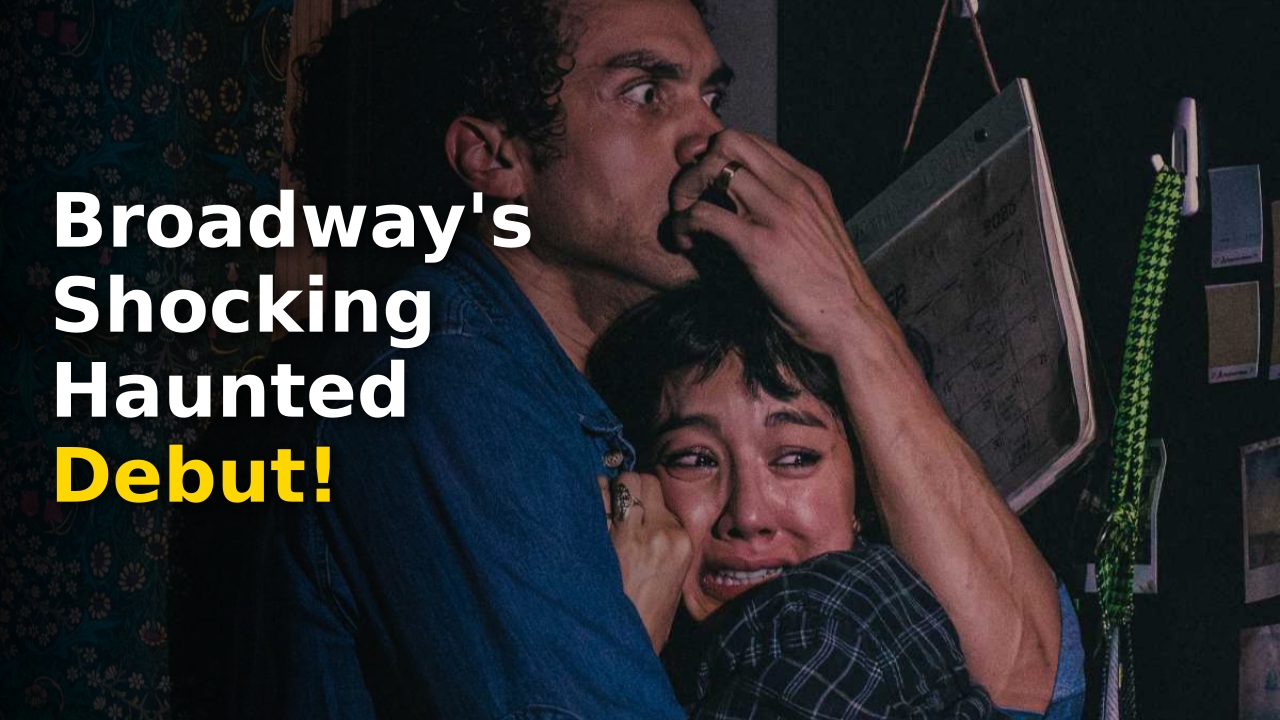
The story follows Lou (Cher Álvarez) and James (Travis A. Knight), an American couple who have fled the familiar streets of Chicago for a fresh start in London. However, they soon discover that the ocean is not enough of a barrier to stop a haunting. Lou is convinced a supernatural entity is stalking her, while James, ever the skeptic, attributes the disturbances to her fragile mental state. This marital friction provides the emotional backbone of the play, making the scares feel grounded in a tragic reality.
The introduction of Etheline Cotgrave (Eva Kaminsky), a medium with a chillingly pragmatic view of the afterlife, elevates the tension. Her mantra that “places are not haunted, people are” serves as the psychological anchor for the production. It suggests that the horror isn’t just coming from the walls of the house, but from the internal traumas the characters carry with them. This depth keeps the play from becoming a mere succession of cheap thrills.
What truly sets this production apart is the direction by Felix Barrett. As the mastermind behind the immersive sensation Sleep No More, Barrett knows how to manipulate space. He uses the entire two-story set as a character. Every corner of the Fly Davis-designed house feels laden with potential danger. You find yourself scanning the background of every scene, dreading the moment a door might swing open or a shadow might move independently of its source.

The Psychology of Collective Fear
There is a specific phenomenon that occurs when hundreds of people are frightened simultaneously. In the world of Paranormal Activity, the audience becomes an active participant in the haunting. When one person screams, it triggers a chain reaction of adrenaline throughout the theater. This creates a feedback loop of excitement that makes the two-hour runtime fly by with breathless intensity.
Psychologists often note that horror serves as a controlled environment for people to process anxiety. On Broadway, this is amplified by the physical presence of the actors. Unlike a film, where the characters are safe behind a digital barrier, the actors on stage are in the room with the “entity.” This proximity increases the stakes significantly for the viewer, making every jump scare feel personal and immediate.
The Technical Wizardry of Chris Fisher and Fly Davis
To bring Paranormal Activity to life, the production enlisted the brightest minds in stage magic. Chris Fisher, the illusion designer who previously worked wonders on Harry Potter and the Cursed Child, is the secret weapon here. He avoids the flashy, over-the-top pyrotechnics of larger spectacles in favor of subtle, unsettling movements that defy logic. This choice ensures that the “paranormal” elements feel authentic rather than theatrical.
The house itself is a masterpiece of engineering. Fly Davis has created a cross-section of a London home that looks entirely ordinary at first glance. However, the set is riddled with hidden mechanisms that allow furniture to misbehave and pictures to fly off the walls with violent precision. The lighting design works in tandem with these effects, using darkness as a weapon to hide the strings while illuminating just enough to keep the audience on edge.
Sound design by Gareth Fry is arguably the most important element of the show. In the original films, the use of low-frequency hums and sudden thuds was key to the dread. Fry recreates this on a massive scale, using a surround-sound system that makes the theater itself feel like it’s vibrating. You don’t just hear the haunting; you feel it in your chest, creating a physical response that is impossible to ignore.
Expert Take: The Engineering of Dread
According to theatrical tech analysts, the shift toward high-concept practical effects in shows like Paranormal Activity represents a new era of “Mechanical Realism.” By utilizing advanced servo-motors and silent magnetic latches, designers can move heavy furniture without the audible click of traditional stage machinery. This silent operation is crucial for horror, as it prevents the audience from “solving” the trick, thereby maintaining the illusion of a supernatural presence. The integration of 4D sound technology, which can pinpoint a noise to a specific seat in the theater, further isolates the viewer, making the experience feel customized and invasive.
The cast manages to hold their own against these overwhelming technical elements. Cher Álvarez delivers a powerhouse performance as Lou, capturing the exhaustion and terror of a woman who knows she is being hunted. Her chemistry with Travis A. Knight is palpable, making their domestic disputes feel as dangerous as the ghosts. When the scares finally hit, their reactions are so grounded that you forget you are watching a choreographed play.
Analyzing the Financial Impact of Franchise Theater
The success of Paranormal Activity is part of a larger trend on Broadway where established IP (Intellectual Property) is being used to de-risk the massive costs of production. Shows like Stranger Things: The First Shadow and Harry Potter have proven that fans are willing to pay premium prices to see their favorite worlds expanded on stage. This trend is vital for the survival of the theater industry in a post-pandemic world.
By targeting the horror demographic, Broadway is tapping into a younger, more diverse audience. These are people who might not be interested in traditional revivals of classics but are willing to travel to 52nd Street for a brand they recognize. The “eventized” nature of the show—where the audience’s reaction is part of the draw—makes it a social media goldmine, further driving ticket sales through word-of-mouth and viral clips of jump-scared patrons.
| Production | Genre | Primary Tech | Target Demographic |
|---|---|---|---|
| Paranormal Activity | Horror/Thriller | Mechanical Illusions | Gen Z / Millennials |
| Harry Potter | Fantasy/Magic | Pyrotechnics/Wirework | Families / Superfans |
| Stranger Things | Sci-Fi/Horror | Video Mapping | Sci-Fi Enthusiasts |
Furthermore, the merchandise potential for a horror brand on Broadway is significant. Unlike a standard musical, horror properties can sell “survival” kits, glow-in-the-dark apparel, and limited-edition posters that appeal to the collector mentality. This secondary revenue stream is a major factor in the long-term viability of the production, which is currently scheduled to run through early 2027.
Why Broadway Needs the Horror Genre Now
Historically, horror has been the red-headed stepchild of the New York stage. While Sweeney Todd and The Rocky Horror Show have found success, they are musicals that often lean into camp or gothic melodrama. Pure, unfiltered horror like Paranormal Activity is a rarity. However, the current cultural climate is ripe for this type of entertainment. In a world of digital screens, people are craving communal, tactile experiences that evoke strong emotions.
The production also benefits from the legacy of the IMDb-celebrated film franchise. By using the title as a shorthand for “scary,” the play bypasses the need for an extensive marketing campaign to explain its tone. Audiences know what they are getting: tension, silence, and sudden, loud shocks. This clarity of purpose is refreshing in a theater landscape that often feels over-saturated with experimental or abstract works.

The Legacy of Stage Grand Guignol
While this production feels modern, it actually draws on a long history of horror theater. The Grand Guignol in Paris was famous for its graphic, realistic horror plays in the late 19th and early 20th centuries. Paranormal Activity is essentially a high-tech successor to that tradition. It understands that theater is at its best when it provokes a physical reaction, whether that is laughter, tears, or, in this case, a cold sweat.
By bringing this energy to the August Wilson Theatre, the production is revitalizing the block. It proves that there is room on the Great White Way for more than just show tunes and Shakespeare. It opens the door for other horror properties—perhaps even original ones—to take a chance on a medium that is uniquely suited to creating atmosphere and dread.
By The Numbers: The Horror Boom
Industry data shows that horror-themed attractions have seen a 45% increase in attendance over the last five years, largely driven by immersive experiences. On Broadway, Paranormal Activity has maintained an average capacity of 94% since its opening, outperforming several long-running musicals in its first quarter. This highlights a shift in consumer behavior where the “experience” of the show—the adrenaline and the social atmosphere—is as valuable as the narrative itself. Experts at Bright Celebrity note that the crossover appeal between film fans and theatergoers is at an all-time high, creating a sustainable model for future IP-driven plays.
Frequently Asked Questions
Is the Paranormal Activity play based on the first movie?
No, the Broadway production features an entirely original story and characters. While it shares the same universe and “rules” as the films—such as unexplained disturbances and jump scares—it focuses on a new couple, Lou and James, who have moved from Chicago to London. It functions as a standalone extension of the franchise rather than a remake.
How scary is the Broadway version compared to the movies?
Many audience members find the stage version more intense because of the live environment. The use of directional sound and practical illusions creates a sense that the haunting is happening in the room with you. While the play isn’t overly gory, it relies heavily on tension and jump scares that are amplified by the physical presence of the actors and the silence of the theater.
Is this show suitable for children?
The production is generally recommended for ages 12 and up. It contains intense sequences of terror, loud noises, and themes of psychological distress. Parents should use their discretion, but the show is designed to be a thrilling experience for teenagers and adults who enjoy the horror genre.
How long is the Paranormal Activity Broadway run?
The production is currently slated for a limited engagement through January 3, 2027. Given its strong ticket sales and positive audience reception, there is a possibility for extensions or a national tour, though nothing has been officially confirmed beyond the current date.
The Final Verdict on Paranormal Activity
In the final analysis, Paranormal Activity on Broadway is a triumph of imagination over budget—or rather, a triumph of how a large budget can be used to simulate a small-scale nightmare. It takes the “less is more” philosophy of the original films and scales it up for a thousand-seat venue without losing the intimacy that makes ghost stories work. It is a loud, proud, and unapologetically fun night at the theater that reminds us why we love being scared in the first place.
While the dialogue-heavy stretches in the second act might feel a bit long for those looking for non-stop action, the payoff is more than worth the wait. The final twenty minutes of the show are a tour-de-force of technical precision and pure terror that will leave you double-checking the locks on your doors when you get home. It isn’t just a play; it’s a test of nerves that every horror fan should take.
As Broadway continues to evolve, the success of Paranormal Activity serves as a blueprint for the future. It proves that with the right creative team and a commitment to high-quality illusions, the theater can be just as thrilling—if not more so—than the local multiplex. If you have the chance to witness this haunting live, do not miss it. Just be prepared to scream along with the rest of the crowd.
More Like This
For more updates, check out our latest entertainment and sports news.