⚡ Key Takeaways
- The Dallas Cowboys face massive roster cuts, reducing their squad from 91 players to the final 53-man limit.
- Surprise standouts and injury-depleted positions are forcing coaching staff into unforeseen roster plans.
- The backup quarterback battle and safety depth chart pose the most critical questions for head coach Mike McCarthy and defensive coordinator Mike Zimmer.
- Waiver wire strategies could ultimately dictate who fills the final veteran cornerback spots.
You are about to witness the most ruthless cutdown day in modern franchise history as the Dallas Cowboys prepare to finalize their roster plans before the fast-approaching NFL regular season. To comply with the strict NFL 53-man roster limit by Sunday at 6:00 p.m. ET, executive vice president Stephen Jones and head coach Mike McCarthy must navigate high-stakes personnel decisions. These sudden adjustments focus on three crucial areas: the quarterback room configuration, safety depth charts involving emerging rookies, and a desperate search for reliable cornerback insurance. While early summer assessments seemed locked in, several roster bubble standouts have thrown the front office’s original blueprints into complete disarray.
The tension inside the Star in Frisco is reaching a boiling point as the coaching staff evaluates bubble players during the final preseason games. Every snap carries career-altering weight for young prospects trying to secure their financial future in the league. Under defensive coordinator Mike Zimmer, the evaluation process has become far more demanding, focusing heavily on physical execution and mental processing. This defensive transition has put several high-profile prospects in vulnerable positions while elevating unheralded names.
While front offices always project their depth charts months in advance, summer realities often shatter those initial blueprints. When looking at the rise of young sports figures or tracking trending media personalities on BrightCelebrity, you realize how quickly public perception and professional value can shift. The Cowboys are experiencing this phenomenon firsthand as three specific players force the coaching staff to reconsider their entire strategy.
Roster plans Face Sudden Disruption
The Dallas Cowboys entering training camp had a relatively clear picture of what their active squad would look like. However, the emergence of raw developmental talents has made the final roster cutdown incredibly complicated for offensive coordinator Brian Schottenheimer. He admitted that projecting the initial depth chart is a tedious process that the staff has already initiated before the final whistle blow. This preemptive planning is necessary because the team must cut down from 91 active players to the mandatory 53-man limit in a tiny 48-hour window.
The primary area of structural debate centers on the quarterback position behind superstar Dak Prescott. Original projections assumed a straightforward hierarchy, but late-summer performances have forced a reevaluation of carrying three active quarterbacks. If Dallas decides to keep three signal-callers, they must sacrifice a vital roster spot at another high-impact position, such as linebacker or offensive tackle. This decision could have massive ripple effects across the entire depth chart, limiting the team’s overall flexibility during the early weeks of the regular season.
The Looming 53-Man Cutdown Deadline
The transition from a 91-man training camp roster to a streamlined active depth chart is a logistical nightmare for NFL franchises. Vested veterans who get released immediately become free agents, while younger players must pass through the treacherous waiver wire system. Dallas has historically lost highly promising developmental prospects to rival franchises who monitor the waiver wire with meticulous detail. This reality makes the decision to cut standout rookies extremely risky, as they are rarely able to clear waivers and return to the practice squad.
Coaching staffs must weigh the immediate value of special teams contributors against the long-term upside of developmental projects. This year, the evaluation is even more complex due to the newly implemented NFL kickoff rules, which demand a completely different athletic profile for coverage units. Players who once excelled on special teams might no longer fit the spatial demands of the new format, forcing a complete overhaul of the bottom of the roster.
The Backup Quarterback Conundrum
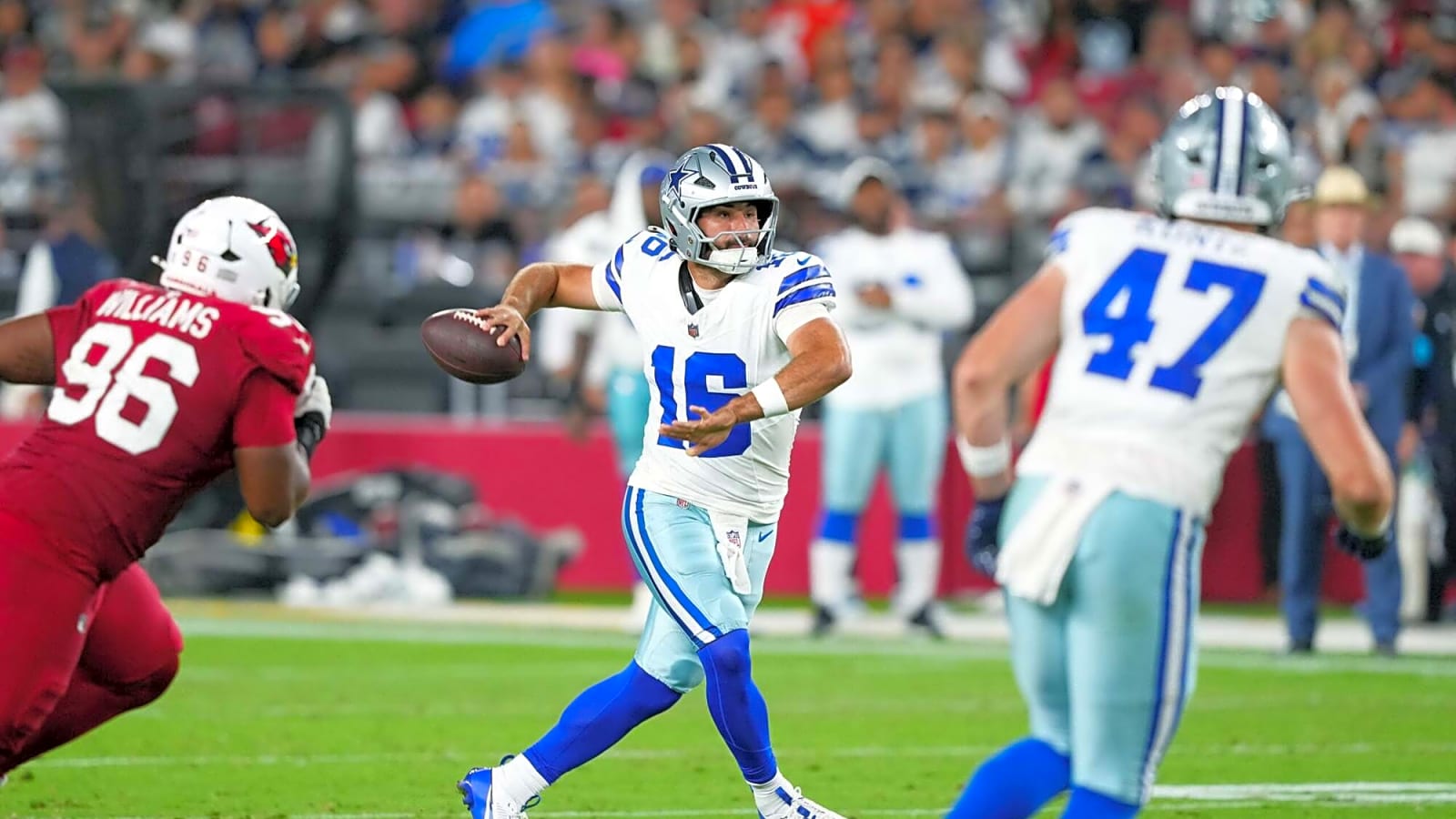
The dynamic behind Dak Prescott remains one of the most heavily discussed narratives in Dallas sports media. While the veteran backup has historically provided a sense of security, the developmental upside of younger arms on the roster presents an intriguing dilemma. Proponents of carrying three quarterbacks argue that securing young talent is vital for the franchise’s long-term sustainability, especially given Prescott’s massive salary cap implications. Conversely, skeptics believe that using a valuable roster spot on a player who will hopefully never see the field is a waste of resources.
This debate has intensified as competing teams across the league look for quality depth under center. The front office must decide whether to showcase their backup talent for potential trade capital or protect them from external vultures. If a quarterback-needy team offers a valuable draft asset, Dallas could be tempted to make a surprising trade before Sunday’s deadline.
Roster plans By The Numbers
To truly understand how these decisions take shape, we must examine the quantitative data that drives front-office evaluations. Performance metrics, snap counts, and historical draft investments all play a massive role in determining who stays and who goes. The coaching staff relies heavily on advanced analytics to validate the visual assessments made during high-intensity training camp practices.
| Player Name | Position | Preseason Snaps | PFF Grade | Roster Probability |
|---|---|---|---|---|
| Cooper Rush | QB | 45 | 71.2 | High |
| Trey Lance | QB | 112 | 64.8 | Medium |
| Julius Wood | S | 88 | 79.5 | Low-Medium |
| Caelen Carson | CB | 95 | 58.2 | Lock |
Evaluating the Safety Dilemma
The safety room in Dallas is arguably the deepest unit on the entire roster. Headlined by established playmakers and elite coverage options, this group has consistently delivered high-level performances throughout the offseason. However, the sudden emergence of undrafted rookie standout Julius Wood has created an incredibly difficult situation for the coaching staff. Wood has displayed phenomenal instincts as an in-the-box defender, racking up impressive tackle numbers and showing exceptional physical grit.
Despite his production, the Cowboys are already highly committed to their veteran safety core. Keeping Wood would mean carrying an unprecedented six safeties on the active roster, which is virtually unheard of in modern roster construction. If Dallas tries to slide Wood onto the practice squad, they risk losing a highly capable defender to a rival franchise looking for immediate secondary help.
Historical Context of Cowboys Cuts
To understand the stakes of these upcoming roster decisions, one must look at how past front office moves have played out. Historically, the Dallas franchise has preferred to build through the draft, placing a high premium on retaining their own draft selections. This draft-and-develop philosophy means that mid-to-late round rookies are often given structural advantages over undrafted free agents, regardless of early preseason performance.
However, this strategy has sometimes backfired when undrafted prospects outperform draft picks but are cut due to investment bias. In previous seasons, highly talented players have gone on to find significant success with other organizations after being exposed to the waiver wire. The front office must balance loyalty to their drafted prospects with the objective reality of on-field production.
Past Draft Picks and Roster Regrets
Analyzing historical roster data reveals that the front office has occasionally struggled to assess the immediate readiness of their developmental secondary players. Some notable draft picks were kept on the active roster for multiple seasons despite showing minimal progression, blocking more productive undrafted players from contributing. This historical trend places added pressure on the current decision-makers to prioritize performance over draft pedigree.
The coaching staff is fully aware of these past missteps and has emphasized that competition remains open until the final hours. This competitive environment has forced even high-round draft choices to push their limits to guarantee their place. The defensive coaching staff under Zimmer is particularly known for demanding immediate execution over theoretical potential.

The Cornerback Depth Crisis
The unexpected injury to star cornerback DaRon Bland has sent shockwaves through the defensive backfield. Bland, who established himself as an elite turnover threat, was supposed to anchor the perimeter alongside Trevon Diggs. His sudden absence has thrust rookie corner Caelen Carson into a high-pressure role that he might not be fully prepared to handle. Carson displayed flashes of dominance during spring practices but struggled significantly during live preseason action, raising serious questions about his immediate viability as a starter.
If the coaching staff believes Carson is not ready to carry the load, they must look to the waiver wire or the trade market for veteran reinforcements. According to national sports portals like ESPN, several capable veteran defensive backs are expected to become available during cutdown day. Dallas will likely be highly active in monitoring these developments as they seek to shore up their secondary depth before the season opener.
By The Numbers: Statistical projections indicate that a secondary missing its primary turnover producer suffers an average drop of 15% in defensive efficiency during the first month of the season. To combat this decline, defensive schemes must rely more heavily on safety help, which directly impacts how many safeties Dallas needs to carry on the active roster. This statistical reality heavily influences the debate surrounding Julius Wood and the safety room configuration.
Frequently Asked Questions
How many players must the Dallas Cowboys cut to reach the limit?
The Dallas Cowboys must trim their roster from 91 active players down to the mandatory 53-man limit. This requires the front office to make exactly 38 roster transactions within a highly condensed 48-hour period following the final preseason game.
What is the waiver wire process for released players?
Players with less than four years of accrued NFL service are placed on waivers after being released, allowing other teams to claim their existing contracts. Vested veterans with four or more years of service immediately become unrestricted free agents and can sign with any franchise.
Will the Cowboys carry three quarterbacks on the active roster?
While historically carrying only two quarterbacks, the impressive development of young signal-callers has forced Dallas to seriously consider carrying three. This decision would protect their developmental assets from being claimed on waivers but would sacrifice depth at another position.
How does DaRon Bland’s injury affect cornerback roster decisions?
Bland’s foot injury has severely compromised the team’s perimeter depth, forcing rookie Caelen Carson into a prominent defensive role. It also increases the likelihood that Dallas will aggressively pursue veteran cornerbacks via trades or the waiver wire after roster cuts are finalized.
Analyzing the Final Roster Decisions
The final hours before the roster deadline are always filled with intense discussions, physical evaluations, and strategic trade calls. The front office must look beyond individual talent and focus on building a cohesive, resilient 53-man unit capable of enduring a grueling 17-game regular season. Every single slot on the active roster carries immense strategic value, particularly when planning for potential in-season injuries and special teams needs.
Ultimately, the decisions made over the coming weekend will define the trajectory of the season and test the depth of this roster. While the original blueprint provided a helpful starting point, the emergence of unexpected contributors has forced management to adapt. The evolution of these roster plans highlights the dynamic, unpredictable nature of the NFL, where opportunities are seized in the blink of an eye and past reputations offer no guarantee of future security. As the deadline approaches, the entire organization stands ready to finalize a squad that they believe can compete for a championship.
More Like This
For more updates, check out our latest entertainment and sports news.