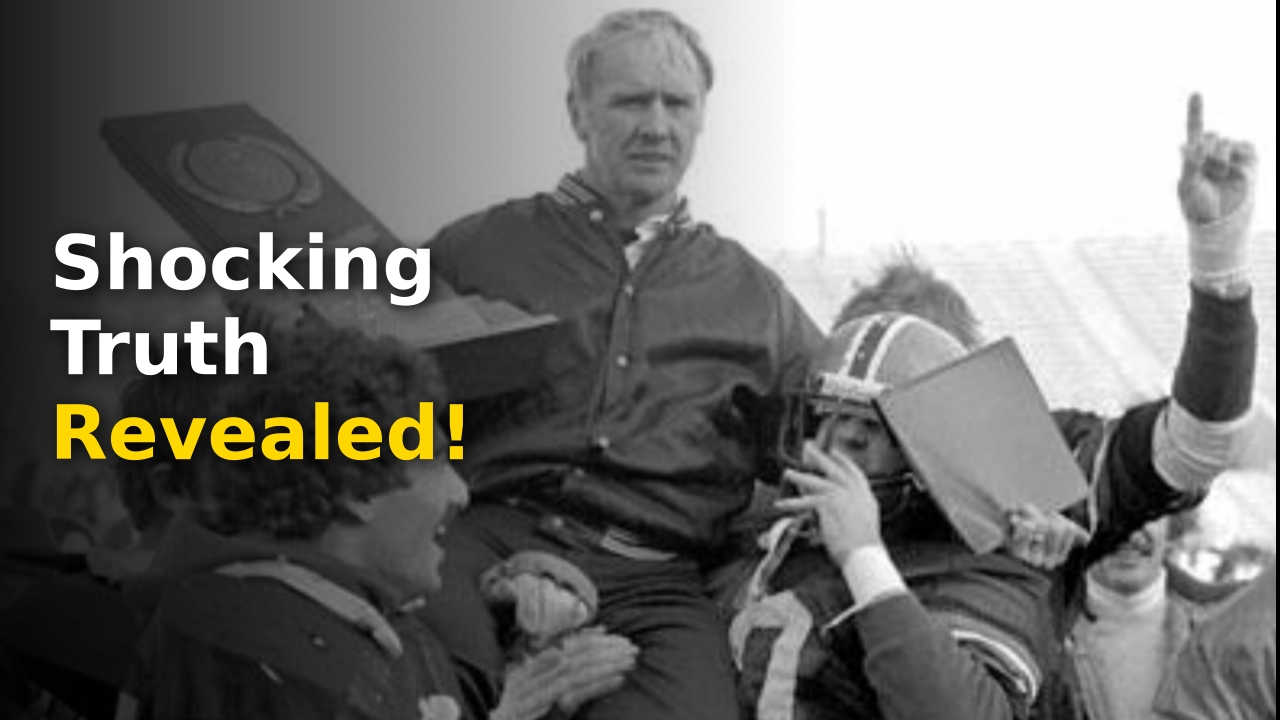
Dave Kragthorpe is remembered today as a titan of collegiate athletics who defied all odds to lead Idaho State University to its only national championship in football. You might know him for his historic 1981 title run, but the depth of his character and his immense impact on the lives of his players remain the true markers of his 93-year legacy. Before his passing in Montgomery, Texas, he cemented his status as a beacon of integrity, proving that true coaching success is measured by the people you elevate along the way.
It is difficult to overstate the magnitude of the 1979-1981 era at Idaho State, a period defined by a singular vision of excellence and grit. While many coaches focus strictly on the scoreboard, Kragthorpe invested in the humanity of his staff and athletes, building a culture of respect that transcended the sport. His journey from BYU assistant to a national champion at ISU remains a masterclass in leadership, demonstrating that even the most desperate situations can be salvaged through trust and tireless work.
Dave Kragthorpe: A Life Defined by Resilience
When you examine the professional life of Dave Kragthorpe, you discover a man who viewed failure merely as a prerequisite for success. Taking over a program that held the nation’s longest losing streak of 16 games, he walked into a situation that would have broken lesser men. The ASISU Minidome had become a theater of frustration, where fans routinely booed their own team, yet Kragthorpe saw only potential. He utilized his experience as an offensive line coach under the legendary LaVell Edwards to implement a system that prioritized high-octane, modern football.
The transformation was not overnight, yet it was undeniably systematic. By recruiting talent like Mike Machurek and encouraging staff members like Dick Kaiser to pursue their academic goals simultaneously, he fostered an environment of total buy-in. He operated with a rare transparency, where players always knew exactly where they stood. This straight-shooting, fair approach became his signature, earning him a spot in the university’s Ring of Honor despite his brief three-year tenure.
Beyond the Xs and Os, he was a teacher of life. His former players remember him not for the specific plays in the 1981 championship game, but for the day he personally visited their homes to offer them a seat at his table. This level of dedication created a brotherhood that lasted for decades after the final whistle had blown. His legacy lives on through the coaches he mentored and the families he supported, including his own son, the late Steve Kragthorpe, and son Kurt.
The impact he had on the community in Pocatello, Idaho, was profound and lasting. Even as he moved on to Utah State and Oregon State, his heart remained tethered to the successes he found in his early head coaching days. He frequently returned to campus, not as a former celebrity, but as an interested, courteous friend to every person he met, regardless of their status or contribution to the school.
Leadership, in his eyes, was about genuine connection. He famously treated every fan, from the wealthiest donors to the local students, with the same level of dignity. This consistency earned him a degree of respect that few coaches in the modern era ever achieve, proving that his 93 years were filled with more than just football victories; they were filled with human victories.

His tenure at Idaho State serves as a stark reminder of what is possible when expectations are managed and hope is restored. He taught a generation that success is not just about beating rivals like Boise State; it is about building a foundation that allows others to thrive long after you have moved on to your next challenge.
Defining Leadership Traits
- Radical honesty and transparency with staff and athletes.
- Commitment to the intellectual development of assistants.
- Unwavering focus on family values during competitive seasons.
- Ability to instill confidence in underperforming rosters.
- Consistent respect for every level of the fan base.
Statistical Legacy and Championship Triumph
The numbers from the 1981 season tell the story of a team that transformed from a winless disaster into a national powerhouse in just twenty-four months. Under his guidance, the 1981 Bengals finished with a staggering 12-1 record, a performance that remains the gold standard for Idaho State athletics. You can see the trajectory of his influence in the table below, which tracks the rapid evolution of the team’s competitiveness.
| Season | Win-Loss Record | Achievement |
|---|---|---|
| 1979 | 0-11 | Inherited long losing streak |
| 1980 | 6-5 | Program turnaround initiated |
| 1981 | 12-1 | 1-AA National Champions |
These figures represent more than just wins; they signify the restoration of school pride. Before his arrival, the university struggled to fill seats, but by the end of his tenure, record-breaking crowds were the norm. This shift in the fan culture at the ASISU Minidome proved that winning was contagious, but only when fueled by a coach who understood the pulse of his community.
His defensive staff, specifically, benefited from his willingness to allow them to learn while they worked. By accommodating those pursuing advanced degrees, he didn’t just build a winning team; he built a pipeline of future athletic directors and elite coaches. This altruistic approach to management is something that is rarely seen in the high-stakes world of modern college football.
You must also recognize the impact of his decision to stay during the 1981 playoffs. Despite external pressure and offers from higher-profile programs, he prioritized the players he had recruited and the commitment he made to the institution. It was this steadfastness that defined his character and set him apart from contemporaries who often chased money or prestige at the expense of their current teams.
The 1981 victory wasn’t just a trophy on a shelf; it was a psychological milestone for every student on campus. For one magical year, the university was united by the successes of a team that had once been the laughingstock of the Big Sky conference. He took that burden away and replaced it with a permanent memory of excellence that will likely never be eclipsed.
Reflecting on these statistics, we see a man who was deeply invested in his legacy. He knew his time at Idaho State was short, yet he played the long game, planting seeds of excellence that would yield fruit for decades. You can learn more about coaching greats at Bright Celebrity, where the stories of such icons continue to inspire the next generation of athletic leaders.
The Human Side of a Legend
Beyond the field, his life was marked by family ties and a genuine love for the people he served. His son Kurt, a prominent sports journalist, often noted that those three years in Pocatello occupied an outsized portion of his father’s joy. It was a time of immense personal satisfaction, where he felt he had truly helped shape the future of a struggling institution.
His interactions with the community were never performative. He treated the groundskeepers with the same warmth he showed his assistant coaches. This ability to make people feel valued was perhaps his greatest coaching tool. When a coach takes a sincere interest in his players’ lives, he earns a level of loyalty that no amount of salary or bonus can replicate.
His later career included notable stints at institutions like Oregon State University, where he continued to share his wisdom. Despite the professional success, he never lost the humility that defined his early days at Idaho State. He carried the lessons of that national championship with him, applying the same principles of hard work and fairness in every environment he entered.
The loss of his son Steve in 2024 brought deep sorrow to the family, yet Kragthorpe remained a pillar of strength. His resilience in the face of both professional challenges and personal loss is a testament to the type of man he was. He faced every obstacle, whether it was a 16-game losing streak or the grief of losing a child, with the same quiet grace and dignity.
His retirement years in Texas were spent surrounded by family, specifically his wife Barbara and his grandson Christopher. Even then, the stories of his football days were never far from the conversation. He remained a proud father and grandfather, whose influence will undoubtedly be felt by the younger generations in his family for years to come.
His story teaches us that we are not defined by the length of our stay, but by the depth of our impact. He spent a lifetime in the world of sports, but his lasting contribution is the community of individuals he helped grow, lead, and succeed. He lived a full 93 years, but he leaves behind a legacy that is truly timeless.
Reflecting on a Lasting Legacy
In the final analysis, Dave Kragthorpe will be remembered not just as a championship-winning coach, but as a man of impeccable character. His passing marks the end of an era for Idaho State football, but the culture he built remains etched into the history of the program. You carry forward his lessons every time you choose integrity over expediency and people over profits.
His life reminds us that greatness is accessible to those who are willing to do the hard work and put their team before themselves. Whether you are a football fan or simply someone who appreciates the story of a life well-lived, the tale of his rise from despair to national prominence is one that demands to be remembered. His influence on the sport of football is immense, and the example he set for future generations is invaluable.
As the sports world mourns this legendary figure, it is worth looking back at the 1981 team once more. They were more than just players; they were part of a movement that changed the identity of an entire institution. Kragthorpe was the architect of that movement, and while he is gone, the foundation he laid continues to support the weight of history.
He navigated the world with a sense of purpose that is increasingly rare today. He understood that his position as a head coach carried with it the responsibility to act as a mentor, a guide, and a role model. He succeeded in all three, leaving behind a trail of successful professionals, happy families, and a grateful community in Southeastern Idaho.
We honor him not for his record, but for his heart. The man who wouldn’t take “no” for an answer, who cared about his assistants’ educations, and who showed up at players’ front doors to offer them a future—that is the man who defined Dave Kragthorpe. May his legacy continue to inspire all who strive for excellence in their own lives.
Ultimately, his story is one of profound human connection. He chose to build relationships that spanned a lifetime, and he never wavered in his commitment to those he loved. As we look back on his 93 years, we find a roadmap for success, integrity, and grace that anyone can follow. His spirit remains in the halls of Idaho State, and his memory will forever be a part of the rich history of collegiate athletics.
More Like This
For more updates, check out our latest entertainment and sports news.