
You likely think of the Green Lantern as a figure of cosmic importance and galactic dread, but DC Comics is currently pivoting toward a hilarious new direction. The Green Lantern franchise is officially embracing a major genre shift toward comedy in the upcoming issue #38, featuring the return of the absurd villain known as the Condiment King. This bold move proves that the Emerald Knight is versatile enough to handle both the deepest horrors of the multiverse and the most ridiculous puns in comic book history.
For decades, the lore of the power ring has been synonymous with high-stakes space opera. Heroes like Hal Jordan and John Stewart typically face threats that could extinguish all life in the universe. However, the introduction of lighthearted elements suggests a new era of storytelling that prioritizes character over constant existential crises. By bringing back a villain originally designed for laughs, DC is signaling a refreshing change of pace for long-time readers.
This shift isn’t just about humor; it’s about the tonal dexterity of the DC Universe as a whole. While some fans prefer the gritty realism found in recent adaptations, others crave the whimsical nature of the Silver Age. The upcoming arc represents a perfect middle ground where the stakes remain high, but the execution allows for genuine levity and creative freedom.
Green Lantern Tonal Evolution
The history of the Green Lantern mythos is a tapestry woven with various genres, ranging from hard-boiled detective stories to cosmic horror. In the early days, the adventures were often simple morality plays set against the backdrop of a growing science-fiction universe. As the decades progressed, writers like Geoff Johns expanded the scope, introducing the Emotional Spectrum and terrifying entities like Nekron.
Nekron represents the absolute peak of cosmic horror within the franchise, acting as a manifestation of death itself. During the Blackest Night event, the Green Lantern Corps had to face reanimated corpses of their loved ones, a plot point that leaned heavily into the macabre. This era solidified the franchise as a serious, often dark, cornerstone of the DC lineup, where the fear of the unknown was the primary antagonist.
Conversely, the Emotional Spectrum has always left room for the strange and the sublime. The Indigo Tribe and the Star Sapphires offer different emotional resonance, but it is characters like Ch’p and Bzzd that provide the necessary contrast. Ch’p, a sentient space squirrel, and Bzzd, a planet-saving housefly, remind us that the Green Lantern ring chooses its bearers based on will, not biological stature. These characters have paved the way for the comedic shift we see today.
The upcoming conflict with the Condiment King in Green Lantern #38 is a natural extension of this inherent absurdity. While Hal Jordan has fought gods and monsters, fighting a man with a ketchup gun requires a different kind of willpower. It challenges the hero to maintain his dignity while navigating a situation that is fundamentally ridiculous, providing a meta-commentary on the nature of superhero tropes.
Critics often argue that comic books take themselves too seriously, losing the sense of wonder that made them popular in the first place. By leaning into the comedic potential of the rogues’ gallery, DC is reclaiming that sense of fun. It allows the writers to explore the everyday lives of these heroes on Earth, grounding their god-like powers in relatable, often funny, human situations.
Furthermore, the Green Lantern franchise has always thrived on the distinct personalities of its human leads. Guy Gardner, for instance, has long been the primary source of comic relief and brash attitude within the Corps. His presence ensures that even the most dire situations have a touch of levity, proving that the “genre change” is actually a return to form for certain corners of the mythos.

The Legacy of the Emotional Spectrum
- The Green Lanterns represent Willpower, the central balancing force of the spectrum.
- Red Lanterns, like the plasma-vomiting cat Dex-Starr, embody pure, unadulterated Rage.
- The Sinestro Corps harnesses the power of Fear, often serving as the primary rivals to the Green Lanterns.
- Indigo Tribe members utilize Compassion, often appearing as mysterious and enigmatic nomads.
- Blue Lanterns represent Hope, providing a necessary boost to the Green Lanterns’ power levels.
The Condiment King Legend
To understand why this genre shift works, one must understand the peculiar history of the Condiment King. He did not originate in the pages of a comic book but was created by Bruce Timm and Paul Dini for Batman: The Animated Series. Originally a brainwashed comedian named Mitchell Mayo, he was intended to be a parody of the campy villains from the 1960s Batman show.
Despite his humble and humorous beginnings, the Condiment King eventually made his way into mainstream DC Comics continuity. Writers realized that there was a certain charm to a villain who was so dedicated to a specific, albeit useless, gimmick. Over time, he evolved from a simple joke into a legitimate, if pathetic, threat to the citizens of Gotham and beyond.
His weaponry, while silly, is not entirely harmless. The high-pressure condiment guns can cause lethal anaphylactic shock in victims with allergies, a detail that adds a layer of dark irony to his crimes. This mix of high-stakes danger and low-brow presentation makes him the perfect antagonist for a Green Lantern looking for a change of pace from interstellar war.
The Condiment King’s longevity is a testament to the audience’s love for the underdog. He has survived multiple reboots and crises, always returning with a new set of vinegar-based puns. His inclusion in the Green Lantern gallery suggests that no hero is too powerful to be bothered by a man in a unitard wielding mustard dispensers.
In the upcoming issue, Hal Jordan is depicted suiting up inside a restaurant, a stark contrast to his usual environment of high-tech interceptors and alien landscapes. This change of scenery is vital for character development, as it forces the Green Lantern to interact with the world he is supposed to protect on a more personal, grounded level. It reminds us that even heroes need a lunch break.
The interaction between the Condiment King and the Big Belly Burger mascots is another layer of comedic genius. Big Belly Burger has long been a staple of the DC Universe, appearing in everything from The Flash to Justice League. Merging a fast-food mascot with a condiment-themed villain is a match made in marketing heaven, or perhaps a culinary nightmare for Hal Jordan.
Green Lantern Comic History
The following table provides a brief overview of the key milestones in the history of the Green Lantern franchise, showcasing its evolution from mystery to cosmic epic and now back to comedic Earth-based adventures.
| Era/Event | Key Character | Primary Tone | Notable Villain |
|---|---|---|---|
| Silver Age Debut | Hal Jordan | Sci-Fi Adventure | Sinestro |
| Emerald Twilight | Kyle Rayner | Psychological Drama | Parallax |
| Blackest Night | The Corps | Cosmic Horror | Nekron |
| The New 52 | Simon & Jessica | Buddy Cop Drama | Atrocitus |
| Current Arc | Hal Jordan | Comedy/Satire | Condiment King |
Cosmic Horror Versus Comedy
The juxtaposition of cosmic horror and comedy is a hallmark of great modern storytelling. In the Green Lantern universe, this contrast is particularly effective because the powers of the ring are limited only by the user’s imagination. When a Lantern faces a horror like Parallax, they create massive shields and weapons of war; when they face the Condiment King, they might create a giant hot dog bun or a massive napkin.
This allows artists and writers to explore the more creative and whimsical side of the power ring. For a long time, the constructs were limited to jets, hammers, and walls. The shift toward a more comedic tone encourages the use of unexpected and funny constructs, which can be just as visually engaging as a fleet of starships.
Moreover, comedy often serves as a survival mechanism in the face of overwhelming odds. The Green Lantern Corps is a military organization, and like any real-world military, gallows humor and absurdity are common ways of dealing with the stress of combat. Integrating this into the narrative makes the characters feel more authentic and less like untouchable icons.
Kyle Rayner’s recent history also supports this move toward varied genres. Having faced monsters like Dr. Skin and the troll Zmora, Rayner’s stories often border on the surreal and the horrifying. Balancing these dark tales with Hal Jordan’s comedic run provides a well-rounded experience for fans of the franchise.
Interestingly, the Green Lantern #38 cover depicts Odyssey watching the clash between Jordan and the King. This suggests that the cosmic hierarchy of the DCU is aware of the absurdity and is perhaps just as amused as the readers. It creates a sense of a living, breathing universe where not every day is about the end of the world.
The shift also helps in deconstructing the hero’s journey. Hal Jordan is often portrayed as the “greatest” Green Lantern, a title that comes with a lot of baggage and ego. Seeing him struggle against a villain who is objectively beneath him is a humbling experience that adds depth to his character arc, showing that even the best can be caught off guard by a well-aimed stream of ketchup.
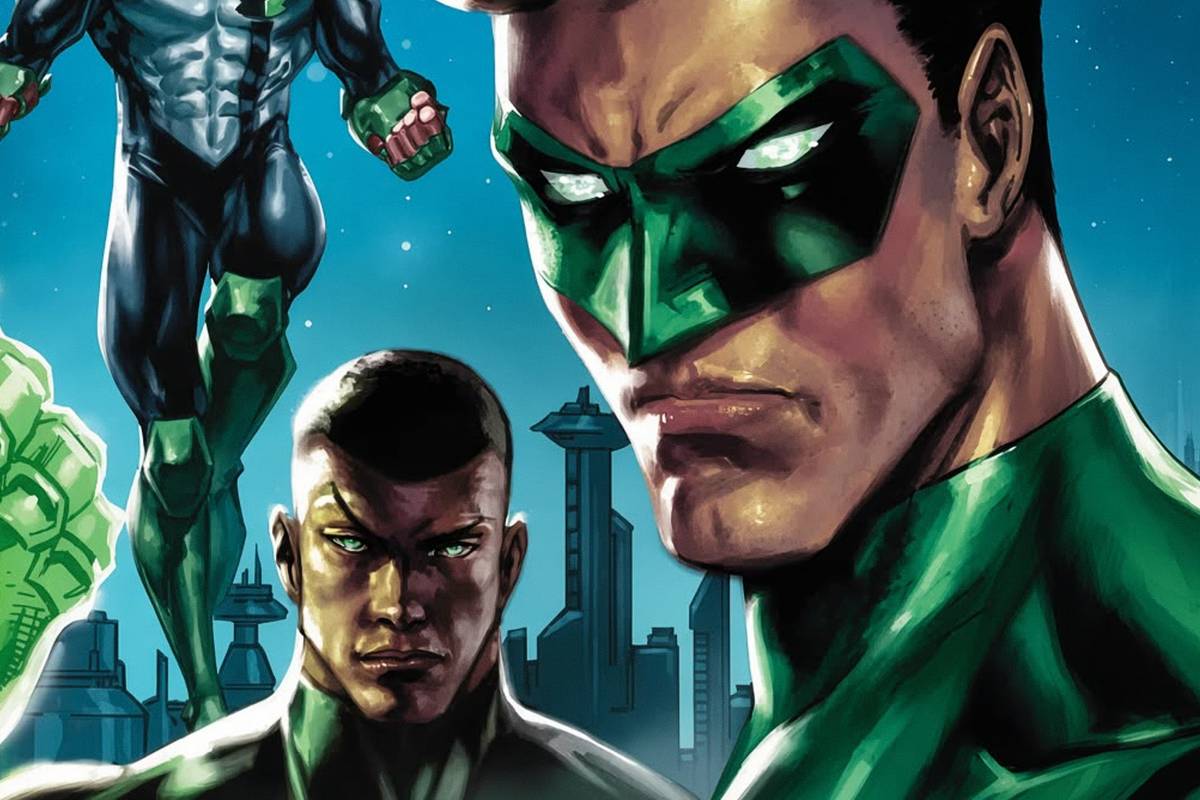
The DCU Cinematic Expansion
This tonal dexterity isn’t confined to the comic books; it’s a major part of the strategy for the new DC Universe (DCU) being spearheaded by James Gunn. Gunn is well-known for his ability to blend heart, humor, and high-stakes action, as seen in his previous work on The Suicide Squad and Guardians of the Galaxy. His vision for the Green Lantern characters seems to follow this successful blueprint.
In the upcoming Superman film, Nathan Fillion will portray Guy Gardner. Fillion is a master of comedic timing, and his Gardner is expected to be an unapologetically silly and stylistically extravagant version of the character. This fits perfectly with the vibrant and colorful world Gunn is building, where heroes are allowed to have flaws and funny moments.
While the movies might lean into the fun, the HBO series Lanterns is taking a different path. Featuring Kyle Chandler as a veteran Hal Jordan and Aaron Pierre as John Stewart, the show is described as a grounded, True Detective-style mystery. This duality shows that the Green Lantern brand is strong enough to support multiple genres simultaneously across different media platforms.
Fans of the franchise can find more updates on their favorite actors and upcoming DC projects at Bright Celebrity, which tracks the latest trends in the entertainment world. The fact that DC is investing in both a gritty detective show and a comedic comic arc demonstrates a commitment to variety that has been missing from the superhero landscape for some time.
Ultimately, the inclusion of characters like the Condiment King in the comics serves as a testing ground for potential live-action appearances. If a character can resonate with readers in a comedic setting, they might just find a place in a future James Gunn project. The DCU thrives on the obscure, and there is no one more obscure or beloved in a cult-like fashion than Mitchell Mayo.
The Green Lantern remains one of DC’s most valuable assets because of this flexibility. Whether it is a deep-space war, a psychological thriller, or a food-themed comedy, the core themes of courage and willpower remain constant. As we look toward the future, it is clear that the Emerald Knights will continue to evolve in ways that surprise and delight their audience.
Why Green Lantern Wins
Ultimately, the success of the Green Lantern franchise lies in its ability to adapt. While other heroes are often trapped in a single genre—Batman in crime noir, Superman in inspirational sci-fi—the Lanterns can go anywhere. The power ring is a literal bridge to any world, and any tone, the writer can imagine.
The return of the Condiment King is not a sign of the series “jumping the shark,” but rather a celebration of the medium’s inherent joy. Comics are meant to be a place where the impossible happens, and sometimes that impossible thing is a man fighting a sentient space squirrel or a ketchup-slinging comedian. Embracing this variety ensures the longevity of the Green Lantern title for generations to come.
As we wait for Green Lantern #38 to hit the shelves on August 26, the anticipation continues to build. Readers are eager to see how Hal Jordan navigates this spicy new challenge and what it means for his future on Earth. If this arc is successful, we might see more “pathetic” villains getting their time in the spotlight, proving that even the smallest threat can make for a great story.
The legacy of the Green Lantern is one of overcoming fear. Sometimes that fear is a giant yellow monster, and sometimes it’s the fear of looking silly in front of your peers. By conquering both, the Lanterns prove they are the true masters of their universe, no matter how many condiments are thrown their way. This genre change is exactly what the doctor—or perhaps the chef—ordered.
The Green Lantern saga continues to be a shining example of how to keep a long-running series fresh and engaging. By refusing to be pigeonholed into a single tone, DC has ensured that there is a Lantern story for everyone. Whether you want to cry, scream in terror, or laugh until your sides ache, the Green Light has you covered.
More Like This
For more updates, check out our latest entertainment and sports news.