You probably think space travel is all about flashy laser beams and magical warp speeds, but the reality of the cosmos is much more terrifying. Hard Sci-Fi movies represent the most intense tier of cinema because they refuse to give you an easy way out through convenient gadgets or alien intervention. These films prioritize the cold, hard laws of physics and the uncompromising nature of biology to craft stories that feel disturbingly plausible in our modern world.
The most intense Hard Sci-Fi movies are defined by their strict adherence to real-world science, forcing characters to solve life-or-death problems using only existing technology and logic. When you watch a film like Gattaca or The Andromeda Strain, the horror comes from knowing these scenarios could actually happen tomorrow. This genre doesn’t just entertain you; it challenges your understanding of the universe and your place within its rigid mechanical structures.
Whether it is the suffocating isolation of a lunar base or the high-speed debris fields orbiting Earth, these stories demand your full attention and intellectual engagement. You will find that the highest stakes are often found in the smallest details, such as a single skin cell or a microscopic mutation. This exploration of six cinematic masterpieces will show you why the truest science fiction is often the most frightening to experience.
The Allure of Hard Sci-Fi
Cinema has always been a vessel for escapism, but Hard Sci-Fi offers a different kind of thrill by grounding its narrative in the possible. Unlike space operas that feature sound in a vacuum, these films respect the silence and physics of the great void. You are forced to confront the vulnerability of the human body when faced with extreme environments and technological overreach.
This sub-genre thrives on the concept of ‘what-if’ scenarios that are backed by peer-reviewed research and believable engineering. When Andrew Niccol wrote Gattaca, he wasn’t just dreaming of a dystopia; he was warning us about the real-world implications of the Human Genome Project. Such films act as mirrors, reflecting our current scientific advancements and the ethical dilemmas that naturally follow them.
The intensity of these movies often stems from their clinical and documentary-style approach to storytelling. By removing the comfort of fantasy, directors like Robert Wise and Alfonso Cuarón place you directly into the shoes of the protagonists. You feel the dwindling oxygen and the crushing pressure of a society that views your biology as a predetermined failure or success.
The Rules of Scientific Realism
- Physics must dictate how ships move and how bodies react to zero gravity.
- Biological threats must follow the logic of evolution, contagion, and genetic mutation.
- Technological solutions must be based on projected engineering rather than ‘magic’ inventions.
- The environment acts as a primary antagonist, being indifferent to human survival or emotion.
- Protagonists are often scientists or engineers who use data and observation to solve crises.
While many actors thrive in blockbuster roles, you can find more about your favorite stars at brightcelebrity.com to see how their careers evolved into these complex genres. Following the careers of Ethan Hawke or Sandra Bullock shows how high-concept realism requires a deeper level of emotional commitment from the performers. Their ability to sell the terror of a realistic vacuum or a genetic screening makes the Hard Sci-Fi experience truly immersive for the audience.
Genetic Destiny in Hard Sci-Fi

The 1997 classic Gattaca remains one of the most poignant examples of how genetic science can create a terrifying social hierarchy. In this world, your career and social status are decided at birth by your DNA sequence, creating a divide between ‘valids’ and ‘in-valids.’ Ethan Hawke plays Vincent Freeman, a man born naturally who must commit identity fraud to achieve his dream of space flight.
The film masterfully uses the concept of biotechnology to create a high-stakes thriller environment. Every day, Vincent must meticulously remove any trace of his actual biology, from loose eyelashes to dead skin cells, to avoid detection. The threat of being exposed by a single drop of sweat creates a level of tension that no alien monster could ever replicate.
Jude Law delivers a haunting performance as Jerome Morrow, a genetically perfected man who provides the biological material Vincent needs to survive. Their partnership highlights the tragedy of a world that values data over the human spirit and determination. It questions whether our potential can ever truly be measured by a machine or a laboratory report in a sterile facility.
The Ethics of Eugenics
Eugenics is a central theme that makes the story feel uncomfortably close to contemporary debates about CRISPR and gene editing. The film suggests that by eliminating flaws, we might accidentally eliminate the very drive that makes us human. Vincent succeeds not because of his genes, but because he never saved anything for the swim back, a metaphor for total commitment.
The retro-futuristic aesthetic of the film serves as a timeless backdrop for these heavy philosophical questions. By blending 1950s style with 21st-century tech, Andrew Niccol creates a world that feels both familiar and alienating. You realize that the technology isn’t the villain; rather, it is the human desire for control and perfection that creates the dystopian nightmare.
Today, as personal DNA testing becomes a household commodity, the warnings of Gattaca resonate more than ever. We are moving toward a world where biological data is a form of currency, making this Hard Sci-Fi masterpiece a mandatory watch for anyone interested in the future of humanity. It serves as a reminder that the most intense battles are often the ones fought against our own biological limitations.
Meticulous Science and Space Germs
When you look back at the history of the genre, The Andromeda Strain stands out as a pioneer of clinical terror. Directed by Robert Wise in 1971, the film follows a team of scientists as they study an extraterrestrial microorganism that kills instantly. The focus is entirely on quarantine protocols and the slow, methodical process of scientific discovery in a high-tech lab.
There are no heroic speeches or sudden epiphanies in this narrative; there is only the rigorous application of the scientific method. You watch as the team tests hypotheses, fails, and revises their data under the constant threat of a global pandemic. This documentary-style approach makes the stakes feel incredibly high because the danger is invisible and seemingly unstoppable by traditional means.
The visual effects by Douglas Trumbull were revolutionary for the time, showing the alien germ in a way that looked authentic to the era’s computers. By using lesser-known actors, the film ensures that the audience focuses on the procedures and the environment rather than a specific celebrity presence. This choice enhances the feeling that you are watching a top-secret government briefing rather than a Hollywood production.
Realistic Laboratory Thrills
The film’s underground facility, known as Wildfire, is a marvel of production design that emphasizes isolation and sterility. Every level of the lab requires a different decontamination process, heightening the sense of claustrophobia for both the characters and the viewers. You are made aware that one tiny mistake in protocol could lead to the total destruction of the human race.
This level of detail is what separates a standard thriller from a true work of Hard Sci-Fi. It respects the intelligence of the audience by explaining the biology of the organism and the chemistry of the containment systems. Even decades later, the film remains a chilling reminder of how vulnerable our civilization is to microscopic threats from beyond our world.
According to reports on Wikipedia, the sub-genre gained massive popularity by focusing on this ‘crunchy’ realism that appeals to fans of technical accuracy. The Andromeda Strain is the gold standard for this approach, proving that you don’t need a visible monster to create an atmosphere of pure, unadulterated dread. It is the definitive ‘space germ’ movie that still manages to haunt the dreams of modern scientists.
Navigating the Gravity of Survival
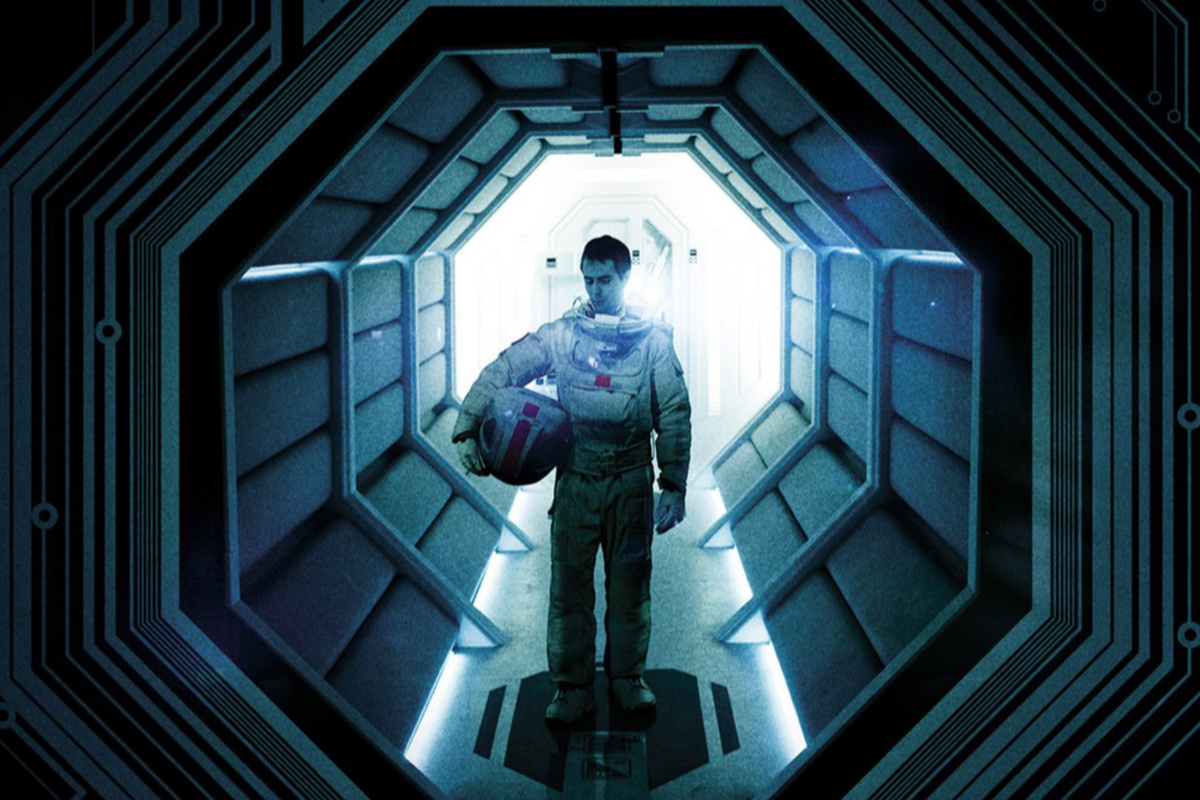
In 2013, Alfonso Cuarón redefined the space thriller with Gravity, a film that places you directly into the lethal environment of low Earth orbit. The story centers on Dr. Ryan Stone, played by Sandra Bullock, who must survive after a chain reaction of satellite debris destroys her shuttle. The film is famous for its 13-minute opening shot that captures the terrifying beauty and vastness of space.
What makes this film so intense is its commitment to the laws of motion and the lack of sound in a vacuum. You don’t hear explosions; you only hear the vibrations through the astronaut’s suit and the frantic breathing of the protagonist. This sensory deprivation creates a state of constant panic as Stone drifts through the darkness with a dwindling oxygen supply.
The film also explores the Kessler Syndrome, a real-world theory where a single collision in space can trigger a massive debris cloud that destroys everything in its path. This grounded threat makes the action feel immediate and relevant to our current reliance on satellite technology. You realize that the very tools we use to connect the world could eventually become the walls of a celestial prison.
| Movie Title | Primary Science | Intensity Level | Director |
|---|---|---|---|
| Gattaca | Genetics | High | Andrew Niccol |
| The Andromeda Strain | Microbiology | Extreme | Robert Wise |
| Gravity | Physics | High | Alfonso Cuaron |
| Europa Report | Astrobiology | Moderate | Sebastian Cordero |
While Gravity focuses on the orbit of our home planet, Europa Report takes you much further into the solar system. This found-footage gem follows a mission to Jupiter’s moon, Europa, to find life in its subsurface oceans. The film uses realistic space travel physics and engineering to show just how difficult and lonely deep-space exploration truly is for human crews.
The astronauts in Europa Report behave like real professionals, staying calm and focused even as disaster strikes. This lack of melodrama makes the final discoveries feel much more profound and earned. You are not watching a monster movie; you are watching a tragic historical record of a mission that pushed the boundaries of human knowledge and endurance.
Isolation on the Lunar Surface
Duncan Jones made a massive impact with his directorial debut, Moon, starring Sam Rockwell as a lonely miner on the lunar surface. The film explores the psychological toll of three years of total isolation, accompanied only by an AI named GERTY. The science here is grounded in the potential for harvesting Helium-3 from lunar soil to provide clean energy for Earth.
The intensity of Moon comes from its deep psychological exploration of identity and corporate ethics. When Sam Bell discovers a horrifying secret about his existence, the film shifts from a survival story into a profound meditation on what it means to be a person. You feel his confusion and despair as he realizes he is merely a disposable asset in a massive industrial machine.
The production used miniatures and practical sets to give the lunar base a heavy, utilitarian feel that CGI often lacks. This physical realism helps ground the high-concept story, making the character’s emotional journey feel tangible and raw. Sam Rockwell delivers one of the most versatile performances in Hard Sci-Fi history, playing multiple versions of himself with distinct personalities and physicalities.
The Ethics of Cloning and Labor
By focusing on the bioethical roots of the story, Moon forces you to confront a future where corporations might treat human life as a replaceable component. The film doesn’t offer easy answers; instead, it leaves you to ponder the morality of a society that thrives on the suffering of those it deems ‘lesser.’ This thematic depth is a hallmark of the genre’s best entries.
The film’s adherence to realistic physics, such as the way rovers move in low gravity, adds to the immersion. You never feel like you are watching a fantasy; you feel like you are witnessing a plausible future for lunar mining. This sense of reality makes the corporate conspiracy at the heart of the movie feel all the more terrifying and possible.
According to data from IMDb, Moon is frequently cited as one of the most underrated science fiction films of the 21st century. Its ability to balance hard scientific concepts with a deeply human story is a testament to the vision of Duncan Jones. It reminds us that the most dangerous place in the universe isn’t the vacuum of space, but the interior of the human mind when left alone.
Demographic Decay and Human Hope
Not every Hard Sci-Fi story takes place in the stars; some of the most harrowing tales occur right here on Earth. Children of Men, directed by Alfonso Cuarón, depicts a world where human infertility has brought society to the edge of collapse. The film uses recognizable geopolitical conflicts and decaying technology to make this extinction event feel immediate and inevitable.
The intensity is heightened by the film’s famous long-take action sequences, which place you in the middle of a war-torn Britain. You follow Theo Faron, played by Clive Owen, as he attempts to protect the first pregnant woman in twenty years. The lack of stylized violence makes every gunshot and explosion feel like a genuine threat to the characters you’ve come to care about.
By portraying the world as a dying image, the production design highlights the slow rot of a civilization that has lost its future. There are no sleek gadgets or shining cities here; there is only the grime and despair of a refugee camp. This grounded approach makes the arrival of a single baby feel like a miracle that could change the course of human history forever.
The film acts as a cautionary tale about our own demographic shifts and immigration crises, making it one of the most relevant Hard Sci-Fi stories of the modern era. It challenges you to find hope in a world that seems to have none left, using the science of biology as its primary narrative engine. You will find yourself breathless by the time the credits roll, moved by the sheer intensity of the journey.
Ultimately, these six films prove that Hard Sci-Fi is the ultimate genre for exploring the human condition under extreme pressure. By sticking to the rules of our reality, they create a sense of immersion that purely fantastic stories can never achieve. Whether it is the cold vacuum of space or the sterile hallways of a genetic lab, these movies remind us that science is a double-edged sword that can both save and destroy us.
As you reflect on these masterpieces, consider how our world is already changing to mirror these cinematic visions. The intensity of Hard Sci-Fi is not just in the screen; it is in the realization that we are living in the future these directors once imagined. Keep exploring the depths of cinema and the latest in celebrity culture at brightcelebrity.com to stay informed on the stars who bring these stories to life.
More Like This
For more updates, check out our latest entertainment and sports news.