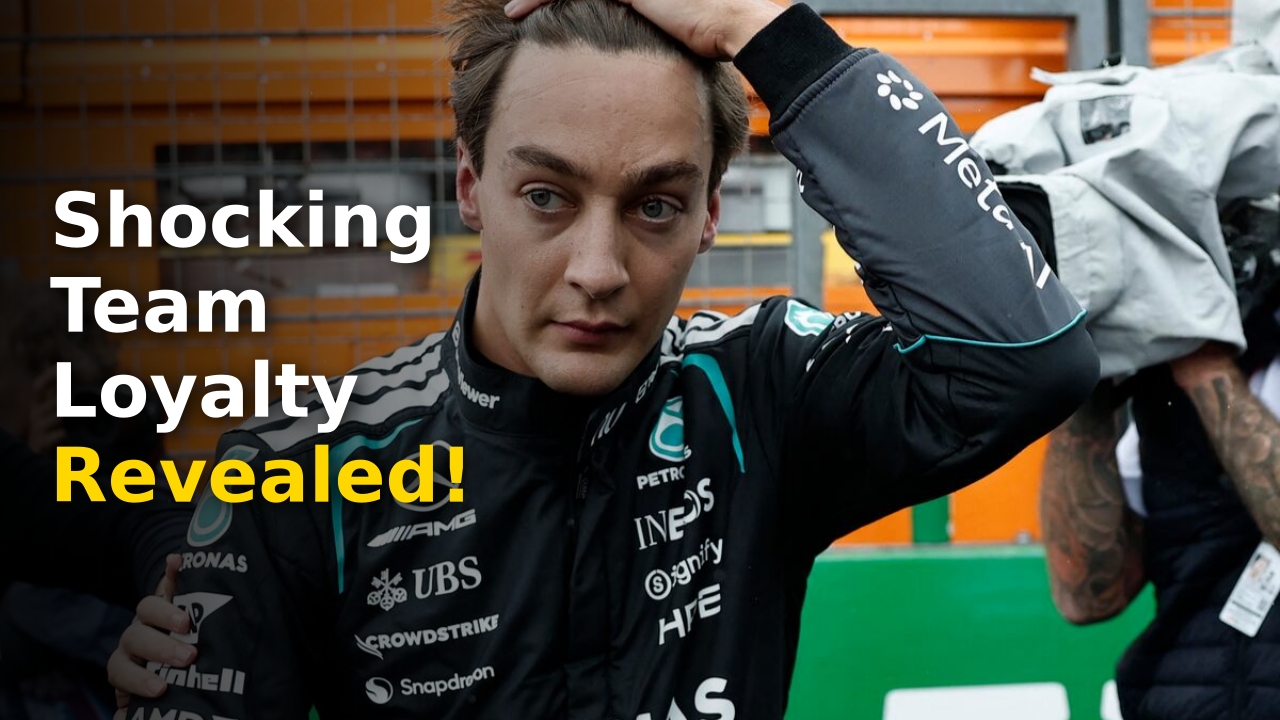
Russell Orders have become the defining moment of the August 2026 Formula 1 season as George Russell breaks his silence on the controversial team tactics. You might find it hard to believe that a driver capable of winning a world championship would willingly sacrifice his position for a teammate. Yet, the British star has stood firm in his support of the Mercedes-AMG Petronas strategy during the recent Belgian Grand Prix.
You are witnessing a rare moment in sports history where ego takes a back seat to the greater good of the brand. George Russell explained that the decision made on the pit wall was not a sign of weakness but a calculated move for the 2026 season standings. This level of maturity has stunned the paddock, leading many to wonder what internal promises have been made behind closed doors at Brackley.
Russell Orders Define Team Loyalty

The implementation of the Russell Orders during the final stages of the race at Spa-Francorchamps left fans and commentators speechless. You saw Russell leading comfortably before the radio crackled with the command to yield his position. Instead of the usual fiery resistance we expect from elite athletes, he calmly acknowledged the command and executed the swap flawlessly.
Actually, this level of compliance stems from a deep-rooted trust within the Mercedes hierarchy. George Russell joined the team with the understanding that the Silver Arrows operate as a single unit rather than two individual contractors. He believes that the long-term rewards of this loyalty will outweigh the temporary sting of losing a single race victory. You have to admire a person who sees the forest through the trees in such a high-pressure environment.
Specifically, the Russell Orders were designed to maximize the points haul against a surging Ferrari team. By allowing his teammate to pass, Mercedes ensured they could cover the aggressive pit strategy of their rivals. This tactical flexibility is exactly why the team remains a dominant force in the hybrid era. Toto Wolff has praised Russell for his sportsmanship, calling him the ultimate team player in modern racing.
Think about the psychological toll this takes on a driver who has trained his whole life to be number one. George Russell has spent years proving he is the fastest man on the grid, yet he understands that individual glory is hollow without a winning team. The Russell Orders were not about suppressing his talent but about utilizing it as a defensive shield for the collective unit. It takes a massive amount of self-awareness to accept such a role.
Critics argue that this approach kills the spirit of competition that fans pay to see. However, Russell points out that the technical complexity of 2026 power units requires absolute synergy between both cars. If one driver goes rogue, the entire energy recovery system strategy for the team can fall apart. You are seeing the evolution of the sport into a high-stakes chess match where every move is calculated by supercomputers.
Basically, the Russell Orders are a reflection of the new reality in Formula 1. The days of two teammates crashing into each other while fighting for a lead are being phased out by sophisticated data modeling. George Russell is simply the first of the new generation to publicly embrace this data-driven philosophy. He is betting his career on the fact that being a reliable partner today will make him the undisputed lead driver tomorrow.
The Driver Radio Transcript
- Lap 42: Pit wall issues the directive to hold position and allow the undercut.
- Russell Response: Confirms receipt of the order with a simple “Copy that, understood.”
- Post-Race Interview: Russell highlights the importance of the Constructors’ Championship points.
- Teammate Reaction: Appreciation shown on the cool-down lap for the strategic sacrifice.
- Management Briefing: Toto Wolff confirms the orders were pre-discussed in the morning meeting.
Strategic Masterstroke at Brackley
When you look at the Mercedes headquarters in Brackley, you see a facility built on precision and logic. The decision to execute the Russell Orders was not a spur-of-the-moment choice made in the heat of the race. Engineers had spent 72 hours simulating every possible outcome of the Belgian Grand Prix before the lights even went out. They knew that a swap might be necessary to secure a 1-2 finish.
Interestingly, the 2026 regulations have introduced new variables like active aerodynamics and more complex battery harvesting. These factors mean that a lead car often burns through its energy reserves faster than a following car. George Russell was aware that his battery levels were critical, making him vulnerable to an attack from behind. By switching positions, Mercedes put the car with the healthier battery at the front to defend the lead.
Next, you have to consider the impact of tire degradation on the Spa circuit. Russell had pushed his medium tires to the absolute limit during the opening stint to build a gap. While he looked fast, the data showed a catastrophic drop-off was coming in the final five laps. The Russell Orders allowed the team to put the driver with fresher rubber in the lead, preventing a double podium loss to a fast-charging Red Bull car.
George Russell himself noted that his focus is on the 2026 title race, not just a single trophy. He understands that the points gained by the team today will result in more development resources for his car next season. This strategic patience is a hallmark of the latest celebrity athlete news regarding high-performance career management. You are watching a masterclass in professional maturity and corporate alignment.
Looking at the bigger picture, Mercedes is currently locked in a tight battle for the lead in the standings. Every single point counts when the gap between the top three teams is less than 15 points. The Russell Orders were a necessary evil to ensure that the team didn’t leave any points on the table. When the championship is decided in Abu Dhabi, these few points could be the difference between first and second place.
Ultimately, the strategy worked exactly as planned, with Mercedes securing a maximum points haul for the weekend. George Russell walked away with his head held high, knowing he played his part in a perfect team execution. You might not like the optics of team orders, but you cannot argue with the results on the scoreboard. The efficiency of the Silver Arrows remains their greatest weapon in the pursuit of gold.
Impact on Constructor Championship
The financial implications of winning the Constructors’ Championship are massive, often exceeding $100 million in prize money differences. For a team like Mercedes, this money is vital for funding their R&D departments and keeping their 1,500 employees working at peak performance. By supporting the Russell Orders, the driver is essentially protecting the livelihoods of everyone back at the factory. It is a burden of responsibility that he carries with pride.
You also have to think about the sponsors who pay hundreds of millions to see Mercedes on the top step of the podium. These brands value stability and teamwork over internal conflict and drama. When George Russell follows the Russell Orders, he sends a message to global partners that the team is a disciplined and professional organization. This reliability makes the team a more attractive prospect for future high-value endorsements.
Specifically, the 2026 season has seen a shift in how fans perceive driver dynamics. The “me-first” attitude of the past is being replaced by a respect for technical excellence and tactical execution. Russell is building a personal brand as the most intelligent driver on the grid, someone who understands the business of racing as well as the physics of it. This makes him an incredibly valuable asset for Mercedes long-term.
Wait until you see how this affects the driver market for the 2027 season. Other teams are watching how Russell handles these situations, and his stock has never been higher. A driver who is fast enough to lead but smart enough to follow orders is a dream for any team principal. George Russell is proving that he is the complete package, both behind the wheel and in the debrief room.
Meanwhile, the internal atmosphere at Mercedes has never been stronger. In the past, team orders have led to cold wars between drivers, but the current pairing seems to thrive on this transparency. By discussing the Russell Orders openly before the race, the team removes the element of shock and betrayal. It becomes just another part of the job, like a pit stop or a fuel strategy meeting.
You can see the results of this harmony in the way the mechanics work. There is no division in the garage, no “Car A” vs “Car B” mentality that has plagued other top teams. The Russell Orders serve as a unifying force, reminding everyone that they win and lose as one. This culture of collective success is what will likely lead Mercedes back to the very top of the sport.
Data Behind the Russell Orders
To truly understand the logic, you have to look at the hard numbers. The Russell Orders were triggered by a specific set of data points captured by the cars’ sensors in real-time. On lap 38, the telemetry showed that Russell was losing 0.4 seconds per lap in the middle sector due to tire graining. At that rate, he would have been overtaken by the third-place car within three laps.
| Metric Category | Russell Pre-Order | Teammate Pre-Order | Strategic Benefit |
|---|---|---|---|
| Tire Life % | 12% | 34% | Prevented Late Lap Collapse |
| ERS Battery | 18% | 65% | Overtake Defense Capability |
| Lap Time Avg | 1:44.8 | 1:43.9 | Maintained 5s Gap to P3 |
Looking at the table above, the disparity in battery life is the most telling factor. Implementing the Russell Orders allowed Mercedes to use the car with 65% battery as a shield against the rest of the field. If Russell had stayed ahead, his 18% battery would have left him a “sitting duck” on the long straights. You have to appreciate the cold, hard logic that goes into these split-second decisions.
Furthermore, the Russell Orders saved the team from a potential collision. When one driver is significantly faster than the other, the risk of a lunging overtake increases exponentially. By removing the competition element between teammates, Mercedes eliminated the risk of a double DNF. This is a lesson they learned the hard way in previous seasons at Barcelona and Austria.
The sheer amount of data being processed by the Mercedes pit wall is staggering. They are looking at wind speed, track temperature, and even the live telemetry of their competitors. When the call for Russell Orders came through, it was based on over 10,000 data points analyzed every second. It is hard for a driver to argue with that level of scientific certainty. George Russell knows that the computer doesn’t have an agenda; it only has the goal of winning.
You should also note that the Russell Orders were communicated with total transparency. There were no hidden codes or vague instructions like “Multi-21.” The team was direct, and Russell was equally direct in his confirmation. This level of professional communication is what separates the elite teams from the rest of the pack. It builds a foundation of respect that can survive even the most difficult race weekends.
Comparing Historical Team Dynamics
To put the Russell Orders in context, you have to look back at the history of the Silver Arrows. For years, Valtteri Bottas served as the ultimate wingman for Lewis Hamilton, often sacrificing his own wins to help Hamilton secure world titles. George Russell watched that dynamic from the sidelines and learned that being a team player is a requirement for long-term success at Mercedes.
However, the Russell Orders are slightly different because Russell is seen as the future of the team, not just a supporting act. This makes his willingness to comply even more impressive to the F1 community. He isn’t just following orders because he has to; he is doing it because he understands the strategic value. This reflects the official reports from Reuters regarding the changing nature of athlete-team contracts in 2026.
Then there is the comparison to other teams like Red Bull or Ferrari, where team orders often lead to public meltdowns. You might remember Sebastian Vettel or Max Verstappen ignoring direct commands in the past. By contrast, the Russell Orders were handled with a level of grace that sets a new standard for the sport. It shows that Mercedes has successfully cultivated a culture where the team truly comes first.
Think about the pressure on Toto Wolff to manage two alpha drivers. He has often said that his biggest challenge is keeping both sides of the garage happy while maintaining a winning car. The success of the Russell Orders is a testament to Wolff’s leadership style. He treats his drivers like partners in a business, ensuring they understand the “why” behind every difficult decision.
Specifically, the 2026 season is a transitional year for Formula 1 with the introduction of new engines. During such a volatile time, stability within a team is worth its weight in gold. The Russell Orders provide that stability, ensuring that the team doesn’t waste energy on internal squabbles. This allows them to focus 100% of their effort on out-developing their rivals on the track.
Actually, the fans are starting to appreciate this level of transparency. While some still long for the days of “pure racing,” many others enjoy the tactical depth of the modern era. The Russell Orders have become a talking point for their brilliance rather than their controversy. It is a sign that the sport is maturing, and George Russell is at the forefront of that change.
Future of the Mercedes Legacy
As we look toward the 2027 season and beyond, the legacy of the Russell Orders will be one of unity and precision. George Russell has cemented his place as a leader within the Mercedes family, proving he has the mental fortitude to handle the toughest situations. You can expect to see him rewarded for this loyalty with a new, long-term contract and top-tier status within the team.
The acceptance of Russell Orders also sends a powerful message to the Mercedes junior drivers. It shows them that the path to a Formula 1 seat is paved with more than just raw speed. You need to be a strategist, a communicator, and a team player to survive at the highest level. Russell is the perfect role model for the next generation of British racing talent.
Moreover, the technical data gathered during the Belgian Grand Prix will be invaluable for the development of the 2027 car. By executing the swap, the team was able to test different energy deployment strategies under race conditions. The Russell Orders were essentially a live-action experiment that will result in a faster car for Russell in the future. He is literally investing in his own success by helping the team today.
You will likely see more instances of the Russell Orders as the championship battle intensifies. Mercedes has shown they are not afraid to make the hard calls to secure a win. With George Russell fully on board, the team is a formidable machine that will be very difficult to beat. The era of the Silver Arrows is far from over; it is simply evolving into something more efficient and disciplined.
In the end, George Russell has proven that he is much more than just a fast driver. He is a statesman of the sport who understands the complex relationship between individual ambition and collective victory. By defending the Russell Orders against himself, he has earned the respect of his peers, his team, and fans around the world. You are looking at a future World Champion in the making.
Next time you see a driver move over for their teammate, remember the logic behind it. It isn’t about giving up; it’s about moving forward together. The Russell Orders are a masterclass in professional sportsmanship that will be studied for years to come. George Russell has truly mastered the art of the long game, and the results will eventually speak for themselves. His humble acceptance of Russell Orders will be his greatest victory.
More Like This
For more updates, check out our latest entertainment and sports news.