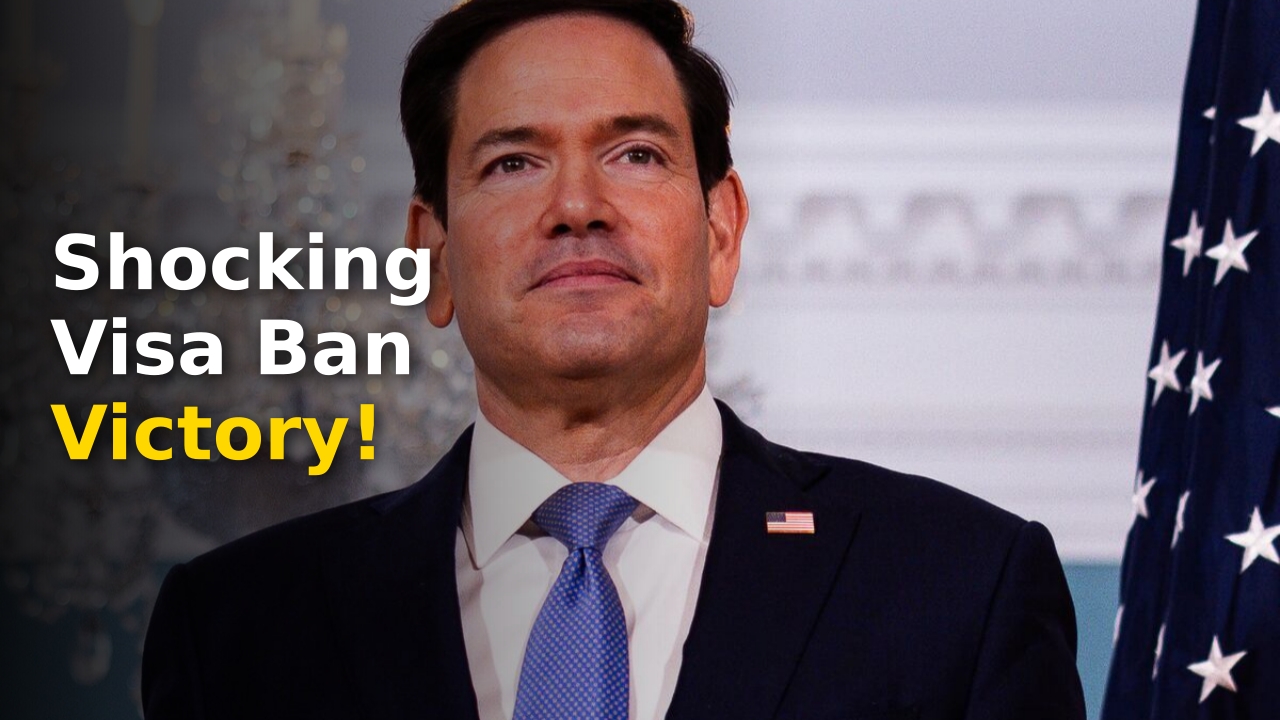
The recent Visa Ban ruling has sent shockwaves through the political landscape as a federal judge officially vacated a policy targeting dozens of nations. You might have thought the era of sweeping immigration restrictions was here to stay, but the court system just threw a major wrench in the works. This decision doesn’t just change a few rules; it completely dismantles a primary pillar of recent executive strategy regarding international travel and residency.
Judge Jeannette Vargas, presiding in New York, didn’t hold back when she issued her ruling on Friday. She made it clear that the administration had overstepped its bounds in a way that simply couldn’t be ignored under the Immigration and Nationality Act. If you have family waiting for a visa or business partners stuck in Afghanistan, Iran, or Russia, this news is the breakthrough you have been waiting for.
Visa Ban Defeated
The core of this legal battle centered on whether a single official can override the laws set by Congress. Judge Jeannette Vargas ruled that the Visa Ban was essentially an act of administrative overreach. You have to understand that in the United States, Congress holds the power to create immigration laws, and the executive branch is supposed to follow them. When those lines get blurred, the courts are the only ones left to step in and fix the mess.
Rubio Oversteps Authority
Secretary of State Marco Rubio was at the center of this controversy. The judge noted that he exceeded his statutory authority by issuing a policy that mandated the refusal of visas without a basis in law. This wasn’t just a minor technicality; it was a fundamental shift in how the State Department operates. Usually, consular officers have the specific authority to review cases, but this policy tried to take that away and replace it with a blanket Visa Ban.
The Legal Logic
The judge was very specific in her 60-page ruling. She argued that the policy ran afoul of the existing Immigration and Nationality Act. By creating a mandatory refusal system for 75 different countries, the administration effectively ignored the criteria set by Congress decades ago. You can’t just invent new rules for visa eligibility based on your own internal data without getting the legislative branch on board first.
Consular Independence
One of the biggest points of contention was the role of the people on the ground. Consular officers are trained to look at individual cases, but the Visa Ban forced them to stop processing applications entirely for certain nationalities. Judge Vargas wrote that Congress imbued these officers with exclusive authority. This ruling restores that power to the professionals at the embassies and consulates who are trained to spot real risks versus arbitrary categorizations.
Protecting the Law
This isn’t just about politics; it is about the rule of law. The court found that the policy represented a “direct abrogation” of the statutory scheme. When the government decides to ignore the laws it doesn’t like, the entire system begins to crumble. This ruling acts as a safety valve, ensuring that the Executive Branch remains accountable to the rules established by the people’s representatives in Washington D.C.
Impact on 75 Nations
The sheer scale of this policy was massive. It included countries ranging from Somalia to Russia. By targeting 75 countries at once, the administration effectively shut down a huge portion of the global immigration pipeline. The judge’s decision to set this aside means that thousands of applications that were frozen in time can finally move forward again. You are looking at a total reset of the visa landscape for nearly half the world.

Data Behind The Policy
To understand why this happened, you need to look at the numbers the government tried to use. The State Department relied on data from the Council of Economic Advisers. They claimed that more than 30 percent of households with immigrants from these specific 75 countries received some form of public assistance. This was the “public charge” justification that formed the backbone of the Visa Ban strategy.
Screening and Vetting
The administration argued that they were simply protecting the American people by upholding high standards of screening. They wanted to ensure that anyone coming to the country could support themselves financially. While that sounds reasonable on the surface, the court found that the way they went about it was entirely illegal. You can’t use statistical averages to ban entire groups of people before they even get an interview.
| Country Group | Visa Status | Legal Justification |
|---|---|---|
| High-Risk Nations | Processing Suspended | Public Charge Concerns |
| African Countries | Vacated by Court | Lack of Statutory Authority |
| Asian Countries | Vacated by Court | Excess of Authority |
| Latin America | Vacated by Court | Immigration Act Violation |
The Internal Cable
An internal cable obtained by the Associated Press revealed just how strict the rules had become. Embassies were told to require applicants to fill out complex forms proving their “financial bona fides.” If an officer even suspected someone might use public benefits, they were essentially forced to deny the visa. This created a culture of fear and rejection within the State Department itself.
Financial Vetting Standards
The vetting wasn’t just for immigrants looking to stay forever. Even those seeking non-immigrant visas were being scrutinized under these heavy-handed rules. You had to prove you wouldn’t apply for benefits while visiting the U.S., which is a high bar for many travelers from developing nations. The court recognized that this shifted the burden of proof in a way that was never intended by the original law.
Public Assistance Myths
While the administration claimed a 30 percent usage rate for public assistance, advocacy groups disputed these figures. They argued that the data was cherry-picked to support a specific political agenda. By using these stats to justify a Visa Ban, the government ignored the billions of dollars in taxes and economic growth that these same immigrant communities provide to the United States every year.
Global Repercussions
The international community had been watching this closely. The Visa Ban had strained diplomatic relations with several key allies and partners. By removing these hurdles, the court has effectively signaled that the U.S. is returning to a more traditional, rule-based approach to immigration. This could help repair some of the damage done to America’s global reputation as a land of opportunity.
Global Impact Explored
This ruling is a massive victory for organizations like CLINIC and African Communities Together. These groups have been fighting in the trenches for months, representing families torn apart by the Visa Ban. For them, this isn’t just about legal theory; it is about real people, real tears, and real lives that have been on hold since the policy was first announced.
Family Reunification First
Anna Gallagher, the executive director of CLINIC, highlighted that this case is about keeping families together. You can only imagine the pain of a parent separated from a child or a spouse from their partner because of a policy that a judge has now called “unlawful.” Catholic social teaching was cited as a major motivator for the plaintiffs, emphasizing the dignity of the human person and the family unit.
Victory in Harlem
In Harlem, the leaders of African Communities Together were elated. They called the Visa Ban “unlawful and racist,” noting the immeasurable harm it caused their community. Today, the mood is one of celebration as they tell their members that the ban is finally no more. This local victory resonates across the entire African diaspora living in the United States.
Employment Petitions Resumed
It wasn’t just families who were affected; five of the plaintiffs were outside the country on employment-based petitions. These are people with jobs waiting for them—doctors, engineers, and researchers—who were blocked simply because of where they were born. The removal of the Visa Ban means the U.S. economy can once again benefit from the talent and skills of these highly qualified individuals.
Legal Support Networks
The success of this lawsuit shows the power of a coordinated legal strategy. By combining the stories of individual families with the resources of national nonprofits, the plaintiffs were able to build a case that the State Department couldn’t easily dismiss. You can stay updated with the latest cultural news and celebrity insights to see how these legal shifts affect the broader landscape of American society.
A Tremendous Victory
Diana Konate, a leader at African Communities Together, described the ruling as a “tremendous victory for the rule of law.” She noted that the ban had cruelly kept loved ones apart for far too long. With the Visa Ban now vacated, these organizations are shifting their focus to helping their members navigate the sudden reopening of the visa processing system.
Restoring Dignity
The overarching theme of the victory is the restoration of dignity. When people are treated as numbers on a spreadsheet or categorized by their nationality alone, their humanity is often lost. This ruling forces the government to see visa applicants as individuals again, each with their own story and their own right to a fair review under the Immigration and Nationality Act.

Trump Immigration Setbacks
This is far from the first time the courts have stepped in to stop Donald Trump’s immigration agenda. In June 2026, another federal judge struck down a policy that made it harder for immigrants from dozens of countries to get work permits, green cards, and asylum. The courts are increasingly becoming the final battleground for the future of American borders and identity.
Indeterminate Legal Limbo
In the June case, the judge accused USCIS of throwing countless lives into “indeterminate legal limbo.” This phrase has become a rallying cry for activists who argue that the administration’s policies are designed to confuse and delay rather than protect. The Visa Ban was seen as part of this broader strategy of using bureaucracy as a weapon against legal immigration.
Ignoring the Law
The courts have been remarkably consistent in their criticism. They have repeatedly accused various departments of ignoring the clear language of the Immigration and Nationality Act. Whether it is USCIS or the State Department, the message from the judicial branch is clear: you cannot make up your own rules just because you have a different political philosophy.
Asylum and Work Permits
The previous rulings also covered essential documents like work permits and citizenship applications. When those were restricted, it wasn’t just the immigrants who suffered; American businesses lost workers, and communities lost potential new citizens. The Visa Ban was merely the tip of the iceberg in a massive effort to overhaul the entire system from the inside out.
State Department Response
The State Department issued a brief statement on Saturday, maintaining that they are protecting the American people through high vetting standards. However, they declined to comment specifically on the Visa Ban litigation. This silence suggests that they may be preparing for an appeal, though the legal ground they are standing on appears increasingly shaky as more judges weigh in.
A Pattern of Loss
If you look at the track record, the administration is facing a pattern of legal losses in the immigration sector. Every time they attempt a major categorical ban, a judge finds a way to remind them of the limits of their power. This latest Visa Ban defeat is perhaps the most significant yet, given the 75 countries and millions of people it potentially impacts.
The 2026 Political Climate
As we move through 2026, these court battles will likely define the upcoming election cycles. Voters are increasingly divided on immigration, but the courts are focusing on the technicalities of the law. This ruling proves that regardless of who is in the White House, the Constitution and the Statutes of the United States remain the final authority.
Future Visa Ban Outlook
So, what happens next for the millions of people affected by this? Now that the Visa Ban has been vacated, the State Department is legally required to resume normal processing of immigrant and non-immigrant visas for the 75 countries mentioned. This isn’t going to happen overnight, as there is likely a massive backlog of applications that have been sitting in desk drawers for months.
Consular Backlog Crisis
You should expect some delays as the embassies get back up to speed. However, the legal barrier is gone. Consular officers in Kabul, Tehran, and Moscow will now have to look at each case on its merits rather than issuing a flat denial based on the Visa Ban. This is a massive logistical undertaking, but it is one that the law now requires them to perform.
Potential for Appeals
It is almost certain that the administration will try to appeal this ruling to a higher court. They may even try to get a “stay” of the judge’s order, which would temporarily keep the Visa Ban in place while the appeal is heard. However, given the strong language used by Judge Vargas regarding the “direct abrogation” of the law, an appeal may be an uphill battle.
Legislative Fixes
If the administration truly wants to implement such a ban, they may have to go through Congress. This would require a change to the Immigration and Nationality Act itself. In the current political climate, getting such a massive change through both the House and the Senate would be incredibly difficult, making this court victory even more permanent in the eyes of many legal experts.
Monitoring the Process
Advocacy groups are already setting up monitoring systems to ensure that the State Department complies with the court’s order. They want to make sure that the “vetting cables” are retracted and that officers are given new instructions that comply with the law. The Visa Ban might be dead on paper, but the real test will be how the bureaucracy responds in the coming weeks.
Final Thoughts
Ultimately, this case serves as a powerful reminder of the checks and balances that govern the United States. You have seen how a few determined nonprofits and individuals can take on the highest levels of government and win. The Visa Ban was a massive hurdle for thousands of families, but thanks to this 2026 ruling, the door to the American dream has been pushed back open. Keep your eyes on the courts, as this is likely just one of many battles to come in the fight for the future of global mobility.
More Like This
For more updates, check out our latest entertainment and sports news.