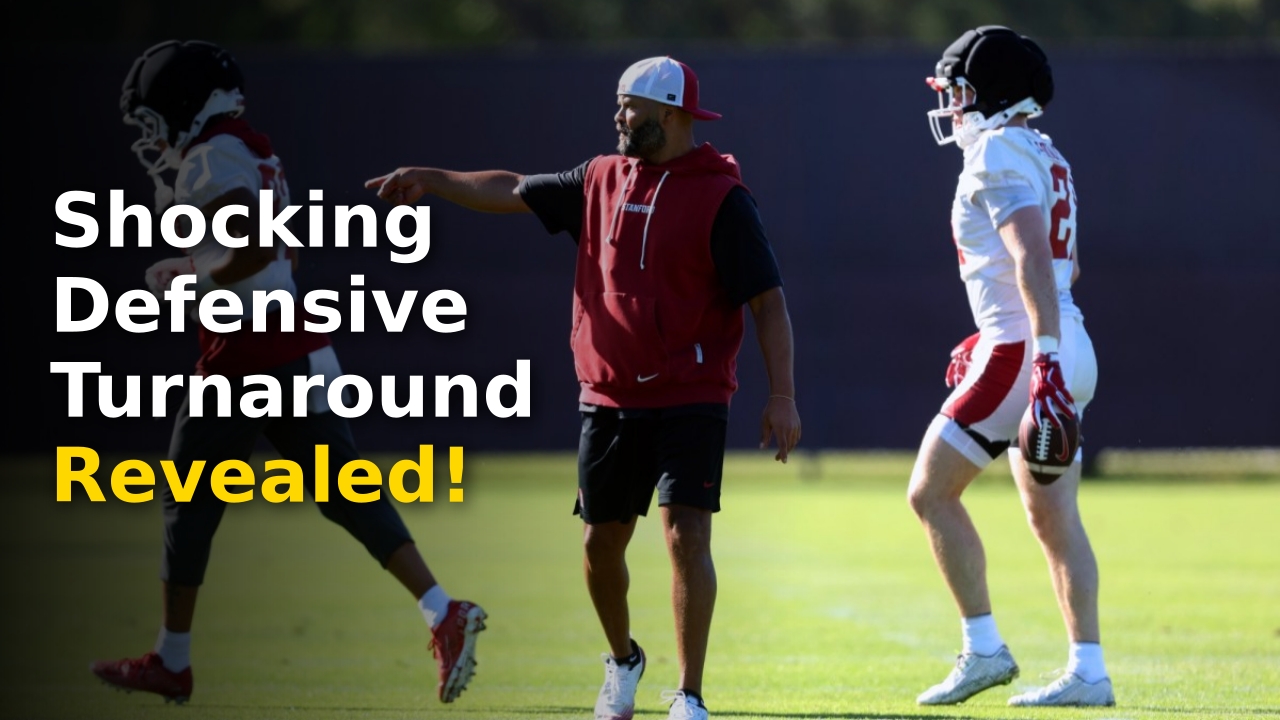
Stanford defense has officially entered a new era of intensity as former NFL coordinator Kris Richard brings a seismic shift in culture to the Cardinal football program. Have you ever wondered what happens when a team that ranked last in the ACC defensive passing metrics decides to completely tear down its identity and rebuild from the ground up?
First-year head coach Tavita Pritchard is not just observing; he is captivated by the relentless, high-velocity energy radiating from the practice fields during this critical preseason. The transformation is not merely superficial, as the squad aims to restore the glory days of Stanford football through pure, unadulterated discipline.
Stanford defense Tactical Evolution
When you watch the film sessions, you see a unit that is no longer reactive but entirely aggressive. Kris Richard has implemented a philosophy of ‘blank slate’ accountability, refusing to look back at the dismal 288.9 yards per game allowed last season. For fans seeking the latest updates on star athlete career paths and coaching shifts, this defensive overhaul represents the most significant storyline of the 2026 season.
The shift to a four-man front is the cornerstone of Richard’s strategy to leverage the unique physical talents of the current roster. By moving away from traditional schemes, the Cardinal are forcing offensive coordinators to adjust to their tempo rather than the other way around. Players are now tasked with mastering intricate coverage patterns while maintaining the stamina required to fly around the field for four full quarters.
Every practice drill is designed to test mental fortitude as much as physical speed. Kris Richard emphasizes that preparation is the primary factor in on-field performance, forcing his players to treat film study with the same intensity as a game-winning drive. The psychological pressure of this ‘non-negotiable’ effort standard is clearly paying off, as veteran leadership begins to permeate the locker room.
Leadership in the secondary is becoming a defining feature, with competition reaching an all-time high between established veterans and hungry newcomers. The collective desire to prove doubters wrong is creating an environment where iron truly sharpens iron every single morning. You can feel the shift in the air; the defense isn’t just playing to stop the clock anymore—they are playing to dominate the narrative.

Building Elite Secondary Depth
- Brandon Nicholson and Aaron Morris lead the veteran charge.
- Leroy Butler adds significant experience following his transfer from Washington.
- Young prospects Xavier Harmon and Jason Hill are forcing coaches to take notice with their explosive reaction times.
- The competition for starting roles has essentially eliminated complacency among the veteran core.
The coaching staff remains committed to fostering an atmosphere of mutual accountability. If a player misses an assignment, they don’t just hear about it from a coach; they hear about it from their teammates who expect the highest level of performance. This self-policing culture is exactly what Stanford needs to climb out of the ACC cellar.
Data Insights and Statistical Projections
| Key Metric | 2025 Status | 2026 Goal |
|---|---|---|
| Passing Yards Allowed | 288.9 (Ranked Last) | Top 5 in ACC |
| Defensive Line Scheme | Hybrid/Mixed | Fixed 4-Man Front |
| Team Energy Level | Sub-Optimal | Relentless |
Beyond the raw data, the internal metrics suggest a massive improvement in player engagement. When you look at Matt Rose, the inside linebacker who recorded 106 tackles last year, you see a blueprint for how this defense should function. His ability to diagnose plays quickly allows the rest of the unit to flow toward the ball carrier with confidence.
Richard’s philosophy of ‘You know, you go’ isn’t just a catchy slogan; it is a directive for processing information in real-time. By removing hesitation, the defense gains a split-second advantage on every snap, which is often the difference between a gain of two yards and a gain of twenty. This decisiveness is the hallmark of the Kris Richard era.
As the season progresses, expect to see more specialized packages designed for third-down efficiency. The coaching staff is clearly prioritizing versatility, allowing players to move across different alignments without losing their fundamental discipline. This flexibility is key to competing in the modern ACC landscape where speed is king.
Recruitment efforts are also reflecting this newfound intensity. High-level prospects are taking notice of the professional-grade coaching provided by someone with 13 years of NFL experience. When you combine the prestige of a Stanford degree with the potential for professional development under a former Seahawks coordinator, the pitch becomes undeniable.

Kris Richard: The Master Architect
Kris Richard brings more than just a playbook; he brings a pedigree that includes coaching legends like Richard Sherman and Paulson Adebo. His background, rooted in the aggressive defensive styles of the NFL, provides a unique perspective that few college programs can offer their student-athletes. He understands the transition from amateur to professional and holds his players to that higher standard from day one.
The return home to California wasn’t just a career move for Richard; it was a chance to influence the next generation of football players at a premier institution. Collaborating with General Manager Andrew Luck, Richard has found a partner in vision, someone who understands that sustainable success requires a complete alignment between the front office and the coaching staff.
You will notice that the players aren’t just faster; they are smarter. The intelligence level required to execute Richard’s defensive front necessitates a deep understanding of opposing offensive formations and tendencies. This intellectual approach is fitting for Stanford, where players are accustomed to high academic rigor and critical thinking.
The challenge remains to sustain this energy throughout a grueling conference schedule. Fatigue is the enemy of discipline, but Richard’s conditioning programs are designed to keep the defense fresh until the final whistle. If the team can maintain this level of intensity, they might just surprise the rest of the conference.
Every player in the locker room realizes the magnitude of the opportunity in front of them. With the 2026 season fast approaching, the window to make a statement is opening. The Stanford defense, under the guidance of a proven winner, is prepared to walk through it and reclaim their status as a force to be reckoned with.
Final Thoughts on Cardinal Transformation
As the dust settles on the preseason, one thing is abundantly clear: Stanford defense has rediscovered its heartbeat. By prioritizing effort, accountability, and a relentless attacking philosophy, Kris Richard has successfully shifted the culture of the team. You are witnessing the birth of a new era, one that favors the bold and rewards the prepared.
While the road ahead will surely test the mettle of this unit, the foundation laid by Coach Pritchard and Richard is rock solid. The competition for spots, the tactical precision, and the high-octane energy on display are all indicators that the Cardinal will be a formidable opponent for any team on their schedule. Keep your eyes on this unit; they are just getting started.
More Like This
For more updates, check out our latest entertainment and sports news.