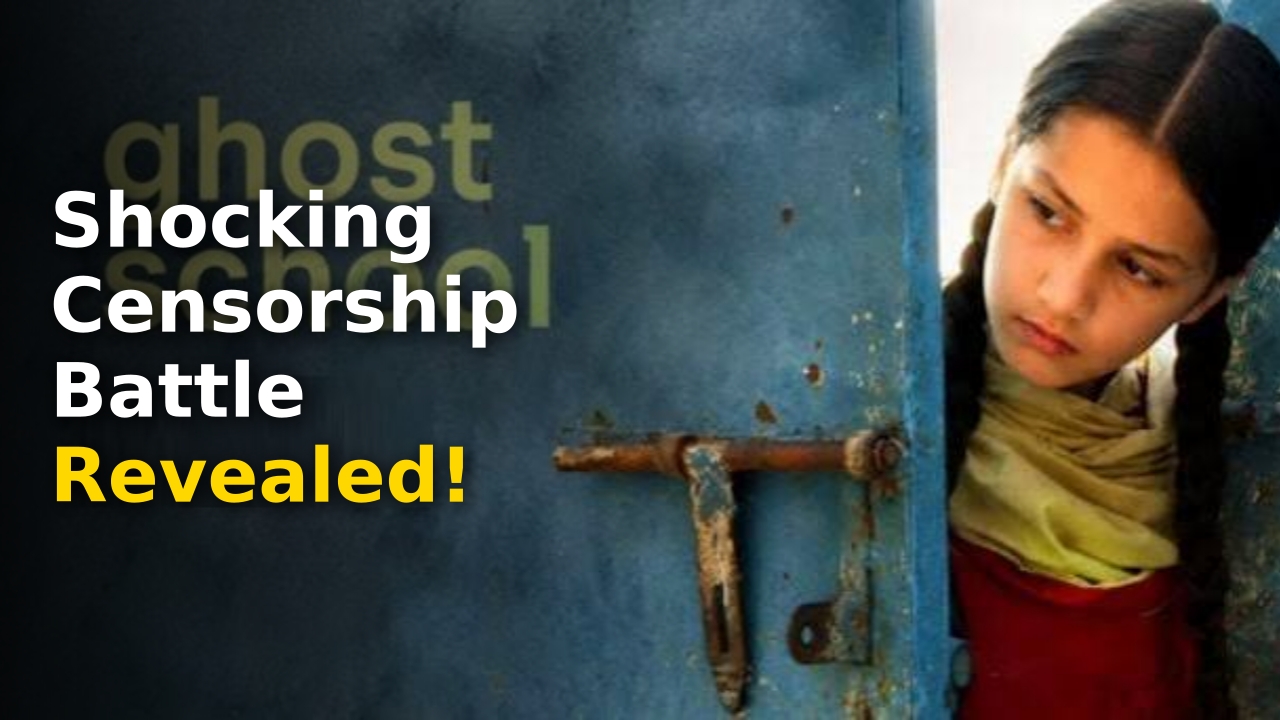
Ghost School is currently at the center of a heated legal battle that has ignited a firestorm regarding artistic freedom and the transparency of provincial governance in Karachi. When a piece of art that wins international accolades is suddenly shuttered by local authorities, you have to ask yourself: what exactly are they afraid of you seeing?
The Sindh High Court, under the sharp eye of Justice Adnan-ul-Karim Memon, has finally stepped in to demand answers from the Sindh Board of Film Censors. The court’s intervention marks a pivotal moment for filmmakers who have faced bureaucratic roadblocks that seem to defy both logic and federal-level approval.
The Ghost School Legal Battle
The controversy began when the filmmakers, armed with a Best Direction award from the prestigious Asian Film Festival in the United Kingdom, attempted to bring their message to the local public. Despite receiving clearance from the Central Board of Film Censors and the Punjab Censor Board, the project hit a wall in Sindh. The disconnect between federal policy and provincial censorship is more than just an administrative quirk; it represents a significant hurdle for creative expression in the region.
Legal representatives for the film argued that the refusal to grant a screening certificate was completely arbitrary and lacked a foundational legal basis. Under the Sindh Motion Pictures Act, 2011, any ban must be strictly justified by concerns such as national security, religious sensitivities, or public morality. The filmmakers claim that their project, which highlights the systemic collapse of public education, doesn’t violate any of these statutes. You can learn more about how artistic narrative shapes public perception by visiting celebrity industry news and trends for deeper context.
During the recent high-stakes hearing, the courtroom atmosphere shifted when Justice Adnan-ul-Karim Memon posed a stinging, humorous question to the board representative: “Are there any ghosts in the film that permission is being denied?” This query highlighted the absurdity of the situation, effectively forcing the Secretary of the Sindh Censor Board to defend a position that seemed to crumble under basic scrutiny. The court made it clear that if the board fails to provide legally sound, transparent reasons for its refusal within the next two weeks, the judiciary may intervene decisively.
For many observers, the term Ghost School refers to a chilling reality—educational facilities that exist on paper to siphon funds but remain completely empty or dilapidated in practice. This is not just a film about ghosts; it is a film about the misappropriation of public resources, a topic that clearly makes certain authorities nervous. By suppressing this narrative, the board has inadvertently turned a small independent project into the most talked-about production in the nation. 
The frustration felt by the creative team is palpable, especially given that they were never issued a show-cause notice prior to the rejection. Procedural fairness is a cornerstone of any administrative action, and the lack of an opportunity to present their case has only bolstered the petitioner’s argument. As the two-week deadline looms, the eyes of the arts community are fixed firmly on the Sindh High Court, waiting to see if justice will prioritize transparency over administrative opacity.
Why This Matters
- The film has already been cleared for national release by the Central Board of Film Censors.
- The project addresses the corruption inherent in non-functional ghost schools across the country.
- Failure to disclose reasons for censorship may lead the court to automatically authorize the screening.
- The case highlights a major discrepancy between federal and provincial censorship power.
- The film previously secured an international win at the Asian Film Festival.
Comparative Censorship Data Points
Understanding how different provinces handle creative content provides a roadmap for why this specific project faced such a unique struggle. The variation in how the Sindh Motion Pictures Act, 2011 is interpreted compared to other regional boards remains a point of contention for many legal experts.
| Censor Authority | Screening Status | Legal Stance |
|---|---|---|
| Central Board (Federal) | Approved | Compliant |
| Punjab Censor Board | Approved | Compliant |
| Sindh Censor Board | Rejected (Review Pending) | Under Judicial Scrutiny |
You can see from the table above that the Sindh Board of Film Censors is an outlier. While the rest of the nation has deemed the film acceptable, the local board’s refusal creates a situation where the content is considered appropriate in one neighborhood and potentially harmful in another. This geographic inconsistency is exactly what the court is looking to resolve through the pending review process.
The Role of Advocacy
Groups advocating for the rule of law and freedom of expression see this case as a litmus test for civil liberties in Karachi. When government bodies are allowed to censor without providing specific, documented reasons, the door is left open for political influence to outweigh objective analysis. Journalists and activists are keeping a close watch on the Secretary of the Sindh Censor Board, as the court has explicitly ordered him to provide the board’s full reasoning before the two-week deadline expires.
This case serves as a broader reminder of the struggles faced by independent cinema in the modern age. Often, the most powerful stories are the ones that local officials try to keep in the dark. The legal precedent set here will likely echo through future film festivals and theatrical releases, potentially limiting the power of regional boards to act as gatekeepers for content that is otherwise nationally approved. 
Public opinion is largely skewed against the censorship, as the term Ghost School resonates with families who deal with educational inequality every single day. The fact that the film has earned international acclaim makes the local prohibition look even more desperate. It is highly probable that the court’s firm stance will force a reversal of the ban, allowing the film to finally hit screens across Sindh.
In the final analysis, the battle over this production is about more than just a single movie; it is about the right of the public to witness stories that hold institutions accountable. The Sindh High Court has signaled that the days of opaque, unreasoned censorship might finally be coming to an end. Whether you are a fan of independent films or simply a proponent of government transparency, the outcome of this case will be a significant victory for the average citizen.
Final Thoughts on the Case
As we watch the two-week clock tick down, the situation regarding Ghost School remains a primary example of how legal action can be used to combat arbitrary administrative overreach. If the board continues to hide behind the vague notion of ‘discretion,’ they may find themselves on the losing side of a landmark judicial decision. Justice Adnan-ul-Karim Memon has set the stage for a resolution that could either modernize censorship laws or reveal the deep-seated issues within the board itself. Keep an eye on the upcoming proceedings; this is a story that is far from over, and it represents a massive win for the future of investigative media and artistic liberty.
More Like This
For more updates, check out our latest entertainment and sports news.