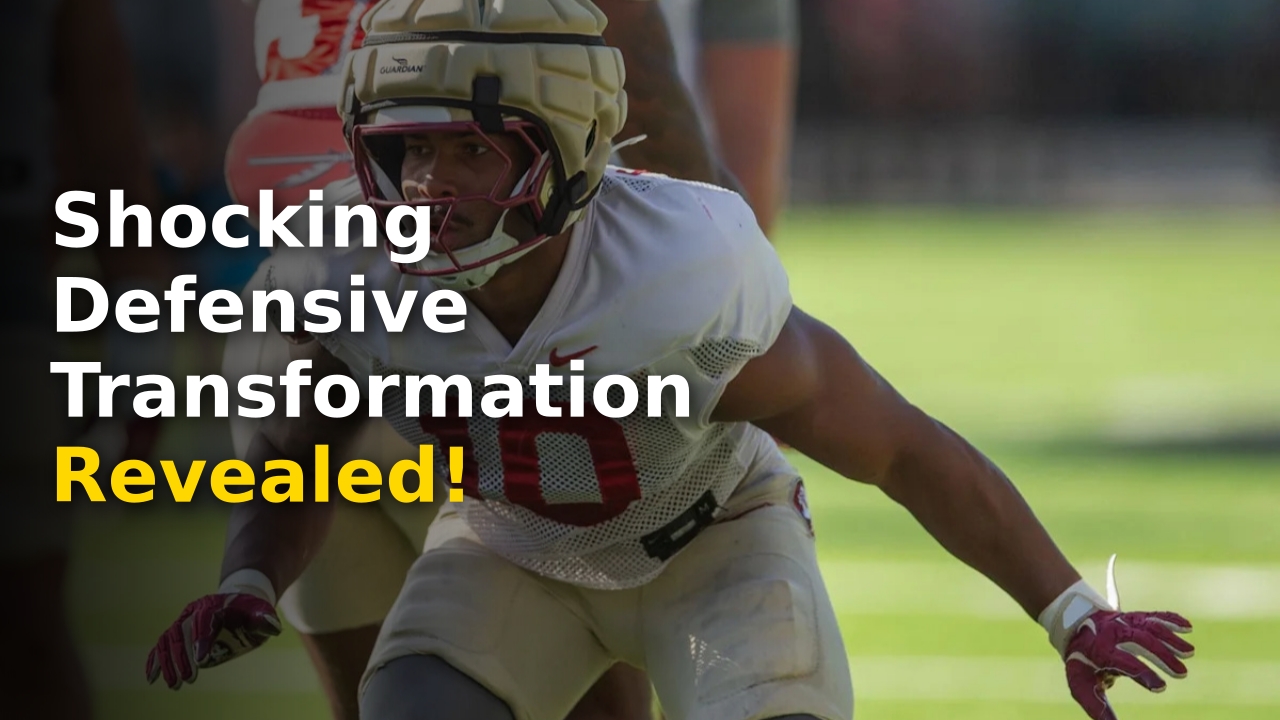
Seminoles linebacker success has always been the heartbeat of Florida State’s defense, and the arrival of two tactical additions suggests a return to dominance for the 2026 season. You know the history: when the middle of the field is locked down, the entire program operates at an elite level, and the current coaching staff is banking on this reality to flip the script in Tallahassee.
Head coach Mike Norvell and defensive coordinator Tony White are under intense pressure to stabilize the heart of their defense. By targeting Chris Jones and Mikai Gbayor, they have initiated a high-stakes gamble that could either redefine the Seminoles’ defensive identity or leave the unit searching for answers during a pivotal campaign.
Analyzing the Seminoles Linebacker Revamp
The addition of Chris Jones is the clearest indicator of intent from the Florida State coaching staff. Coming off a stellar 2025 campaign at Southern Miss, Jones brings the kind of resume that turns heads in the scouting community. He finished his final season with 79 tackles and 15 pressures, proving that he is more than just a standard run-stopper.
When you look at the film, you see a player comfortable in three-down scenarios. PFF data highlights his 76.8 run-defense grade, which is arguably his most dangerous weapon. He avoids the tendency of modern linebackers to simply play for volume, instead opting for high-impact stops that keep opposing offenses off schedule.
His physical frame, standing at 6-foot-1 and 231 pounds, makes him a nightmare for interior linemen. Unlike lighter linebackers who get swallowed up in traffic, Jones maintains the core strength to fight through blocks and locate the ball carrier. This physicality is the missing ingredient for the FSU defense as they attempt to reclaim their spot at the top of the conference.
However, the transition to the Seminoles defensive system will demand a rapid improvement in his pass coverage skills. While he possesses the athleticism to match up with tight ends, his 75% completion rate allowed in coverage suggests a learning curve. If he masters the zone schemes implemented by Tony White, he will likely be the standout performer of the 2026 class.
Beyond the raw stats, Jones provides a vocal presence that the locker room has sorely missed. Leadership is often intangible, but in high-pressure games, having a centerpiece who understands his assignment perfectly is what separates contenders from middle-of-the-pack teams. You can track all the latest developments on this defensive transition by checking out the deep-dive analysis at the leading celebrity and athlete tracker.

Key Development Areas
- Improving lateral speed in pass coverage scenarios.
- Consistency in maintaining gap integrity during high-tempo plays.
- Mentoring incoming younger defenders to build long-term depth.
- Adjusting to the specific intensity of ACC offensive schemes.
Data Breakdown: The 2026 Defensive Potential
Numbers don’t lie, and when you look at the statistical profiles of Jones and Gbayor, the potential for a massive defensive surge is evident. The following table highlights the key production markers that determine whether this duo can effectively anchor the middle of the field.
| Player | 2025 Grade | Run Defense | Primary Role |
|---|---|---|---|
| Chris Jones | 67.8 | 76.8 | Middle Linebacker |
| Mikai Gbayor | 67.1 | 67.5 | System Depth/Hybrid |
The Gbayor Reclamation Project
If Jones is the polished headliner, Mikai Gbayor represents the high-upside gamble that could define the season’s success. After spending time under the tutelage of Bill Belichick at North Carolina, Gbayor returns to the system he knows best. Reconnecting with Tony White is the critical bridge here; White was instrumental in Gbayor’s development during his productive tenure at Nebraska.
Gbayor’s 2025 season in Chapel Hill was defined by flashes of brilliance interrupted by inconsistency. Recording 23 tackles across limited snaps proves he has the instincts, but the 17.5% missed tackle rate is a red flag that must be addressed immediately. In the high-octane ACC, missing a tackle in the open field is often the difference between a stop and a touchdown.
The comfort level Gbayor has with White’s aggressive defensive front cannot be overstated. When he was at his best in 2024, he recorded nearly 50 tackles, showcasing a level of aggressiveness that intimidated opposing offenses. Florida State isn’t looking for him to be a savior; they are looking for him to be a reliable, system-aware piece that allows the rest of the unit to play with confidence.
His journey from Nebraska to North Carolina and now to Tallahassee mirrors the nomadic nature of the modern transfer portal era. For athletes like Gbayor, finding the right “home” or coaching match is often more important than the brand of the uniform. He is betting on the fact that the scheme that once elevated his status will do so again in 2026.
Physical longevity is the final hurdle for Gbayor. Injuries have hampered his trajectory, and staying on the field is the primary requirement for him to unlock his potential. If he can maintain the form he showed earlier in his career, the Seminoles will possess a depth chart that is finally capable of rotating talent without losing efficiency during crucial late-game moments.
[INJECT_IMAGE_2_HERE]
The Championship Swing Factor
Looking ahead to the 2026 season, the performance of the linebacker corps stands as one of the most significant swing factors for the Seminoles. You have seen how championship-level defenses operate; they rarely have massive voids in the middle. By investing in experienced transfers, Norvell is trying to bypass the typical multi-year rebuilding phase and jump directly into contention.
The legacy of great linebacker tandems—like the 2023 pairing of Kalen DeLoach and Tatum Bethune—looms large over the current roster. Fans in Tallahassee have high expectations, and they will be watching closely to see if Jones and Gbayor can match that intensity. Every snap, every tackle, and every forced turnover will be under a microscope in a conference dominated by explosive passing games.
Coaching is the final piece of this puzzle. Tony White has built his reputation on aggressive, unorthodox looks that confuse quarterbacks, and he now has the personnel to execute those schemes properly. Without a solid foundation at linebacker, his defensive front-seven concepts often fall apart, which is why the pressure on Jones and Gbayor is magnified by the systemic needs of the staff.
As you watch the season unfold, pay close attention to the snap counts. If Jones continues to handle a massive workload while Gbayor settles into a trusted niche role, the defense could experience a statistical jump similar to the top-tier units in the nation. It is a long road to travel, but the pieces are finally in place for a potential resurgence.
Ultimately, the question of whether this duo can restore the defensive pride of the program is one that will be answered on the field. You can find more comprehensive reports on team strategies by visiting Reuters Sports to see how the landscape of college football is shifting in real-time. The era of the Seminoles linebacker needs a new face, and the combination of talent and experience currently in the building is the best bet they have had in years.
Final Thoughts on the 2026 Outlook
Reclaiming the identity of a program is never an overnight process, but the recruitment of proven commodities signals that Mike Norvell is not willing to wait. By prioritizing players who have already tasted high-level success, he is shortening the path toward a competitive 2026 campaign.
Whether these two newcomers can handle the bright lights of Tallahassee is the ultimate mystery. The potential is clearly there, backed by both the stats and the schematic fit with Tony White. For the Seminoles, the return to prominence depends entirely on the stability of their defense, and that stability starts squarely in the middle with the new Seminoles linebacker core.
More Like This
For more updates, check out our latest entertainment and sports news.