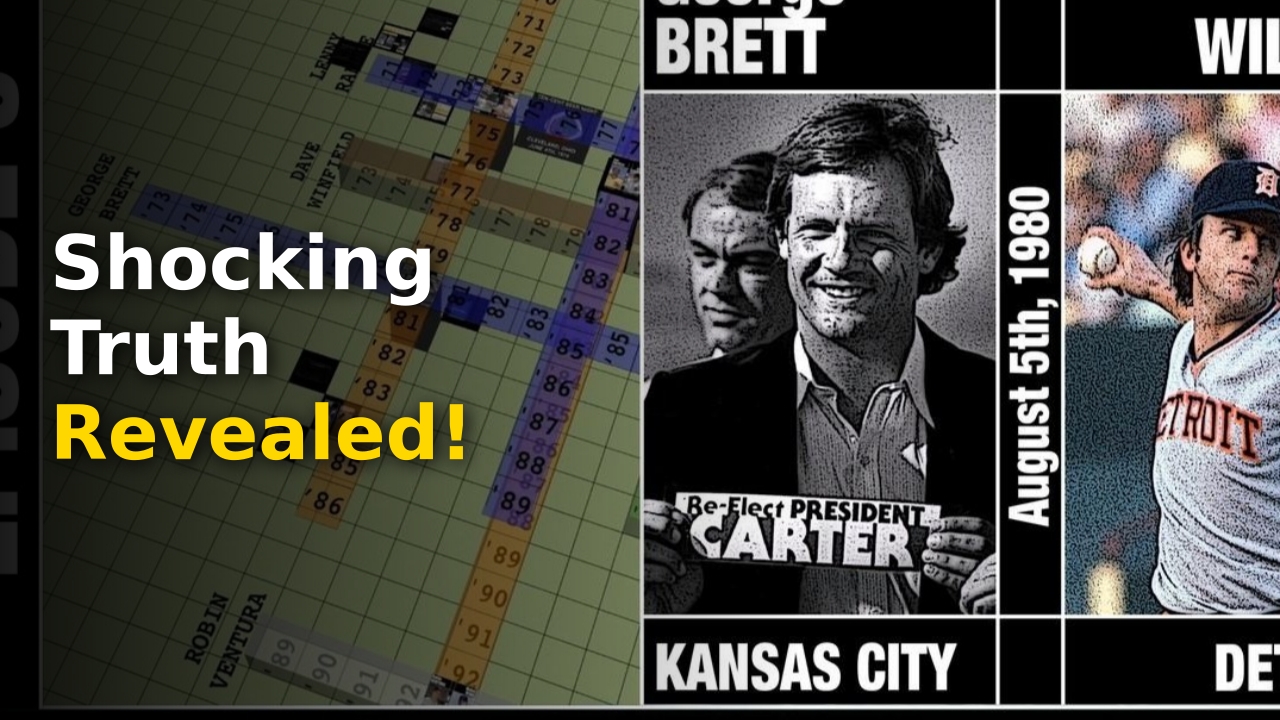
Mound charging represents the ultimate breaking point in professional baseball, a moment where the thin veneer of competitive sport vanishes to reveal raw, unfiltered human emotion. When George Brett and Milt Wilcox locked horns in 1980, they weren’t just playing a game; they were participating in an unwritten, violent ritual that defines the psychology of the diamond.
You might think that such a legendary confrontation would be preserved in high-definition glory for all time, but the truth is far more mysterious. The physical footage of this showdown has vanished into the ether of history, leaving us to piece together the narrative from the accounts of those who lived it.
The Anatomy of Mound charging
Why do elite athletes decide, in the span of a single heartbeat, to abandon the safety of the batter’s box and rush toward an angry pitcher? The answer is never as simple as a misplaced fastball or a bruised ego, though those elements certainly provide the spark. You have to understand that in the high-stakes environment of Major League Baseball, respect is the only currency that matters. When a pitcher throws inside, they aren’t just pitching; they are making a statement about their territory.
George Brett, a man known for his intense competitiveness and legendary focus, found himself at the center of this firestorm. For players of his caliber, the decision to charge isn’t a calculated tactical move; it is a primal reflex. It is the physical manifestation of a player deciding they will not be intimidated on their own stage.  Whether or not the pitcher intended to cause physical harm is often secondary to the message received by the batter.
There is a dangerous misconception that steroids or performance enhancers provide the only explanation for such volatility. This reductionist view ignores the complex social dynamics of the clubhouse, the mounting pressures of a pennant race, and the long-standing vendettas that simmer beneath the surface of every game. [https://brightcelebrity.com/|Celebrity influence and sports culture] often shift the narrative toward sensationalism, but the reality is grounded in the deep, psychological burden of being a professional athlete under the constant gaze of millions.
The pressure to maintain performance levels across an grueling 162-game season creates a unique form of psychological stress. When a player breaks, it is rarely about the single pitch that triggered the reaction; it is about the weeks of internalizing frustration, pain, and the relentless expectation to remain a star. To truly appreciate what occurred between Brett and Wilcox, you must look past the punch-throwing and consider the immense mental toll of their era.
Many modern fans fall into the trap of analyzing these events through a strictly clinical lens, blaming chemical enhancements for every outburst or sustained career success. This dismissive attitude ignores the sheer grit and tactical awareness required to thrive in the majors. George Brett wasn’t just a physical specimen; he was a cerebral tactician who understood that sometimes you fight because you are furious, and sometimes you fight because the optics demand it.
When you investigate the history of Major League Baseball, you find that these moments are actually essential components of the sport’s dramatic arc. They are the pressure valves that keep the game from becoming purely mechanical. Without the threat of the mound charge, the psychological dynamic between the pitcher and the batter would shift fundamentally, potentially making the game far less interesting to watch.
The Psychological Trigger Points
- The perceived intent of the pitcher during high-leverage situations.
- The cumulative effect of previous bench-clearing incidents or rivalries.
- The social pressure from teammates to defend the home plate turf.
- The physical toll of repetitive motion and long-term injury management.
- The desire to shift momentum during a losing streak or critical series.
Comparative Analysis of Infamous Brawls
To put the incident in context, consider the history of confrontations in the sport. The numbers don’t lie when it comes to the frequency of these events throughout the decades. Historical archives show a significant shift in how these altercations are managed, recorded, and remembered by the public.  The era of George Brett was vastly different from today, where high-speed cameras record every blink of an eye, yet we still find ourselves without definitive footage of this specific, explosive moment.
| Era/Event | Key Participants | Primary Motivation |
|---|---|---|
| 1980 Conflict | George Brett / Milt Wilcox | Territorial Defense |
| 1990 Bench Clearer | Ryan / Ventura | Beanball Retaliation |
| 2026 Rivalries | Various Stars | Digital/Media Pressure |
We often romanticize the past, viewing players of the 80s as tougher or more authentic. While that might be true in terms of media access and the lack of digital surveillance, the fundamental motivations remain identical. Whether it is 1980 or 2026, the moment the ball crosses the threshold of the strike zone, it is personal. Milt Wilcox understood this perfectly, as did George Brett, turning a standard game into a lasting piece of lore.
Data suggests that teams involved in more physical altercations often foster a unique, if controversial, sense of internal solidarity. When you witness your teammate charging the mound, your perception of team unity changes instantly. It isn’t just about the fight itself; it is about the willingness to risk one’s own safety for the benefit of the group. This tribalism is an inescapable aspect of baseball culture.
We must also acknowledge the role of the audience in perpetuating these myths. The YouTube comment sections and social media threads that analyze these events often mirror the same intensity as the players on the field. You can spend hours digging through forums, but you will rarely find a consensus. The mystery surrounding the missing footage of Brett versus Wilcox only adds to the intrigue, turning a forgotten game into an urban legend that we continue to pass down.
Perhaps the most valuable lesson from this entire saga is that history is not just about what is recorded; it is about what is felt and remembered by those who watched it. The lack of video documentation serves as a reminder that the most significant moments in sports are often those that escape the lens of the camera. They reside in our collective memory, growing more dramatic with every retelling.
The Final Verdict
In the final assessment, mound charging will remain a permanent, electrifying, and inevitable feature of the sport. It serves as a reminder that baseball is a game played by humans, not machines, and human beings are susceptible to the pressures and impulses of their environment. By studying figures like George Brett and Milt Wilcox, we gain a better understanding of the high-stakes world of professional athletics.
Always remember that the next time you see a batter walking toward the pitcher, you are witnessing a century of tradition, tension, and raw human emotion colliding at ninety miles per hour. It is a spectacle that defines the soul of baseball, regardless of whether a camera is there to capture it. As we continue to dissect these moments, keep asking the difficult questions, because that is where the real history of the sport resides.
More Like This
For more updates, check out our latest entertainment and sports news.