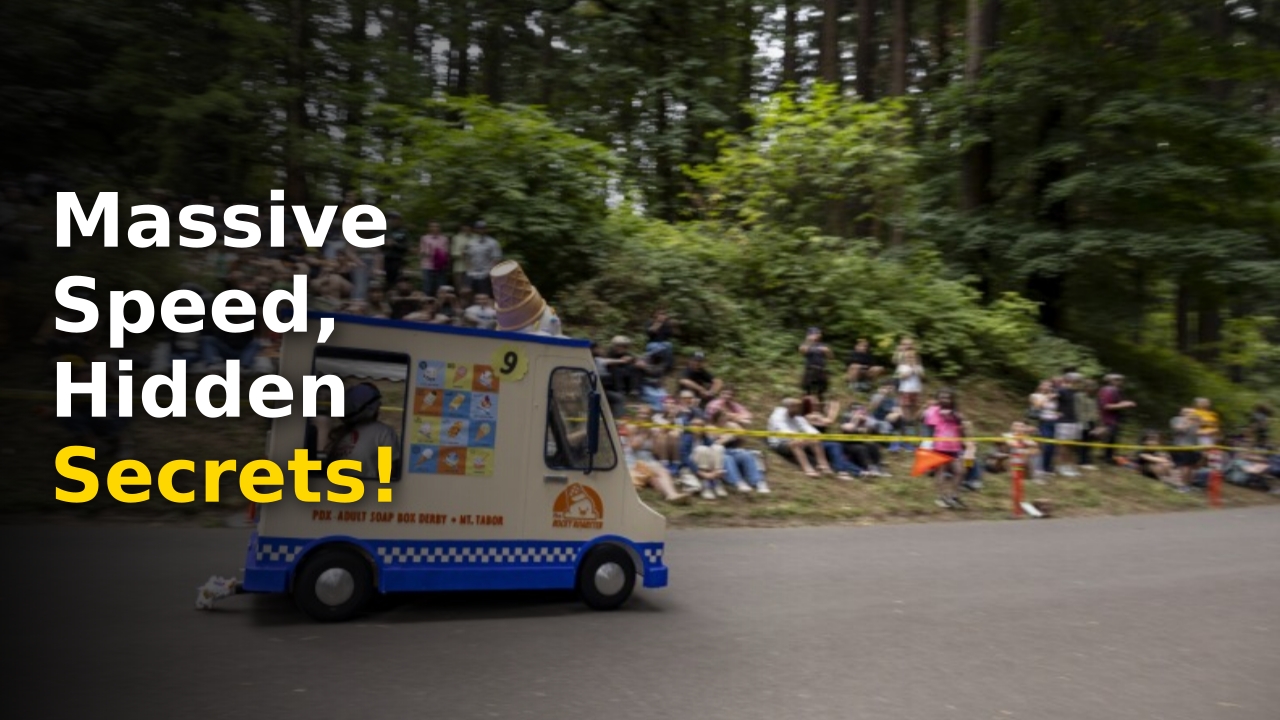
Soap box racing usually conjures images of wholesome, neighborhood children, but you haven’t seen anything until you witness the chaotic, high-stakes spectacle of the Portland Adult Soap Box Derby. Imagine, if you will, a group of grown adults hurtling down the extinct volcanic slopes of Mt. Tabor Park in contraptions constructed from little more than hope, plywood, and repurposed scrap metal.
This isn’t just a race; it is a cultural phenomenon that has gripped the Pacific Northwest for 27 years. You are about to step into a world where aerodynamics take a backseat to sheer, unadulterated performance art and engineering madness.
The Soap box Evolution
Gravity remains the most reliable engine in human history, but the way we apply it has undergone a radical transformation since the early 20th century. While historical records trace the roots of these vehicles back to the 1914 Kid Auto Races featuring a young Charlie Chaplin, the modern iteration is far removed from those humble, early pushmobile origins.
The classic design ethos, which dominated the mid-20th century, focused entirely on drag reduction and high-performance materials like titanium and fiberglass. Those were the golden days of the Ohio-based national championships, where local glory was measured in milliseconds and technical precision. Television icons like Bewitched and Dennis the Menace helped cement the derby in the American consciousness as a sleek, streamlined pursuit.
Portland, however, decided to turn this tradition on its head by injecting it with a healthy dose of DIY anarchy. Instead of wind tunnels and corporate sponsorship, the Portland Adult Soap Box Derby champions the beauty of “booger-welded” scrap heaps that somehow defy the laws of physics.  You might find a vehicle shaped like a giant sloth or a tribute to the infamous Oregon exploded dead whale, all competing for the same finish line.
The transition from a professional race to a mobile art exhibition has shifted the focus from speed to the sheer spectacle of the descent. Participants spend months meticulously crafting their rigs, often guided by the whimsical requests of their children, as seen with John Nurse and his dragon-inspired racer. When you decide to build a vehicle based on a 10-year-old’s drawing, you aren’t just racing; you are engaging in a form of extreme community theater.
Safety is the only aspect where the organizers draw a hard, uncompromising line. Despite the zaniness, every driver must wear high-quality safety gear and undergo rigorous brake testing, acknowledging the genuine, slight threat of danger that keeps the audience on the edge of their seats. The thrill of the hill is magnified precisely because these cars are not meant for high-speed mountain navigation, yet they charge ahead regardless.
The community support is staggering, with thousands of residents claiming their territory on the grass of the park, armed with folding chairs and a festive spirit. It is a testament to the local culture, a place where individual creativity is prioritized over efficiency. For those looking for more insight into how unique events are transforming local economies, you can visit Bright Celebrity for further coverage on regional trends.
Why Portland Stands Out
- Unrestricted creative design rules compared to national standards.
- Emphasis on community-driven art over pure athletic speed.
- Utilization of unique urban geography, specifically an extinct volcano.
- Collaborative building environments for families and neighbors.
The Math Behind Madness
While the participants insist that the day is all about the vibes, the technical achievement of putting a refrigerator on wheels and sending it down a mountain shouldn’t be underestimated. In the world of gravity racing, weight, aerodynamics, and structural integrity create a delicate balance that determines whether you reach the bottom in glory or in pieces. We have compiled a look at how this event compares to traditional, technical racing circuits.
| Metric | Classic Derby | Portland Derby |
|---|---|---|
| Primary Goal | Maximum Speed | Maximum Joy/Art |
| Construction | Aerodynamic/Tech | Mixed Media/Scrap |
| Venue | Regulated Tracks | Volcanic Slopes |
| Spirit | Competition-Driven | Party-Driven |
To really appreciate the scale, consider the dedication of David Paulsen, the president of the derby, who has been involved since 1997. His role, along with a massive team of volunteers, involves everything from manual landscaping to brush clearing to ensure the safety of the path. They are the backbone of this nonprofit endeavor, proving that local passion remains the most potent fuel.
The event is not just a one-day affair; it represents months of planning, testing, and community outreach. The fire department even gets into the spirit, keeping watch while riding in their own, custom-built, miniature red fire-engine car. It is a delightful reminder that even the most serious safety protocols can be implemented with a touch of charm and humor.
As you watch these machines hurtling toward the finish line, you notice the engineering diversity. You have the Conestoga wagon built by Michael Orczyk, a structure that would have been better suited for the Oregon Trail than a modern race, yet it handled the descent with aplomb. Every design choice is a story, a physical manifestation of a Portlander’s desire to express themselves in the most public way possible.
Spectators are not just passive observers; they are an essential part of the ecosystem. Many arrive hours before the first car launches to secure the best vantage points on the volcanic slopes. The atmosphere is less like a sporting event and more like an impromptu family reunion that happens to be hosting a high-speed parade of insanity.
 The financial reality of such an event is equally impressive, though entirely nonprofit. Every dollar collected from local support is reinvested into the infrastructure and cleaning efforts required to keep Mt. Tabor Park pristine for the next year. It is a model of sustainability that proves you don’t need a corporate budget to build a lasting, beloved tradition.
The Human Spirit of Speed
Why do we love to watch things move fast? It taps into our primal need for adrenaline, yet the Portland event adds a layer of humanity that is often missing from high-end athletics. When you see a person inside a “deep-sea anglerfish” rig, you aren’t just cheering for the speed; you are cheering for the human spirit.
This event invites everyone to be a kid again, regardless of their actual age. The permission to fail, to create something absurd, and to laugh at yourself is the true engine of the Portland derby. You don’t have to be an engineer to participate, nor do you need to be an artist; you simply need the nerve to roll down a hill in a contraption of your own making.
There is a lesson here for all of us. Modern life is often about optimization, efficiency, and perfection. The derby, by contrast, is a loud, messy celebration of the imperfect. It teaches us that there is profound value in taking an idea from the drawing board to the reality of the road, even if the road is steep and the brakes are questionable.
The sense of kindred spirits is palpable. When Paulsen talks about meeting people who share his love for “booger-welded garbage cars,” he is speaking to a core aspect of our need for connection. We all have that inner urge to build, to create, and to share those creations with our community in a way that feels authentic.
Looking toward the future, the popularity of the event continues to surge. Every year sees more participants, more elaborate designs, and more onlookers lining the hillsides. The growth is not just in numbers but in the quality of the designs, as each new cohort of participants learns from the successes and failures of the ones before them.
The safety record of the event remains a point of pride, even with the inherent risks. By empowering individuals to take ownership of their own machines, the event fosters a culture of responsibility alongside the joy. It is a delicate, successful dance of freedom and caution that continues to evolve with every single run down the mountain.
Final Thoughts on Gravity
When you wrap up the day at Mt. Tabor, you leave with a renewed appreciation for the intersection of art and mechanics. It’s rare to find an event that captures the essence of a community so perfectly, blending the natural wonder of the landscape with the wild creativity of the people living in it. Whether you are a fan of speed or a lover of art, the soap box race provides an unforgettable experience that defines what it means to be part of the vibrant Portland culture. It isn’t just a descent; it’s a testament to the fact that with enough imagination and a little help from gravity, anything is possible.
More Like This
For more updates, check out our latest entertainment and sports news.