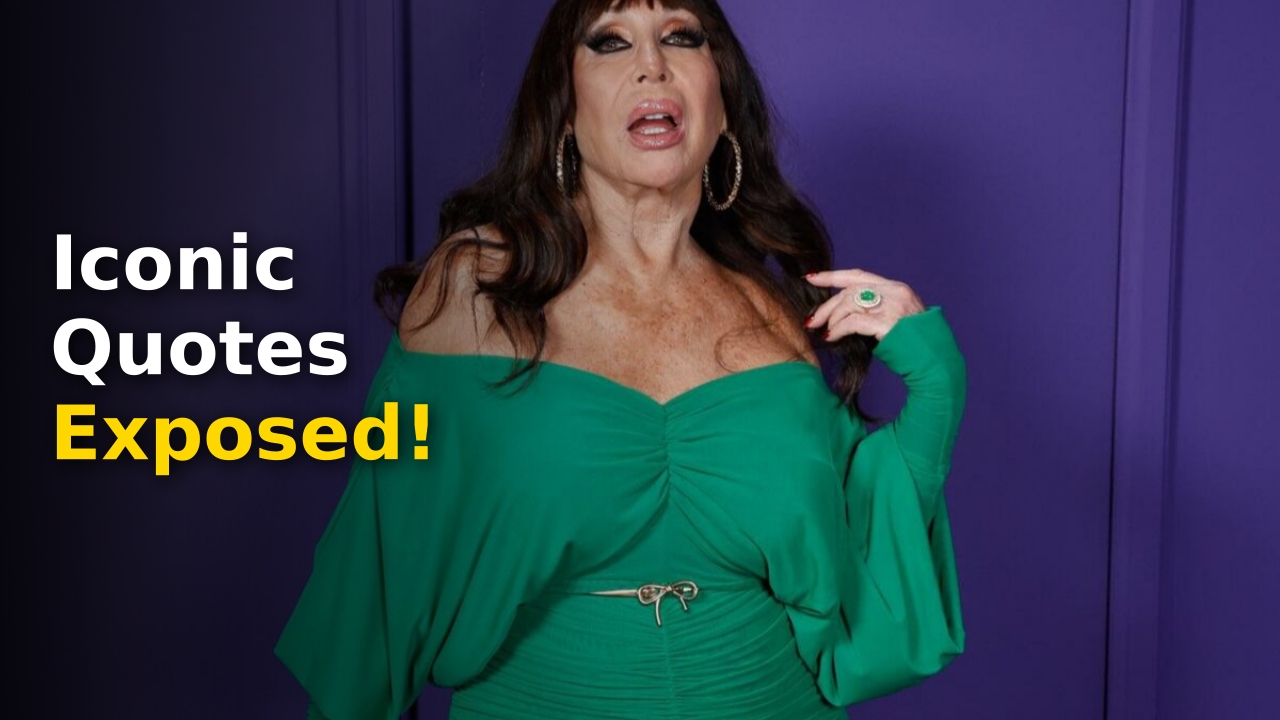
Moria Casán remains an unmatched titan in Latin entertainment, dominating television screens and cultural conversations for over five decades. If you have ever watched Argentine television, you know that her sharp wit and razor-sharp tongue can stop any broadcast in its tracks. Few figures command public discourse with such raw charisma, turning everyday catchphrases into national folklore.
Known universally as “La One,” she transformed the landscape of talk shows, variety theater, and primetime reality competitions. From Buenos Aires theater stages to modern viral social media memes, her vocabulary shapes how millions express humor, defiance, and unapologetic self-worth.
Whether delivering shocking courtroom retorts, commanding unruly studio audiences, or redefining female empowerment on her own terms, she crafted a persona that defies conventional celebrity boundaries. You can explore more about top Latin icons in the latest celebrity entertainment news as we dissect the enduring power of her media empire.
Cultural Impact of Moria Casán
The Argentine entertainment industry has witnessed dozens of starlets and divas, yet none match the linguistic dominance of this theatrical powerhouse. In South American popular culture, only legendary figures like Diego Maradona rival her ability to inject original phrases directly into everyday street slang. Her famous one-liners serve as comedic armor against public scrutiny and societal hypocrisy.
Beginning her explosive rise as a premier theater vedette at the iconic Teatro Maipo and Teatro El Nacional, she disrupted traditional expectations placed on female performers. She refused to play the passive showgirl, seizing control of scripts, commanding comedy sketches, and dictating media narratives. Her outspoken demeanor quickly made her a household name across Argentina, Uruguay, and international television syndicates.
Her media philosophy relies on total authenticity and a complete absence of shame. When cameras roll, she delivers spontaneous, hard-hitting truths wrapped in theatrical bravado. This distinct communication style became universally recognized as the “lengua karateca,” an unmatched verbal defense mechanism that dismantles critics within seconds.

Unapologetic Sexual Freedom
Long before mainstream media embraced progressive dialogues around intimacy and gender identity, she pushed boundaries on live television. Her declarations surrounding sexuality remain foundational to her feminist legacy.
- “Soy un hombre homosexual encerrado en el cuerpo de una mujer” – A revolutionary assertion of gender fluidity and queer allyship delivered during conservative television eras.
- “Mis neuronas tienen clítoris” – A bold proclamation uniting female intellect with sexual autonomy.
- “Cuando tengo un orgasmo, lloro” – Raw emotional honesty dismantling traditional taboos regarding female pleasure.
- “Tratamiento chongo-shock” – Her tongue-in-cheek prescription for vitality, rejuvenation, and personal independence.
- “Somos la longevidad al palo” – Celebrating active sexuality and vibrant romance well into mature adulthood.
Television Battles and Viral Clashes
During the late 1990s and early 2000s, daytime television underwent a seismic shift with the launch of talk shows like Amor y Moria. The format placed her in direct confrontation with dramatic personal disputes, creating ground-breaking television moments. It was during these intense studio confrontations that her signature catchphrase, “Si querés llorar, llorá,” was born.
The phrase resonated so deeply with audiences that it transcended television ratings to become an everyday idiom across Latin America. Psychologists, commentators, and everyday citizens adopted the line to express either genuine comfort or ironic detachment. She understood human theatricality better than anyone, validating emotional outbursts while orchestrating brilliant television spectacles.
Her later transition to primetime judge on Bailando por un Sueño alongside host Marcelo Tinelli solidified her status as the ultimate reality television authority. Whenever contestants challenged her scoring or attempted rehearsed arguments, she silenced them with devastating comebacks. Media historians often study her runtime interventions as masterclasses in live performance timing.
Her clashes were never merely petty disputes; they were linguistic boxing matches that captivated millions of households every night. Opponents routinely found themselves outmatched against her spontaneous wordplay and theatrical pacing. Even decades later, soundbites from those broadcasts generate millions of views on contemporary platforms like TikTok and Instagram.
Her television tenure documented in Moria Casán’s legendary career demonstrates how one artist can manipulate media attention across multiple generations. She turned high-stress studio environments into personal runways, dictating the tempo of multi-million-dollar broadcasts with a single glance or gesture.
Lengua Karateca Masterclass
Her confrontations with fellow panelists, dancers, and rival vedettes produced some of the most quoted insults in modern television history.
- “¡El decorado se calla!” – A legendary command demanding total silence from studio guests and background dancers.
- “Terminó el debate, señor Tinelli, no resiste mi análisis tanta pelotudez” – The ultimate dismissal of televised triviality.
- “No lo sacás ni con la orden de un juez de acá” – Her colorful reaction to obstinate reality competitors refusing to leave the stage.
- “Sos de cuarta, patético, siniestro, obsecuente, felpudo” – A rapid-fire barrage of adjectives that left her opponents speechless.
- “Si yo soy cotillón, vos sos papel picado” – A brilliant visual metaphor establishing absolute hierarchical superiority in show business.
- “¿What pass, Papi?” – Spanglish humor deployed to disarm tense backstage confrontations with instant irony.
Breaking Down Iconic Expressions
Beyond entertainment spectacles, Moria Casán developed a deeply philosophical perspective on fame, resilience, and personal reinvention. Her language frequently addresses the superficial nature of high society, exposing pretension with devastating clarity. The classic phrase “Comen mortadela y eructan caviar” perfectly encapsulates her disdain for snobbery and manufactured celebrity status.
Her capacity to reframe personal setbacks into victorious public moments remains unprecedented in South American media. She famously declared, “Por más que me caiga en una cloaca, me levanto y huelo a rosas, mi amor.” This line illustrates her survival instinct within a notoriously ruthless entertainment industry that often discards aging female performers.
By declaring herself “El Obelisco con tetas,” she claimed the ultimate architectural symbol of the Argentine capital, Buenos Aires. In four words, she intertwined her physical presence with national monumentality, asserting that her celebrity is as permanent as the city’s granite skyline. Few artists possess the audacious self-assurance required to make such a comparison and have the public completely agree.

Philosophical Wit on Stage
Her stage performances and intimate interviews reveal a woman who treats life as a magnificent, self-directed comedy.
- “Estoy reseteada contra la huevada” – A mantra for emotional immunity against petty gossip and online criticism.
- “Acercate negra, ¿cómo nos vamos a pelear? Por favor, somos mujeres del espectáculo” – A masterclass in breaking tension through mutual professional respect.
- “El secreto de mi juventud es no tener la mente oxidada” – A refreshing view on ageless mental energy and constant curiosity.
- “A mí no me entra ninguna bala mediática” – Proclaiming complete invulnerability against tabloid rumors and hostile press campaigns.
Career Timeline and Milestones
To fully grasp the magnitude of her media dominance, one must examine the pivotal decades that shaped her artistic evolution. From revue theater headliner to cultural benchmark, her trajectory reflects relentless reinvention and extraordinary commercial longevity.
The following breakdown highlights the key eras where her legendary phrases and artistic endeavors reshaped Latin television programming forever.
| Decade | Primary Medium | Defining Show / Project | Signature Cultural Quote |
|---|---|---|---|
| 1970s | Teatro de Revista | Corrientes Avenue Revues | “Soy el Obelisco con tetas” |
| 1980s | Cinema & Comedy TV | Monumental Films with Olmedo & Porcel | “Mis neuronas tienen clítoris” |
| 1990s | Daytime Talk Shows | Amor y Moria | “Si querés llorar, llorá” |
| 2000s | Primetime Reality TV | Bailando por un Sueño | “¡El decorado se calla!” |
| 2010s–2020s | Digital Media & Streaming | Moria es Moria & Podcasts | “Estoy reseteada contra la huevada” |
Each distinct phase of her career established a new set of rules for mainstream entertainment. While other stars faded with shifting audience demographics, she adapted instantly to digital media formats, transforming younger audiences into passionate followers of her timeless linguistic arsenal.
Legacy of Moria Casán Today
Today, the influence of Moria Casán extends far beyond conventional television studios. Modern digital creators, theatrical producers, and feminist scholars frequently analyze her rhetoric as a pioneering form of uninhibited female empowerment in Latin America. She systematically shattered traditional taboos surrounding female aging, bodily autonomy, and aggressive self-promotion.
Her enduring relevance proves that authentic personality triumphs over manufactured celebrity PR strategies. By owning her flaws, celebrating her sexuality, and relentlessly defending her crown, she created a cultural blueprint that continues to inspire generations of performers.
As contemporary media trends shift rapidly toward digital streaming and viral micro-content, her phrases remain as potent and widely shared as ever. In a world full of rehearsed talking points, her unapologetic honesty and linguistic brilliance guarantee that “La One” will forever retain her rightful place at the pinnacle of pop culture royalty.
More Like This
For more updates, check out our latest entertainment and sports news.