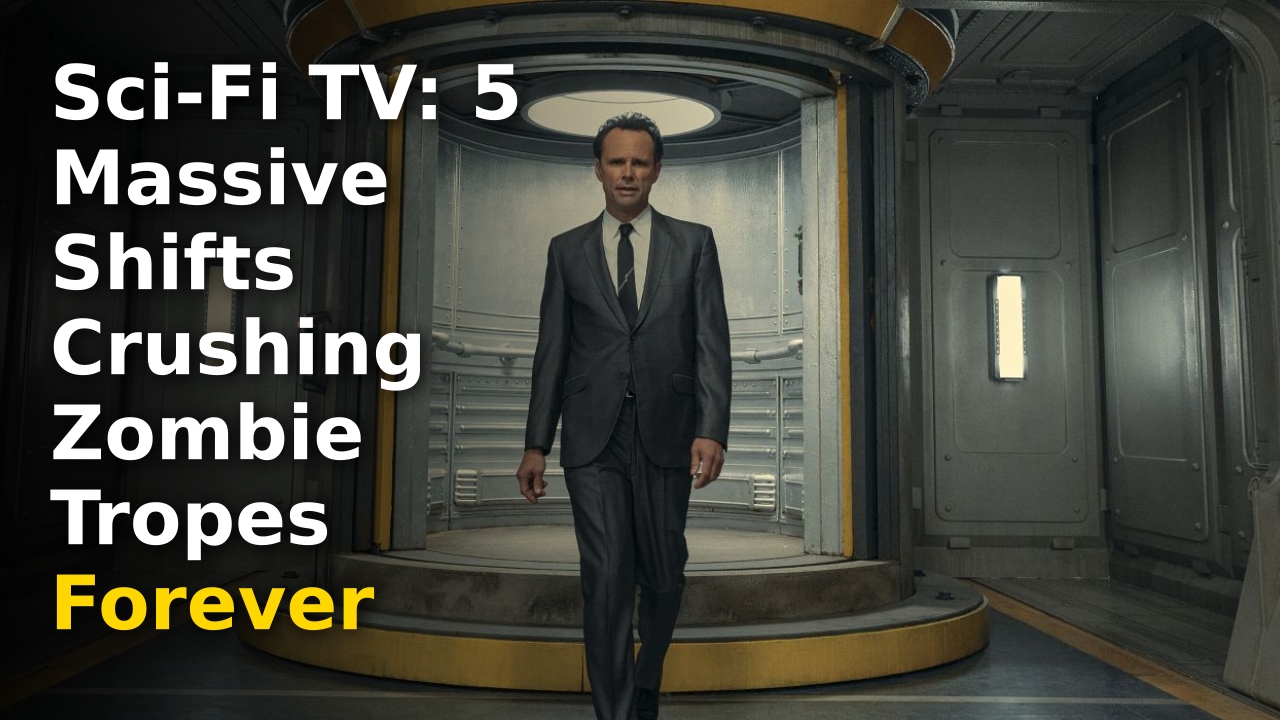
Have you noticed that the scariest monster on television right now does not have rotting flesh or razor-sharp fangs? Sci-Fi TV is undergoing a massive cultural transformation that is quietly leaving traditional zombie wastelands and random viral outbreaks in the past. Today, audiences are captivated by a far more terrifying antagonist: ultra-wealthy executives designing the end of the world from boardrooms.
For over a decade, network executives relied on chaotic survival formulas popularized by megahits like The Walking Dead and The Last of Us. Those stories placed ordinary people against unstoppable biological horrors, forcing survivors into violent scrambles for canned goods and ammunition. Yet modern viewers are demanding richer, smarter mysteries grounded in contemporary real-world anxieties.
Streaming heavyweights like Apple TV+’s Silo and Amazon Prime Video’s Fallout are leading this creative revolution. Instead of dealing with nature running amok, these groundbreaking shows explore calculated human interference, corporate greed, and psychological manipulation. The shift is not just refreshing; it is completely redefining how networks greenlight speculative fiction for the next decade.
The Death of Zombie Wastelands
Remember when every post-apocalyptic series opened with a deserted hospital, an empty highway, and an inexplicable virus ravaging civilization? That formula worked wonders in October 2010 when AMC launched an unstoppable television empire. Today, audiences are experiencing severe apocalypse fatigue after years of repetitive survival stories.
Viewers no longer feel genuine suspense when watching survivors run away from slow-moving hordes of the undead. While spin-offs like The Walking Dead: Dead City and The Walking Dead: Daryl Dixon are keeping franchise loyalists engaged through 2027, the mainstream cultural zeitgeist has moved on. The real dread is no longer biological decay, but structural human corruption.
Modern genre enthusiasts crave layered psychological storytelling over gratuitous jump scares. You can see this appetite reflected across leading pop culture commentary and entertainment industry breakdowns that highlight how prestige storytelling now dominates modern streaming charts. Viewers want answers to complex systemic questions rather than endless cycles of nomadic scavenging.
Shows like HBO’s adaptation of The Last of Us managed to elevate the infection sub-genre by leaning into devastating emotional relationships. Even so, the fundamental premise still relied on an uncontrollable fungal mutation destroying society overnight. The newer wave of speculative television rejects this premise entirely by proposing that societal collapse is almost always intentional.
When disaster strikes in modern television, it is rarely an accidental lab leak or an unpredictable act of God. It is a carefully budgeted line item on a corporate quarterly forecast. This shift makes the onscreen drama feel uncomfortably close to home in an era dominated by rapid technological disruption and wealth inequality.
By shifting focus from physical combat to corporate subterfuge, showrunners have unlocked an entirely new dimension of suspense. The true horror is not stepping outside to face a mutant; it is realizing the person who built your shelter planned your imprisonment years before you were born.

Sci-Fi TV Corporate Villains Emerge
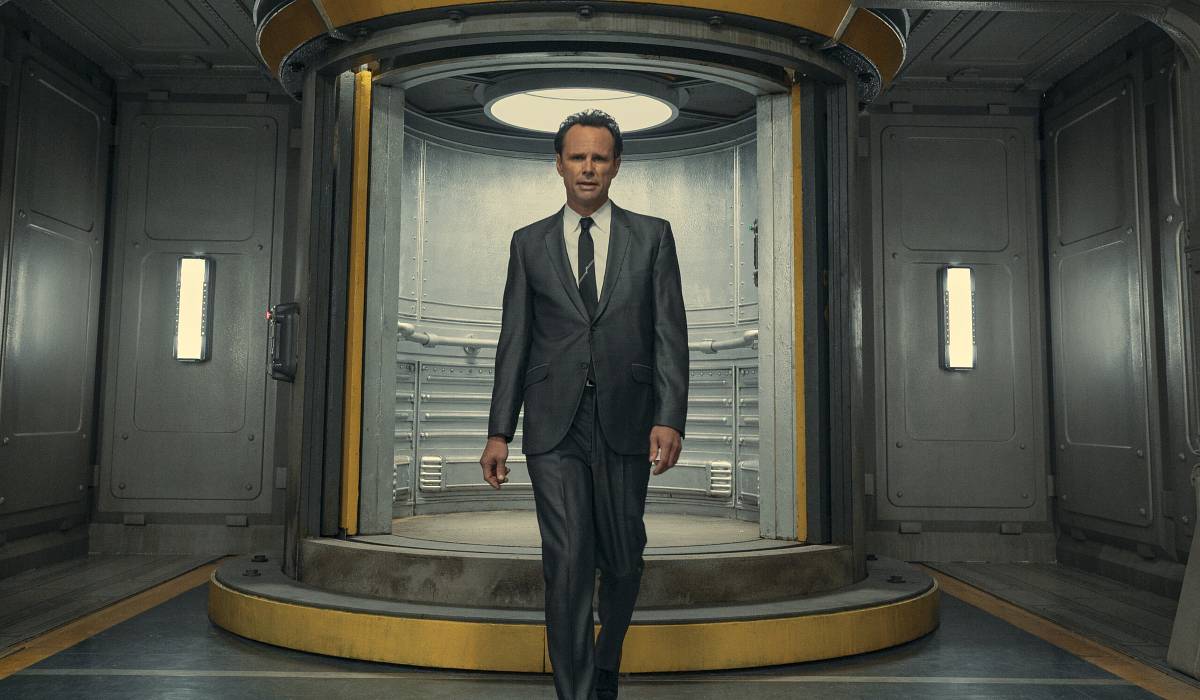
The newest evolution of Sci-Fi TV positions multi-billion-dollar conglomerates as the ultimate architects of planetary destruction. In the critically acclaimed adaptation of Fallout, the sinister conglomerate Vault-Tec did not simply build underground fallout bunkers to protect everyday citizens from incoming nuclear warheads. They actively commodified armageddon to maximize corporate shareholder value and eliminate global market competition.
Instead of merely surviving nuclear war, Vault-Tec executives placed themselves in advanced cryochambers to outlive humanity and run horrific social experiments on unsuspecting bunker dwellers. The terrifying revelation that corporate executives dropped the bombs themselves flips the classic nuclear deterrence narrative on its head. Humanity was not destroyed by geopolitical failure; it was liquidated for corporate profit.
Meanwhile, in Apple TV+’s runaway hit Silo, based on the celebrated novels by Hugh Howey, thousands of survivors live inside a massive 144-level underground bunker. Legendary author Stephen King publicly praised the series for its razor-sharp pacing and claustrophobic tension. The citizens inside the silo are forbidden from asking questions about the past, with the penalty for curiosity being immediate banishment to clean external sensors where toxic air kills them within minutes.
The Anatomy of Engineered Control
- Manufactured Scarcity: Restricting access to historical records, advanced tools, and essential medicines to keep populations dependent.
- Algorithmic Suppression: Using automated monitoring and artificial intelligence to crush dissent before it organizes.
- False Moral Superiority: Gaslighting survivors into believing their subterranean cages are acts of corporate benevolence.
- Class Stratification: Forcing labor classes into lower levels while elites manage surveillance from hidden control centers.
As Silo progresses, viewers discover the haunting role of tech billionaire Per Stensen, played with chilling charisma by Colin Hanks. Stensen justifies his monumental underground construction projects by voicing deep paranoia over weaponized artificial intelligence and rogue cyber attacks. Alongside high-ranking politicians like Senator Rosalind Thurman (portrayed by Laura Innes), these power brokers decide humanity must be locked underground for its own safety.
What makes this narrative device so compelling is the ambiguity surrounding the original catastrophe. Did Stensen genuinely rescue civilization from an imminent technological strike, or did he trigger the collapse to guarantee a return on his multi-billion-dollar bunker investment? That lingering uncertainty keeps millions of viewers glued to their screens every week.
Characters like Daniel (played by Ashley Zukerman) and Helen (portrayed by Jessica Henwick) find themselves trapped in automated transport vehicles controlled by invisible corporate overlords. The lack of physical monsters amplifies the paranoia, proving that human beings with unlimited wealth pose a far greater existential threat to civilization than any fictional creature.
Engineered Panic and Fake Threats
Another striking example of this structural revolution is the thrilling series Paradise. In this intense post-apocalyptic drama, visionary billionaire Samantha "Sinatra" Redmond, brought to life by Julianne Nicholson, listens to climate scientists sounding the alarm on catastrophic global warming. Rather than working collaboratively to prevent environmental collapse, Redmond decides to secretly construct an exclusive subterranean paradise for hand-selected elites.
Unlike Vault-Tec, Sinatra did not directly cause the natural disaster that followed, yet her calculated preparedness created an authoritarian micro-society built entirely on manufactured lies. The residents of her underground haven are raised on strict dogma claiming the surface of the Earth is a completely uninhabitable hellscape devoid of human life.
The central dramatic tension erupts when survivors discover that people actually survived above ground without corporate patronage. By hiding the truth of surface survival from her population, Sinatra maintained absolute political dominance over thousands of citizens. Preparedness was not just an insurance policy; it was a mechanism to establish uncontested personal dictatorship.
This recurring trope across modern television speaks directly to real-world anxieties regarding modern tech moguls purchasing luxury survival bunkers in places like New Zealand and Hawaii. Audiences watch these fictional billionaires engineer survival systems and immediately draw parallels to contemporary headlines about elite disaster capitalism.
The psychological tension stems from the complete gaslighting of ordinary citizens. When survivors are told to be endlessly grateful to the very corporation that stripped them of their fundamental human rights, rebellion becomes an act of psychological liberation. It forces the protagonist to question every piece of historical truth they have ever been taught.
Instead of testing physical endurance in a wasteland, modern protagonists must exercise investigative journalism and intellectual resistance. Protagonists like Juliette Nichols (played by Rebecca Ferguson in Silo) and Lucy MacLean (played by Ella Purnell in Fallout) are truth-seekers peeling back layers of institutional propaganda designed by powerful men centuries prior.
Major Apocalyptic Shows Compared
To truly understand how drastically narrative priorities have shifted across popular television over the past two decades, we must look at how core story mechanics have evolved. The differences between legacy apocalypse shows and modern corporate-engineered sci-fi thrillers demonstrate a complete reimagining of the genre.
Early shows prioritized immediate physical peril, graphic gore, and tribal conflict between ragtag groups of wanderers. Contemporary productions instead prioritize corporate espionage, institutional secrecy, systemic inequality, and puzzle-box world-building that rewards close viewer analysis.
| Series Title | Primary Antagonist | Catastrophe Source | Core Narrative Theme |
|---|---|---|---|
| The Walking Dead | Zombie Hordes & Warlords | Unexplained Biological Virus | Brutal Primal Survival |
| Fallout | Vault-Tec Executives | Premeditated Nuclear Strike | Runaway Corporate Greed |
| Silo | Founding Architects & AI | Engineered Surface Toxicity | State Censorship & Control |
| Paradise | Billionaire Sinatra Redmond | Climate Disaster Exploitation | Manufactured Isolation |
| The Last of Us | Cordyceps Mutants & FEDRA | Natural Fungal Mutation | Grief & Human Connection |
As seen in the breakdown above, the shift moves away from accidental scientific mishaps toward premeditated social engineering. When catastrophes are deliberately planned, every aspect of human life inside the shelter becomes a narrative clue waiting to be decoded by observant viewers.
This structured storytelling naturally invites massive community engagement across social media platforms. Fans spend entire weeks between episodes analyzing background set designs, corporate logos, and historical timeline discrepancies to guess who really pulled the strings.
The result is a vastly more rewarding viewing experience that keeps audiences invested across multiple seasons. Viewers are no longer just wondering who will survive the next zombie attack; they are actively working to dismantle a multi-generational corporate conspiracy.
The Lost-Inspired Mystery Formula
Much of this creative renaissance owes a massive creative debt to Lost, the landmark series created by J.J. Abrams and Damon Lindelof that revolutionized serialized television in the mid-2000s. Like the iconic Dharma Initiative, modern shows use mysterious corporate entities with retro-futuristic aesthetics, cryptic orientation films, and rigid operational rules.
In Fallout, the jaunty mascot Vault Boy and cheerful 1950s infomercials mask deeply sinister human experimentation programs. In Silo, the sacred Pact serves as a pseudo-religious legal code enforced by the shadowy Judicial department to suppress mechanical innovation and historic curiosity.
These storytelling devices turn the physical setting of the show into a giant escape room for the characters. Protagonists must uncover forgotten technology, decipher redacted documents, and bypass digital security systems to learn why their ancestors were locked underground in the first place.
Why Mystery-Box Storytelling Captivates Fans
- Deep Lore Architecture: Creating sprawling fictional histories that reward meticulous viewer analysis and theory crafting.
- Moral Ambiguity: Forcing protagonists to choose between dangerous external freedom and comfortable, safe captivity.
- Unreliable Narrators: Utilizing flashbacks and institutional propaganda to obscure the true historical timeline.
- Social Relevance: Exploring anxieties surrounding unchecked tech oligarchs, private security forces, and artificial intelligence.
Flashback episodes have become the secret weapon for these modern sci-fi epics. By intercutting present-day bunker survival with scenes of boardrooms and political summits before the apocalypse, writers build incredible dramatic irony. You watch powerful executives casually decide the fate of billions over glasses of expensive scotch, knowing precisely what horrors await their descendants.
This narrative structure also allows showrunners to cast prestigious character actors who bring immense weight to brief, crucial scenes. Seeing seasoned performers portray arrogant visionaries highlights the hubris that drove civilization off a cliff in the name of corporate salvation.
Rather than feeling like disposable filler, every flashback sequence delivers vital puzzle pieces that redefine how audiences view the current subterranean world. The show becomes an intellectual duel between past architects and present-day rebels fighting for the right to know reality.
Why Preparedness Became Terrifying
The realization that unchecked wealth and pre-emptive disaster planning can be weaponized against humanity represents a profound maturation in modern entertainment. The era of mindless monster mashes has officially given way to complex social commentary on corporate power, surveillance capitalism, and technological authoritarianism.
As audiences continue to embrace this sophisticated storytelling approach, networks will inevitably invest even heavier resources into cerebral speculative fiction. The greatest existential threat to our collective future is not an alien invasion, an untreatable disease, or an unavoidable meteor strike. The real threat is the intoxicating combination of unlimited private capital, unchecked political influence, and the arrogant belief that one person knows who deserves to survive.
Shows like Silo, Fallout, and Paradise resonate so deeply because they hold up a dark mirror to our own world. They remind us that the human spirit cannot be permanently contained inside concrete bunkers or subdued by corporate propaganda. As long as visionaries continue pushing the boundaries of Sci-Fi TV, the genre will remain one of the most vital, thought-provoking mediums on television today.
More Like This
For more updates, check out our latest entertainment and sports news.