
If you search the archives of the Lewiston Tribune, you will immediately uncover a rich and fascinating history of Idaho.
The legendary Lewiston Tribune has stood as a silent witness to over a century of untold triumphs, political shifts, and deep regional controversies.
You can learn a massive amount about American history by looking closely at how small communities recorded their daily lives. Every vintage page tells an authentic story of triumph and struggle.
Lewiston Tribune Uncovered
When you look at the archives of the Lewiston Tribune, you discover a treasure trove of historical facts.
The paper first went to print on September 3, 1892, in the bustling river port of Lewiston, Idaho.
Since that fateful day, journalists have worked tireless shifts to deliver unbiased regional reporting to the Pacific Northwest.
This legendary outlet, known officially as the Lewiston Tribune, has documented everything from gold rushes to modern political battles. Its founders, Albert L. Alford and Eugene L. Alford, believed in fearless truth-telling above all else.
They built an institution that survived economic depressions, world wars, and the rapid rise of the digital age. You will find that local archives hold details that national networks completely ignore.
Archival Goldmines
- Key historic headlines from August 13, 1914
- Detailed local government budgeting records from 1932
- Comprehensive reporting on the Snake River dam construction
You can find historic files of the Lewiston Tribune at local universities and state libraries. These regional archives hold tiny details that national networks completely ignore but matter deeply to locals.
These small-town stories carry immense weight for the people living them every single day. They define the socio-economic landscape of the entire Lewiston-Clarkston Valley for future researchers.
The advertising archives reveal the shifting prices of daily goods over a century of economic shifts. You see how national events like the Great Depression hit home in rural areas.
The family announcements offer an unbroken lineage of regional births, weddings, and passings. Lewiston Morning Tribune microfilms are often more accurate than official government registries from that era.
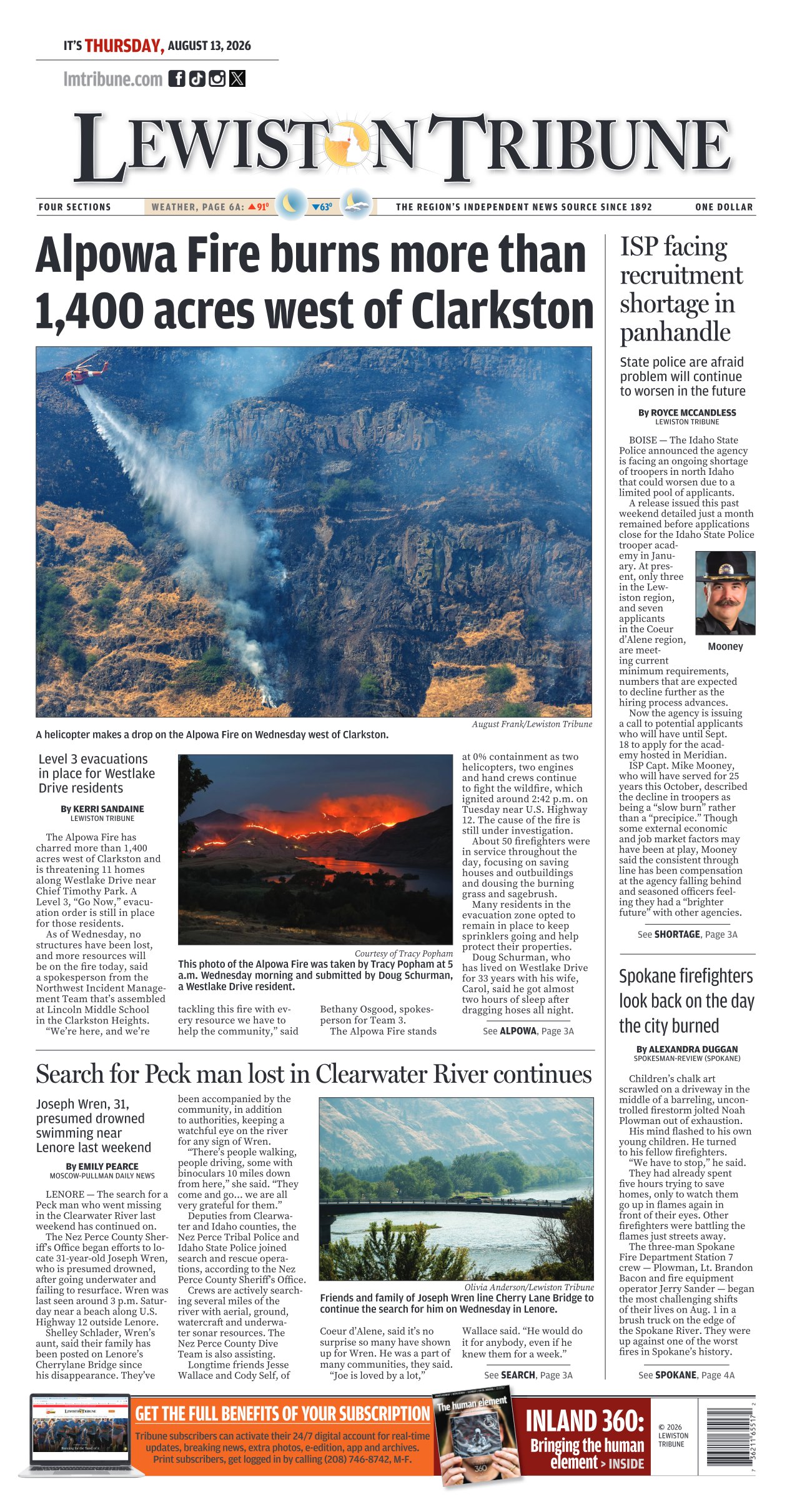
Preserving Local Journalism
Many researchers rely on the Lewiston Tribune to verify municipal records and family genealogies.
Without these archives, a massive chunk of Pacific Northwest history would simply disappear forever.
You must realize that local reporting is the primary draft of history for future generations.
The regional impact of the Lewiston Tribune extends far beyond the borders of Idaho.
Its journalists have won numerous prestigious awards for investigative reporting and public service.
They have exposed corruption in small municipalities and fought for vital environmental conservation efforts.
Just as modern readers search online for exclusive celebrity profiles, they also seek reliable local news from trusted regional newspapers. Both forms of media keep us connected to the human experience in unique ways.
They show us what people value, love, and fear in different historical eras. They capture the raw, unedited heartbeat of humanity.
Community Connections
- Local reporting on environmental changes in the Clearwater River basin
- Investigative pieces on the regional logging industry’s steep decline
- Weekly spotlights on community heroes and grassroots charitable organizations
Regional journalists spend hours sitting in boring city council meetings to protect your hard-earned tax dollars. They ask tough questions to powerful figures who would prefer to operate in total silence.
You benefit directly from this constant oversight, even if you never pick up a physical paper. Without this watchdog presence, local governments could easily waste public funds without any accountability.
The newspaper acts as a mirror reflecting the community’s true health and challenges. It celebrates local victories and demands answers during regional environmental crises.
The print edition serves as a physical bond between neighbors who share a geographic identity. It sparks conversations at local diners and busy community centers every single morning.
Historical Printing Milestones
Historians often point to the Lewiston Tribune as one of the most resilient print publications in the Pacific Northwest.
The transition from manual typesetting to digital publishing was filled with immense financial challenges.
Yet, the paper adapted without losing its core editorial integrity or its dedicated subscriber base.
Investing in digital archives of the Lewiston Tribune ensures that future generations have direct access to these valuable stories.
The digital age demands that we digitize these delicate physical papers before they decay into dust.
Ink fades, and paper crumbles, but digital records can last indefinitely when properly maintained.
You can help protect this legacy by supporting local digitization efforts and subscribing to digital editions. Every subscription funds the tedious process of scanning old microfilm and archiving photos.
This preservation work is vital for maintaining historical accuracy in our modern digital world. It prevents the erasure of regional identities.
Technological Evolution
- Transition to high-speed offset printing presses in 1965
- Introduction of the first online digital edition in 1998
- Complete digitization of archives dating back to 1892
The early printing rooms were loud, hot, and filled with the intense smell of lead ink. Printers hand-set every single letter to create the daily front page under tight deadlines.
This physical labor required immense skill, concentration, and dedication from the entire crew. The introduction of computers revolutionized how news was gathered, edited, and distributed.
Reporters could file stories directly from the field using portable terminals and early internet connections. This technological shift dramatically increased the speed and accuracy of regional reporting.
Today, online platforms allow the paper to reach global audiences instantly and efficiently. Former residents living across the world can stay connected to their hometown news.
Media Impact Database
To understand the sheer reach of this publication, we must look at the historical circulation figures of the Lewiston Tribune.
The following data highlights the impressive growth and digital shift of the paper over the decades.
These numbers tell a story of adaptation, survival, and deep reader loyalty in Idaho.
You can see how readership preferences shifted from physical paper to screen-based subscriptions over time.
This transition required massive structural changes within the newsroom and editorial departments.
Journalists had to master multimedia storytelling alongside traditional print writing techniques.
The data proves that local interest in news remains incredibly high, even if the medium changes.
The demand for verified facts is stronger than ever in our highly polarized modern world.
The paper continues to meet this demand head-on with quality journalistic standards. It remains a shining beacon of truth.
| Decade | Print Circulation | Digital Subscribers | Active Journalists |
|---|---|---|---|
| 1920s | 5,500 | 0 | 8 |
| 1950s | 15,000 | 0 | 18 |
| 1980s | 24,500 | 0 | 35 |
| 2010s | 18,000 | 6,500 | 22 |
| 2020s | 10,200 | 14,800 | 15 |
Future of Lewiston Tribune
If you want to support independent regional voices, keeping the Lewiston Tribune active is crucial.
The paper must find sustainable business models to thrive in the modern internet era.
Relying solely on print advertisements is no longer a viable strategy for any publisher.
Local communities in Clarkston and Lewiston continue to champion the Lewiston Tribune as their premier news source.
The bond between the readers and the writers is incredibly strong in this region.
This mutual trust is the foundation of local journalism’s survival and future success.
Ultimately, the legacy of the Lewiston Tribune remains a vital part of American journalism.
By valuing local reporting, you ensure that history is recorded accurately and transparently.
Let us keep these stories alive for the generations to come by supporting local editors. Your engagement directly fuels their passion.
Digital Transformation
- Dynamic paywall models to secure recurring reader subscription revenue
- Interactive hyper-local newsletters delivered directly to your inbox daily
- Expanding multimedia coverage with engaging local investigative podcasts
The shift to a digital-first strategy requires investments in new user experiences and platforms. Subscribers expect fast loading times and clean layouts on their mobile devices today.
Providing a seamless digital experience is key to retaining younger readers and supporters. Collaborations with local universities can also help fund deep investigative projects.
These partnerships bring fresh perspectives and resources to the newsroom each year. They train the next generation of journalists in traditional, ethical reporting standards.
By focusing on deep, investigative regional reporting, the paper offers something unique. Original stories about your community are the ultimate value proposition for any newspaper.
More Like This
For more updates, check out our latest entertainment and sports news.