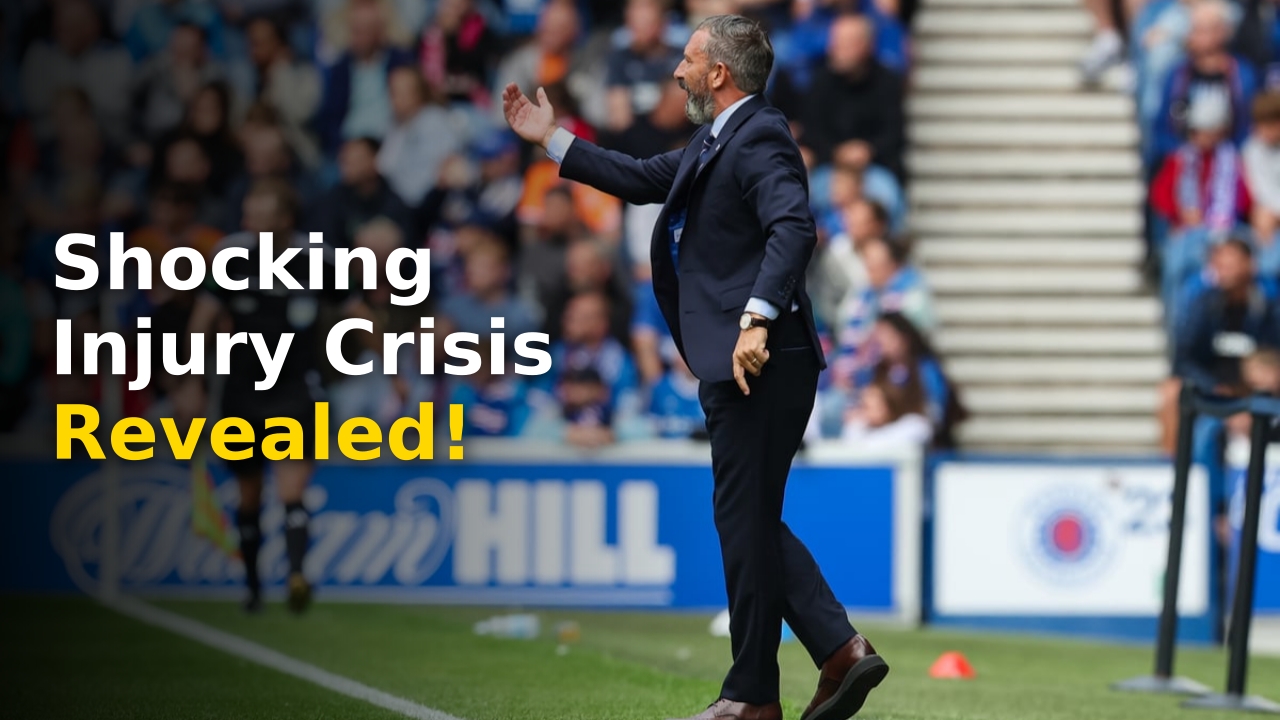
Are you ready to see how the latest Rangers Injury nightmare has completely reshaped the team’s season ahead of a vital European night? The latest health update from Scottish football insiders has exposed massive structural vulnerabilities at Ibrox ahead of their high-stakes continental campaign.
Fans across Glasgow are holding their breath as managerial commentary confirms that key starter positions are completely depleted. This fitness crisis forces the club to enter the upcoming transfer window with an aggressive, desperate recruitment agenda.
With crucial continental fixtures fast approaching, technical directors are working around the clock to prevent a total domestic collapse. Understanding this injury storm requires looking at both the medical room and the scouting department’s immediate targets.
Rangers Injury Crisis Deepens Fast
The medical room at Ibrox Stadium is currently operating at full capacity during one of the busiest months of the season. Major starting stars continue to fill the treatment tables, leaving coaching staff with almost no room for tactical flexibility.
When key players miss consecutive fixtures, squad chemistry rapidly deteriorates under relentless competitive pressure. Supporters who track exclusive sports celebrity news know that fitness setbacks can derail multi-million pound seasons instantly.
Physical strain from condensed winter schedules has clearly caught up with the Scottish heavyweights. Veteran stars and young talents alike are suffering from recurrent hamstring pulls, knee ligament damage, and high-impact contact injuries.
According to sports science experts, the intense pressing style demands an athletic threshold that current squad rotation simply cannot sustain. When two or three core starters drop out, the workload on remaining players spikes exponentially across every competition.
This vicious circle creates secondary injuries among exhausted athletes who are forced to play through minor discomfort. The club’s medical department is under intense public scrutiny as fans demand answers regarding training ground practices in Glasgow.
Unpacking The Treatment Room Casualty List
- Todd Cantwell – Suffering from persistent muscle fatigue after intense fixture congestion.
- Danilo – Recovering from complex joint discomfort that requires extended rehabilitation protocols.
- Nicolas Raskin – Undergoing physical therapy for high ankle sprains suffered in domestic action.
- Ryan Jack – Managing chronic calf stiffness that limits high-intensity athletic performance.
- Tom Lawrence – Working through recurring soft tissue ailments under specialist medical supervision.
The lack of available depth is visible during every high-tempo fixture in both domestic and European action. Without key anchors in midfield and defense, the squad looks unusually fragile during transition phases.
Two Key Areas Targeted Now
.jpeg?width=1200&auto=webp&trim=178%2C0%2C180%2C0)
Recruitment specialists are focusing heavily on two critical pitch positions to stabilize performance levels immediately. Executives understand that failing to land top-tier talent during the transfer window could cost tens of millions in European prize money.
Scouting networks are currently blanketed across Europe and South America to identify match-ready talent. The recruitment team wants athletes who can walk directly into the starting eleven without needing weeks of fitness adaptation.
Financial resources are being reallocated to secure high-impact deals before competition heats up. Intelligence from major outlets like BBC Sport confirms that valuation negotiations are already underway with key target clubs.
Central Midfield Overhaul Priority
The first major priority involves securing a physically dominant central midfielder capable of breaking up opponent attacks. Tactical control in central areas has evaporated without fit ball-winning options on the pitch.
Negotiations are centering around box-to-box midfielders who combine physical stamina with precise passing ability. Finding a player who fits the financial structure of Scottish football while delivering elite European quality remains a tough challenge.
Dynamic Forward Depth Targeted
The second urgent focal area centers on acquiring a dynamic forward player who can operate centrally or on the flank. Goal scoring output has plummeted since top strikers were sidelined with recurring muscular injuries.
Scouts are prioritizing target forwards with proven goalscoring records in competitive leagues across Europe. Loan deals with options to buy appear to be the preferred financial mechanism for the upcoming window.
Boardroom executives are reportedly prepared to sanction significant wage packages to entice high-profile talent to Scotland. Time is running out to finalize these multi-million pound transfer operations before the deadline passes.
Europa League Stakes Skyrocket High
European football offers immense financial rewards, but it also relentlessly exposes any physical weakness in a squad. Facing continental opposition with a depleted matchday lineup presents immense tactical danger for the Scottish giants.
Opposing managers are well aware of the fitness limitations currently plaguing the Light Blues squad. Tactical analysts from rival clubs are designing aggressive game plans aimed directly at exploiting tired legs late in matches.
Every group stage fixture represents millions of pounds in UEFA coefficient rewards and broadcasting revenue. Dropping crucial points due to fatigue or injury could severely hamper long-term financial planning for several seasons.
Traveling to demanding away grounds across Europe puts extra stress on players already pushing physical limits. Long flights, unfamiliar pitches, and late-night recoveries only amplify physical vulnerability among key athletes.
Supporters are demanding that board members prioritize domestic stability while maintaining competitive standards on the European stage. Balancing these competing pressures demands world-class squad management and elite sports science support.
Coaching staffs must adapt tactical setups to minimize unnecessary defensive running during intense European fixtures. Defensive compactness and disciplined counter-attacking strategies may replace high-pressing tactics until key stars return to full fitness.
Managerial Tactics Under Heavy Fire
Opposition managers, including experienced figures like Derek McInnes, have publicly observed how injuries disrupt team performance. When rival coaches spot physical vulnerability, they adjust their own pressing triggers to exert maximum pressure on reserve players.
Tactical flexibility becomes almost impossible when key game-changers are stuck watching from the grandstands. Managers are forced to play individuals out of position, creating obvious structural flaws that experienced opponents exploit.
Fans in the stands are growing vocal about rotation policies and squad selection choices during recent matches. The pressure on the coaching staff is immense as every tactical decision is dissected by national media outlets.
Training sessions have reportedly been altered to focus more on tactical positioning rather than intense physical conditioning. Preventing additional non-contact muscular injuries has become the single highest priority for the strength and conditioning department.
Young academy prospects are suddenly being thrust into high-intensity match environments before they are fully ready. While young talent brings energy, relying heavily on inexperienced teenagers during critical European ties carries substantial risk.
The coaching staff understands that results determine job security regardless of mitigating medical circumstances. Navigating this challenging patch requires exceptional leadership, tactical innovation, and a fair share of good fortune on the pitch.
Rangers Injury Stats And Figures
Analyzing the raw numbers behind this physical breakdown reveals the true extent of the club’s current crisis. Another Rangers Injury wave could reduce available squad selection choices below the minimum requirements for competitive match registration.
| Player Name | Position | Injury Type | Estimated Return | Market Value |
|---|---|---|---|---|
| Todd Cantwell | Attacking Midfield | Hamstring Strain | 3 Weeks | £8.5 Million |
| Danilo | Center Forward | Knee Ligament | 6 Weeks | £6.0 Million |
| Nicolas Raskin | Defensive Midfield | Ankle Sprain | 2 Weeks | £7.0 Million |
| Ryan Jack | Central Midfield | Calf Recurrence | 4 Weeks | £2.5 Million |
| Tom Lawrence | Winger | Muscle Tissue | 3 Weeks | £3.5 Million |
These core assets represent over £27.5 million in sidelined market value sitting in the treatment room. The total games missed by key starters has surpassed 45 combined matches already this term.
Financial analysts estimate that player absences cost the club roughly £150,000 per week in unutilized salary expenses. Medical rehabilitation costs and emergency specialist consultations add significant financial strain to operational budgets.
When key metrics are examined side-by-side, the urgent necessity of the upcoming transfer window becomes indisputable. Without decisive transfer action, domestic title hopes and European progression goals remain in extreme jeopardy.
Future Outlook For Light Blues
The upcoming weeks will define the outcome of the entire campaign for the Scottish titans. If recruitment directors successfully execute their target signings, the club can stabilize and surge forward in domestic competition.
However, failing to address squad depth issues during the recruitment window could result in catastrophic season setbacks. Fans are keeping a close eye on administrative decisions as rumors swirl across European sports media.
Supporters will be watching closely to see if management can overcome the immediate Rangers Injury crisis and bring back glorious winning football. Only time will reveal whether early winter preparation can rescue European ambitions and secure silverware.
More Like This
For more updates, check out our latest entertainment and sports news.