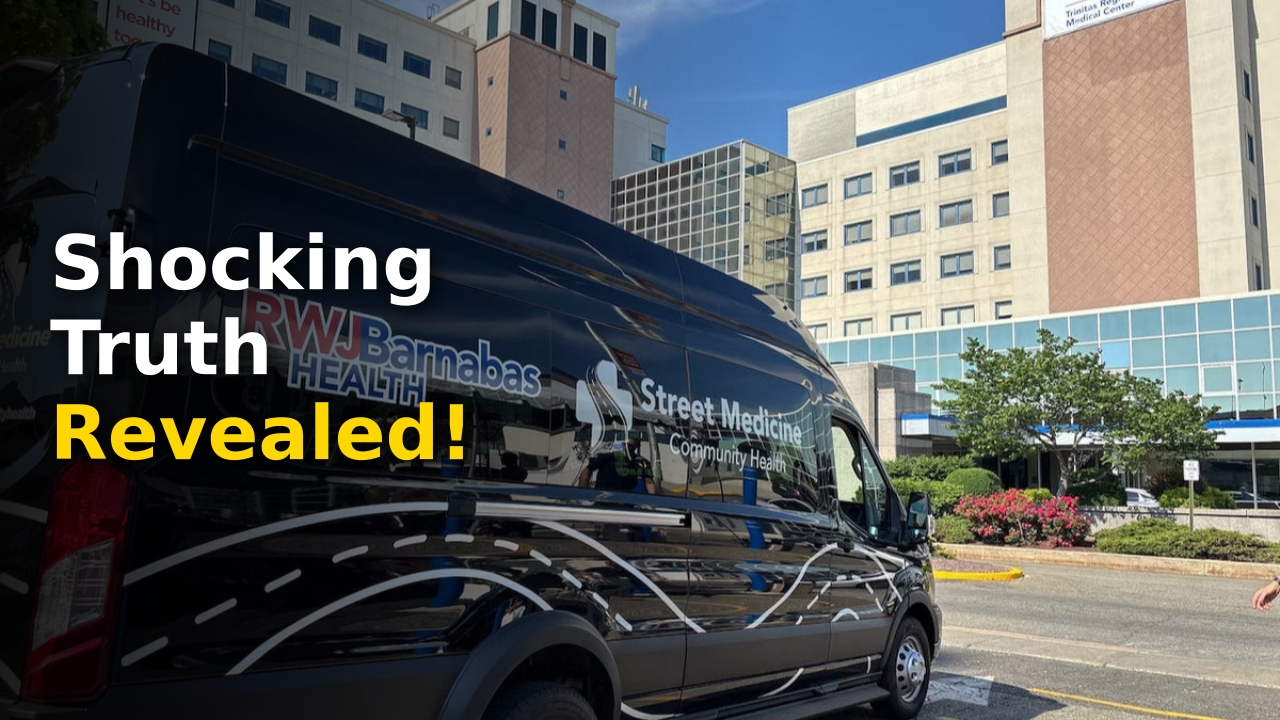
Have you ever wondered how real-world healthcare heroes survive when they step off the glittering Hollywood screen and bring street medicine directly to the hard concrete? You might think this gritty level of care is exclusive to premium television dramas, but a massive real-world medical movement is launching in your local neighborhood right now. You are about to witness a paradigm shift in how urban communities care for their most vulnerable residents.
The acclaimed HBO emergency room drama The Pitt captivated millions of viewers by showcasing dedicated medical professionals treating vulnerable patients in urban alleyways and under overpasses. Now, an inspiring initiative in Elizabeth, New Jersey is bringing this exact concept to life to save real lives. This bold venture bridges the gap between television fiction and the harsh realities of modern poverty.
This groundbreaking healthcare program is set to deliver critical medical attention directly to those who face insurmountable barriers to traditional clinical care. By removing costly medical hurdles, local doctors are preparing to hit the pavement to serve their community with unprecedented compassion. You will see how this revolutionary approach is transforming the landscape of public health.
street medicine reality

The highly anticipated launch of this localized street medicine clinic is officially scheduled for August 13, 2026. You will find this vital healthcare hub stationed at the NJRC Union Reentry Site in the heart of Elizabeth, a location specifically chosen for its high density of citizens in transition.
This massive effort represents a powerful alliance between RWJBarnabas Health, Clara Maass Medical Center, and the New Jersey Reentry Corporation (NJRC). Together, these influential organizations are completely rewriting the rules of metropolitan community health delivery by moving doctors out of traditional offices and directly onto the streets.
This service specifically targets individuals returning to society from incarceration, local veterans, and citizens battling severe substance use disorders. These are the highly vulnerable populations that traditional, sterile hospital environments frequently leave behind due to systemic neglect and rigid institutional rules.
Traditional healthcare networks often fail these high-risk groups due to rigid appointment scheduling, transportation gaps, and lack of standard identification. This program strips away those complex bureaucratic hurdles entirely to provide immediate clinical relief. By eliminating the paperwork, doctors can focus entirely on the human being standing in front of them.
Patients can walk directly into the new clinic without needing health insurance, government-issued identification, pre-scheduled appointments, or any form of payment. It represents a level of medical freedom and human dignity rarely seen in modern healthcare systems. This low-barrier model ensures that no one is turned away in their moment of greatest need.
The incredible medical team is operating under the direct leadership of Dr. Edward J. Egan, a veteran emergency physician from Trinitas Regional Medical Center. Alongside him, Dr. Balpreet Grewal-Virk provides critical community health leadership to guide this life-saving initiative. Their combined decades of clinical experience ensure that patients receive top-tier care in non-traditional settings.
Critical medical services
- Full physical examinations and comprehensive clinical health assessments.
- Blood pressure monitoring and regular blood glucose level checks.
- Comprehensive medication reviews to prevent dangerous pharmaceutical drug interactions.
- Direct referrals to advanced medical specialists within the local network.
- Coordinated follow-up care to ensure long-term patient recovery and stability.
- Evaluation and continuation of buprenorphine treatments, including Suboxone, for opioid recovery.
Continuing life-saving addiction treatments like Suboxone is a massive step forward in fighting the ongoing national opioid epidemic. By offering this specialized medical care on-demand, local doctors can actively prevent devastating relapses and save lives. This clinical support provides a vital lifeline for those fighting the agonizing cycle of addiction.
Patients requiring complex medical interventions will not be abandoned on the streets after their initial clinical evaluation. The program acts as a direct pathway, linking patients to premier providers within the vast RWJBarnabas Health network. This seamless transition ensures that street-level care is backed by the full power of a major medical system.
Hollywood meets reality
You might have watched fictional doctors battling the elements on your television screen, but the true story of street medicine is far more compelling. The popular HBO drama The Pitt sparked a national conversation about clinical accessibility and the moral duty of healthcare providers. It showed the world that medicine is not defined by the four walls of an expensive clinic.
To understand how this practice evolved, we can look at the global history of street medicine which has provided mobile clinical care to unsheltered individuals for decades. This is not a sudden medical trend, but a battle-tested philosophy of compassionate care that dates back to pioneering humanitarian efforts. It proves that meet-the-people-where-they-are healthcare actually works.
While the Hollywood version features high-stakes cinematic tension and dramatic lighting, the real-world execution requires meticulous planning and deep community trust. The doctors in Union County are stepping out of pristine offices into unpredictable environments to deliver hope. Their daily operations require immense emotional resilience and a deep commitment to social justice.
Building trust with highly skeptical patients is the most difficult obstacle these dedicated medical professionals face on a daily basis. Many individuals served by the program have experienced systemic trauma that makes them wary of traditional authority figures. Overcoming this barrier requires patience, respect, and a consistent presence in the community.
The New Jersey Reentry Corporation plays a crucial role in bridging this deep gap of social trust. Their established presence at the Union Reentry Site ensures that patients feel safe and respected from the moment they arrive. This partnership transforms a simple medical checkup into a holistic welcoming experience.
Conventional clinics require advanced booking, credit checks, and extensive paperwork that many vulnerable citizens simply do not possess. For someone sleeping on a park bench or transitioning from a correctional facility, those demands are practically impossible. By removing these barriers, the program offers a fresh start and a path to recovery.
Analyzing critical impact
The numbers behind the New Jersey Reentry Corporation are staggering and show why this expansion is so desperately needed in Union County. Under the leadership of Executive Director Jim McGreevey, the organization has achieved monumental success in transforming lives. Their data-driven approach proves that targeted intervention yields massive positive outcomes for the community.
Since its founding, the organization has served more than 33,000 individuals across the state. This incredible reach includes providing vital resources to more than 2,000 veterans who served our country but fell on hard times. These brave individuals are finally receiving the specialized medical and social support they earned.
Securing stable health coverage is a massive barrier for citizens returning to society after serving prison sentences. The group has facilitated over 25,000 Medicaid enrollments, opening doors to long-term health, dental, and psychological stability. This critical administration work forms the backbone of successful societal reintegration.
Thousands of individuals have also received direct referrals for critical addiction treatment and behavioral health services through this program. This holistic approach targets the root causes of recidivism and homelessness rather than just treating immediate physical symptoms. It represents a deep investment in the long-term human potential of every participant.
Executive Director Jim McGreevey emphasized that healthcare must be readily available where people actually exist in their daily lives. His vision relies on dismantling the physical and bureaucratic walls of traditional medicine to reach the marginalized. This philosophy is the driving force behind the partnership with RWJBarnabas Health.
If you enjoy tracking how major television shows inspire real-world cultural shifts, you can discover more trending entertainment news on BrightCelebrity to stay ahead of the curve. The intersection of media representation and actual social reform is stronger than ever before. This real-life initiative is a perfect example of art reflecting and driving positive social change.
Vital impact metrics
To fully comprehend the scale of this public health crisis and the response of local organizations, let us examine the historical achievements of the program partners. These metrics showcase the profound impact of low-barrier healthcare interventions on vulnerable populations. They prove that targeted, compassionate care can drastically alter the trajectory of a community.
| Metric Category | Total Achievements | Primary Location |
|---|---|---|
| Total Individuals Served | 33,000+ | New Jersey Statewide |
| Medicaid Enrollments | 25,000+ | NJRC Facilities |
| Veterans Assisted | 2,000+ | NJRC Union Reentry |
| Clinic Launch Date | August 13, 2026 | Elizabeth Site |
These figures highlight the sheer volume of underserved individuals who require immediate, low-barrier clinical assistance. By integrating a clinical team into this existing framework, the partners are maximizing their community impact and reaching people who would otherwise avoid care. This synergy is key to addressing the healthcare gap.
Trinitas Regional Medical Center has long been on the front lines of emergency care in Union County. Having their medical director lead this initiative ensures that the clinic operates with top-tier emergency room expertise and crisis-management experience. This background is critical when treating patients with complex, unmanaged chronic conditions.
Medical equity is not just about building bigger hospitals; it is about extending the reach of existing systems to the margins. This new program represents a massive step toward clinical inclusivity for New Jersey residents who have felt abandoned by society. It is a powerful statement that everyone deserves high-quality medical care.
By treating chronic conditions before they escalate, this outreach reduces the financial burden on emergency rooms. Preventing a clinical crisis is always more cost-effective than treating one in an intensive care unit. This proactive approach saves taxpayer money while simultaneously delivering superior patient outcomes.
This program also serves as an educational beacon for other medical institutions across the United States. Many healthcare systems are watching this trial closely to see if it can be replicated in their own metropolitan areas. The success of this model could inspire nationwide reform in community medicine.
A robust community safety net requires active participation from both public and private health sectors. This collaboration demonstrates how healthcare networks can successfully partner with local nonprofit organizations to create lasting change. It is a testament to what can be achieved when clinical expertise meets grassroots advocacy.
future of street medicine
As society grapples with rising homelessness and economic instability, the demand for street medicine will only continue to grow. You are seeing a fundamental shift in how modern cities approach public health challenges. Mobile clinics and proactive outreach are transitioning from alternative experiments to essential components of urban healthcare.
This Elizabeth-based initiative proves that healthcare systems can adapt to meet the changing needs of our communities. It offers a clear, compassionate blueprint for treating patients with dignity, regardless of their societal status. The lesson is clear: when we meet people where they are, we can begin to heal the entire community.
While shows like The Pitt bring these critical struggles into our warm living rooms, the real work happens on the cold concrete. The doctors, advocates, and patients in Elizabeth are proving that compassion is the most powerful medicine of all. Their courage and dedication are a beacon of hope in challenging times.
The next time you tune in to watch your favorite medical drama, remember that real heroes are walking the streets of New Jersey. They do not wear makeup or follow a script, but their life-saving work is making our world a healthier place every single day. Their efforts deserve our deepest respect and ongoing support.
More Like This
For more updates, check out our latest entertainment and sports news.