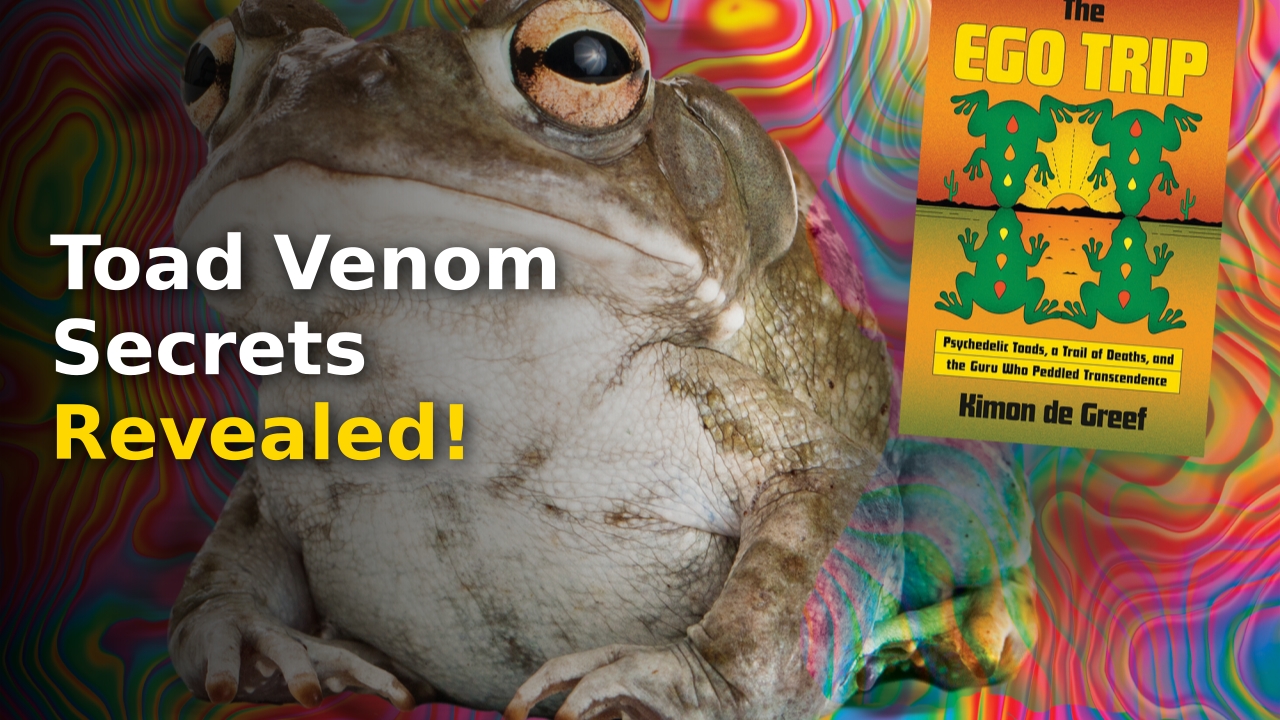
Toad Venom is the terrifyingly potent psychedelic currently sweeping through the ranks of the world’s most powerful people, promising an experience that some call the ultimate rebirth. Would you risk your sanity and your physical safety for a chance to witness the dissolution of your own ego? This isn’t just another party drug for the bored and wealthy; it is a chemical sledgehammer that is redefining the landscape of modern spirituality and addiction recovery in 2026.
You have likely heard of acid or mushrooms, but those are mere toys compared to the 5-MeO-DMT produced by a specific amphibian in the Sonoran Desert. This substance has created a global movement led by a controversial figure whose rise and fall reads like a Hollywood thriller. The obsession with this ‘God Molecule’ has reached a fever pitch, drawing in legendary athletes, political scions, and tech pioneers who are all looking for a shortcut to the divine.
As the trend grows, the line between healing and horror continues to blur, leaving a trail of trauma and legal battles in its wake. Understanding the origins of this movement requires looking at the man who started it all, a doctor who became a shaman and convinced the world that a toad’s secretions could save their souls. This is the raw, unvarnished truth about the most dangerous high in the world today.
Toad Venom: The Ultimate Celebrity High
The elite have always looked for the next big thing to conquer their inner demons, and Toad Venom has become their weapon of choice. Heavy hitters like Mike Tyson have famously credited the substance with changing their lives forever. Tyson revealed on the Joe Rogan Experience that after smoking the venom, he felt like he had died and been reborn, losing the aggression that once defined his boxing career.
Even the halls of political power haven’t been immune to the siren song of the desert toad. Hunter Biden detailed his experiences with the medicine in his memoir, claiming that the intense psychedelic trip managed to keep him sober from crack cocaine for an entire year. The sheer intensity of the experience acts as a neurological reset that traditional rehabs often struggle to replicate.
Military veterans are also joining the ranks of the ‘toad smokers’ to combat the scars of war. Former Navy SEAL Robert O’Neill, the man who shot Osama bin Laden, admitted to Tucker Carlson that he used the substance to treat severe PTSD. For these men, the drug isn’t a recreation; it is a desperate attempt to find peace after years of unimaginable stress and violence.
The tech world’s elite are equally fascinated by the potential for cognitive expansion. Bill Atkinson, a key member of the original Apple Macintosh team, described his 2017 trip as a ‘psychedelic bungee jump.’ He believes the substance provides ‘training wheels’ for achieving a divine state of consciousness, suggesting that the future of human intelligence might be linked to these ancient biological compounds.
While these celebrities celebrate their breakthroughs, they often ignore the complex ethics of the practice. The demand for the venom has put a massive strain on the local ecosystem of the Sonoran Desert, where the toads are harvested. As we track exclusive celebrity lifestyles, it becomes evident that the pursuit of personal enlightenment often comes at a high cost to the natural world and the indigenous cultures that first discovered these secrets.
The ritual itself involves vaporizing the dried flakes of the toad’s secretions in a glass pipe. Within seconds of inhaling, the user is thrust into a void where time, space, and identity cease to exist. It is a violent, beautiful, and often terrifying transition that has earned the substance its reputation as the most powerful psychedelic on the planet.

From Crack Pipes to Shamanism
The man responsible for this global phenomenon is Octavio Rettig Hinojosa, a Mexican doctor who reinvented himself as a 21st-century shaman. His journey began not in a temple, but in the depths of his own addiction. Octavio was a cocaine addict who found salvation in the very same chemical he would later peddle to the stars. After being introduced to 5-MeO-DMT by a fellow student, he claimed his addiction vanished overnight.
Driven by a messianic fervor, Octavio began traveling to the northern regions of Mexico to treat indigenous tribes suffering from methamphetamine crises. His success in these communities earned him the nickname ‘El Doctor Sapo’—the Toad Doctor. He wasn’t just a medical professional anymore; he was a bridge between the ancient world and modern suffering, using Toad Venom as his primary tool for transformation.
His fame exploded after a TEDx organizer named Klaudia Oliver discovered him. She polished his image, styled him, and prepared him for the global stage. By the time he reached the Burning Man Festival in 2013, he was a superstar. Dressed in ceremonial Seri attire, he resembled a ‘Mexican Elvis,’ shaking rattles and singing while disciples lined up to smoke his potent amphibious potion.
The financial rewards were as massive as the spiritual ones. Octavio began charging thousands of dollars for group sessions, quickly tripling his prices as his notoriety grew. He carried a business card identifying himself as a practitioner of ‘indigenous knowledge for the whole world,’ believing that he was on a divine mission to heal the planet. However, fame has a way of distorting even the most noble intentions.
As he traveled the globe, Octavio became more of a ‘Pied Piper’ than a healer. He began to believe his own hype, often treating his clients with a level of aggression that shocked observers. His sessions were no longer about gentle guidance; they were high-stakes gambles with the human psyche. He would shout at first-time users, telling them to ‘put on a fucking diaper’ before they faced the godhead.
Despite the growing red flags, his cult of personality only strengthened. The United Nations Association of Venezuela even endorsed him in 2014. People wanted to believe in the miracle cure, and Octavio was more than happy to provide the spectacle they craved. But beneath the rattles and the chants, a much darker reality was beginning to take shape.
The Seri Tribe Connection
- The Seri people, also known as the Comcaac, are the traditional inhabitants of the region where the toad lives.
- While Octavio claimed his practices were rooted in their ancient traditions, the tribe has since officially disavowed him.
- Tribal leaders state that Toad Venom smoking was never part of their ancestral heritage until Octavio introduced it to them in the early 2010s.
- The exploitation of their name for commercial gain has led to a deep rift between the shaman and the indigenous community.
- Indigenous activists now label him an ‘actor’ and a ‘fake’ who used their culture as a backdrop for his personal brand.
Science of the 5-MeO-DMT
- The Sonoran Desert Toad (Incilius alvarius) possesses large glands on its neck and limbs that secrete a milky-white venom.
- This venom contains high concentrations of 5-MeO-DMT, a powerful tryptamine that is four to six times stronger than its cousin, DMT.
- When ingested, the venom is toxic and can be fatal to predators or humans; however, vaporization changes its chemical structure.
- The process of ‘alchemy’ through heat makes it safe to inhale, triggering an immediate and profound alteration of brain chemistry.
- Current research in 2026 is looking into how this molecule can literally rewire the brain to break the cycles of depression and addiction.
Data Behind the Toad Venom
To understand the sheer scale of the Toad Venom movement, one must look at the numbers and the clinical interest it has generated. What started as a fringe practice in the desert has transformed into a multimillion-dollar industry involving retreats, underground guides, and now, pharmaceutical corporations. The ‘God Molecule’ is being quantified, standardized, and packaged for a global audience hungry for mental health breakthroughs.
| Category | Detail / Statistic | Impact Level |
|---|---|---|
| Active Compound | 5-MeO-DMT | Extreme |
| Ceremony Cost | $500 – $3,000 per session | High |
| Duration of Trip | 15 to 45 minutes | Moderate |
| Celebrity Users | Mike Tyson, Hunter Biden, etc. | Massive |
| Clinical Trials | Over 12 active Phase II trials | Growing |
These figures show that the substance is moving out of the shadows and into the mainstream. However, the commercialization of Toad Venom brings its own set of dangers. When profit becomes the primary driver, safety protocols are often the first things to be discarded. This is exactly what happened as Octavio’s practice expanded across borders and into the hands of less experienced practitioners.

Violence and the Dark Side
The darker side of Toad Venom began to emerge as Octavio’s sessions became increasingly erratic. Video evidence surfaced in 2016 showing the shaman kicking and slapping a client on a beach in Venezuela. He claimed this was a necessary ‘mindfuck’ to help the user break through psychological resistance, but to most observers, it looked like a brutal assault on a vulnerable person.
Even more disturbing were reports of Octavio using Taser-like devices on comatose trippers or pouring water down their throats, a practice that many compared to waterboarding. He argued that these extreme measures were essential parts of the neo-shamanic experience. This defense fell flat when the body count began to rise, with rumors of at least four deaths associated with his ceremonies.
In one high-profile incident, a Spanish photographer died during a session, leading to Octavio’s arrest by Mexican authorities. Although he was never convicted and continues to deny any wrongdoing, the incident sent shockwaves through the psychedelic community. It highlighted the total lack of oversight in the world of underground shamanism, where a leader’s charisma is the only thing protecting a client from harm.
The lack of physical preparation for these trips is another major concern. 5-MeO-DMT causes a complete loss of bodily control, and without proper ‘sitting,’ users can aspirate on their own vomit or suffer from seizures. Octavio’s disregard for these basic medical safety nets proved that his transition from doctor to shaman had left behind the most important tenet of medicine: first, do no harm.
Furthermore, the drug often unleashes powerful, repressed emotions and physical urges. There have been multiple allegations of Octavio entering into sexual relationships with female clients who were still processing their intense psychedelic experiences. This abuse of power is a recurring theme in cult-like environments where the leader is viewed as a god-like figure who can do no wrong.
Today, Octavio still operates healing retreats in northwest Mexico, but he is a pariah in many circles. He remains a ‘divisive prophet’ whose actions forced the world to look at the dangers of unregulated psychedelic therapy. His legacy is a complicated mix of genuine healing for some and absolute devastation for others, a reminder that the most profound human experiences are the easiest to exploit.
Legacy of the Toad Venom
As we move further into the decade, the Toad Venom story is entering a new, pharmaceutical phase. The era of the lone, charismatic shaman is being replaced by white-coated researchers and clinical trials. Scientists are now trying to synthesize 5-MeO-DMT in labs, removing the need to harvest the toads and creating a more predictable, safer experience for patients.
This shift toward medicalization is the direct result of the awareness raised—for better or worse—by the early pioneers. The God Molecule has proven too powerful to ignore, and its potential to treat treatment-resistant depression and addiction is a beacon of hope for millions. The scientific community is now doing the hard work of proving what the ‘toad smokers’ have claimed for years.
However, the transition to big pharma brings its own set of questions. Can a spiritual experience truly be bottled and sold as a prescription? Will the ‘ego death’ that celebrities chase at Burning Man be as effective in a sterile hospital room? These are the questions that will define the next chapter of the psychedelic revolution.
You must realize that the story of Toad Venom is more than just a tale of a ‘wacko’ shaman and his famous clients. It is a reflection of a society that is desperately searching for meaning in a disconnected world. Whether through a pipe in the desert or a pill in a clinic, the pursuit of the divine remains one of our most fundamental human drives.
In the end, the toad will survive its own fame. The Sonoran Desert still holds its secrets, and the God Molecule will continue to offer transcendence to those brave—or desperate—enough to seek it. As the pharmaceutical era begins, we must remember the lessons of the past and ensure that the pursuit of healing never again leads to the horrors seen on those Venezuelan beaches.
More Like This
For more updates, check out our latest entertainment and sports news.