Key Takeaways
| Historic American Entry: DeLorean becomes the first official US constructor in the Airspeeder International Series. |
| Debut Timeline: Racing operations commence November 2026 using standardized Mk3C electric race aircraft. |
| Collegiate Engineering: Engineering teams from UC Berkeley and Georgia Tech will co-develop custom 2027 eVTOL airframes. |
| High-Tech Racing: Pilots fly through 3D aerial tracks with virtual gates and advanced LiDAR collision avoidance. |
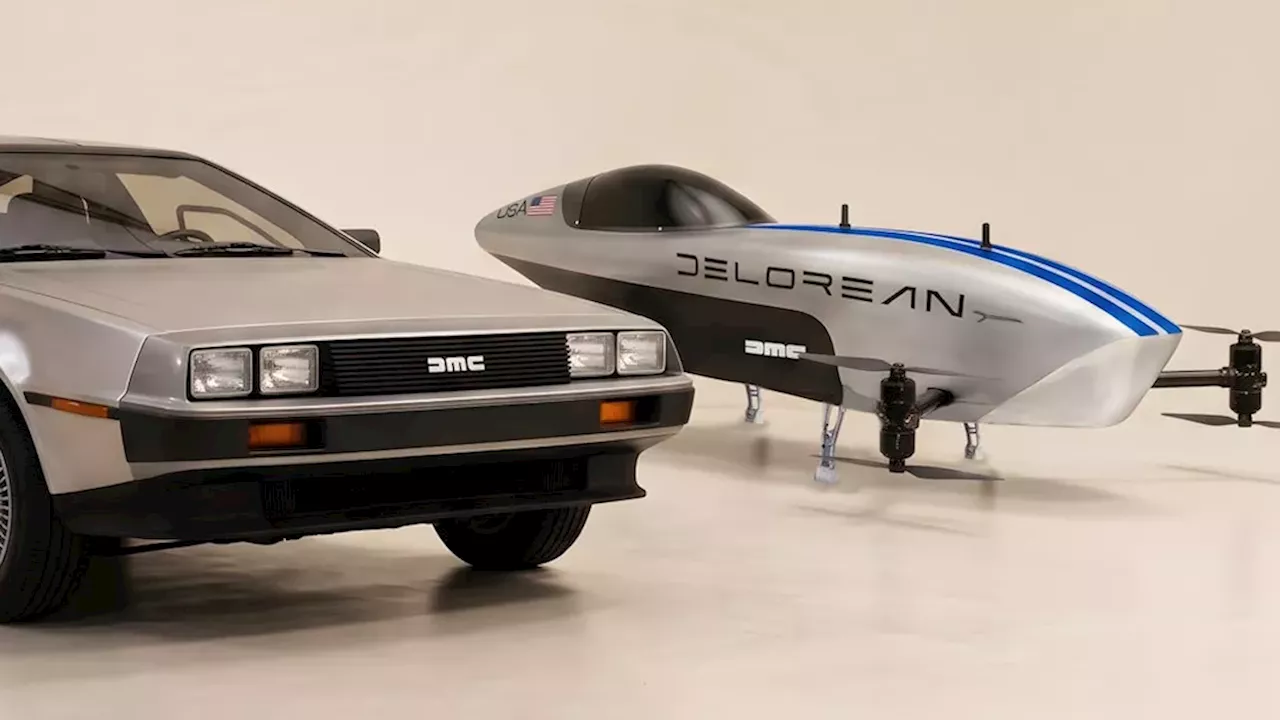
The iconic DeLorean flying car is officially turning cinematic science fiction into live aerial motorsport reality. You remember Doc Brown claiming roads were unnecessary, and now, decades later, the revived American automaker is formally taking flight in international competition.
Announced at TechCrunch Disrupt in San Francisco, the marque will field an official team in the Airspeeder International Series starting in November 2026. This aggressive transition from nostalgic pop-culture icon to cutting-edge aerial manufacturer positions the brand at the absolute frontier of modern electric mobility.
By joining what organizers herald as the world’s first competitive championship for electric flying cars, DeLorean becomes the pioneering American constructor on the grid. With backing from elite collegiate engineering programs, the project aims to accelerate vertical flight development just as traditional grand prix competition advanced the performance of high-end consumer automobiles.
DeLorean Flying Car Joins Airspeeder Series
The arrival of the DeLorean flying car program marks a bold chapter for the reborn American constructor. Rather than merely licensing its storied badge, DeLorean intends to use aerial grand prix circuits to incubate real-world electric vertical takeoff and landing (eVTOL) solutions.
For the opening 2026–2027 campaign, the DeLorean Airspeeder Team will pilot standardized Mk3C electric aircraft featuring custom-engineered liveries and distinct aerodynamic styling touches. These high-performance craft operate at rapid acceleration levels, pushing extreme aerodynamic loads that mirror top-tier motorsport formulas.
Starting in the 2027–2028 championship season, DeLorean’s technical involvement expands significantly beyond aesthetic bodywork. The constructor will collaborate directly with engineering talent from UC Berkeley and the Georgia Institute of Technology to engineer bespoke, proprietary race aircraft. Discover related coverage on our entertainment news home for comprehensive updates on boundary-pushing vehicle announcements.
This collegiate pipeline gives future aerospace leaders direct access to telemetry data, battery chemistry testing, and composite airframe refinement. The resulting innovations will shape not only the racing craft but also the broader civilian urban air mobility pipeline.

Autonomous Collision Avoidance and Virtual Skytracks
Airspeeder racing introduces a three-dimensional competitive format unlike anything seen on asphalt circuits. Pilots navigate high-speed tracks defined completely in augmented reality, carving through virtual gates suspended several meters above the ground.
To maintain safety during wheel-to-wheel aerial duels, all craft utilize advanced LiDAR, radar, and machine-vision sensors. These systems build real-time digital force fields around every vehicle, preventing dangerous collisions while permitting aggressive overtaking maneuvers at full throttle.
- Speed & Agility: Race craft generate instant electric torque, delivering rapid altitude climbs and lateral cornering loads that rival open-wheel racers.
- Augmented Reality Navigation: Pilots wear specialized heads-up display helmets that render track boundaries directly across their visual field.
- Safety Envelopes: Autonomous collision-avoidance algorithms automatically intervene if two competing aircraft breach critical distance thresholds.
Airspeeder Technical Specs and Racing Metrics
Understanding the performance dynamics of this upcoming electric aerial championship requires examining the engineering metrics underpinning the standardized fleet. The series relies on ultra-lightweight structural engineering combined with high-discharge lithium battery packs.
Here is an in-depth breakdown comparing the current technical racing specifications of the championship aircraft with traditional automotive racing standards:
| Metric / Specification | Airspeeder Mk3C Aircraft | Formula E Gen3 Car | Civilian Urban eVTOL Goal |
|---|---|---|---|
| Powertrain Output | 320 kW (Approx. 429 hp) | 350 kW (Approx. 469 hp) | 400 kW to 600 kW |
| Top Speed Capability | 125 mph to 160 mph | 200 mph | 150 mph cruise |
| Structure Material | Carbon-Fiber Monocoque | Carbon & Kevlar Composite | Aerospace Grade Composites |
| Pit Stop Requirement | Rapid Battery Pack Swap (<20s) | Ultra-Fast Boost Charge | Vertiport Base Plug-in |
| Operational Dimension | 3D Airspace Navigation | 2D Street Track Circuit | Regulated Air Corridors |
These specifications showcase how lightweight materials bridge the power-to-weight demands of vertical flight. Rapid battery-swapping protocols developed in pit stalls will directly influence turnaround times for commercial air taxis serving urban vertiports across major metropolitan zones.
The Aerospace Strategy Behind Automotive Racing
Airspeeder was founded by Australian innovator Matt Pearson, who launched the platform in 2016 to mirror motorsport history. Just as early grand prix racing refined the internal combustion engine, braking systems, and aerodynamics, competitive aerial racing aims to fast-track advanced air mobility solutions.
Automakers understand the high stakes involved in this multi-billion dollar emerging sector. Global giants like Toyota, Hyundai, Honda, and Stellantis have invested hundreds of millions into commercial passenger eVTOL initiatives. Check out our exclusive industry features to review how modern legacy marques are pivoting towards next-generation electric mobility architectures.
Unlike commercial aerospace corporations focused strictly on multi-passenger commuter certifications, racing allows engineers to operate at the absolute technological limit. In racing conditions, thermal management, motor cooling, and aerodynamic drag are pushed past typical safety margins, generating valuable durability data.
As detailed by aviation reporting in Flying Magazine's eVTOL industry analysis, the transition toward regional air taxi networks relies heavily on resolving real-world battery density challenges. Racing environments compress multi-year research timelines into single competitive seasons.

Expert Take: The High-Stakes Relaunch of DeLorean
Industry analysts note that DeLorean’s aerial pivot is a calculated masterstroke of brand positioning. Chief Brand Officer Cameron Wynne explained that audiences worldwide have envisioned a DeLorean in the sky for over four decades, referencing the beloved Back to the Future film franchise.
By directly embracing this heritage rather than dodging it, DeLorean transforms historical cinema lore into practical commercial momentum. The company previously unveiled concept electric road vehicles, but joining Airspeeder separates the badge from run-of-the-mill retro revivals.
According to aerospace analysts covered in Aviation Today's advanced air mobility coverage, consumer confidence represents one of the largest hurdles facing eVTOL adoption. High-profile, broadcast-ready racing series provide the cultural exposure necessary to normalize pilot-operated vertical flight for the skeptical general public.
Collegiate Partnerships Drive Next-Gen Engineering
The decision to enlist top American engineering universities marks a major operational strength for the DeLorean team. Collaborating with faculty and doctoral candidates at Georgia Tech and UC Berkeley introduces cutting-edge aerodynamic research straight into the design studio.
These academic institutions possess some of the most sophisticated wind-tunnel facilities and algorithmic modeling systems on the planet. By directing those computational resources toward Airspeeder’s 2027 technical regulations, DeLorean secures an immediate computational advantage.
Students participating in the initiative will tackle several complex engineering hurdles unique to dynamic eVTOL racing environments:
- Thermal Dissipation: Managing extreme heat generated by high-draw motor controllers during sudden vertical throttle bursts.
- Aero-Acoustic Tuning: Reducing propeller noise signatures to prepare racing designs for quiet civilian airspace compliance.
- Composite Weight Optimization: Engineering ultra-stiff carbon chassis segments capable of handling multi-G cornering forces without structural fatigue.
Explore more engineering perspectives and vehicle breakthroughs inside our dedicated auto tech analysis hub to track how academic motorsport partnerships continue to revolutionize consumer transit.
People Also Ask
What happened with DeLorean today?
DeLorean officially announced its entry into the Airspeeder International Series, becoming the first American constructor to join the competitive electric flying-car racing championship.
When does the DeLorean Airspeeder team make its racing debut?
The DeLorean Airspeeder Team will make its competitive racing debut when the 2026–2027 season officially launches in November 2026.
Which universities are partnering with DeLorean for flying car development?
DeLorean is partnering with engineering students and researchers from UC Berkeley and the Georgia Institute of Technology to design custom race aircraft for the 2027–2028 season.
How fast do Airspeeder electric flying cars fly?
Championship race craft like the Mk3C can reach speeds between 125 mph and 160 mph while navigating three-dimensional courses mapped with augmented-reality virtual gates.
The Future of High-Speed Aerial Motorsport
The introduction of the DeLorean flying car team represents far more than an entertaining marketing showcase. It acts as an operational testbed for structural lightweighting, high-voltage battery architecture, and three-dimensional trajectory algorithms that will shape urban transit.
Motorsport has spent a century demonstrating that intense competition breeds rapid mechanical innovation. By putting professional pilots into airborne circuits bounded by virtual obstacles, Airspeeder and DeLorean are pioneering the safety standards and performance envelopes of twenty-first-century flight.
As November 2026 approaches, the world will watch whether this legendary brand can capture checkered flags above the clouds, turning one of cinema’s greatest prophecies into an enduring competitive sports dynasty.
More Like This
For more updates, check out our latest entertainment and sports news.