Key Takeaways
| Mike Ditka passed away at the age of 86, leaving a void in the NFL landscape. |
| He remains one of only two individuals to win a Super Bowl as a player, assistant, and head coach. |
| Ditka led the iconic 1985 Chicago Bears to a 15-1 season and their only Super Bowl title. |
| His philanthropic legacy includes the founding of the Gridiron Greats Assistance Fund. |
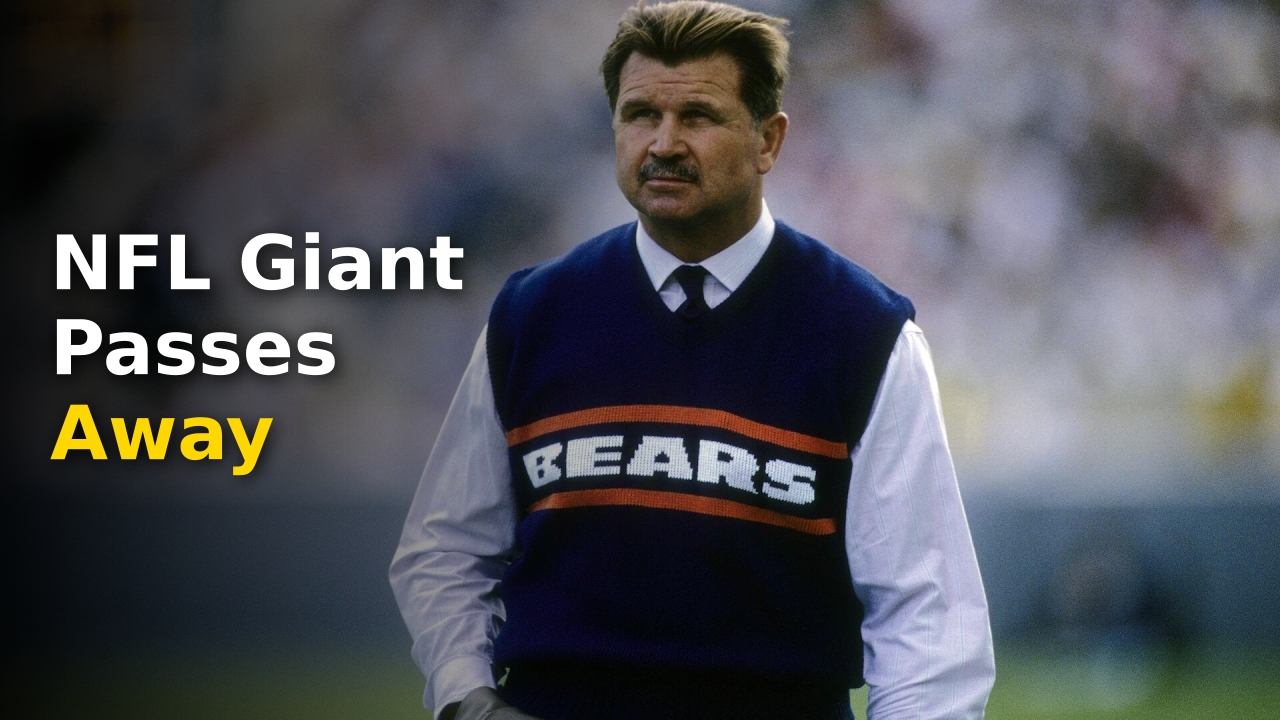
The **Mike Ditka Death** news has sent shockwaves through the sporting world, as you witness the passing of a man who didn’t just play football—he personified it. On Friday, the legendary Chicago Bears head coach and Pro Football Hall of Fame tight end passed away at the age of 86, leaving behind a legacy that spans generations of fans and players. Known affectionately as “Da Coach” and “Iron Mike,” Ditka’s influence stretched from the gridiron of the 1960s to the broadcast booths of the modern era, marking the end of a truly singular American life.
You see his impact everywhere, from the way tight ends play the game today to the cultural phenomenon that was the 1985 Bears. His family confirmed the news with profound sadness, describing him as the heart of their family. NFL Commissioner Roger Goodell praised his intensity and authenticity, noting that Mike served as an ambassador for the game throughout his 12-year playing career and his decades of leadership on the sidelines. The loss is felt deeply in Chicago, Dallas, New Orleans, and every city where the name Ditka was synonymous with toughness.
As tributes pour in from figures like Robert Saleh, Matt LaFleur, and Jim Nantz, the narrative of Mike Ditka’s life emerges as a masterclass in grit. He was a first-round draft pick out of Pittsburgh who transformed the tight end position before revolutionizing how we view coaching personalities. Whether he was screaming at referees or raising millions for retired players in need, Ditka was always 100% authentic. This deep dive explores the monumental life and the lasting ripple effects of the **Mike Ditka Death** in 2024.
Mike Ditka Death 2024: Honoring a Football Titan
The **Mike Ditka Death** marks the departure of a figure who bridged the gap between the leather-helmet era’s toughness and the modern NFL’s media-heavy landscape. To understand his magnitude, you have to look at the 1985 Chicago Bears, a team that became a cultural juggernaut under his guidance. They weren’t just a football team; they were a rock band in cleats, led by a man who refused to take anything from anybody. Ditka’s tenure in Chicago saw seven double-digit win seasons and the franchise’s only Super Bowl victory, a 46-1 dominance of the New England Patriots.
His coaching philosophy was rooted in the lessons he learned under the stoic Tom Landry in Dallas and the legendary George Halas in Chicago. Ditka was hired by Halas in 1982 to bring the “Monsters of the Midway” back to life, and he did so with a fiery temperament that often clashed with players and media alike. Yet, that very fire is what made him beloved. His players knew that while he was demanding, he was also their fiercest protector. He was a man of his word, a man of his city, and a man of his sport.
Beyond the wins and losses, Ditka’s post-coaching life was defined by his commitment to his peers. Through the Gridiron Greats Assistance Fund, he became a champion for those who helped build the game but were left with mounting medical bills and little support. This philanthropic side of “Iron Mike” showed the depth of his character. He wasn’t just a tough guy on the sidelines; he was a compassionate leader who recognized the human cost of the game he loved so dearly.
The Triple Crown of Super Bowl Success
Mike Ditka achieved a feat that only one other person—Tom Flores—can claim: winning a Super Bowl as a player, an assistant coach, and a head coach. He won Super Bowl VI as a tight end for the Dallas Cowboys, Super Bowl XII as an assistant under Tom Landry, and Super Bowl XX as the head man for the Chicago Bears. This trifecta is a testament to his versatility and his deep understanding of every facet of the game.
- Player Victory: Super Bowl VI with the Dallas Cowboys (1971 season).
- Assistant Victory: Super Bowl XII with the Dallas Cowboys (1977 season).
- Head Coach Victory: Super Bowl XX with the Chicago Bears (1985 season).
- Career Wins: 106 victories as head coach of the Chicago Bears.
By The Numbers: Mike Ditka Career Statistics
When you analyze the numbers behind the legend, the sheer consistency of Mike Ditka’s excellence becomes undeniable. He didn’t just participate in the NFL; he dominated it from the moment he stepped onto the field as the 5th overall pick in 1961. His rookie season remains one of the greatest in league history, especially for a position that, at the time, was primarily used for blocking. Ditka’s 1,076 receiving yards and 12 touchdowns in 1961 set a standard that took decades to be challenged by modern athletic tight ends.
As a coach, his record in Chicago is the stuff of legend. Only the great George Halas, who founded the franchise and coached for four decades, has more wins than Ditka’s 106. During his peak years from 1984 to 1988, the Bears were an nearly unstoppable force, winning the NFC Central five consecutive times. The statistical dominance of the 1985 defense is often credited to Buddy Ryan, but Ditka was the architect of the culture that allowed that defense to flourish while maintaining a balanced, physical offense.
| Category | Record / Statistic | Significance |
|---|---|---|
| Rookie Receiving Yards | 1,076 Yards | NFL Record for TE (held for decades) |
| Bears Coaching Wins | 106 | 2nd All-Time in Franchise History |
| Pro Bowls (Player) | 5 | Selected 1961-1965 consecutively |
| Coach of the Year | 2 | Won in 1985 and 1988 |
The statistical legacy of Ditka is further immortalized in the Pro Football Hall of Fame profile of Mike Ditka, where he was inducted in 1988. He was the first tight end ever to be inducted into the Hall, a milestone that underscores his role as a pioneer. Before Ditka, tight ends were essentially extra offensive tackles. After Ditka, they became primary offensive weapons, a trend that continues today with stars like Travis Kelce and George Kittle. When you see a tight end split out wide or catching a 50-yard bomb, you are seeing the DNA of Mike Ditka.
The Cultural Impact of Da Coach
The **Mike Ditka Death** resonates because he was more than a coach; he was a persona that came to represent the city of Chicago itself. Hard-working, blunt, and unapologetically themselves—Chicagoans saw their own reflections in Ditka. The legendary “Bill Swerski’s Superfans” sketches on Saturday Night Live, featuring the “Da Bears” catchphrase, weren’t just comedy; they were a tribute to the sheer gravitational pull of Ditka’s personality. He was a man who could command a room with a single glare or a well-timed quip.
His transition to the New Orleans Saints in the late 90s was less successful on the field, famously marked by the trade of an entire draft class for Ricky Williams. While it didn’t result in a Super Bowl, it showcased Ditka’s willingness to go “all in.” He was a high-stakes gambler in a sport that often rewards conservatism. This fearlessness is why he remained a staple of latest NFL news updates long after he stopped wearing the headset. He was a television natural, providing commentary that was as unvarnished as his coaching style.
You also have to consider his role in the development of other coaches. Robert Saleh, the former Jets head coach, recently shared how his father used Ditka as the primary example of how to play the game with passion. This generational influence is a hallmark of truly great figures. Even those who never met him felt they knew him. His charisma was so great that he made countless cameos in movies and TV shows, always playing a version of himself that was larger than life.
Expert Take: The Architect of Intensity
According to sports historians, Ditka’s greatest achievement wasn’t just the 1985 Super Bowl ring, but his ability to manage the massive egos of that locker room. Dealing with personalities like Jim McMahon, Walter Payton, and Buddy Ryan required a level of psychological warfare that few coaches could master. Ditka didn’t try to dampen those personalities; he channeled them into a collective force. He understood that to win in a city like Chicago, you needed a team that reflected the city’s grit and occasional arrogance.
By the numbers, the 1985 Bears outscored their opponents 456 to 198. That margin of victory is staggering and remains a benchmark for NFL dominance. Ditka’s ability to maintain focus amidst the “Super Bowl Shuffle” distractions is often overlooked. He allowed his players to be stars, provided they produced on Sundays. This “player-first” yet “discipline-heavy” approach created a bond that lasted decades, as evidenced by the heartbroken reactions from his former players upon hearing the news of the **Mike Ditka Death**.

The Final Quarter: Philanthropy and Broadcasting
In his later years, the fire that defined Mike Ditka was directed toward the welfare of former NFL players. He was outspoken about the league’s need to better support its veterans, particularly those from the eras before massive television contracts. Through his work, he helped provide medical assistance, housing, and financial aid to hundreds of players. This mission became his primary focus, proving that beneath the “Iron Mike” exterior was a man deeply concerned with the wellbeing of his brothers in arms.
His broadcasting career at CBS and ESPN allowed a new generation to experience his wit. Jim Nantz recently reflected on Ditka’s generosity and charisma, noting that while he was famous for his temper, he was equally known in the industry for his kindness behind the scenes. This duality is what made him so fascinating. He could be your best friend or your worst nightmare, depending on whether you were giving your best effort. To Ditka, effort was the only currency that mattered.
The **Mike Ditka Death** also brings to light his success as a businessman. From his namesake steakhouses to his apparel lines, he built a brand that outlasted his coaching career. He understood the value of his image and used it to create a lasting empire that provided for his family and his charitable endeavors. He was a self-made man who never forgot his roots in the steel country of Pennsylvania, a background that informed everything he did in the professional world.
People Also Ask
What was the cause of Mike Ditka’s death?
Mike Ditka passed away at the age of 86 on Friday. While specific medical details were not immediately released by the family, he had faced several health challenges in recent years, including a stroke in 2012 and heart issues in 2018.
How many Super Bowls did Mike Ditka win?
Mike Ditka won a total of three Super Bowl championships. He won one as a player for the Dallas Cowboys (VI), one as an assistant coach for the Cowboys (XII), and one as the head coach of the Chicago Bears (XX).
Who are Mike Ditka’s surviving family members?
Mike Ditka is survived by his wife, Diana Ditka, and his four children from a previous marriage: Mike Jr., Mark, Matt, and Megan. His family released a statement describing him as the heart of their home.
What is Mike Ditka’s coaching record?
Mike Ditka finished his head coaching career with a regular-season record of 121-95. He went 106-62 with the Chicago Bears and 15-33 during his three-season tenure with the New Orleans Saints.
The Lasting Legacy of Iron Mike
In the wake of the **Mike Ditka Death**, the football world is left to contemplate a future without one of its most colorful and impactful characters. You can still feel his presence in the hallways of Halas Hall and in the hearts of Bears fans who still wear his iconic sweater vests. He was a man of a different era, one who valued toughness above all else, yet he successfully navigated the transition into a modern celebrity. His life serves as a reminder that authenticity is the most powerful brand a person can have.
As you reflect on his journey from a rookie standout to a Super Bowl-winning coach, it’s clear that Mike Ditka didn’t just play the game—he changed the way the game is perceived. For more on how his impact continues to shape the league, check out Mike Ditka’s lasting impact and our coverage of other sports icons who left us in 2024. He was the quintessential Chicago Bear, a man who gave everything to the city and the sport, and he will be remembered as long as the game of football is played.
Ultimately, Ditka’s story is about more than football; it’s about the pursuit of excellence and the refusal to compromise one’s principles. He was a leader, a mentor, and a friend to many. Whether you knew him as the fiery coach on the sideline or the charitable champion for retired players, his absence will be felt by all. Rest easy, Coach. You have left the game much better than you found it. To see where he ranks among the greatest NFL coaches of all time, visit our comprehensive analysis of the league’s legendary leaders.
More Like This
For more updates, check out our latest entertainment and sports news.