
Key Takeaways
| Robot umpires correctly overturned 54% of challenged calls during their high-stakes debut season. |
| Catchers emerged as the most effective at using the system, boasting a 59% success rate compared to batters. |
| Strategic timing is now a professional skill, with teams showing a marked increase in challenge frequency during the final innings. |
| The Cincinnati Reds led the league in efficiency, securing a net gain of 16.8 runs through successful appeals. |
You might think professional baseball is still a game of human perception, but the Robot Umpire ABS debut has fundamentally altered the diamond’s reality. With a staggering 54% of challenged calls being overturned, the introduction of the Automated Ball-Strike System (ABS) has forced players to treat their challenge opportunities like a high-stakes resource in a chess match. You are watching a transformation where every pitch—and every reaction—is now quantified by cold, hard data.
This shift isn’t just about getting the call right; it is about the evolution of player instincts. Managers like the Yankees’ Aaron Boone describe the process as building a “new muscle,” where catchers and batters must instantly decide if an umpire’s strike call is worth the risk of losing their team’s limited remaining appeals. For a closer look at the evolution of modern officiating, explore the latest breakthroughs in baseball analytics and how they are changing the game.
Mastering the Robot Umpire ABS Debut Challenges
The success of the Robot Umpire ABS debut relies entirely on a player’s ability to identify the marginal errors in a home plate umpire’s strike zone. While the human eye has been the ultimate arbiter for over a century, the system now provides an objective baseline that players are rapidly learning to exploit. Success rates vary wildly across the league, indicating that some organizations have invested far more in “challenge coaching” than their rivals.
You can see this divergence clearly in the team run-value data. The Cincinnati Reds mastered the system early, securing 16.8 runs through successful appeals, while other playoff-bound clubs like the Los Angeles Dodgers and New York Yankees actually registered negative values. This gap highlights a critical reality: simply having the technology isn’t enough. You need the discipline to know when the evidence truly warrants an appeal.
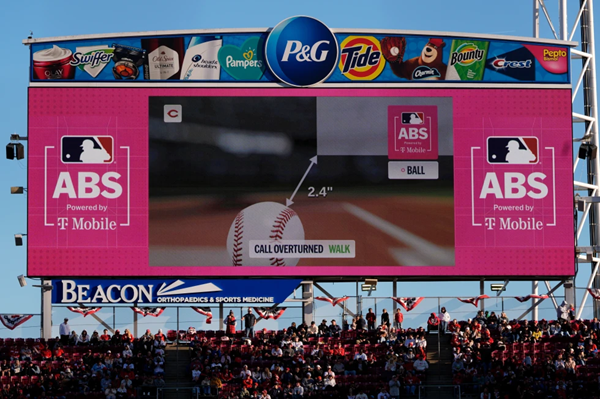
The Catcher’s Strategic Advantage
Catchers have become the unsung heroes of the ABS era, utilizing their unique vantage point to influence the count. With a 59% success rate, these players are proving to be far more accurate at detecting mistakes than their counterparts at the plate. William Contreras of the Milwaukee Brewers stands out as a premier strategist, leading the league with 5.2 projected runs prevented through his defensive awareness. Even in postseason play, the power of a single challenge can decide a series, as evidenced by J.T. Realmuto’s clutch game-ending appeal for the Philadelphia Phillies.
By The Numbers: The Statistical Landscape
The following data illustrates the efficiency of team challenges across Major League Baseball during this inaugural season. Note the stark difference between the top-tier tactical teams and those still struggling to calibrate their response to the Robot Umpire ABS debut.
| Metric | Value / Result |
|---|---|
| Total Challenges Recorded | 10,557 |
| Overall Overturn Rate | 54% |
| Catcher Success Rate | 59% |
| Batter Success Rate | 49% |
| Highest Team Success (KC) | 69.7% |

The Evolution of In-Game Strategy
In the early days of this implementation, teams played with extreme caution. Fear of running out of the two allotted challenges caused players to hesitate, often leaving unused opportunities on the table. However, as the experts at ESPN have observed, the “if you have it, use it” mentality has taken hold, particularly in the ninth inning. You now see teams becoming significantly more aggressive as the game reaches its climax, knowing that the cost of an unused challenge is a wasted asset.
Managerial philosophy is also shifting. While some coaches push for aggressive use in low-leverage situations to establish the strike zone, others prefer to hold onto the safety net. This tactical tension is exactly what makes the modern game so compelling to watch. For more on the long-term implications of these technical changes, read our analysis on how technology is redefining the dugout.
People Also Ask
What exactly is the Robot Umpire ABS debut system?
The Automated Ball-Strike System (ABS) is a technology that uses advanced tracking to provide an objective, real-time judgment of balls and strikes. It allows players to challenge an umpire’s call if they believe the electronic system would provide a different verdict.
Why are catchers more successful than batters in the ABS system?
Catchers are positioned directly behind the plate, giving them the best view of the pitch’s trajectory relative to the strike zone. This proximity allows them to intuitively recognize when a pitch was wrongly called, leading to a 59% success rate on appeals.
How many times can a team challenge in a game?
Teams are granted two challenge opportunities per game. If both appeals are unsuccessful, they lose the right to challenge for the remainder of the contest, which forces teams to be highly selective.
How does this impact the pace of play?
Review times have remained efficient, with the average length of a review sitting at approximately 1 minute and 25 seconds. This allows for increased accuracy without significantly stalling the flow of the game.
The Future of Baseball Officiating
The Robot Umpire ABS debut marks the point of no return for traditional officiating in professional sports. As players, managers, and fans adjust to this new reality, we are seeing a shift where the “human element” is no longer about the umpire’s error, but about the team’s ability to navigate technological systems. If your favorite team wants to stay competitive, they must continue to refine their approach to these digital appeals. You can find more updates on the latest industry shifts on our dedicated sports news portal as we track how this technology evolves in the coming seasons.
More Like This
For more updates, check out our latest entertainment and sports news.