Key Takeaways
| Lead Actress | Tala Calil stars as Lana, also serving as co-writer and producer. |
| Director | Tina Gharavi steers the challenging, multi-location project. |
| Production Struggle | Filmed across Beirut and Bulgaria during the height of the COVID-19 pandemic. |
| Key Themes | Explores trauma, OCD, expatriate guilt, and raw Middle Eastern family dynamics. |
If you have ever felt the crushing weight of returning to a fractured homeland, this **Shadows of Beirut review** will expose how director Tina Gharavi translates that precise existential terror onto the silver screen.
This ambitious independent production attempts to balance the heavy burden of childhood trauma with the claustrophobia of a global pandemic. As the narrative unfolds, audiences are plunged into a world where physical boundaries mirror deep psychological scars. You will find that the movie represents both a literal and figurative journey through ruins, exploring how the past never truly leaves us. For those seeking fresh cinematic perspectives, you can check the latest news and independent cinema updates to see how regional dramas are shaping international film festivals this year.
Shadows of Beirut review: Cinematic Chaos
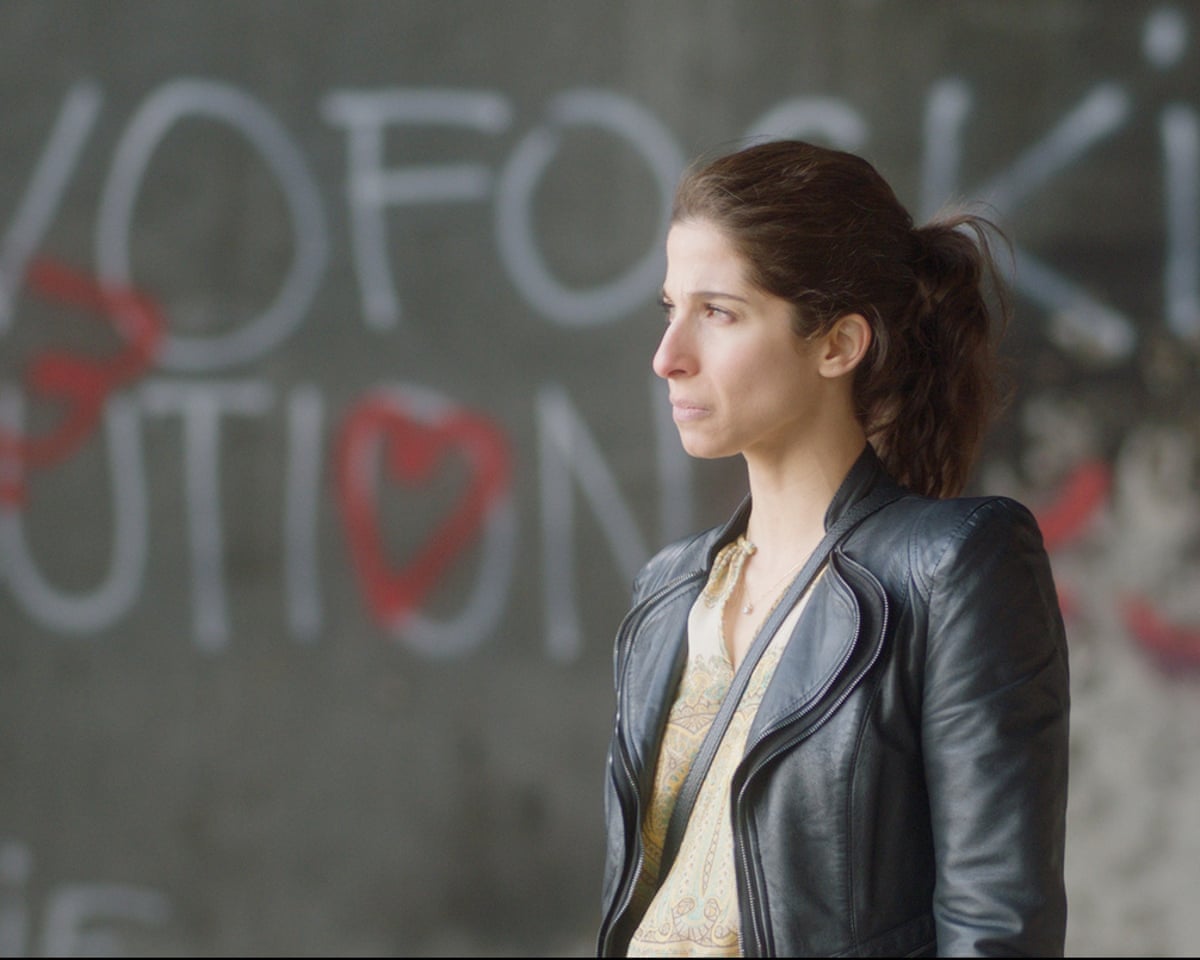
The core narrative of this film centers on Lana, played with trembling intensity by Tala Calil, a London-dwelling émigrée who must abruptly return to Lebanon. Her biological father is dying, forcing her to confront a childhood blighted by chronic alcoholism, systemic neglect, and domestic violence. Having spent twenty-five years escaping these painful memories, her sudden repatriation triggers a severe psychological unraveling. The film meticulously documents her descent into panic as she navigates a city that has changed as drastically as she has.
Lana’s life in London is ostensibly stable, shared with her supportive yet exasperated boyfriend Ben, played by Michael E Rodgers. However, her unresolved childhood trauma manifests as severe obsessive-compulsive disorder, particularly focused on contamination. Her reliance on heavy protective equipment serves as a physical armor against a hostile world. When she lands in Beirut, this structured defense mechanism immediately clashes with the beautiful, chaotic, and unpredictable nature of her birth city.
The contrast between structured London life and the sensory overload of Beirut forms the emotional backbone of the story. Beirut is presented not just as a setting, but as an active, breathing character that demands adaptation. Lana is forced to abandon her rigid routines, navigating ruined housing stock, economic instability, and fractured familial relationships. The film captures this transition with a frantic energy that mirrors the internal state of its protagonist.
As she reconnects with her roots, Lana finds an unexpected source of strength in her cousin Rami, portrayed by the talented Assaad Bouab. Rami represents the lingering warmth of her family, offering a bridge between her traumatic childhood and her current survival. Through this relationship, Lana begins to let down her guard, symbolically shed her protective masks, and find the courage to face her dying father. This journey of healing is painful, messy, and deeply emotional.
Pandemic Production Restraints
Shooting a complex emotional drama during a global pandemic presented the production team with unprecedented logistical challenges. Director Tina Gharavi had to split filming between the authentic, chaotic streets of Beirut and controlled studio sets in Bulgaria. This geographic fragmentation is evident throughout the film, sometimes creating an unintentional sense of displacement. However, this disjointed quality accidentally works in favor of the narrative, mirroring Lana’s fractured state of mind.
The transition between real Lebanese locations and eastern European studio sets can occasionally feel jarring to the trained eye. Yet, the crew manages to maintain a cohesive visual palette by focusing on tight close-ups and intimate framing. This stylistic choice emphasizes the characters’ isolation, reflecting the universal anxiety of the lockdown era. It stands as a testament to the resilience of independent filmmakers working under extreme global restrictions.
Fractured Editing Decisions
The film’s editing has received considerable attention for its frenetic, almost hyperactive pacing. Cuts are quick, scenes shift rapidly, and characters always seem to be in a state of perpetual motion. While some critics argue this style makes the narrative feel disjointed, others believe it perfectly replicates the protagonist’s panic attacks. It forces the audience to experience the same disorientation and sensory overload that Lana suffers upon her return.
This editing style is particularly effective during a sequence where Lana’s new friend, Sirine, played by Flavia Bechara, casually relinquishes the steering wheel of a moving car. The sheer nonchalance regarding safety reflects a city where traffic laws are treated as mere suggestions. The rapid cuts and high-angle shots capture Lana’s absolute terror, creating a visceral experience for the viewer. It is a brilliant example of using technical elements to enhance character psychology.
Comparing Post-War Cinema Metrics
To fully understand the position of this film within the modern cinematic landscape, it is helpful to look at how it compares to other regional dramas. Independent Middle Eastern cinema often struggles with funding, distribution, and international representation. The table below outlines how this production measures up against typical industry benchmarks for regional independent releases.
| Metric Category | Industry Average | Shadows of Beirut |
|---|---|---|
| Production Locations | Single Country (90%) | Dual Country (Lebanon/Bulgaria) |
| Dialogue Ratio | 80% Monolingual | 50% English / 50% Arabic |
| Filming Timeline | 4 to 6 Weeks | Extended (Pandemic-disrupted) |
| Thematic Focus | Historical/Political | Psychological Trauma & OCD |
These metrics indicate that the film broke away from standard conventions to deliver a highly unique, cross-cultural product. By splitting the dialogue and the filming locations, the production team highlighted the duality of the expatriate experience. This structural decision elevates the film beyond a simple family drama into a broader study of cultural identity. It showcases the lengths to which independent filmmakers must go to realize their artistic visions during times of global crisis.
Analyzing Tala Calil Performance
A significant portion of the film’s emotional weight rests on the shoulders of lead actress, co-writer, and producer Tala Calil. Carrying three major roles in a feature film is an immense undertaking, particularly during a high-stress pandemic shoot. You can explore more exclusive celebrity profiles to see how other industry multi-hyphenates manage their complex creative responsibilities. Calil’s portrayal of Lana is raw, unfiltered, and deeply sympathetic, capturing the physical toll of mental illness.
Her performance is characterized by a quiet intensity that contrasts sharply with the loud, vibrant world around her. She successfully conveys the paralyzing nature of OCD, showing how routine becomes both a prison and a sanctuary. However, some critics have noted that her English dialogue can occasionally feel somewhat stiff. This stiffness is likely a reflection of the character’s internal rigidness, though it can sometimes hinder the natural flow of intimate scenes.
Interestingly, Calil’s performance shifts dramatically when she transitions from English to Arabic. The stiffness melts away, replaced by a deep-seated warmth and cultural resonance that feels entirely genuine. This linguistic shift highlights the complexity of the immigrant identity, showing how language can unlock different facets of personality. It is in these bilingual moments that the film truly finds its emotional footing.
Behind the camera, Calil’s influence as a writer and producer is felt in the film’s unwavering commitment to authenticity. She avoids romanticizing the city of Beirut, presenting its flaws alongside its beauty. This balanced portrayal is a refreshing departure from typical Hollywood representations of the region. Her dedication to telling a personal, culturally rich story shines through in every frame of this challenging production.
Expert Take: The Psychology of Representation
Film scholars note that the representation of OCD in cinema is rarely handled with such raw domestic detail. Often, Hollywood treats the condition as a quirky personality trait rather than a debilitating coping mechanism for deep-seated trauma. By tying Lana’s OCD directly to her childhood memories of her father’s violence, the screenplay offers a sophisticated psychological perspective. It reminds us that our bodies often remember what our minds try desperately to forget.
Furthermore, the physical transition of shedding protective gear in a chaotic environment subverts typical narrative expectations. Usually, a character finds safety in sterile environments; here, Lana finds healing in the chaotic, unsterile heart of Beirut. This transition suggests that true recovery requires us to embrace the messiness of life rather than hiding behind artificial barriers. It is a powerful metaphor that resonates deeply in a post-pandemic world.
Supporting Cast Highlights
While Calil delivers a powerful performance, the supporting cast provides the essential texture that makes the film’s world feel lived-in. Assaad Bouab brings a grounded charm to the role of Rami, offering a steady anchor for Lana’s emotional turbulence. His interactions with Calil are among the most natural in the film, providing much-needed moments of warmth and humor. He represents the enduring strength of familial bonds despite years of physical separation.
Flavia Bechara also shines as Sirine, the free-spirited friend who guides Lana through her initial panic attacks in Beirut. Bechara plays the character with a vibrant, unforced energy that perfectly captures the resilient spirit of the city’s youth. Her performance serves as a brilliant counterweight to Lana’s rigid anxiety, showcasing the healing power of unexpected female friendships. These supporting characters ensure that the movie never devolves into a purely solitary psychological study.
The Geographical Reality Unfolded
To fully appreciate the film, one must understand the complex history of its primary setting. Beirut has long been a city of dramatic contrasts, characterized by historic beauty and devastating conflict. The film captures this duality beautifully, showcasing ruined historic villas alongside bustling, modern cityscapes. For a deeper look into the creative minds behind such projects, you can read more about director Tina Gharavi on Wikipedia to understand her artistic background.
The physical destruction of the city serves as an obvious but effective metaphor for the broken families within the narrative. The houses, scarred by previous conflicts and economic neglect, mirror the emotional scars carried by Lana and her relatives. Yet, amidst the ruins, there is a vibrant social life that refuses to be extinguished. This resilience is captured in the small, observational scenes that occur around the edges of the main plot.
Director Tina Gharavi excels at capturing these small, human moments that bring the setting to life. From men chatting casually in ruined doorways to family members arguing passionately at a gathering, these details build a rich cultural tapestry. They prevent the film from feeling like a generic trauma drama, anchoring it firmly in a specific time and place. It is this cultural specificity that makes the film so memorable.
Ultimately, the decision to shoot partly in Bulgaria does not detract significantly from the overall experience. The production design team did an admirable job of matching the aesthetics of the European sets with the authentic Lebanese footage. This seamless integration allows the viewer to remain fully immersed in Lana’s emotional journey. It highlights the incredible adaptability of modern cinematic production crews in the face of global challenges.
By The Numbers: The Cost of Lebanese Indie Cinema
To put the production of this film into context, one must consider the extreme economic hurdles facing Lebanese artists. During the period of the film’s production, Lebanon experienced one of the worst financial collapses in modern history. Hyperinflation, fuel shortages, and daily power outages made physical production almost impossible. This explains why the team had to rely on Bulgarian studios, which offered stable electricity, predictable schedules, and secure working environments.
Furthermore, the local film industry receives virtually no government funding, relying almost entirely on foreign co-productions and private equity. According to independent film registries, the average budget for a Lebanese feature film has plummeted by over sixty percent in recent years. This financial reality makes the completion of a complex, dual-location project like this film an extraordinary achievement. It highlights the immense passion and dedication of the regional creative community.
For more insights into the cast and crew, you can view the official profile of Tala Calil on IMDb to explore her previous filmography and artistic contributions. Her work on this project serves as an inspiration for other regional filmmakers striving to tell their stories against all odds. It is a reminder that even in the face of financial and logistical collapse, powerful art can still find a way to be made.
People Also Ask
What happened with the Shadows of Beirut movie production during the pandemic?
The production of the movie had to be split between real locations in Beirut, Lebanon, and studio sets in Bulgaria due to COVID-19 travel restrictions and local economic instability.
Why is Shadows of Beirut trending right now among independent film circles?
It is trending due to its raw portrayal of obsessive-compulsive disorder (OCD) and the unique challenges the crew faced while filming dual-country sequences during global lockdowns.
How does the bilingual dialogue affect the performances in the film?
Critics have noted that the performances feel much more natural and emotionally resonant when the actors transition from speaking English to speaking Arabic.
Where can I find more details about lead actress Tala Calil?
You can find more detailed information about her extensive acting and writing career on her official IMDb profile or through major independent film databases.
Final Verdict and Impact
Ultimately, this comprehensive **Shadows of Beirut review** highlights a production that, while structurally flawed, burns with undeniable regional passion. The film serves as a vital document of a specific, high-stress moment in global history. It captures the unique anxiety of the pandemic era while addressing timeless themes of familial trauma, cultural identity, and emotional healing. While the editing may polarize some viewers, the raw sincerity of the performances remains unquestionable.
For audiences interested in regional independent cinema, this project is a must-watch for its ambitious scope and emotional honesty. It challenges viewers to consider how our environments shape our mental health and how returning home can be the ultimate catalyst for personal growth. You can stay updated with the latest BrightCelebrity film reviews to discover more hidden gems from the world of international cinema. Tina Gharavi and Tala Calil have crafted a challenging, deeply personal piece of art that refuses to be ignored.
More Like This
For more updates, check out our latest entertainment and sports news.