Key Takeaways
| Historic Struggle: The play ‘Stand or Fall’ documents the existential threat to Brighton & Hove Albion during the 1990s. |
| Authentic Voices: Producers include Ian Hart, who famously parked a hearse outside the club office to protest the Goldstone Ground sale. |
| Cultural Impact: The production highlights the nomadic era of the club, moving from Gillingham to the Withdean athletics track. |
| Fan Resilience: The story serves as a testament to the diverse coalition of supporters who prevented the club’s permanent collapse. |
Brighton stadium play 2026 marks a powerful return to the city’s most turbulent era, dramatizing the near-extinction of a footballing institution. You might find it hard to imagine, but the modern-day Premier League side once faced a complete disappearance from the professional ranks.
As the club celebrates its 125th anniversary, the theatre production Stand or Fall brings the raw emotion of the 1990s to the stage. This is a story of how a funeral director, a punk poet, and thousands of ordinary fans saved the soul of Brighton & Hove Albion.
The Emotional Core of Brighton Stadium Play 2026
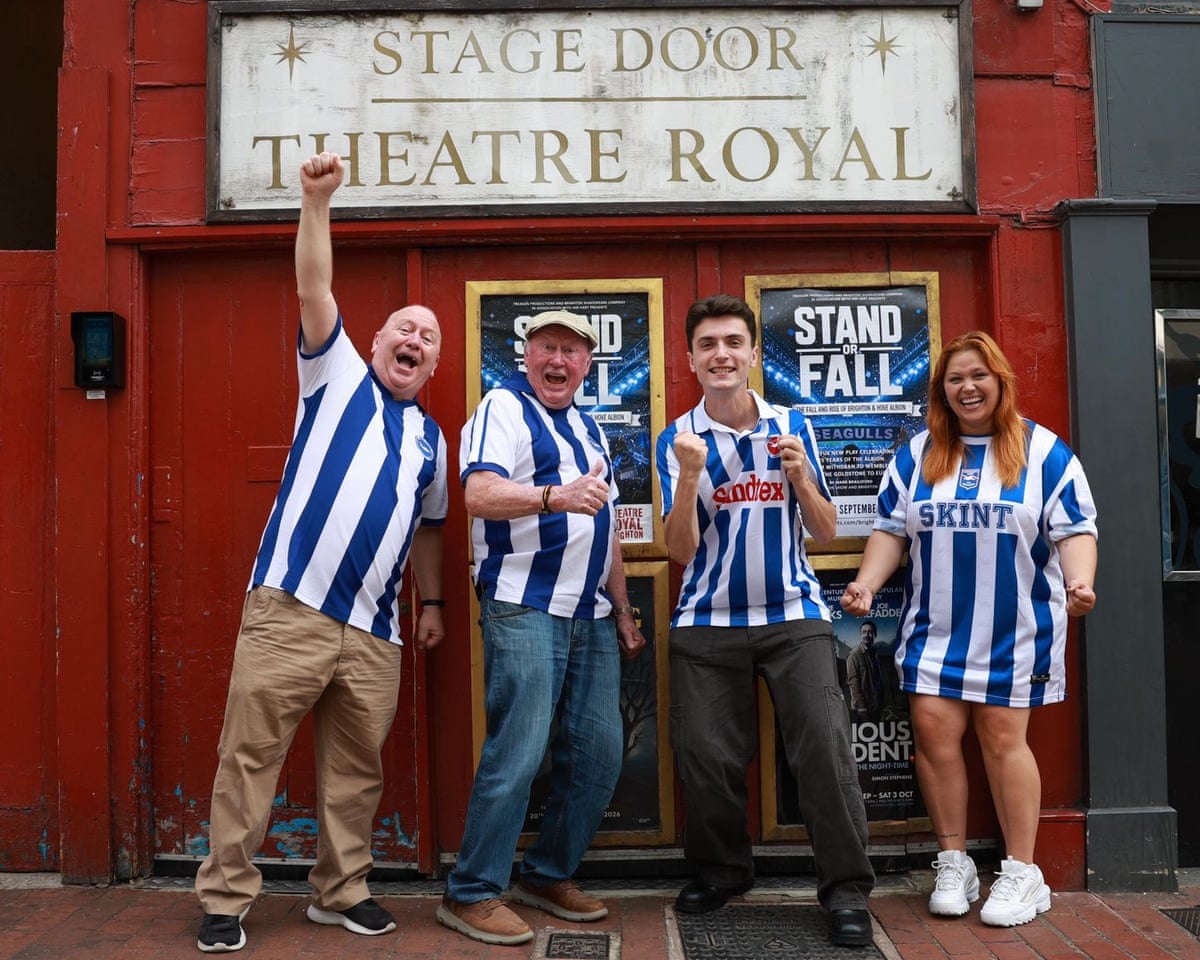
The narrative of the Brighton stadium play 2026 production centers on the betrayal felt by fans in 1995. When director Gordon Lucking revealed that the historic Goldstone Ground had been sold out from under them, the community erupted in a decade-long crusade for survival.
Ian Hart, the co-editor of the fanzine Gull’s Eye, became a pivotal figure during this period. His decision to park a hearse outside the club’s offices was not just a stunt; it was a physical manifestation of the club’s impending death. This event, alongside protests at the boardroom, defined a movement that bridged social gaps between laborers, accountants, and artists.
The play captures the transition from the intimacy of the Goldstone Ground to the cold, nomadic reality of playing home matches at Gillingham. This exile 70 miles away nearly broke the bond between the team and its city, leading to a lost generation of supporters who had to reclaim their identity over two decades.
By highlighting the diverse group of individuals involved in the campaign, the production avoids being a dry documentary. It honors the contributions of figures like John Baine, the punk poet known as Attila the Stockbroker, who channeled the collective frustration of the terraces into a roar that the Football League could no longer ignore.
Defining the Nomad Era
- The sale of the Goldstone Ground forced an immediate and painful departure from the club’s spiritual home.
- Gillingham served as a temporary, albeit alienating, host for home matches, testing the loyalty of the traveling support.
- The Withdean Stadium, despite being an athletics facility, provided a vital bridge back to the city limits.
- The eventual construction of the Amex Stadium stands as the ultimate victory for those who refused to let the dream die.
By The Numbers: The Brink of Collapse
| Milestone | Significance |
|---|---|
| 1995 | The year the Goldstone Ground sale was exposed. |
| 1997 | Demolition of the stadium and final escape from relegation. |
| 2017 | Promotion to the Premier League. |
| 2024 | European football campaign debut for the club. |
The Cultural Legacy and Expert Take

The preservation of this history is vital for modern sports fan culture. Experts suggest that the Brighton struggle remains one of the most critical case studies in community-led ownership models. By moving from a supporter-led consortium to the financial stability provided by Tony Bloom, the club demonstrated the efficacy of strategic planning aligned with fan loyalty.
The Stand or Fall exhibition at the Brighton Museum complements the play, ensuring that the younger demographic understands the cost of their current success. The transition from the brink of relegation in the Football League to European competition is a narrative arc that feels almost theatrical in its intensity.
In the view of those who lived through the events, the current successes—including European nights—are not taken for granted. There is a deep-seated humility among the fanbase that stems directly from the period when they possessed no home, no kit, and barely a future. The play invites you to understand the cost of this revival.
Beyond the theatre walls, the influence of this era is felt in how the club manages fan relations today. The recognition that the club belongs to the community rather than the board is a lesson that echoes across the English football landscape, serving as a reminder to current owners of the power held by a unified supporters’ group.
People Also Ask
What happened to the Goldstone Ground in 1997?
The Goldstone Ground, which had been the home of Brighton & Hove Albion since 1902, was demolished in 1997 after the club was forced to sell the land amidst severe financial mismanagement.
Why is the Stand or Fall play trending right now?
The play is trending because it aligns with the club’s 125th anniversary and offers an emotional, behind-the-scenes look at the ‘civil war’ that defined the club’s history in the 1990s.
How did Brighton survive the late 90s?
The club survived thanks to a supporter-led consortium, a dramatic escape from relegation in 1997 against Hereford, and the subsequent takeover by Tony Bloom which brought fiscal stability.
Where can I see the Stand or Fall exhibition?
The exhibition is currently being held at the Brighton Museum and is scheduled to remain open to the public until the end of 2026.
Reflections on the Brighton Legacy
Reflecting on the journey from the brink of extinction to the European stage is essential for understanding the heartbeat of the city. You can see through the lens of Stand or Fall that the club’s history is not just about points or league tables, but about the people who refused to walk away.
As you explore the historical context of this story, it becomes clear that Brighton & Hove Albion is a club forged in the fire of resistance. The Brighton stadium play 2026 serves as both a celebration of that survival and a reminder of the fragility of football heritage. The spirit that saved the club remains its greatest asset as it looks toward its next century of competition.
More Like This
For more updates, check out our latest entertainment and sports news.