Key Takeaways
| Record Viewership: ESPN drew an unprecedented 23.2 million viewers for its Week 1 opener, cementing the game as a historic broadcast. |
| ManningCast Slump: The alternative broadcast on ESPN2 fell to 705,000 viewers, continuing a multi-year ratings decline. |
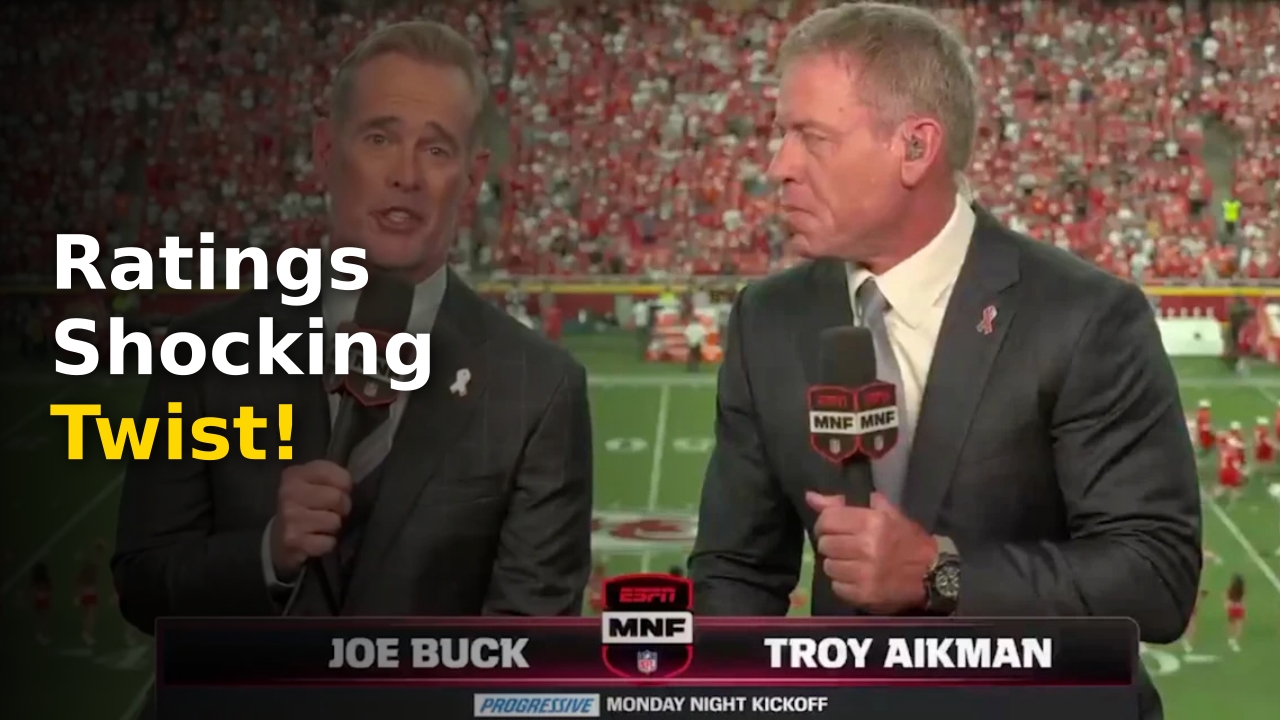
| Massive Booth Investment: Host Joe Buck secured a massive contract extension valued at over $100 million. |
| Super Bowl Runway: This ratings boom provides Disney with crucial momentum heading into its first-ever Super Bowl broadcast. |
You might think linear television is dying, but the latest Monday Night Football ratings prove that live NFL broadcasts remain the undisputed king of American media. The spectacular clash between the Denver Broncos and the Kansas City Chiefs captured the attention of millions of sports fans across the nation. As traditional networks struggle to retain audiences, Disney-owned ESPN demonstrated the unparalleled gravity of premium live sports properties. The final numbers confirmed that American viewers are still deeply obsessed with professional football, regardless of shifting media habits. This season opener serves as a critical proof of concept for the network as it prepares for its biggest broadcasting year in history.
While executives in Bristol are undoubtedly celebrating the massive turnout for the main broadcast, a parallel storyline is emerging. The highly publicized alternative broadcast hosted by Peyton and Eli Manning experienced a noticeable dip in live engagement. As viewers flocked to the traditional booth, the ESPN2 alternative stream struggled to capture the same magic that made it a viral sensation during its debut seasons. This division of audience attention highlights a complex challenge for sports media executives trying to balance innovation with traditional program delivery. You can follow our entertainment news updates to trace how these shifting audience dynamics impact the broader television landscape.
Monday Night Football Ratings Break Historic Records
The total audience of 23.2 million viewers represents more than just a successful night of television programming. It establishes this specific matchup as the most-viewed Week 1 game in the history of the franchise since the network acquired the package. To put this milestone into context, this broadcast now stands as the third-most-watched telecast in the entire history of the program on cable. Achieving this level of scale is incredibly rare in the modern fragmented media landscape where audiences are divided among hundreds of streaming choices. The incredible draw of the Chiefs and Broncos rivalry proved to be the ultimate programming weapon for Disney’s sports division.
This ratings surge occurs at a pivotal moment for the sports media ecosystem as traditional cable bundles continue to erode. Despite the secular decline of pay-television, live sports continue to defy gravity by delivering massive, highly concentrated consumer audiences to major advertisers. The partnership between the NFL and major media companies remains the most lucrative relationship in the entire entertainment industry. As television executives look to justify multi-billion-dollar rights fees, these historic audience metrics provide validation for their massive financial outlays. The strong start to the season suggests that public appetite for professional football has not yet hit its ceiling.
The Chiefs-Broncos Viewership Surge
The competitive tension between Patrick Mahomes and the Broncos defense provided the perfect on-field drama to secure early-season interest. Fans tuned in early and stayed late, driving up the average dwell time for the entire duration of the telecast. Advertisers pay premium rates based on sustained viewer attention, and this specific broadcast delivered exactly what was promised. The strong lead-in from afternoon studio programming also helped establish a powerful viewing pipeline that lasted deep into the night.
Additionally, the regional distribution of the audience showed massive engagement in key Midwest and Rocky Mountain television markets. Local markets registered massive share percentages, proving that regional loyalties still drive national television trends. By capturing both casual national viewers and die-hard local fanbases, the broadcast achieved a perfect storm of demographic coverage. This broad appeal is exactly why major brands continue to prioritize live sports above all other advertising avenues.
Historic Milestones Since 2006
Ever since the franchise transitioned to cable in 2006, the network has worked tirelessly to replicate the cultural footprint of the original broadcast era. Reaching the 23 million viewer mark places this specific game in an elite tier of historical television events. This achievement validates the network’s long-term programming strategy and its massive investments in production quality. The steady evolution of the broadcast experience has clearly resonated with multiple generations of football fans.
By comparing these figures to historical baselines, media analysts can trace the long-term resilience of the brand. While other primetime television programming has lost up to fifty percent of its audience over the past decade, live sports have remained remarkably stable. This relative strength has transformed live sports into the primary anchor keeping the traditional cable bundle afloat. Without these massive weekly audiences, the economic model of modern cable networks would face immediate collapse.

Analyzing the ManningCast Audience Slump
While the primary broadcast celebrated historic achievements, the alternative stream on ESPN2 faced a far more sobering reality. The ManningCast managed to attract only 705,000 live viewers, representing a significant drop from its previous heights. This alternative format, which features Peyton and Eli Manning offering casual commentary alongside celebrity guests, was once hailed as the future of sports broadcasting. However, the latest figures suggest that the initial novelty of the format may be gradually wearing off for the average fan. As industry analysts evaluate emerging sports media trends this year, the future of alternative broadcasts remains a major point of discussion.
The downward trend for the ManningCast is not an isolated incident but rather a pattern that has developed over several seasons. During the previous competitive year, the show failed to cross the elusive one-million-viewer threshold during any of its regular-season broadcasts. Even the highly anticipated Wild Card game broadcast failed to spark the level of viewership seen during the show’s early run. When a flagship alternative product struggles to capture even a fraction of the main broadcast’s audience, executives must reassess the long-term viability of the concept. The current numbers suggest a widening gap between the core football audience and the alternative entertainment-focused viewership.
The Deeper Shift Away from Alt-Casts
The decline in live viewership for alternative streams can be attributed to several fundamental shifts in viewer psychology. When fans tune in to a high-stakes divisional matchup, they often prefer the focused, professional commentary of a traditional broadcast team. The casual, sometimes chaotic nature of the alternative stream can distract from the critical action on the field. For many viewers, the constant interruptions and guest interviews detract from the core drama of the game itself.
Furthermore, the competitive landscape of alternative sports commentary has grown increasingly crowded over the last two years. Countless podcasts, social media live streams, and secondary broadcasts now compete for the exact same audience of highly engaged fans. This fragmentation has made it increasingly difficult for any single alternative show to dominate the conversation. The ManningCast no longer enjoys the monopoly on casual, athlete-driven commentary that it possessed during its initial launch.
Rating Fatigue and Alternative Stream Trends
Media fatigue is a well-documented phenomenon in modern television, especially for shows that rely heavily on a specific gimmick. The brotherly banter and self-deprecating humor of the Manning brothers, while still highly entertaining, has become a known quantity to sports fans. Without significant format innovations, the broadcast risks becoming a predictable experience for long-time viewers. The debut of new features like “Manning Mode” represents an attempt to inject fresh energy into the broadcast, but its immediate impact on ratings remains modest.
Despite the live rating slump, the program continues to generate massive value through secondary distribution channels. The modern media landscape rewards brands that can generate viral moments for social media consumption. Peyton and Eli Manning remain exceptionally gifted at producing highly shareable clips that flood social algorithms on Tuesday mornings. Even if fans are not watching the full three-hour broadcast live, they are still consuming the brand’s best moments on their mobile devices.
The Financial Impact of ESPN Media Investments
Securing elite broadcasting talent requires an extraordinary financial commitment in today’s highly competitive sports media marketplace. The network recently solidified its long-term future by signing legendary play-by-play announcer Joe Buck to a lucrative extension. According to reports from The Athletic, the six-year deal is valued at well over $100 million, making him one of the highest-paid media figures in the world. This massive contract underscore the premium that networks place on established, credible voices who can guide viewers through high-profile sporting events.
With partner Troy Aikman expected to secure a similarly massive contract in the near future, the network’s financial commitment to its primary booth is unprecedented. These historic investments are designed to provide stability and prestige as the network prepares to broadcast its first-ever Super Bowl. Having a world-class broadcast team is essential for attracting maximum advertising dollars during the biggest sporting event on the global calendar. These massive salary figures are directly tied to the network’s ability to maintain dominant Monday Night Football ratings throughout the winter months.
| Broadcast Entity | Week 1 Viewership | Historical Peak | Primary Media Channel |
|---|---|---|---|
| ESPN Main Broadcast | 23.2 Million | Third-Highest Since 2006 | ESPN / ABC / ESPN+ |
| ManningCast Alternative | 705,000 | 1.6 Million (2021) | ESPN2 / ESPN+ |
| Joe Buck Studio Booth | 23.2 Million | N/A (Booth Talent) | ESPN Main Feed |
Premium Talent Acquisitions and Contract Strategy
The aggressive pursuit of top-tier talent is a direct response to the rising competitive threats from streaming giants like Amazon and Netflix. As tech companies bid billions for exclusive sports rights, traditional networks must elevate their production value to survive. Securing the services of Buck and Aikman was a clear defensive maneuver to protect the network’s most valuable asset. The credibility of the broadcast team directly influences how the NFL distributes its most desirable weekly matchups.
Furthermore, these high-profile talent acquisitions create a powerful halo effect across the entire network’s programming schedule. Having elite broadcasters calling the weekly flagship game elevates the brand image of surrounding studio shows and digital content. This interconnected media ecosystem relies on the prestige of the main broadcast to drive engagement across all platforms. These investments are proving highly effective, highlighting how these high-profile celebrity business moves dictate network strategies in the modern era.

How Digital Engagement Outpaces Traditional Viewership
In the modern media environment, evaluating a program’s success solely through linear television ratings is an outdated methodology. While the live ManningCast ratings show a downward trajectory, the brand’s digital footprint continues to expand at a rapid pace. The modern sports fan consumes media in a highly fragmented, non-linear fashion, often preferring short-form clips to full-game broadcasts. For ESPN, the ability of Peyton and Eli Manning to generate highly viral social media content represents a massive win that extends far beyond traditional rating charts.
The Manning brothers operate under Omaha Productions, a highly successful media venture that has deeply integrated itself into the sports ecosystem. This partnership allows the network to maintain a strong, creative relationship with two of the most popular figures in sports history. The value of this relationship becomes even more critical as the network prepares for major promotional pushes ahead of the Super Bowl. The Manning family’s cultural influence remains a powerful tool for driving broad viewer engagement across both linear and digital platforms.
Social Algorithms and Viral Distribution Channels
A single viral clip of Peyton Manning reacting with frustration to a missed block can generate more social impressions than a standard television commercial. These organic social interactions help keep the network’s programming at the center of the cultural conversation throughout the week. By dominating digital feeds on platforms like TikTok, Instagram, and YouTube, the alternative broadcast maintains its relevance among younger demographics. This digital reach is highly attractive to modern advertisers who want to connect with hard-to-reach younger consumers.
Additionally, this multi-platform distribution strategy helps mitigate the financial risks associated with declining linear television viewership. Even if a consumer cancels their traditional cable subscription, they are still highly likely to interact with the brand’s content online. This digital ecosystem creates a continuous loop of brand reinforcement that benefits the network’s overall subscription services. As streaming services continue to evolve, the ability to transition linear audiences to digital platforms will determine the long-term winners of the media wars.
People Also Ask
What caused the drop in the Monday Night Football ratings for ManningCast?
The decline in ManningCast viewership is primarily driven by viewer fatigue with the alternative broadcast format and a strong preference for the traditional broadcast team during highly anticipated, competitive games. Additionally, a highly fragmented digital media landscape has introduced many alternative options for fans seeking second-screen sports commentary.
How do current Monday Night Football ratings compare to past seasons?
The Week 1 main broadcast drew an astonishing 23.2 million viewers, making it the most-watched opening game since ESPN took over the franchise slot in 2006. This milestone represents a significant increase over average viewership figures from recent seasons, showcasing the enduring appeal of live NFL games.
What is Joe Buck’s salary under his new ESPN contract?
Joe Buck signed a highly lucrative six-year contract extension with the network that is valued at more than $100 million. This landmark media deal solidifies his position as one of the most prominent and highly compensated play-by-play voices in the history of sports television.
Why are Monday Night Football ratings so important for ESPN this season?
These ratings are critical this season because the network is preparing to broadcast its first-ever Super Bowl. Securing strong viewer engagement early in the year provides valuable leverage for advertising sales and establishes crucial promotional momentum ahead of the championship game.
The Future of Monday Night Football Ratings
As the NFL season progresses, the battle for audience attention will only intensify across both linear and digital platforms. The spectacular Week 1 performance proves that the appetite for live sports remains incredibly strong among the American public. By securing historic Monday Night Football ratings, the network has established a powerful foundation for the rest of the broadcast calendar. The immense popularity of the main booth showcases the unmatched value of having trusted, professional voices delivering the action to millions of homes every week.
While the alternative ManningCast format must adapt to changing audience preferences, its strategic value to the network remains undisputed. The program serves as a critical bridge to younger audiences and provides a constant stream of high-value social media content. As the media landscape continues to undergo rapid transformation, the networks that can successfully balance traditional broadcast excellence with digital innovation will emerge victorious. The road to the Super Bowl promises to deliver more historic television moments as the network cements its status as a dominant force in sports entertainment.
More Like This
For more updates, check out our latest entertainment and sports news.