
Key Takeaways
| Data-Driven Growth: Dmitry Rudenko achieved 165 million views by abandoning personal aesthetic preferences. |
| Emotional Legibility: The highest-performing content prioritizes instant emotional recognition over complex production value. |
| Controlled Variation: Success stems from keeping the core emotional hook while changing surface-level visuals. |
| Audience Fatigue: What feels repetitive to the creator often feels entirely fresh to the viewer experiencing it for the first time. |
Dmitry Rudenko: 165 million views taught him to stop trusting his own taste, a realization that has fundamentally shifted how he approaches digital content distribution. If you have ever felt frustrated that your most artistic work flops while simple, derivative posts go viral, you are suffering from the same creative bias that once plagued this Siberian digital strategist.
By treating his personal Instagram account as a high-speed laboratory, Rudenko uncovered a counterintuitive truth about modern social algorithms. Your audience does not care about your artistic vision; they care about instant, relatable emotional resonance. To master the game, you must learn to detach your ego from your analytics.
Understanding Dmitry Rudenko: 165 million views in focus
The journey to Dmitry Rudenko: 165 million views began with a series of failures that forced a brutal audit of his process. Initially, he believed that high-effort, aesthetically pleasing content—such as a beautifully crafted tribute to Sergei Yesenin—would naturally garner attention. Instead, it received a lukewarm response, while a simple, unpolished video about a couple on a couch captured millions of eyes.
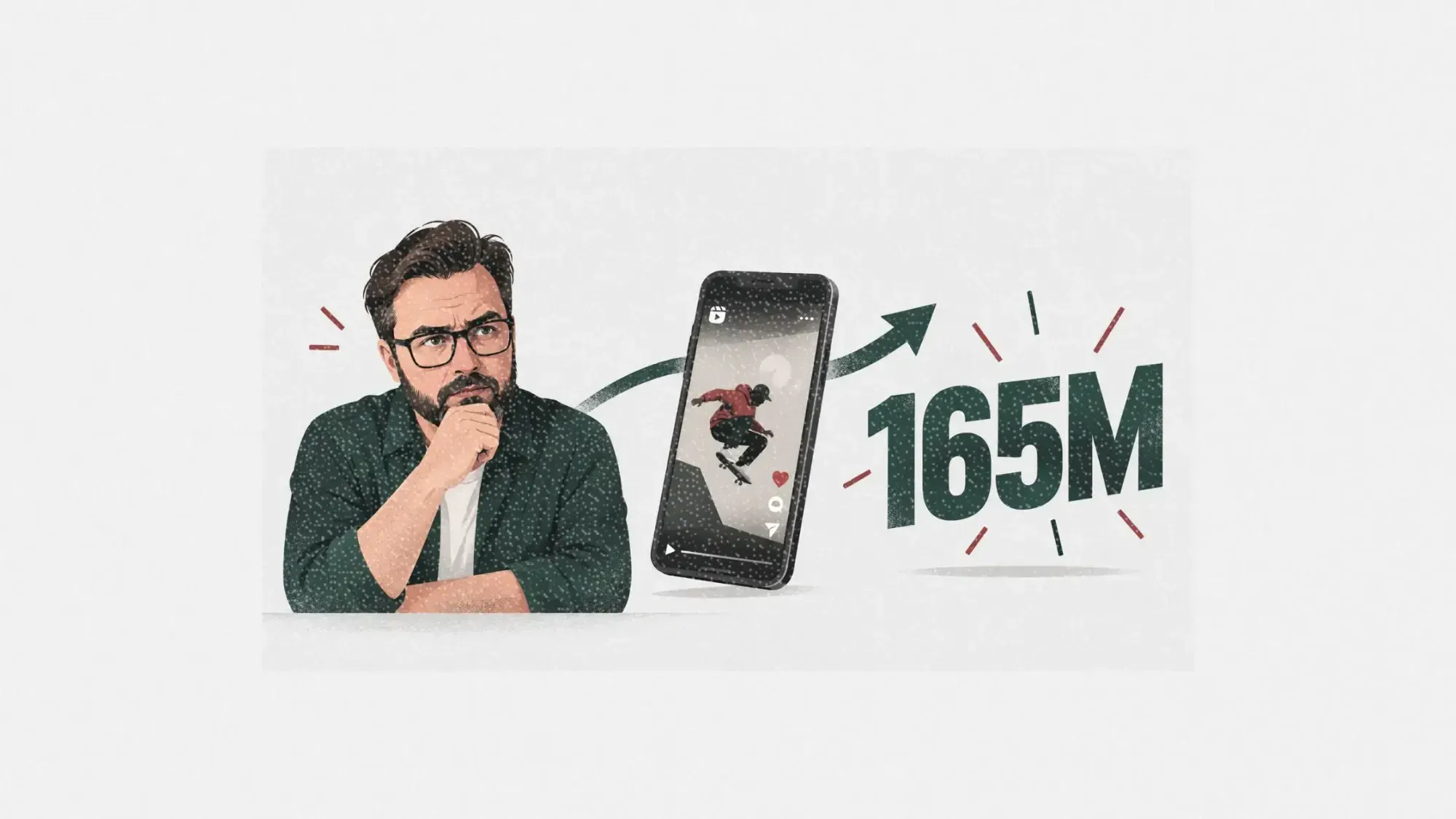
This disparity proved that cognitive load is the enemy of virality. The couch video succeeded because it was readable in under one second. It required no setup, no dialogue, and no complex context. Viewers understood the emotional shift instantly, which facilitated the all-important “share and send” behavior that drives algorithm favorability.
Rudenko’s pivot required a total restructuring of his workflow. He stopped viewing his personal taste as a reliable barometer for success. Instead, he adopted a disciplined cycle of iteration where only the data-backed components of a video survive the next round of generation. If you are struggling with digital growth strategies, this shift from creator-centric to audience-centric design is your most vital tool.
The mechanics of controlled variation
Rudenko’s strategy relies on what he calls “controlled variation.” Once an idea proves successful, he dissects it to find the specific element that resonated—a core relationship, a specific feeling, or a universal moment of childhood or aging. He keeps that anchor and rotates everything else: the lighting, the setting, the characters, and the staging.
This method challenges the conventional wisdom that creators should move on once a concept has been exhausted. Most creators kill a successful idea because they are personally bored of it, forgetting that every new viewer is seeing that concept for the first time. By ignoring his own fatigue, Rudenko allows his best concepts to scale exponentially.
Analytics and audience behavior metrics
| Variable | Old Strategy | New Strategy |
|---|---|---|
| Creative Priority | Personal Aesthetic | Audience Legibility |
| Success Metric | Artist Satisfaction | Share and Retention |
| Variation | New Concepts Daily | Refining Winning Patterns |
| Decision Maker | Creator Intuition | Audience Data Loop |
The philosophy of creative detachment
Rudenko’s background in high-stakes environments, such as playing rapid chess on Chess.com, has significantly influenced his content strategy. He views every failed video as a single, detached game. When a move that looks brilliant on the surface leads to a loss ten seconds later, he simply resets and begins again, devoid of emotional baggage.
This resilience is perhaps his greatest asset. Many creators stop after a few failures because they interpret poor performance as a reflection of their personal worth. Rudenko, conversely, sees content creation as a purely iterative creative discipline. He does not lament the loss of a video he loved; he focuses on the next iteration that might unlock deeper engagement.
His approach to AI generation is equally clinical. He treats the software not as an artist, but as a manufacturing line. By generating multiple variations simultaneously, he allows the market to perform the heavy lifting of curating what works. It is a radical departure from the romanticized image of the lone, inspired creator, yet the results—165 million views—are difficult to argue with.
Expert analysts often point to this transition as the future of the creator economy. As algorithms become more precise, the ability to act as an objective observer of one’s own data becomes more valuable than the ability to paint a masterpiece. In this landscape, the best content distribution patterns are those that mirror human behavior rather than those that seek to redefine it.
People Also Ask
What happened with Dmitry Rudenko and his AI video strategy?
Dmitry Rudenko achieved massive success by shifting from producing content based on his personal artistic preferences to prioritizing content that demonstrated high audience engagement and emotional legibility. This pivot allowed him to accumulate 165 million views by identifying winning patterns and refining them through controlled variation.
Why is Dmitry Rudenko trending right now?
Rudenko is trending because his recent transparent analysis of how he gamed social media algorithms through data-driven iteration has challenged standard industry beliefs about creative burnout and content production.
How does this affect current digital marketing standards?
His success suggests that digital marketing is shifting toward an iterative model where creative intuition is secondary to real-time performance data and audience retention metrics.
When should a creator stop iterating on a concept?
Rudenko argues that creators should only stop when the data indicates the underlying idea is no longer resonating with new audiences, not when the creator personally feels bored with the concept.
Final thoughts on modern creative success
The story of Dmitry Rudenko: 165 million views is a roadmap for any creator operating in the attention economy. By acknowledging that your taste is often a poor predictor of distribution, you free yourself to pursue what actually resonates with the public. It is not about abandoning your passion, but about refining your process so that your message has the highest possible chance of reaching its audience.
As you move forward in your own work, remember that the most effective stories are those that require the least effort from the viewer to understand. Prioritize that immediate, human connection, trust your data over your ego, and never be afraid to treat your creative process as a rigorous, scientific experiment.
More Like This
For more updates, check out our latest entertainment and sports news.