Key Takeaways
| Sonic Superiority: Broadcast networks invested heavily in veteran pop and television composers to create memorable opening anthems during the 1990s animation boom. |
| Syndication Saturation: Daily afternoon broadcast strips exposed suburban kids to identical musical earworms up to five times per week, locking melodies permanently into memory. |
| Narrative Exposition: Unlike modern streaming title cards, classic 1990s openers functioned as full narrative micro-stories that clearly established characters and complex premises. |
| Streaming Casualties: The arrival of automated “Skip Intro” algorithms effectively eradicated the budget and creative priority for full-length broadcast theme songs. |
You probably cannot recite a single coherent plotline from Saturday morning television thirty years ago, but iconic **90s cartoon theme songs** still live rent-free in your subconscious mind. Turn on any retro playlist today, and thousands of adults will instantly belt out every single syllable of a minute-long musical intro without missing a beat.
Television executives in that golden broadcast era treated opening credits as high-stakes battlegrounds for youth attention spans. Networks like The Disney Afternoon programming block and Nickelodeon hired seasoned session musicians, Motown veterans, and orchestral savants to capture suburban eyes before rival channels could air a commercial.
Today, streaming technology has reduced musical introductions to two-second sonic chimes or ignominious skip buttons. Looking back at the peak of syndicated animation reveals a fascinating truth: several legendary musical compositions completely surpassed the narrative quality of the half-hour cartoons they originally introduced.
The Cultural Power of 90s Cartoon Theme Songs
During the early 1990s, syndicated television experienced an unprecedented creative explosion driven by competitive broadcast networks and swelling advertising budgets. Broadcasters recognized that children possessed volatile channel-surfing habits, making a high-energy musical introduction the absolute primary anchor for commercial ratings. Production studios did not merely commission functional jingles; they bankrolled intricate, genre-bending anthems that rivaled contemporary radio tracks in both composition and technical execution.
Studio powerhouses like Walt Disney Television Animation, Warner Bros. Animation, and Klasky Csupo brought immense resources to their recording stages. Legends like Mark Mueller, Richard Stone, and Steve Bernstein wrote multi-layered compositions featuring dynamic live brass sections, soaring gospel choirs, and complex time signatures. These creators approached juvenile entertainment with the refined rigor of Broadway stage productions and golden-age Hollywood film scoring.
The cultural persistence of **90s cartoon theme songs** also stems from daily syndication schedules that modern streaming audiences never experience. Instead of watching an entire season across one weekend and skipping every credit sequence, children absorbed identical 60-second compositions every weekday afternoon at 3:30 PM. That relentless broadcast repetition carved these arrangements directly into the neurological foundations of an entire generation.
Beyond structural repetition, these tracks served an indispensable storytelling function known in media production as expositional compression. In an era before instant internet wikis, an opening track had to explain why a dog and a cat shared an abdomen or why two chipmunks were solving urban felonies. When executed with elite musicianship, the musical prologue often proved far tighter and more emotionally compelling than the episodic animation that followed.
Expert Take: Sonic Branding and Childhood Memory Retention
Cognitive media psychologists often note that early auditory exposure forms some of the most resilient neural pathways in human development. When layered rhythms, melodic hooks, and clear vocal storytelling combine during formative years, the brain stores those memories within long-term auditory processing regions. Unlike visual episodic plots that blur together over decades, musical motifs trigger instant emotional recall that defies normal adult memory decay.

Five Iconic Animated Openers That Outshined Their Shows
While audiences frequently praise the artistic achievements of landmark titles like Batman: The Animated Series, many syndicated broadcasts relied on sheer musical brilliance to keep viewers hooked. The following five productions featured musical introductions so undeniably catchy that the songs themselves became massive cultural touchstones, completely outshining the dozens of narrative episodes they accompanied.
Goof Troop: New Jack Swing Meets Disney Suburbia
Debuting nationally in 1992, Goof Troop took Walt Disney’s legendary, accident-prone character and thrust him into modern American suburban fatherhood. While the animated series offered amusing situational comedy across its 65-episode syndication run, the show’s true masterpiece was its wildly infectious theme song. Written by television music veteran Mark Mueller, the theme embraced the burgeoning sounds of early-nineties New Jack Swing and radio pop.
The track layered punchy synth basslines underneath bright brass riffs and soulful gospel-style backing vocal harmonies. Vocalists enthusiastically chanted “We’re the Goof Troop!” alongside a funky rhythm that felt completely at home alongside contemporary charts from producers like Teddy Riley. While fans remember the cinematic spin-off A Goofy Movie on IMDb for its vibrant pop soundtrack, the original daily television series survived primarily through the sheer sonic magnetism of its theme song.
CatDog: Appalachian Bluegrass and Surrealist Storytelling
Nickelodeon struck gold throughout the late 1990s by introducing eccentric, creator-driven concepts that challenged conventional animation boundaries. Created by Peter Hannan, CatDog presented the bizarre existential dilemma of conjoined brothers: an anxious feline intellectual and an exuberant, garbage-eating hound. While the series often struggled with repetitive, slapstick premises across its broadcast run, Hannan wrote a theme song that remains an absolute masterclass in narrative efficiency.
Performed with rustic enthusiasm by Hannan himself, the song discarded typical synthesizer textures in favor of lively Appalachian bluegrass and country blues. Opening with the famous couplet, “One fine day with a woof and a purr / A baby was born and it caused a little stir,” the track established the premise in under thirty seconds. The gravelly, rhythmic shout of the titular characters’ name delivered an irresistible earworm that thoroughly overshadowed the gross-out animation that typically filled the episodes.
Chip ‘n Dale Rescue Rangers: High-Octane Motown Pop
Premiering as a foundational cornerstone of The Disney Afternoon, Chip ‘n Dale Rescue Rangers completely reimagined two classic theatrical antagonists as globe-trotting detectives. Sporting attire directly inspired by Indiana Jones and Magnum, P.I., the heroic rodents solved miniature mysteries alongside gadgeteer Gadget Hackwrench and cheese-obsessed Monterey Jack. Yet ask any millennial about the show today, and they will immediately scream the signature choral refrain: “Ch-ch-ch-Chip ‘n Dale!”
Composed by Mark Mueller and sung with blistering energy by seasoned session vocalist Jeff Pescetto, the theme blended driving rock drums with soaring Motown horn stabs. The vocal track featured soaring dynamic range, sliding effortlessly from breathless narrative verses into a massive, arena-sized chorus. The production value on the track was so extraordinarily high that the cartoon episodes often felt slow and pedestrian by comparison.
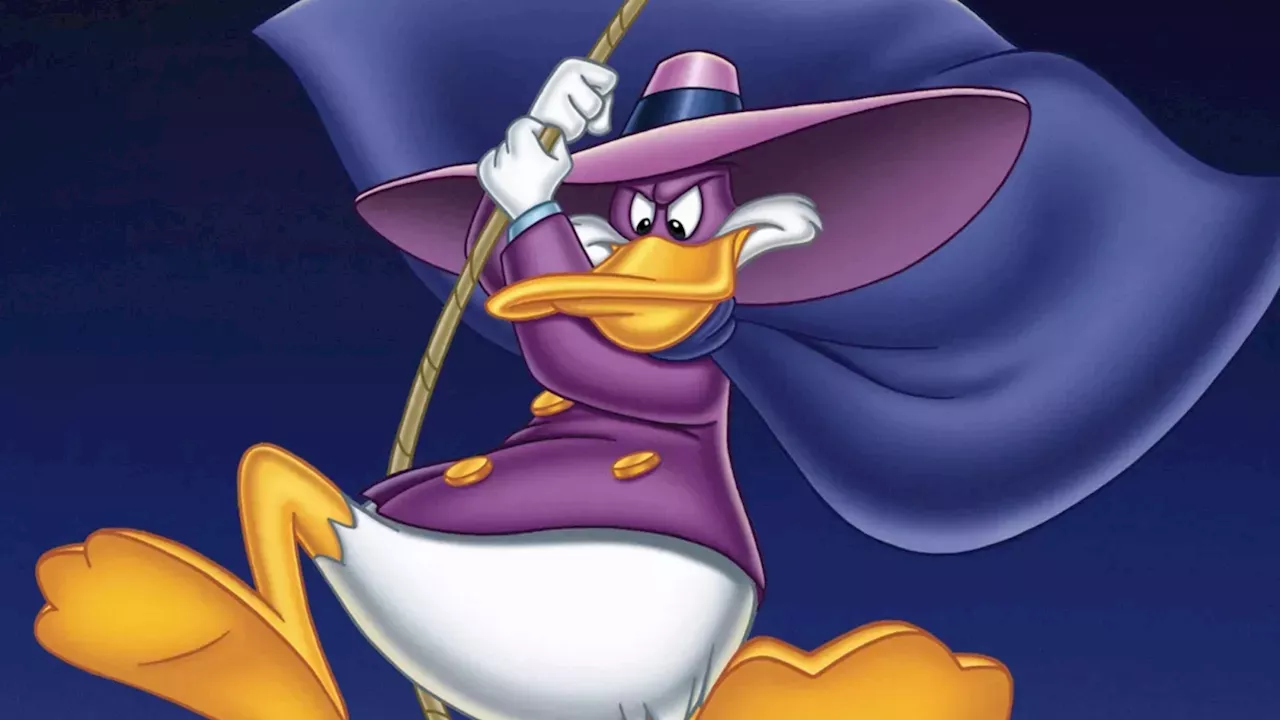
Darkwing Duck: Noir Superhero Grandeur and Funk
In 1991, Disney animators attempted to tap into the massive cultural mania surrounding modern comic book blockbusters with Darkwing Duck. Centered on Drake Mallard, an egotistical crime-fighter navigating the crime-ridden streets of St. Canard, the series blended caped crusader noir tropes with slapstick superhero parodies. The animated episodes featured clever satire, but the opening theme delivered a cinematic punch that rivaled legitimate Hollywood action scores.
Written by Philip Giffin and Steve Nelson, the track merged dramatic orchestral strings, a thunderous four-on-the-floor beat, and sleek funk bass. Lyrics like “Daring duck of mystery, champion of right / Swoops out of the shadows, Darkwing owns the night” captured midnight vigilante drama with flawless tongue-in-cheek sincerity. When legendary voice actor Jim Cummings punctuated the musical climax with the gravelly catchphrase, “Let’s get dangerous,” television history was cemented.
Freakazoid!: Big Band Mania and Fourth-Wall Satire
Executive produced by legendary filmmaker Steven Spielberg and developed by Tom Ruegger alongside Paul Dini, Freakazoid! was decades ahead of its time. The 1995 series satirized early internet culture, comic book clichés, and hyperactive pop culture absurdism with relentless fourth-wall breaks. Despite critical acclaim from industry insiders, mainstream youth audiences frequently found the chaotic narrative pacing disorienting, resulting in a premature cancellation after only two seasons.
However, the show’s grand big-band orchestral theme song remains a towering triumph of animated musical comedy. Composed by Emmy-winning maestro Richard Stone with lyrics by Ruegger, the song featured a blistering, brass-heavy Broadway rhythm. Verses ricocheted wildly between juvenile humor and theatrical bombast: “Super-teen extraordinaire / Freakazoid, Freakazoid! / Runs around in underwear / Freakazoid, Freakazoid!” The track captured manic creative brilliance in a pure, sixty-second musical burst that outlived the show itself.
Broadcast Syndication and Theme Song Production Data
The golden era of syndicated animation operated under unique economic constraints that directly shaped musical production. Broadcasters required packages of exactly 65 half-hour episodes to air daily strips from Monday through Friday across an entire thirteen-week television quarter. Because these episodes aired consecutively five days a week, studio heads dedicated substantial capital toward securing memorable musical branding that prevented viewers from changing the channel.
Production houses routinely contracted elite members of the Society of Composers & Lyricists to orchestrate authentic live instrumentation rather than settling for primitive digital synthesizer presets. These detailed production realities explain why **90s cartoon theme songs** sounded vastly superior to the low-budget synthesizer jingles of the previous decade.
| Animated Series | Premiere Year | Lead Composers / Lyricists | Musical Genre Styling | Total Episodes |
|---|---|---|---|---|
| Chip ‘n Dale Rescue Rangers | 1989 | Mark Mueller | Pop Rock / Motown Horns | 65 |
| Darkwing Duck | 1991 | Philip Giffin, Steve Nelson | Orchestral Noir / Funk Pop | 91 |
| Goof Troop | 1992 | Mark Mueller | New Jack Swing / Urban Pop | 78 |
| Freakazoid! | 1995 | Richard Stone, Tom Ruegger | Big Band Swing / Broadway | 24 |
| CatDog | 1998 | Peter Hannan | Folk Bluegrass / Skiffle | 68 |
Television historians frequently reference detailed retrospectives on the era, such as archival overviews available on The Disney Afternoon history on Wikipedia. These productions generated millions in secondary performance royalties through global distribution, rewarding studios that prioritized unforgettable songwriting over generic background scores.
For fans exploring classic pop culture evolutions, our comprehensive retrospectives on brightcelebrity entertainment archives showcase how traditional television music influenced modern soundtrack composition. Many session artists transitioned seamlessly from children’s television into blockbuster studio records and international commercial campaigns.
By The Numbers: The Repetition Engine of 90s Syndication
Between 1990 and 1998, an average American child who watched afternoon television after school was exposed to a syndicated theme song roughly 260 times in a single calendar year. Across a standard three-year syndication run, that calculated to nearly 800 impressions of the exact same 60-second musical piece. In modern streaming landscapes where audiences consume disparate weekly drops across fractured platforms, achieving that level of concentrated musical immersion is statistically impossible.

Why Modern Streaming Killed the TV Theme Song
The radical transformation of television distribution models over the past decade completely dismantled the creative incentives that once produced iconic cartoon anthems. When Netflix introduced the automated “Skip Intro” button in early 2017, the feature permanently shifted how production executives allocate limited post-production budgets. When user data revealed that over 85 percent of streaming viewers deliberately bypass opening credits to binge episodes faster, studios naturally stopped funding elaborate live-orchestra theme tracks.
Modern streaming shows typically allocate their creative resources toward subtle ambient tone-setters or microscopic title cards lasting fewer than five seconds. While ambient music serves prestige adult dramas well, it robs animated entertainment of bold character introductions and vibrant musical personality. Audiences are no longer greeted by energetic vocal hooks that define the spirit and emotional trajectory of an upcoming broadcast adventure.
Furthermore, contemporary entertainment consumption operates on fragmented digital timelines where viewers rarely share synchronized cultural experiences. In the nineties, millions of children sat down simultaneously across various time zones to absorb the same broadcast blocks, uniting entire classrooms under identical musical touchstones. Today, algorithmic recommendations isolate audiences into hyper-niche programming silos where collective musical memories struggle to form.
For deeper explorations into shifting entertainment trends, discover our latest features on nostalgic celebrity culture highlights and see how digital distribution transformed modern media consumption. Readers tracking the creative shifts of modern television can also analyze in-depth breakdowns on classic television production trends across contemporary streaming ecosystems.
The loss of expositional theme songs also altered how children consume narrative storytelling today. Without a concise musical summary establishing the rules of the fictional universe before each episode, modern animated shows must spend valuable narrative real estate explaining character motivations through clunky expositional dialogue. Classic nineties animators trusted their songwriters to do the heavy lifting, allowing the episodes to focus entirely on visual humor and character interactions.
People Also Ask
Why were 90s cartoon theme songs so much catchier than modern intros?
Studios in the 1990s hired veteran pop composers and live session musicians to write full 60-second radio-quality songs that served as sonic branding. Daily television syndication also exposed children to the same song hundreds of times per year, embedding the melodies deeply into their long-term memories.
Who wrote the Chip ‘n Dale Rescue Rangers and Goof Troop theme songs?
Both iconic themes were written by veteran pop songwriter Mark Mueller, who also composed the world-famous theme song for Disney’s DuckTales. Mueller specialized in blending radio-friendly pop hooks, Motown horn sections, and New Jack Swing rhythms into children’s television.
Did Steven Spielberg produce the Freakazoid animated series?
Yes, Steven Spielberg served as an executive producer alongside Warner Bros. Animation veterans Tom Ruegger and Paul Dini. Spielberg actively championed the show’s fast-paced satire, live orchestral score, and memorable big band theme song composed by Richard Stone.
Why did television networks stop making full cartoon theme songs?
The rise of streaming platforms and automated ‘Skip Intro’ buttons led networks to cut budgets for elaborate musical introductions. Modern programming favors 5-second digital title cards or ambient transition cues to encourage rapid binge-watching rather than full musical exposition.
The Enduring Legacy of 90s Cartoon Theme Songs
Decades after these animated series completed their original television runs, the cultural power of **90s cartoon theme songs** shows no signs of fading. They remain celebrated fixtures across social video platforms, nostalgic trivia nights, and live cover concerts worldwide. Even as the specific plotlines and animation quirks of these shows recede into history, their musical signatures endure as vibrant reminders of a golden era in broadcast entertainment.
These sixty-second masterpieces proved that music composed for children could exhibit sophisticated craftsmanship, technical mastery, and timeless emotional appeal. Whenever that opening brass hit echoes through your speakers, you are instantly transported back to an afternoon living room floor, proving that great songwriting will always outlast the fleeting narratives of everyday television.
More Like This
For more updates, check out our latest entertainment and sports news.