Key Takeaways
| Strategic Pivot | Carlos Alcaraz plans to take more extended breaks during upcoming tennis seasons to preserve his mental health. |
| Successful Return | Alcaraz returned from a four-month wrist injury hiatus to defeat Wu Yibing 6-3, 6-4, 6-1 at the U.S. Open. |
| Workload Contrast | After playing 80 matches last year, the superstar is leveraging his financial security to optimize his schedule. |
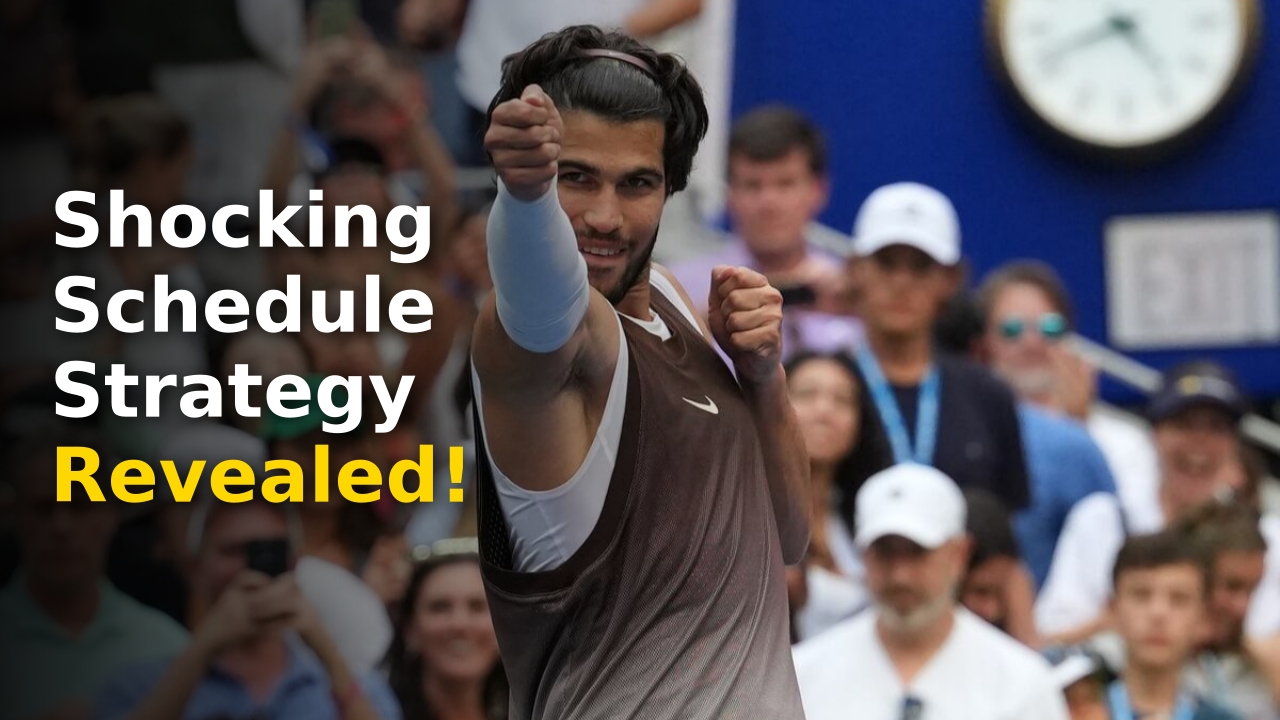
| On-Court Style | The Spaniard debuted a double-shirt wardrobe look and a new arrow-shooting victory celebration designed by his brothers. |
You might think that dominating the global sports scene requires competing in every single tournament, but **Carlos Alcaraz tennis breaks** are proving that strategic rest is the ultimate weapon for modern athletes. The Spanish superstar recently made a sensational return to the court after a grueling four-month absence caused by a right wrist injury. His flawless performance at the U.S. Open has reignited critical conversations about the unsustainable physical demands of the professional tennis tour. By prioritizing his mental well-being over ranking points, Alcaraz is charting a bold new path for the next generation of elite sports icons.
The defending champion looked remarkably sharp during his 6-3, 6-4, 6-1 victory over Wu Yibing in the fourth round. After being sidelined since his April withdrawal at the Barcelona Open, many tennis experts worried about potential competitive rust. Instead, the young champion surprised himself with his seamless recovery and high-energy performance. His physical resilience suggests that his temporary departure from the tour was exactly what his body and mind required to mount a successful title defense.
This scheduling revolution represents a monumental shift in how young tennis prodigies manage their competitive careers. Historically, rising stars were expected to play a relentless schedule to secure sponsorships and climb the world rankings. Alcaraz is challenging this status quo, openly admitting that he wants to miss tennis occasionally to maintain his passion. His refreshing honesty highlights a growing movement among elite competitors who refuse to sacrifice their long-term health for short-term competitive gains.
Why Carlos Alcaraz Tennis Breaks Represent a Paradigm Shift
Elite professional tennis has long been a sport of physical attrition, demanding constant travel and intense physical exertion across eleven months of the year. The decision to implement regular **Carlos Alcaraz tennis breaks** signals a profound change in how top-tier athletes view their career longevity. Rather than chasing every available ranking point, Alcaraz is focusing on peaking during the most prestigious events. This strategic selectivity allows him to avoid the psychological burnout that has historically derailed many promising young careers.
At just 23 years old, Alcaraz possesses a mature understanding of his own physical and psychological limits. He explained that his recent wrist injury was not caused by overplaying, meaning future breaks will be taken primarily for mental preparation. The young champion understands that staying mentally healthy is just as important as maintaining physical fitness. By stepping away from the court, he preserves the child-like joy and creativity that define his signature style of play.
This philosophy marks a massive departure from the traditional tennis mentality, which often equates constant play with dedication. Many players fear that taking time off will lead to a loss of momentum and competitive sharpness. However, Alcaraz proved that a well-rested player can return at an incredibly high level without missing a beat. His ability to perform at his best after a four-month absence will likely inspire other players to reconsider their own exhausting tournament schedules.
Redefining Player Longevity on Tour
The concept of load management, popularized by basketball stars in the NBA, is finally finding a permanent home in professional tennis. For years, individual tennis players lacked the luxury of sitting out mandatory tournaments without facing significant penalties. Alcaraz, however, is rewriting these traditional rules by putting his personal well-being ahead of tour expectations. His long-term career planning shows that he is preparing to dominate the sport for the next fifteen years, rather than burning out before he reaches his physical prime.
This disciplined approach to scheduling requires a high level of self-confidence and trust in one’s coaching staff. Alcaraz and his team understand that a shorter, more intense season can yield better results at the Grand Slams. By reducing his overall match load, he minimizes the risk of chronic joint and muscle injuries. This preventive strategy ensures that when he does step onto the court, he can deliver the explosive athleticism that fans love to watch.
The Mental Health Revolution in Tennis
The conversation surrounding mental health in sports has evolved rapidly over the past decade, with tennis stars leading the charge. Alcaraz’s willingness to speak openly about his psychological needs is a crucial step forward for the sport. He noted that playing tournament after tournament can make the tour feel like a repetitive grind rather than a joyful pursuit. Taking structured breaks allows him to reconnect with his family, enjoy his hobbies, and return to the court with a completely clear mind.
For fans who follow sports celebrity lifestyles, Alcaraz’s approach offers a fascinating look at the realities of modern fame. Behind the glamorous trophies and massive endorsement deals lies an intense pressure to perform under constant global scrutiny. By taking regular breaks, Alcaraz protects himself from the exhausting demands of the spotlight. This balance is essential for maintaining both his happiness and his status as a global ambassador for the sport.
By the Numbers: Tracking Alcaraz’s Grueling Load
To understand why these scheduling changes are so necessary, one must look at the intense workload Alcaraz carried before his injury. Last season, the young Spaniard competed in an astonishing 80 matches, a number that placed immense strain on his developing body. Even before his wrist injury sidelined him in April, he had compiled a spectacular 22-3 record this year. This intense match play included securing his seventh major championship at the Australian Open, a feat that cemented his legendary status.
This high volume of high-stakes tennis highlights the physical toll of consistently reaching the final rounds of tournaments. Unlike lower-ranked players who might exit in the early rounds, Alcaraz routinely plays deep into the second week of every event. This continuous play means his actual hours on court are significantly higher than the average player. The following table illustrates the dramatic contrast between his championship runs and the necessary recovery periods required to sustain them.
| Season Phase | Matches Played | Major Titles Won | Injury Weeks | Scheduled Breaks |
|---|---|---|---|---|
| Previous Season | 80 | 2 | 2 | 4 Weeks |
| Current Season (Pre-Injury) | 25 | 1 (Australian Open) | 16 (Right Wrist) | None |
| Projected Next Season | 55-60 | TBD | 0 (Targeted) | 10-12 Weeks |

This statistical breakdown shows why a strategic shift in scheduling is a logical step for Alcaraz’s long-term success. Reducing his yearly match count to a more manageable number will help prevent the recurring physical setbacks that often plague explosive players. By focusing his physical energy exclusively on premier events, he can maximize his chances of winning more historic titles. This data-driven approach proves that resting is not a sign of physical weakness, but a calculated strategy for athletic optimization.
How the ATP Tour Calendar Forces Early Burnout
The structured setup of the tennis calendar has long been a point of contention among active professional players. Unlike major team sports that feature distinct off-seasons, tennis competitors are locked into a continuous loop of tournaments. This relentless system forces players to constantly travel across time zones, adapting to different court surfaces and playing conditions. For young athletes whose bodies are still developing, this non-stop competition can quickly lead to chronic joint issues and chronic fatigue.
Fortunately, Alcaraz possesses a unique set of advantages that allows him to break free from this demanding cycle. Unlike lower-ranked players who rely on weekly match play to cover their travel expenses, Alcaraz has immense financial stability. His elite status allows him to comfortably skip intermediate tournaments without worrying about his financial security. This autonomy gives him the power to design a custom schedule that prioritizes his physical health and psychological well-being.
This scheduling freedom is a luxury that very few players on the tour can currently afford. For the majority of professional competitors, skipping events means losing crucial ranking points and vital prize money. This systemic pressure often forces athletes to play through minor injuries, turning small physical issues into major career-threatening conditions. Alcaraz’s decision to take control of his schedule highlights the need for structural reforms within the professional tennis landscape.
The Cost of Chasing the World Number One Ranking
The pursuit of the world number one ranking has historically pushed tennis players to their absolute physical and mental limits. To hold the top spot, players must consistently perform at an elite level across dozens of tournaments each year. While reaching the summit of tennis is a legendary achievement, the physical cost can often shorten a player’s career by several years. Alcaraz seems remarkably aware of this trade-off, choosing to value career longevity over temporary ranking milestones.
By prioritizing Grand Slams over minor tour events, Alcaraz ensures that he will remain a dominant force in the sport for years to come. This big-picture perspective is incredibly rare for such a young athlete, showing a level of emotional maturity that matches his physical brilliance. Fans who want to follow his journey can stay updated by reading exclusive tennis updates regularly. His selective approach to scheduling may soon become the standard blueprint for the next generation of tennis superstars.
Expert Take: The Biomechanics of Alcaraz’s Playstyle
According to sports science experts, Alcaraz’s unique playstyle is exceptionally demanding on his joints and tendons. His extreme court coverage, explosive sliding on hard courts, and rapid wrist acceleration on his forehand require maximum physical effort. This high-intensity movement pattern makes him more susceptible to repetitive strain injuries than more conservative baseline players. By incorporating regular breaks, Alcaraz gives his micro-torn muscle tissues and tendons the essential time they need to rebuild and strengthen, reducing the likelihood of severe structural damage.
Historical Comparisons: The Federer and Nadal Blueprint

Alcaraz is not the first tennis icon to realize the immense value of a highly selective tournament schedule. His legendary compatriot, Rafael Nadal, frequently missed large portions of the season to nurse chronic injuries, only to return and dominate the clay-court circuit. This historical precedent proves that a player does not need to play constantly to maintain their status as an all-time great. By focusing his physical energy on the events that mattered most, Nadal was able to capture an incredible 22 Grand Slam titles.
Similarly, Roger Federer masterfully adjusted his tournament schedule in the latter half of his career to preserve his joints. By skipping the entire clay-court season for multiple years, Federer kept his body fresh and extended his career well into his late thirties. Alcaraz is adopting a similar philosophy but implementing it much earlier in his career than his famous predecessors did. This proactive approach could help him avoid the severe physical setbacks that Nadal and Federer faced during their twenties.
To explore how elite athletes manage their physical health through customized lifestyle routines, fans can read about elite athletes wellness routines. These specialized insights show how top stars use sleep, nutrition, and scheduled rest to maintain peak performance. Alcaraz’s schedule changes are a key part of this modern approach to athletic wellness, proving that rest is just as important as active training.
Nadal’s Hard Court Sacrifices
Throughout his legendary career, Rafael Nadal had to make difficult decisions regarding his tournament scheduling, particularly on punishing hard courts. These hard surfaces are notoriously tough on an athlete’s knees and lower back, often leading to long-term chronic pain. Nadal’s willingness to skip major hard-court events to save his body for the clay-court season became a crucial element of his historic longevity. Alcaraz, who plays with an equally explosive style, must continue to apply these physical lessons to his own career path.
His recent right wrist injury served as a clear warning of what can happen when the body is pushed past its natural limits. By choosing to sit out the clay-court warmups and focusing on a gradual return, Alcaraz ensured his wrist was fully healed before competing at the U.S. Open. This patience paid off handsomely, allowing him to play with complete freedom and confidence during his matches in New York.
Federer’s Masterclass in Longevity
Roger Federer’s late-career resurgence is widely considered a triumph of smart scheduling and physical preservation. By focusing almost exclusively on grass and fast hard courts, Federer kept his body fresh and highly competitive against much younger opponents. His strategic absences allowed him to win multiple Grand Slam titles late in his career, defying conventional aging curves. Alcaraz’s decision to embrace this selective mindset at age 23 shows a forward-thinking attitude that could yield massive long-term rewards.
As Alcaraz continues to refine his scheduling strategy, his progress will be watched closely by tennis analysts worldwide. According to ESPN’s comprehensive tennis coverage, the ability of young players to manage their physical workload is the single biggest factor in determining their ultimate place in tennis history. Alcaraz is proving that he has both the physical talent and the mental maturity to navigate these challenges successfully, securing his future as a true legend of the sport.
People Also Ask
What happened with Carlos Alcaraz today?
Carlos Alcaraz successfully advanced to the fourth round of the U.S. Open with a commanding 6-3, 6-4, 6-1 victory over Wu Yibing, showing no lingering physical issues from his recent right wrist injury.
Why is Carlos Alcaraz taking breaks from tennis?
Alcaraz is planning to take more extended breaks from the tennis tour to prioritize his mental health, prevent burnout, and ensure he arrives at major tournaments feeling fully prepared and motivated.
How does Carlos Alcaraz’s injury affect his ranking?
While his four-month absence from April to August caused him to miss several key tournaments, Alcaraz’s strong performance at the U.S. Open helps protect his high ranking, and his financial stability means he has no major ranking or financial concerns.
When is the next tournament for Carlos Alcaraz?
Following his run at the U.S. Open, Alcaraz will work with his coaching staff to finalize his late-season tournament schedule, which will include highly anticipated appearances at key Masters 1000 events and the ATP Finals.
The Long-Term Impact of Carlos Alcaraz Tennis Breaks
As the tennis world adapts to this new era, the decision to normalize **Carlos Alcaraz tennis breaks** will undoubtedly influence scheduling policies across the entire ATP tour. Tennis fans must get used to the idea that their favorite stars may not appear at every single Master 1000 event. However, the trade-off is a far higher quality of play when these athletes do step onto the court. By prioritizing their physical and mental health, top players can deliver more exciting, high-energy performances when the stakes are highest.
Alcaraz’s successful return at the U.S. Open, highlighted by his comfortable victory over Wu Yibing, proves his formula works. His renewed energy on the court was obvious, complemented by his fun new arrow-shooting celebration and a practical double-shirt wardrobe adjustment. This lighthearted attitude is exactly what Alcaraz needs to sustain his passion for professional sports over the next decade. By choosing mental health and joy over immediate ranking points, he is setting a new standard for what it means to be a champion. The tennis world is watching, and the era of the highly selective, hyper-focused tennis superstar has officially arrived.
More Like This
For more updates, check out our latest entertainment and sports news.