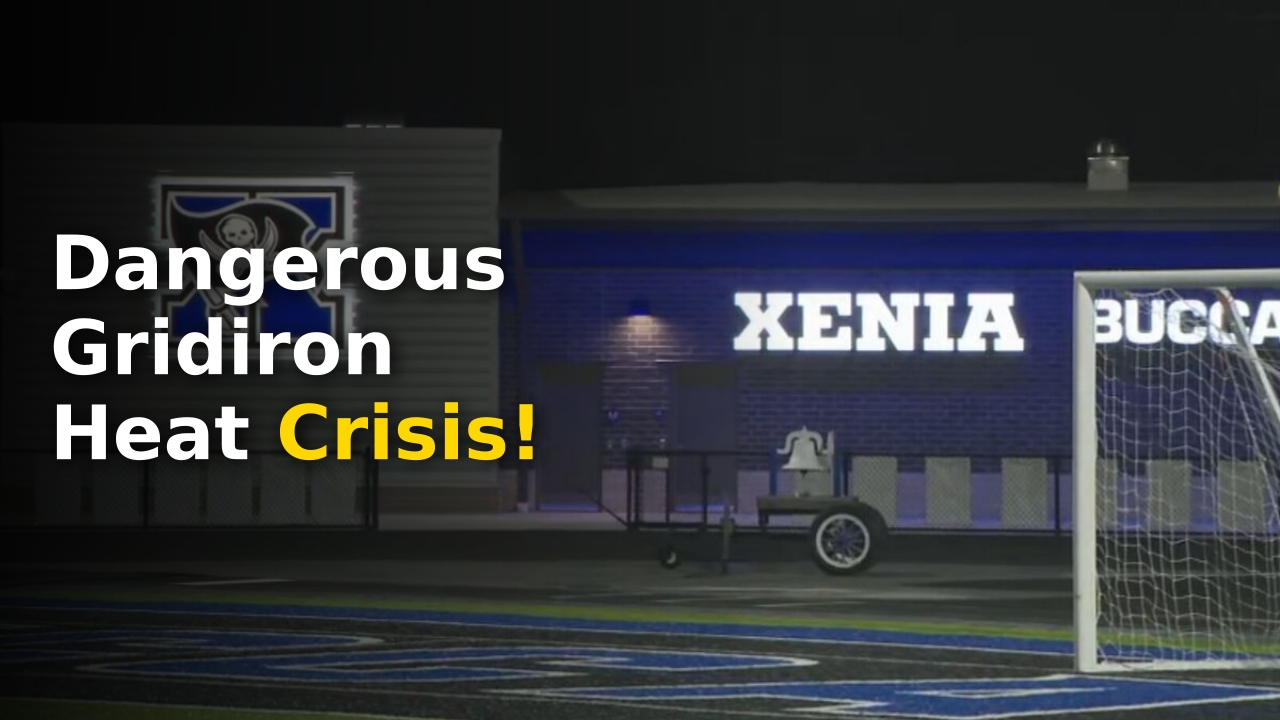
Key Takeaways
| Coaches at Xenia and Trotwood-Madison have moved practices to early mornings and late evenings to avoid peak heat. |
| OHSAA guidelines now dictate mandatory hydration breaks and gear restrictions based on Wet Bulb Globe Temperature. |
| Athletic trainers are utilizing advanced cooling methods, including ice baths and electrolyte monitoring, to prevent heat stroke. |
| Upcoming Friday night games are currently proceeding with a 7 p.m. kickoff despite lingering humidity concerns. |
You probably didn’t expect the most dangerous opponent on the gridiron this year to be the thermometer rather than a rival linebacker. High school football heat safety has become the primary concern for coaching staffs across the Midwest as a brutal heat wave forces fundamental shifts in how athletes prepare for the season. As record-breaking temperatures continue to bake the turf, the traditional afternoon practice is rapidly becoming a relic of the past for programs focused on player survival and performance.
The intensity of the current weather pattern has transformed the standard coaching whistle into a signal for mandatory hydration and physiological monitoring. In Ohio, local powerhouses like Xenia High School and Trotwood-Madison High School are rewriting their playbooks, not to beat their next opponent, but to conquer the physiological stress of 90-degree heat and stifling humidity. This shift represents a broader national movement toward data-driven athlete protection that prioritizes internal body temperature over traditional toughness drills.
Understanding the gravity of high school football heat safety requires a look at the drastic measures taken by veteran coaches who have seen the climate shift over their decades on the sidelines. The days of restricted water breaks as a form of “mental conditioning” are officially over, replaced by a sophisticated network of athletic trainers and weather monitoring systems. This evolution is not just about comfort; it is a life-saving necessity in an era where exertional heat stroke remains a leading cause of death among young athletes.
High school football heat safety Protocols in Ohio
For Xenia High School football coach Maurice Harden, the battle against the elements begins before the sun fully crests the horizon. Harden has implemented a strict early morning practice schedule during the summer months, ensuring that his players are off the field long before temperatures reach their hazardous peak. This proactive approach allows the team to maintain high-intensity training without the looming threat of the afternoon’s radiant heat, which can often feel ten degrees hotter on a synthetic turf field compared to natural grass.
Harden emphasizes that his decision-making process is deeply collaborative, involving constant communication with the school’s professional athletic training staff. By checking the weather forecast daily and cross-referencing it with the Ohio High School Athletic Association (OHSAA) guidelines, the Xenia coaching staff removes the guesswork from athlete safety. “Well, I think the priority is always to be safe, right?” Harden noted during a recent briefing. “Keeping players safe is a big thing for us. So, we wanted to make sure that was at the forefront of everything.” This sentiment is echoed throughout the region as coaches recognize that a single heat-related incident can have devastating, long-term consequences for a program.

At Trotwood-Madison High School, the strategy differs slightly but remains rooted in the same safety philosophy. Rather than the early morning sunrise sessions favored by Xenia, Trotwood-Madison has opted for late-evening practices, with sessions not commencing until 7 p.m. This timing ensures that the players are active during the cooling phase of the day, though it presents its own logistical challenges for families and staff. Athletic trainer Tianna Dixon Gordan is the linchpin of this operation, overseeing the logistics of hydration and cooling. She ensures the stadium is stocked with massive quantities of ice and water, transforming the sidelines into a mobile medical recovery zone.
The Role of the Athletic Trainer
Tianna Dixon Gordan’s role extends beyond just providing water; she is an educator for the young athletes under her care. She stresses the importance of “pre-hydration” and post-practice recovery, teaching players that their safety is a 24-hour commitment. “Just making sure that they’re taking care of themselves before practice, eating right, and after practice,” Gordan explained. This holistic approach ensures that when players do take the field in the evening, their bodies are physiologically prepared to handle the remaining thermal load of the day.
The integration of professional athletic trainers into the daily workflow of high school sports has been a game-changer for high school football heat safety. These professionals use tools like Wet Bulb Globe Thermometers (WBGT) to measure not just air temperature, but the combined effects of humidity, wind speed, and solar radiation. When the WBGT reaches specific thresholds, the OHSAA mandates specific actions, such as removing helmets and pads or, in extreme cases, canceling all outdoor activity. This data-driven approach removes the “tough it out” mentality that historically led to tragedies on the practice field.
Data and Statistics for Heat Mitigation
| WBGT Reading (F) | Activity Level | Mandatory Rest Breaks |
|---|---|---|
| Under 82.0 | Normal Activity | 3 breaks per hour / 5 min each |
| 82.0 – 86.9 | Use Discretion | 3 breaks per hour / 10 min each |
| 87.0 – 89.9 | Maximum 2 hours | 4 breaks per hour / 10 min each |
| 90.0 – 92.0 | No protective gear | 20 min rest every 45 min |
| Over 92.1 | No Outdoor Activity | Immediate cancellation |
As seen in the data above, the margins for safety are incredibly slim. A swing of just five degrees in the WBGT can be the difference between a productive practice and a lethal environment. According to research from the Korey Stringer Institute, exertional heat stroke is 100% preventable if the proper protocols are followed, yet it remains a top concern for parents and administrators alike. The use of cold-water immersion tubs, which can cool an overheated athlete’s core temperature twice as fast as air cooling, has become a staple on the sidelines of schools committed to high-level athlete wellness.
Expert analysis suggests that the “acclimatization period” is the most critical time for high school football heat safety. Statistical data shows that the majority of heat-related illnesses occur during the first five days of practice when the body has not yet adapted to the combined stress of exercise and high ambient temperatures. During this window, OHSAA rules strictly limit the amount of equipment a player can wear and the duration of the sessions. By the time Xenia hosts Butler at Doug Adam Stadium this Friday, the players will have undergone weeks of this careful conditioning, though the 7 p.m. kickoff will still be monitored closely.
The Historical Context of Heat in Sports
The evolution of high school sports safety didn’t happen in a vacuum. It was forged through tragedy and subsequent advocacy. Historically, football culture celebrated “waterless” practices as a way to build mental fortitude. This dangerous misconception began to shift in the early 2000s following several high-profile deaths at the collegiate and professional levels. Today, the focus has shifted from “toughness” to “resilience,” recognizing that a dehydrated and overheated brain cannot effectively process the complex schemes of a modern high school offense.
In the last decade, climate data reveals that the average temperature during the month of August has risen steadily in the Midwest. This environmental shift has forced state athletic associations to adopt more rigid and scientifically backed heat policies. Organizations like the OHSAA official safety protocols have become national models for how to balance the competitive spirit of football with the undeniable reality of a warming planet. Schools that fail to adhere to these standards face not only athletic sanctions but significant legal liability and, most importantly, the risk of losing a student-athlete.

By the numbers, the impact of these changes is clear. While the number of extreme heat days has increased, the rate of heat-related fatalities in high school sports has seen a downward trend in states with mandatory WBGT policies and required athletic trainers. This success is a testament to the work of people like Coach Harden and Tianna Dixon Gordan, who prioritize science over tradition. Their commitment ensures that the focus remains on the game itself, such as the upcoming clash where Trotwood-Madison plays at Springfield, rather than the medical emergencies occurring on the sidelines.
Modern Technology in Heat Mitigation
Beyond schedule changes, some elite programs are turning to wearable technology to monitor high school football heat safety in real-time. Biometric sensors embedded in jerseys or chin straps can now transmit a player’s core temperature and heart rate directly to a trainer’s tablet. While this technology is currently expensive for many public school districts, it represents the future of the sport. For now, the most effective tools remain the most basic: shaded rest areas, large fans, and an endless supply of ice-chilled water.
Nutrition also plays a vital role in this safety ecosystem. Athletes are encouraged to consume sodium-rich foods and electrolyte-balanced drinks to replace the minerals lost through heavy sweating. You can find more details on brightcelebrity.com regarding how elite athletes manage their diets during extreme weather. Proper fuel allows the body to maintain its internal cooling mechanisms, such as perspiration and peripheral vasodilation, more effectively. Without the right caloric and fluid intake, even an early morning practice in Xenia can become hazardous.
People Also Ask
What happened with high school football heat safety protocols today?
Today, schools like Xenia and Trotwood-Madison in Ohio moved their practices to the early morning and late evening to avoid the dangerous peak temperatures of the afternoon heat wave. Coaches are strictly following OHSAA guidelines to ensure player safety during these extreme conditions.
Why is the OHSAA heat index policy trending right now?
The policy is trending because of a record-breaking heat wave affecting the region during the start of the football season. This has forced athletic departments to implement mandatory cooling breaks and gear restrictions based on Wet Bulb Globe Temperature (WBGT) readings.
How does this extreme heat affect Xenia High School football?
Xenia High School has shifted its practices to the early morning hours before temperatures peak. Coach Maurice Harden and his staff are working closely with athletic trainers to monitor weather conditions daily and prioritize the health of their student-athletes.
When is the Xenia vs. Butler football game scheduled?
The game between Xenia and Butler is scheduled to kick off at 7 p.m. this Friday at Doug Adam Stadium. Officials will continue to monitor the heat index leading up to the game to determine if further delays are necessary.
Final Thoughts on Athlete Protection
The landscape of prep sports is changing, and the recent adjustments at Xenia and Trotwood-Madison are just the tip of the iceberg. As we look toward the future, the integration of climate science into athletic planning will only become more vital. Ensuring high school football heat safety is no longer just a seasonal concern; it is a fundamental pillar of modern sports management that requires the cooperation of coaches, trainers, parents, and the athletes themselves.
For more information on the latest in youth sports and athlete wellness, check out the resources available at brightcelebrity.com for deep dives into training protocols. Additionally, you can find expert perspectives on the evolution of coaching at brightcelebrity.com. As these young men take the field this Friday night, they do so under a canopy of safety measures that were designed to ensure their biggest challenge remains the opponent across the line of scrimmage, not the air they breathe. Organizations like the National Athletic Trainers’ Association continue to provide the framework for these life-saving decisions.
Ultimately, the resilience of these programs lies in their ability to adapt. Whether it is shifting a practice to 5 a.m. or investing in high-tech cooling equipment, the goal remains the same: the preservation of the student-athlete. In the high-stakes world of Ohio football, where the passion for the game is unmatched, the commitment to high school football heat safety stands as the ultimate victory for every program involved.
More Like This
For more updates, check out our latest entertainment and sports news.