Key Takeaways
| Historic Speed Barrier | Sir Malcolm Campbell became the first person to exceed 300 mph in an automobile. |
| The Perfect Venue | The legendary run took place at the Bonneville Salt Flats in Utah on September 3, 1935. |
| Power Plant Marvel | The custom Blue Bird vehicle utilized a supercharged 2,300-horsepower Rolls-Royce aviation engine. |
| Geopolitical Milestones | September 3 also marks the signing of the Treaty of Paris and the outbreak of World War II. |
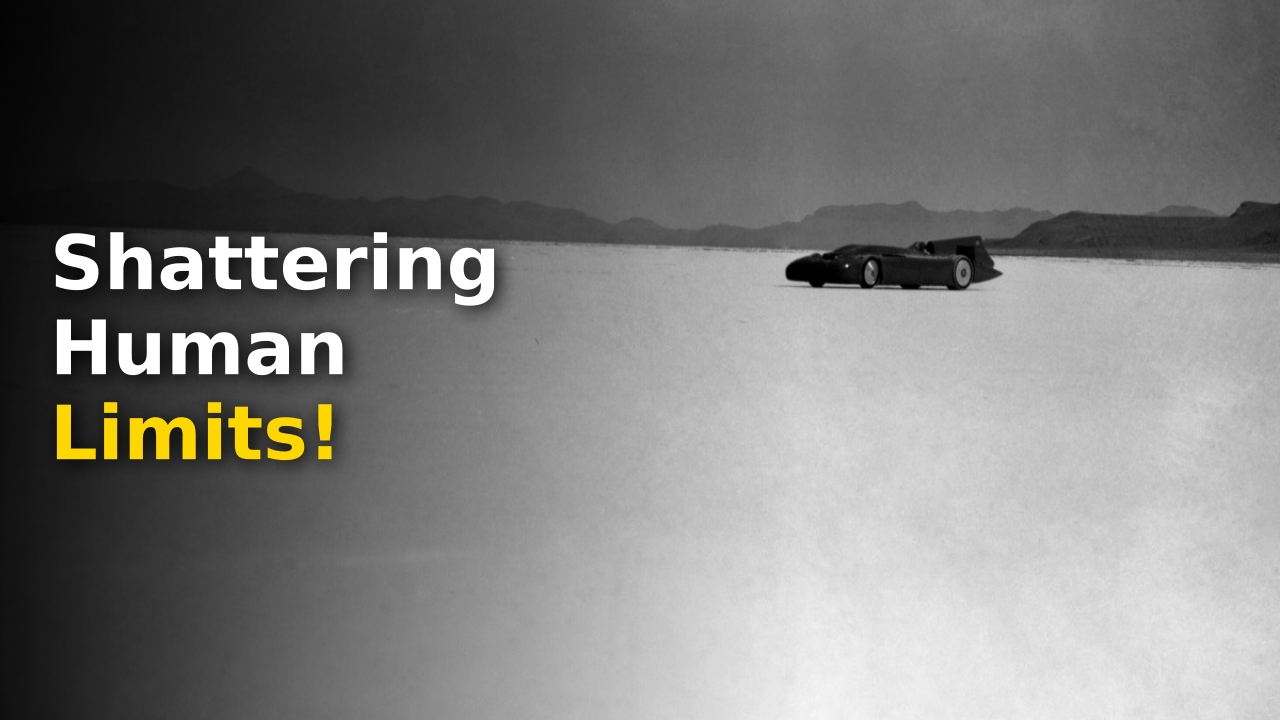
If you think modern supercars are terrifyingly fast, the story of the Campbell Speed Record will completely redefine your understanding of courage. On September 3, 1935, a fearless British motoring journalist pushed the absolute limits of physics on a desolate salt bed. He did not just break a number; he shattered human limitations by soaring past 300 miles per hour. Today, we look back at how this legendary run changed automotive history forever.
This pioneering achievement showcased the incredible synergy between human bravery and early aerospace engineering. Pushing a land vehicle beyond 300 miles per hour was once considered medically impossible, with some scientists claiming a human would suffocate. Sir Malcolm Campbell proved the skeptics wrong, solidifying his status as an eternal icon of speed and innovation.
The Campbell Speed Record Legacy
The story of the Campbell Speed Record is not merely a tale of high speeds, but a saga of relentless ambition and mechanical engineering triumph. Sir Malcolm Campbell, an elite racer and dedicated motoring journalist, spent decades pursuing land and water speed records. By 1935, Campbell had already secured multiple world records, yet the elusive 300 mph barrier remained his ultimate obsession. This quest eventually led him away from the shores of Florida to the uniquely flat crust of Utah.
This historic milestone occurred at the iconic Bonneville Salt Flats, a setting that would become synonymous with land speed legends. The salt flats provided the perfectly level, expansive, and low-friction surface necessary to reach speeds that were once deemed fatal. Campbell’s previous attempts on sandy beaches were often disrupted by unpredictable tides and uneven surfaces, which threatened to flip his heavy vehicle. Transitioning to the salt of Bonneville was a stroke of genius that forever changed the landscape of extreme motorsports.
The historic run itself was a masterclass in calculated risk-taking and nerves of steel. On that Tuesday morning, the roaring engine of the Campbell-Railton Blue Bird echoed across the barren Utah desert. Campbell managed to achieve an average speed of 301.129 miles per hour over two consecutive runs, overcoming massive traction issues. This incredible feat cemented his name in the annals of automotive history as the first human to cross the 300 mph threshold.

The cultural impact of the Campbell Speed Record was immediate and profound across both the United States and Great Britain. Campbell was celebrated as a global hero, receiving a knighthood from King George V for his contributions to engineering and motor sports. His victory was also a triumph for British engineering, showcasing the superior performance of British-built engines and aerodynamics. You can explore more about similar history-making moments in our celebrity sports profiles collections.
The Salt Flats Crucial Choice
Before Campbell’s legendary run, land speed record seekers primarily used Daytona Beach in Florida. However, Daytona’s sand was notoriously unstable, often causing wheel spin and dangerous directional shifts. The Bonneville Salt Flats offered a vast, hard-packed crystalline surface that allowed for superior tire adhesion and longer stopping distances. Campbell recognized this geological marvel as the key to unlocking the 300 mph achievement, setting a precedent that racers still follow today.
The 301 MPH Breaking Point
Hitting 301.129 mph was not a smooth ride; it was a violent, vibrating journey on the edge of disaster. During the run, Campbell experienced a terrifying tire blowout at high speed, which threatened to send the Blue Bird spinning out of control. His expert car handling and incredible reflexes saved his life and preserved the record. This dramatic event highlighted the immense danger faced by early speed pioneers who risked everything for technological glory.
Engineering the Legendary Blue Bird
At the heart of the Campbell Speed Record was the magnificent Campbell-Railton Blue Bird, a vehicle designed specifically to defy gravity and drag. This mechanical marvel was powered by a supercharged Rolls-Royce R V12 aero engine, which produced a staggering 2,300 horsepower. This engine was originally developed for the Schneider Trophy air races, representing the absolute pinnacle of aviation technology of the era. Integrating such an immense power plant into a land vehicle required unprecedented engineering expertise.
The aerodynamics of the Blue Bird were meticulously crafted to keep the vehicle firmly pressed against the ground. At 300 mph, even a slight aerodynamic imbalance could cause the car to lift off like an airplane, leading to a catastrophic crash. The vehicle featured a streamlined body, a large rear tail fin for directional stability, and enclosed wheel arches to minimize drag. Every curve and panel of the Blue Bird was designed to slice through the air with maximum efficiency.
The extreme tires for this run were engineered by Dunlop, who created custom smooth tires tested up to 300 mph in laboratory conditions. These tires featured ultra-thin tread to prevent heat buildup and were only designed to last for a few minutes. This highlighted the incredibly narrow margins of safety Campbell operated within. You can learn more about the legendary driver’s story on our BrightCelebrity profile features pages.
This engineering success serves as an inspiration for modern automotive design, showing how extreme racing drives commercial vehicle safety. The technologies pioneered by Campbell and his design team eventually filtered down to consumer automobiles, improving tire safety, aerodynamics, and high-speed stability. The Blue Bird remains a testament to what human ingenuity can achieve when pushed to the absolute edge of possibility.
By the Numbers: The vehicle weighed a massive 5 tons, measured over 27 feet in length, and consumed fuel at an astonishing rate. The Rolls-Royce engine required special aviation-grade fuel mixes to prevent detonation under high supercharger boost. These extreme specifications prove that the Campbell Speed Record was as much a triumph of industrial chemistry and mathematics as it was of driving skill.
Historic September 3 Milestone Metrics
September 3 is a day of monumental transitions, conflicts, and achievements that have continually reshaped human civilization. From the birth of nations to the exploration of deep space, this date holds a special place in global history. To help you understand the sheer scale of these events, we have compiled a detailed comparative analysis.
Here is how the major historical events of September 3 compare in terms of global impact and lasting legacy:
| Year | Event Category | Key Historical Figure / Entity | Impact Score (1-10) |
|---|---|---|---|
| 1783 | Diplomacy & Nationhood | United States & Great Britain | 10/10 |
| 1935 | Motorsports & Engineering | Sir Malcolm Campbell | 9/10 |
| 1939 | Global Warfare | King George VI & Allied Powers | 10/10 |
| 1976 | Space Exploration | NASA Viking 2 Lander | 8.5/10 |
These diverse milestones show that September 3 is uniquely charged with moments of high-stakes tension and historic resolution. Whether through treaties signed in ink or speed records carved in salt, this day represents the relentless march of progress. The Campbell Speed Record stands alongside these geopolitical shifts as a monument to human focus and mechanical mastery.
Global Conflicts and Peaceful Treaties
While the Campbell Speed Record represents a peak of human mechanical achievement, September 3 also marks major turning points in global conflict and diplomacy. On this day in 1783, representatives of the United States and Great Britain signed the Treaty of Paris. This momentous document officially ended the Revolutionary War, forcing Great Britain to formally recognize U.S. sovereignty. It remains one of the most critical diplomatic achievements in human history, laying the foundation for the rise of a global superpower.
You can learn more about this by studying the Treaty of Paris historical documentation which details the exact borders and fishing rights granted to the newly independent nation. This treaty proved that even the most bitter, bloody conflicts could find a peaceful resolution through structured diplomacy. It set a precedent for international law and conflict resolution that continues to guide diplomatic efforts to this day.
Decades later, the dark clouds of the American Civil War cast a shadow over September 3, 1861. Confederate forces invaded the strategically vital border state of Kentucky, which had previously declared its official neutrality. This aggressive move shattered Kentucky’s neutral stance, pushing the state legislature to throw its support behind the Union. The invasion was a major tactical blunder for the Confederacy, as it secured Union control over critical waterways and logistics hubs.

The specter of global war returned on September 3, 1939, when Britain, France, Australia, and New Zealand declared war on Germany. This fateful decision came just two days after Adolf Hitler’s Nazi forces invaded Poland, igniting World War II. In a deeply moving national radio broadcast, Britain’s King George VI addressed the empire, stating, “With God’s help, we shall prevail.” This speech galvanized millions of citizens, steeling their resolve for a long and brutal struggle against fascism.
Exactly four years later, on September 3, 1943, Allied forces launched an invasion of the Italian mainland, marking a critical turning point in World War II. On that very same day, Italian officials secretly signed an armistice with the Allies, effectively removing Italy from the Axis alliance. This coordinated military and diplomatic operation forced Germany to redirect valuable troops to secure the Italian peninsula. These historical events highlight how September 3 has repeatedly served as a crucible for global power dynamics and geopolitical restructuring.
Expert Take: Historians often view the strategic decisions made on September 3 as pivoting points that prevented worse outcomes. For instance, the declaration of war in 1939, although tragic, established a unified front against tyrannical expansion. Similarly, the 1783 treaty demonstrated that even the most bitter enemies could find a path to peace through structured diplomatic engagement. These events remind us that progress is often born out of conflict and resolved through courageous leadership.
Modern Space Exploration and Tragedies
Moving into the modern era, September 3 continued to witness history-making milestones that stretched from the Martian surface to the streets of Europe. On September 3, 1976, NASA’s Viking 2 lander successfully touched down on Mars, completing a historic voyage. The lander immediately began transmitting the first close-up, high-resolution color photographs of the red planet’s surface. This monumental achievement provided scientists with invaluable data, forever changing our understanding of the solar system.
For more technical insights, you can visit NASA’s Viking 2 Mars exploration mission archives. The search for extraterrestrial life and Martian geological history took a massive leap forward thanks to this project. The successful touchdown proved that humanity could land delicate instruments on distant worlds, paving the way for future rover missions.
The closing of a painful chapter in modern pop culture also occurred on this day in 1999. A French judge officially closed a two-year inquiry into the tragic car crash that killed Princess Diana in Paris. The court dismissed all charges against nine photographers and a press motorcyclist, concluding the crash was caused by an inebriated driver. This legal conclusion sparked intense public debate regarding media ethics, privacy rights, and the role of paparazzi in the lives of public figures. It remains a watershed moment in the relationship between celebrities and the press.
In 2019, corporate social responsibility took a major leap forward on September 3, when retail giant Walmart announced major changes to its gun policy. The company declared it would stop selling ammunition for handguns and short-barrel rifles, while also requesting that customers no longer openly carry firearms in its stores. This bold policy shift followed a horrific mass shooting at a Walmart store in El Paso, Texas, which left 22 people dead. The decision marked a significant moment where corporate America actively intervened in the polarizing national debate over gun control.
Most recently, on September 3, 2025, tragedy struck the historic streets of Lisbon, Portugal, when an iconic electric streetcar derailed and crashed. The picturesque streetcar, a major tourist attraction, suffered a catastrophic mechanical failure, killing 15 people and injuring 18 others. This devastating accident raised serious questions about the maintenance of historical transit systems and tourist safety infrastructure in European capitals. It serves as a somber reminder of the constant need to balance historical charm with modern safety standards.
People Also Ask
What happened with the Campbell Speed Record today?
On September 3, 1935, British motoring journalist Sir Malcolm Campbell achieved a historic land speed record of 301.129 mph at the Bonneville Salt Flats in Utah, becoming the first person to exceed 300 mph in an automobile.
Why is Sir Malcolm Campbell trending right now?
Sir Malcolm Campbell is trending as motorsports enthusiasts celebrate the anniversary of his groundbreaking 300 mph speed record. His legendary run represents a pinnacle of early 20th-century engineering and extreme human courage.
How did the Treaty of Paris change global history?
Signed on September 3, 1783, the Treaty of Paris officially ended the American Revolutionary War and recognized the sovereignty of the United States. This diplomatic milestone allowed the newly formed nation to establish its own borders and trade policies.
When did Viking 2 land on Mars?
NASA’s Viking 2 lander touched down on the surface of Mars on September 3, 1976. It successfully captured and transmitted the first high-resolution, color photographs of the Martian landscape, advancing space science significantly.
Celebrating the Campbell Speed Record Legacy
Looking back across the vast expanse of history, the events of September 3 reveal a profound truth about humanity: we are defined by our relentless drive to push beyond existing boundaries. Whether navigating the dangerous, uncharted territory of a new nation, exploring the surface of Mars, or chasing the legendary Campbell Speed Record, our history is built on daring leaps into the unknown. Each milestone on this date represents a victory of human willpower over physical and geopolitical constraints.
The daring spirit of Sir Malcolm Campbell reminds us that what seems impossible today can become the standard of tomorrow. His historic 300 mph run did more than just break a record; it changed the way engineers approached speed, aerodynamics, and safety. This legacy of courage continues to inspire modern racers, innovators, and thinkers who refuse to accept conventional limits. Readers can explore more history-making milestones on our BrightCelebrity historical updates platform.
As we look toward the future, the lessons of September 3 serve as a powerful reminder of our shared potential. By celebrating these historic achievements, we keep the spirit of exploration and discovery alive for future generations. The pursuit of excellence, whether on the salt flats of Utah or in the depths of space, remains our most enduring human quality. The legacy of the Campbell Speed Record will continue to shine as a guiding light for dreamers who refuse to slow down.
More Like This
For more updates, check out our latest entertainment and sports news.