Key Takeaways
| The Sony BRAVIA Theatre Trio abandons the traditional single-bar design for three distinct speakers. |
| It features a 3.0.2-channel configuration optimized for immersive Dolby Atmos and DTS:X height effects. |
| Users can expand the system with wireless subwoofers and rear speakers for a full-scale home theater. |
| HDMI 2.1 support allows 4K/120Hz passthrough, making it a powerful choice for high-end gaming consoles. |
The Sony BRAVIA Theatre Trio is fundamentally changing how you experience audio in your living room by ditching the singular soundbar for a three-piece, dedicated front-stage architecture. If you have ever felt that your massive 75-inch television looks lonely perched above a puny soundbar, this system is specifically engineered to correct that visual and sonic imbalance.
By separating the center, left, and right channels into three distinct units, Sony has created a soundscape that feels wider and more cinematic than any traditional all-in-one bar. This isn’t just a speaker refresh; it is a direct challenge to the premium home audio market, targeting users who want high-fidelity performance without the clutter of a complicated wired receiver setup.
Understanding the Sony BRAVIA Theatre Trio Design
The core innovation behind the Sony BRAVIA Theatre Trio is the physical separation of the front soundstage components. In a standard soundbar, the left, center, and right channels are packed into a single, narrow plastic enclosure, which naturally limits how far apart the audio sources can be. Sony’s decision to move these into three independent cabinets allows for true, uncompressed stereo imaging and a vastly superior sense of directionality.
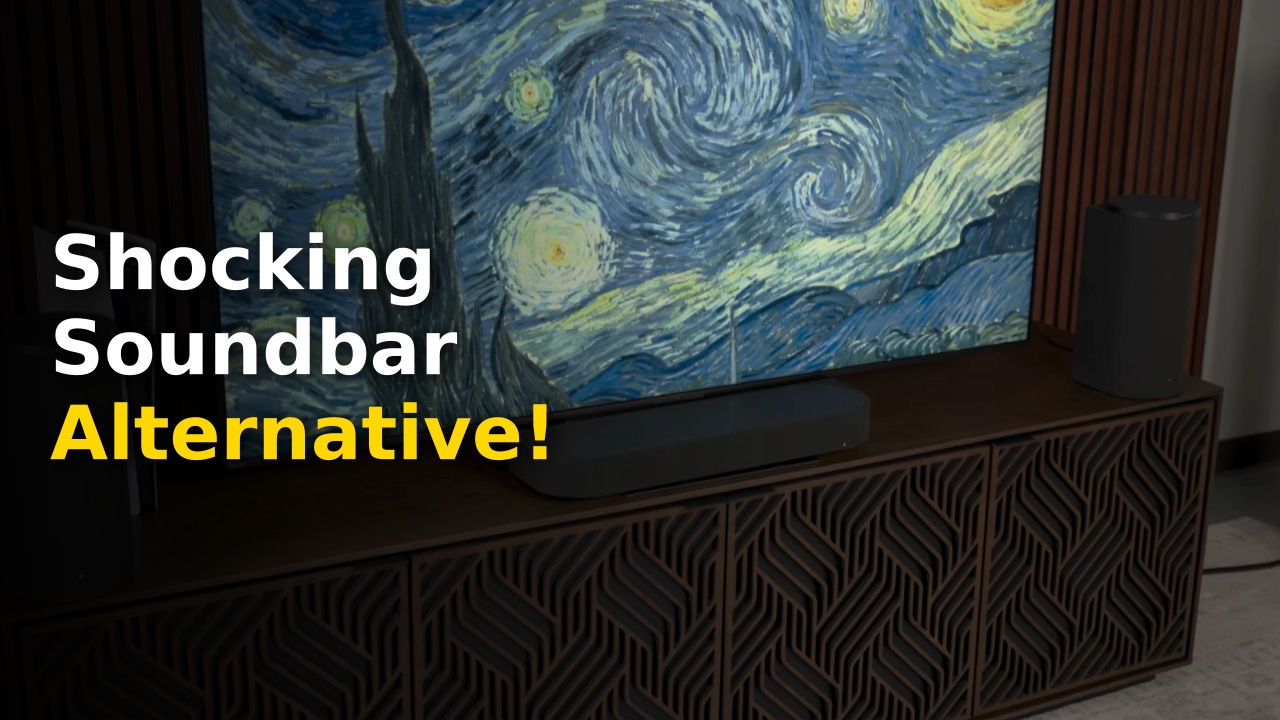
Each speaker has a specialized role in this configuration. The center channel, crucial for dialogue, is optimized with dual woofers to keep voices firmly anchored to the center of your screen. Meanwhile, the left and right speakers handle the heavy lifting of the cinematic score and atmospheric effects, featuring front-firing drivers and upward-firing elements to bounce sound off your ceiling for a convincing Dolby Atmos experience.
Because the system stands over 13 inches tall, it requires a significant amount of surface space on your media console. However, for those with extra-large screens, the aesthetic impact is undeniable. The speakers flank your display, creating a sense of physical immersion that matches the scale of modern high-definition cinematography. 
Sony’s 360 Spatial Sound Mapping technology serves as the software glue that keeps these pieces cohesive. By generating phantom speakers, the system tricks your brain into hearing sounds coming from areas where no physical hardware exists. This creates a virtual sound field that feels significantly larger than the three physical speakers would suggest, providing a seamless transition of sound effects from left to right.
Technical Specifications and Performance Metrics
When analyzing the raw power and input capabilities, the system proves itself as a versatile entertainment hub. Sony has equipped this unit with full HDMI 2.1 support, including 4K at 120Hz passthrough. This makes it an ideal companion for the PlayStation 5 gaming experience, ensuring that your audio-visual chain remains bottleneck-free during high-frame-rate gameplay.
| Feature | Specification |
|---|---|
| Channel Config | 3.0.2 (Expandable) |
| Total Power | 405W |
| Format Support | Dolby Atmos, DTS:X |
| HDMI Ports | eARC, 4K/120Hz Passthrough |
| Control | Bravia Connect App |
Beyond the specs, the real-world utility of this system lies in its room calibration. Using an included microphone, the system measures your room’s unique acoustics and optimizes the output of the three speakers to compensate for reflections or uneven speaker placement. This ensures that even if your setup isn’t symmetrical, the soundstage remains balanced and professional.
The Evolution of Home Theater Audio
Historically, the market for home cinema was bifurcated: you either had the convenience of a sleek, compromised soundbar or the complex, wire-filled nightmare of a traditional AV receiver and multi-speaker setup. The Sony BRAVIA Theatre Trio sits comfortably in this middle ground, offering a modular, wireless-ready ecosystem. You can find more expert reviews of modern electronics on our dedicated home theater portal, which provides deep dives into how these systems are evolving.
By removing the requirement for long cables running to the back of the room, Sony has made the system approachable for the average consumer. Yet, for the hardcore enthusiast, the system remains a platform for expansion. You can integrate the BRAVIA Theatre Sub 7, 8, or 9, as well as rear satellite speakers, creating a system that grows alongside your budget and your evolving needs for true surround sound.
Expert Take: The genius of this modular approach is that it reduces the barrier to entry for high-end audio. In the past, buying a receiver, speakers, and cables was a daunting task that required significant research. Now, you can buy the core Theatre Trio, experience a massive upgrade over TV speakers, and decide later if you truly need that extra thumping bass or rear-channel immersion. 
Another benefit of this separation is the stereo performance. Because the left and right speakers are physically wider than a single bar, they handle musical content with genuine width and depth. When you disable the virtual processing for pure music playback, you gain a classic stereo imaging experience that is often missing from compact, integrated soundbars.
People Also Ask
What happened with the Sony BRAVIA Theatre Trio launch?
The Sony BRAVIA Theatre Trio launched in the US market with a price tag of approximately $2,200. It arrived as a premium alternative to traditional soundbars, focusing on large-screen TV owners.
Does the Theatre Trio include a subwoofer?
No, the base package of the Sony BRAVIA Theatre Trio does not include a subwoofer. It is a 3.0.2-channel system, though it is fully compatible with optional wireless Sony subwoofers.
How does this system affect gaming performance?
The system features HDMI 2.1, supporting 4K/120Hz passthrough. This allows gamers to maintain high-quality video signals from consoles like the PS5 while enjoying high-fidelity audio.
Why is this speaker system trending for large TVs?
Traditional soundbars often look undersized beneath massive 75-inch and 85-inch screens. The three-piece design of the Theatre Trio provides a wider, more visually balanced look while delivering better stereo separation.
Final Thoughts on the Theatre Trio
The Sony BRAVIA Theatre Trio is an ambitious piece of hardware that correctly identifies a massive gap in the current home audio market. By prioritizing physical separation, superior stereo imaging, and modular expansion, Sony has created a flexible solution for high-end consumers. Whether you are a dedicated cinephile or a competitive gamer, this system offers an impressive blend of form and function that demands attention in the premium audio space. We expect to see this become a benchmark for high-performance home theater gear throughout the next fiscal year.
More Like This
For more updates, check out our latest entertainment and sports news.