
⚡ Key Takeaways
- The 1969 lineup exists in the 31st century and possesses cosmic-level power scaling far beyond the MCU team.
- Vance Astro’s tragic backstory involves a 1,000-year cryogenic sleep and a containment suit that prevents him from turning to dust.
- Charlie-27 is a genetically engineered Jovian with eleven times the muscle mass of a normal human.
- The original team was formed as a desperate insurgency against the reptilian Badoon empire following a planetary genocide.
- James Gunn integrated these legacy characters as Ravager captains, but stripped away their planet-shattering abilities for the films.
You probably think you know the team that saved the universe, but the Original Guardians were a vastly different, far more lethal breed of cosmic warriors than the lovable misfits seen on the silver screen. While James Gunn successfully transformed C-level outcasts into global icons, the raw power and tragic depth of the 1969 comic book roster make the modern movie team look like a group of weekend hobbyists. These were not bounty hunters looking for a quick payday or a dance-off; they were the last survivors of a decimated human race fighting a hopeless war in the 31st century.
The fundamental gap between the two iterations lies in their core purpose and the scale of their abilities. The MCU version relies on high-tech gadgets, quips, and “found family” dynamics to overcome obstacles. In contrast, the 1969 pioneers were biological marvels designed to survive the harshest environments of the solar system. From the crushing gravity of Jupiter to the absolute zero temperatures of Pluto, these heroes were built for a cosmic stage that the MCU has only begun to scratch the surface of in recent phases.
The Original Guardians Power Scale Disparity
When you compare the physical capabilities of Vance Astro and his crew to Star-Lord and Rocket Raccoon, the difference is staggering. The comic originals were born from a need to survive a systematic genocide perpetrated by the reptilian Badoon Empire. This high-stakes environment necessitated a level of power that dwarfs the capabilities of a celestial half-breed or a genetically modified procyonid. Fans who track the evolution of these characters often visit brightcelebrity.com to see how the market value of these comic properties has skyrocketed alongside the films.
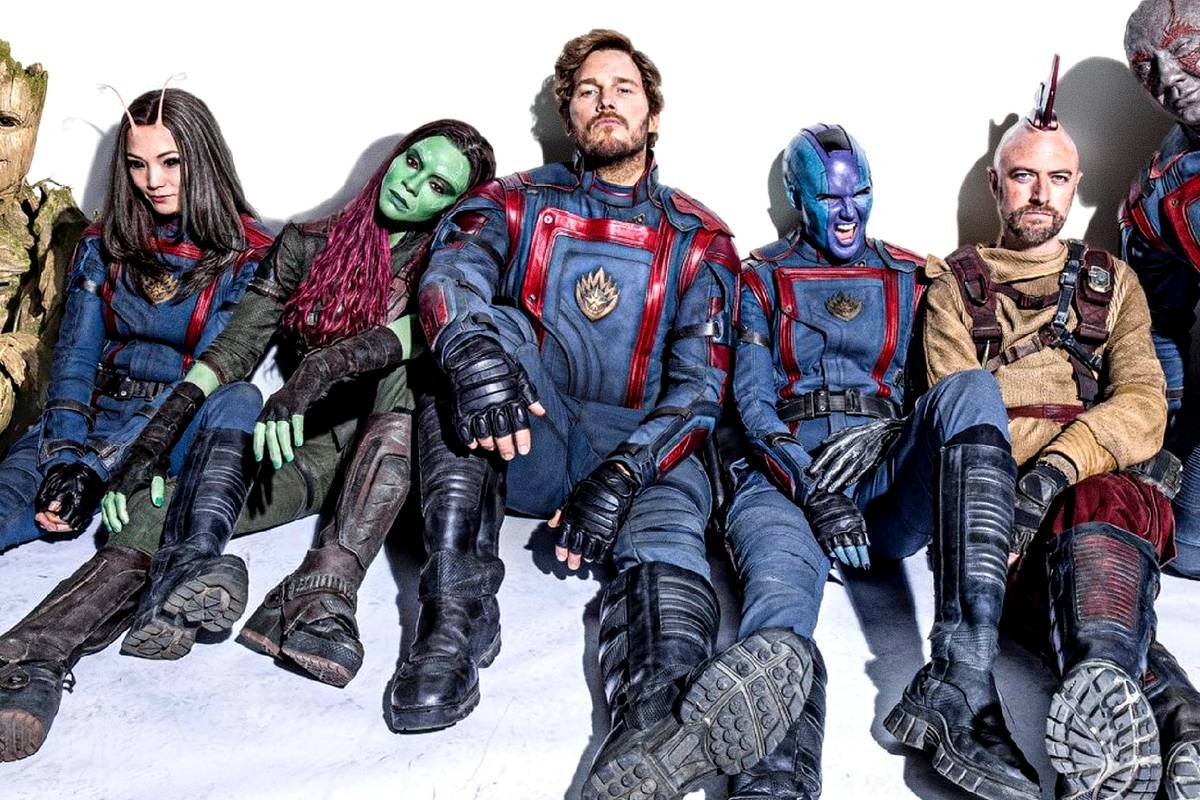
Charlie-27 represents the pinnacle of this biological superiority, having been engineered to live and work in the crushing atmosphere of Jupiter. His skin is essentially bulletproof glass, and his strength is measured in tons rather than the street-level brawling seen from Drax the Destroyer. While Drax is formidable, he lacks the Jovian muscle density that allows Charlie-27 to punch through reinforced starship hulls with his bare hands. This version of the team was designed to be a literal heavy-hitting unit, capable of taking on entire planetary occupations alone.
Expert Take: The Shift in Comic Narrative
Industry analysts often point out that the transition from the Original Guardians to the 2008 iteration reflects a broader shift in science fiction storytelling. The 1960s were dominated by “hard” sci-fi concepts involving planetary colonization and biological adaptation, heavily influenced by the Space Race. By the time the modern team arrived, the focus shifted toward space opera and character-driven ensemble comedies. This change allowed for better audience connection but significantly nerfed the team’s overall combat effectiveness and cosmic threat level.
According to historical records on Marvel.com, the original team debuted in 1969 under the creative guidance of Arnold Drake and Gene Colan. Their vision was one of gritty resistance and survival, a stark contrast to the colorful, neon-lit aesthetic of the MCU. The weight of their mission was felt in every panel, as they carried the grief of lost worlds—Earth, Mercury, and Pluto—into every battle they fought against their reptilian oppressors.
By The Numbers: Cosmic Power Comparison
To truly understand why the comic book originals are considered superior in terms of raw capability, we must look at the specific data points regarding their physiology and gear. The following table highlights the radical differences in power scaling between the 31st-century veterans and the modern MCU lineup.
| Character | Origin World | Key Power/Ability | MCU Equivalent |
|---|---|---|---|
| Vance Astro | Earth | Telekinesis / Cap’s Shield | Star-Lord (Tech-based) |
| Charlie-27 | Jupiter | 11x Human Muscle Density | Drax (Super Strength) |
| Martinex | Pluto | Thermal Manipulation | Groot (Elemental/Physical) |
| Starhawk | Varies | Precognition / Cosmic Energy | Mantais (Empathy/Mental) |
The numbers don’t lie when it comes to durability and utility. Martinex, with his crystalline organic silicon body, can withstand the absolute vacuum of space without any protective equipment. His ability to project blasts of extreme heat and absolute zero simultaneously makes him a walking tactical nuke on the battlefield. This is a far cry from the movie version where the characters are often in peril from simple atmospheric venting or standard blaster fire.
The Tragedy of the Original Guardians Leader
At the center of this 31st-century team is Major Vance Astro, a man whose life is defined by a level of isolation that makes Peter Quill’s daddy issues seem trivial. Astro was a 20th-century astronaut who volunteered for a mission to Alpha Centauri. Because faster-than-light travel hadn’t been invented yet, he was placed in cryogenic sleep for a thousand-year journey. When he finally arrived, he discovered that humanity had developed FTL travel centuries ago, colonized the system, and had already been conquered by the Badoon.
Vance woke up to find his mission was irrelevant before it even finished. To add to the horror, his body had to be permanently sealed in a copper-alloy containment suit. If the suit is ever breached, his skin would be exposed to the air of a world a thousand years past his time, causing him to age and turn to dust in a single second. This physical and metaphorical prison created a leader who was fueled by pure duty and the cold grief of a man who outlived his entire species.
He eventually found the original shield of Captain America, using his burgeoning telekinetic powers to wield it as a symbol of a long-dead Earth. This iconic image of a man in a metallic suit throwing the star-spangled disc in the year 3000 is one of the most powerful visuals in Marvel history. It represents a level of legacy and grim determination that the MCU’s more lighthearted approach simply cannot replicate without fundamentally changing the tone of the franchise.
Complex Dynamics of the 31st Century Team
The Original Guardians were not just physically superior; they were psychologically complex in ways that the movies often gloss over. Starhawk, for example, is a being known as “One Who Knows.” He exists in a state of constant rebirth, reliving his life over and over while possessing the memories of his previous incarnations. This gives him a god-like perspective on the timeline, but it also makes him an unpredictable and often cold ally who views his teammates as pawns in a cosmic game.
The Mercurian Fire of Nikki
Later additions like Nikki brought a different kind of intensity to the group. As a native of Mercury, she had a natural resistance to heat and radiation that allowed her to survive in environments that would vaporize most life forms. Her combat style was frenetic and aggressive, born from years of hiding in the shadow-mines of her home planet to avoid Badoon capture. She wasn’t just a pilot or a shooter; she was a guerrilla fighter who had seen her entire civilization reduced to ash.
This theme of extinction permeates the entire 1969 run. Every member of the team is the “last” of something. They are the last Jovian, the last Plutonian, the last Mercurian. Their bond is not based on a shared love of 70s pop music, but on the shared trauma of being the only ones left to remember what their worlds looked like before the scales of the Badoon covered the galaxy. This weight makes their victories feel earned and their losses feel catastrophic.
Frequently Asked Questions
Who were the founding members of the first Guardians team?
The original lineup consisted of Major Vance Astro, Charlie-27, Martinex T’Naga, and Yondu Udonta. They first appeared in Marvel Super-Heroes #18 in 1969. Unlike the movies, Yondu was a primitive hunter from Centauri IV and a noble co-founder of the team rather than a space pirate.
Why is the comic version of Yondu so different from Michael Rooker’s version?
In the comics, Yondu is a spiritual warrior who uses a bow and yaka arrows as part of his cultural heritage. The MCU version, portrayed by Michael Rooker, was reimagined as a gritty Ravager leader and a father figure to Peter Quill to fit the movie’s outlaw theme. The blue skin and the whistle-controlled arrow are the only major similarities.
Is the original team part of the MCU canon?
Yes, but in a modified form. James Gunn introduced the original team members as Ravager captains in Guardians of the Galaxy Vol. 2. This includes Stakar Ogord (Sylvester Stallone), Martinex (Michael Rosenbaum), and Charlie-27 (Ving Rhames). However, they are depicted as contemporary outlaws rather than 31st-century rebels from a future timeline.
The Enduring Legacy of the Original Guardians
While the MCU has undoubtedly brought the brand to new heights of popularity, the Original Guardians remain the gold standard for high-concept cosmic science fiction. Their story is a reminder that the genre can be more than just fun adventures; it can be a medium for exploring the limits of human endurance and the pain of absolute loss. As Marvel continues to expand its cinematic universe, fans are holding out hope that we might one day see a standalone project that truly captures the 31st-century war against the Badoon.
For now, the 1969 pioneers exist as a fascinating shadow behind the modern stars. They represent the “heavy metal” version of the team—stronger, darker, and infinitely more tragic. Whether you prefer the dance-offs of the movies or the planetary sieges of the comics, there is no denying that the Original Guardians laid the foundation for every cosmic adventure that followed. Their legacy is etched into the stars of a future that has yet to happen, reminding us that even when everything is lost, someone will always stand to guard what remains of the galaxy.
More Like This
For more updates, check out our latest entertainment and sports news.