⚡ Key Takeaways
- EGOT winner Viola Davis publicly rejected the corporate giant’s statement regarding a racist Halloween costume.
- The costume, a ‘Circus Clown’ modeled by a Black child, was criticized for mirroring Jim Crow-era minstrel show caricatures.
- The controversy arrives as Target and other major retailers like Walmart scale back their DEI initiatives in a shifting political landscape.
- Davis argues that such imagery reinforces historical dehumanization and atrocities committed against Black communities.
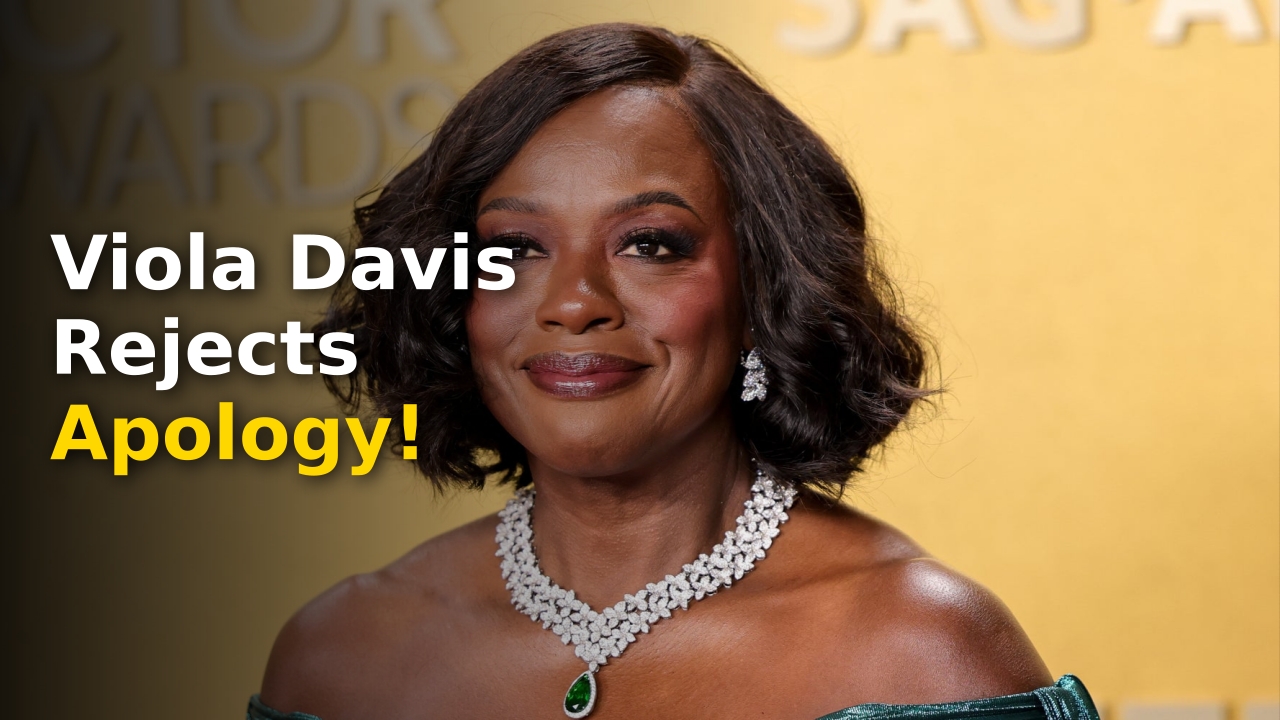
You might think a corporate giant could handle a PR crisis with ease, but the Target Apology regarding a racist Halloween costume proves that some wounds go too deep for a simple statement. When Viola Davis, the powerhouse EGOT winner and star of The Woman King, took to Instagram, she didn’t just share a post; she ignited a national conversation about corporate accountability and the persistent ghost of Jim Crow imagery. The Target Apology, issued after the retailer pulled a controversial ‘Circus Clown’ costume from its shelves, was met with a blunt ‘I do not accept’ from the legendary actor.
The costume in question featured a Black child modeling a Kids’ Glows Under Blacklight Circus Clown Halloween Costume. While it may have appeared as a standard holiday item to a distracted buyer, the visual coding was unmistakable to many. The stark white makeup around the mouth and eyes, contrasted against the child’s skin, immediately evoked the painful history of Blackface and minstrelsy. For Viola Davis, this wasn’t just a marketing oversight; it was a visceral reminder of an ideology that has historically justified violence and systemic oppression.
The Weight of a Target Apology
The Target Apology was issued on Monday after a wave of online criticism began to swell. The company stated it was ‘deeply sorry’ and acknowledged that the costume ‘should never have been part’ of their assortment. They claimed to be looking into how the internal vetting process failed so spectacularly. However, for critics like Viola Davis, these words felt hollow when compared to the gravity of the offense. She noted that such images laid the foundation for every atrocity committed against her people, suggesting that a standard corporate ‘we got this wrong’ is insufficient for the level of trauma inflicted.
When a brand like Target, which generates billions in annual revenue, allows a caricature-like image to pass through multiple levels of creative and legal approval, it signals a systemic disconnect. You have to wonder how many eyes saw that photo before it reached the sales floor. The Target Apology attempt to frame this as an isolated mistake is exactly what Viola Davis is challenging. She is demanding that the retailer understand the ‘impact, the pain, and the dehumanization’ that these images perpetuate in a society still grappling with racial inequality.

By The Numbers: The DEI Rollback
To understand why the Target Apology feels performative to some, one must look at the broader corporate landscape in 2025. Following the re-election of Donald Trump, several major US brands have pivoted away from the Diversity, Equity, and Inclusion (DEI) promises they made in 2020. This retreat suggests that social justice was perhaps a trend rather than a core value for these institutions.
- 2020: Target pledges $100 million to support Black-owned businesses and internal DEI growth after the murder of George Floyd.
- 2024: Conservative backlash leads to the removal of ‘Pride’ merchandise in several regions.
- Early 2025: Target and Walmart announce significant reductions in DEI-focused roles and training programs.
Expert Take: ‘Corporations often treat racial sensitivity as a risk management strategy rather than a moral imperative,’ says a leading retail strategist. ‘When the Target Apology lacks a roadmap for structural change, it confirms the fears of many Black consumers that their identity is only valued as a marketing tool, not as a human experience. The timing of this costume failure, occurring alongside a rollback of DEI initiatives, creates a perfect storm of perceived insincerity.’
The Sinister Roots of Minstrelsy
To understand why Viola Davis reacted with such intensity, one must look at the history of minstrel shows in the United States. These 19th-century performances used Blackface to portray Black people as dim-witted, lazy, or buffoonish. The ‘Clown’ archetype was frequently used to make Black children appear as objects of ridicule. By placing a Black child in makeup that mimics these historical caricatures, Target tapped into a century-old visual language of oppression.
This isn’t just about ‘feeling offended.’ It is about the power of imagery to shape public perception and policy. Viola Davis explicitly stated that these images ‘laid the foundation’ for atrocities. When you strip a group of their dignity through caricature, it becomes easier for society to ignore their suffering or justify their marginalization. The Target Apology did not acknowledge this specific historical context, which is likely why it failed to satisfy the ‘Woman King’ star. The lack of historical literacy in corporate boardrooms is a recurring theme in these PR disasters.
Furthermore, the ‘Glow Under Blacklight’ feature added a surreal and arguably more disturbing layer to the costume. In a dark room or under a UV light, the exaggerated features of the clown mask would be the only visible parts, further emphasizing the ‘Blackface’ effect. This technological ‘upgrade’ to a classic racist trope is what many found particularly egregious. It shows that even when attempting to be innovative, old biases and dangerous archetypes can easily slip through the cracks of a modern corporation.
The Great Corporate DEI Retreat
The Target Apology is being scrutinized heavily because of the company’s recent political shifts. For years, Minneapolis-based Target was seen as a leader in progressive corporate policy. However, the political climate of 2025 has seen a massive shift. Under pressure from conservative activists and a new administration, Target joined several other ‘Fortune 500’ companies in scaling back their social programs. This has led many to believe that the Target Apology is merely a way to silence a loud news cycle rather than address a deep-seated issue.
| Retailer | DEI Status (2025) | Recent Controversy |
|---|---|---|
| Target | Scaled Back | Racist Clown Costume Scandal |
| Walmart | Major Reduction | Removal of Diversity Hiring Goals |
| Tractor Supply | Eliminated | Complete reversal of DEI commitments |
As you can see, the trend is moving away from social accountability. This makes the Target Apology seem even more contradictory. If the company is removing the people and systems designed to catch these errors—namely DEI consultants and diverse creative teams—then errors like the racist costume are bound to happen more frequently. Viola Davis points out that the company has shown it is ‘not on OUR side,’ referencing the Black community that has supported the brand for decades. The economic power of the Black consumer is significant, yet it often feels ignored until a major backlash occurs.

Critics argue that the Target Apology is a symptom of ‘diversity fatigue.’ After the initial rush of support for Black communities in 2020, many companies found that maintaining these commitments was difficult and occasionally unpopular with a segment of their customer base. By retreating from these values, they have left themselves vulnerable to the very biases they claimed they wanted to eradicate. The racist costume is not just a mistake; it is the natural byproduct of a company that has stopped prioritizing cultural intelligence.
Viola Davis: More Than Just a Movie Star
Viola Davis has long used her platform to highlight the struggles and triumphs of the Black experience. Whether she is discussing the lack of pay equity in Hollywood or the need for more complex roles for Black women, her voice carries immense weight. You can read more about her career and influence at brightcelebrity.com, where her journey from poverty to EGOT status is documented. Her refusal of the Target Apology is consistent with her career-long mission to demand respect and humanity for her community.
When she wrote, ‘We MATTER!!’, she was echoing the sentiments of millions who feel that corporate America only sees them as a dollar sign. Her followers on Instagram, which include other high-profile celebrities and activists, have rallied behind her. The comment section of her post has become a digital town hall for discussing the failures of corporate allyship. People are not just angry about the costume; they are exhausted by the cycle of ‘offend, apologize, repeat’ that has characterized retail marketing for years.
Expert Take: ‘Viola Davis isn’t just an actress; she’s a cultural titan,’ notes a film historian. ‘When she speaks on dehumanization, she is drawing from the characters she has portrayed—women who survived the Jim Crow era and fought for their dignity. Her rejection of the Target Apology is a masterclass in holding powerful institutions accountable. She knows that without a cost to their reputation, these companies will never truly change their internal culture.’
Frequently Asked Questions
Why was the Target Halloween costume considered racist?
The costume was modeled by a Black child and featured makeup patterns (large white circles around the eyes and mouth) that closely resembled 19th-century minstrel show caricatures. These images were historically used to mock Black people and promote white supremacy, leading many to view the costume as a modern-day form of Blackface.
What was the official Target Apology regarding the incident?
Target issued a statement saying they were ‘deeply sorry’ and that the costume ‘should never have been part’ of their assortment. They removed the item from all stores and online platforms, stating that they were looking into their internal processes to ensure such an incident does not happen again.
Has Target faced similar controversies in the past?
Yes, Target has faced several controversies related to its product assortment, including backlash over its Pride Month collections and various marketing campaigns. The company often finds itself caught between progressive social goals and conservative consumer pressure, leading to inconsistent branding and policy shifts.
What is Viola Davis’s specific grievance with Target?
Viola Davis stated that she does not believe Target understands the ‘impact’ or the ‘pain’ caused by the costume. She argued that the imagery used in the costume laid the foundation for historical atrocities against Black people and that Target’s actions show they are not truly supportive of the Black community.
Forging a Path Toward Real Accountability
In the wake of this scandal, the Target Apology will likely be remembered as a turning point for how celebrities interact with brands. Gone are the days when a simple press release could smooth over a significant cultural failure. In the age of social media, where a single post from a star like Viola Davis can reach millions in seconds, companies must do more than just say they are sorry. They must prove it through their actions, their hiring practices, and their product vetting processes.
As Reuters has reported, the retail industry is at a crossroads. As companies navigate a polarized political environment, the temptation to play it safe by scaling back DEI efforts is high. However, as the Target Apology saga shows, ‘playing it safe’ can actually be the most dangerous move of all. If a company loses its moral compass and its cultural literacy, it risks alienating its most loyal customers and incurring the wrath of influential voices who are no longer willing to accept the status quo.
Ultimately, the rejection of the Target Apology by Viola Davis is a call for a new era of corporate responsibility. It is a reminder that the images we put into the world matter and that the pain of the past is still very much present in the lives of many. Whether Target will take this lesson to heart and reinvest in the diversity efforts it has recently abandoned remains to be seen. But one thing is clear: the public, led by voices like Davis, is watching closer than ever before.
More Like This
For more updates, check out our latest entertainment and sports news.