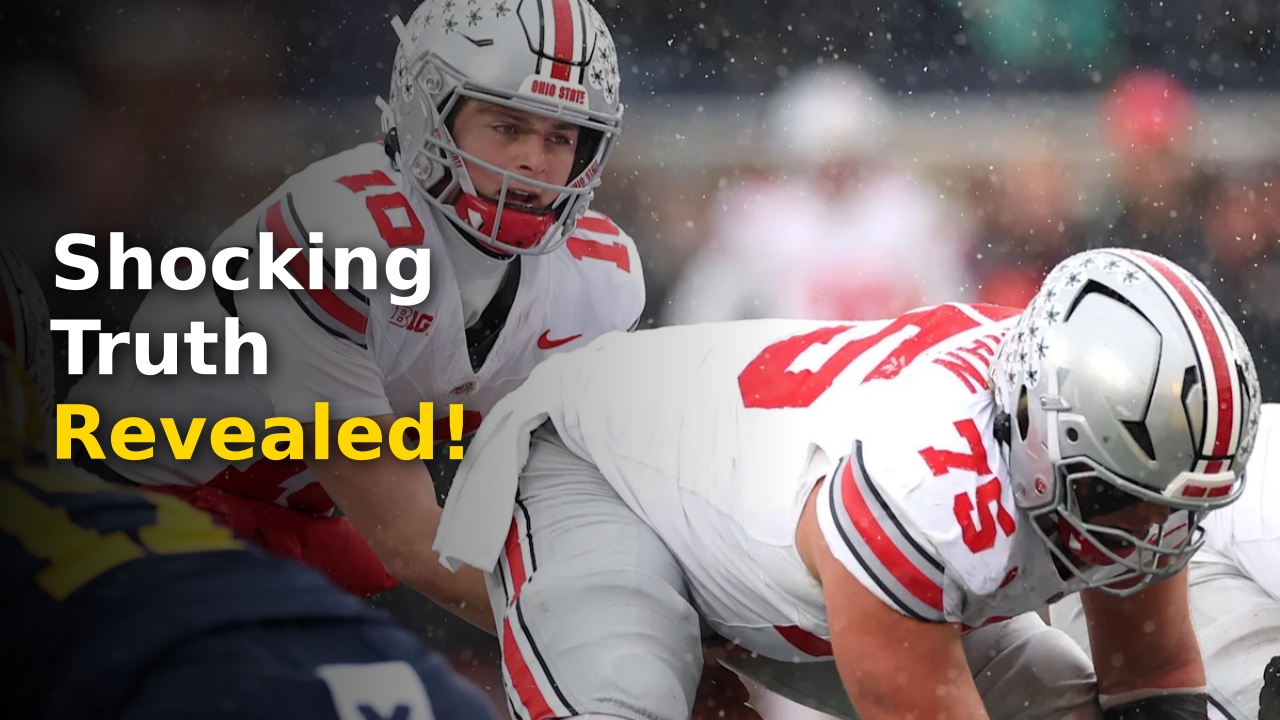
⚡ Key Takeaways
- The Trench Threat: The primary obstacle to a successful Buckeyes playoff run is not their skill talent, but the physical battles on both the offensive and defensive lines.
- Offensive Line Concerns: A newly restructured front five led by Ian Moore must adapt quickly to Arthur Smith’s demanding wide-zone scheme to protect quarterback Julian Sayin.
- Defensive Void: The departure of elite linemen like Caden Curry and Kayden McDonald leaves a massive defensive production gap of 14 sacks that young prospects must fill.
- Brutal Schedule: Nine out of twelve opponents on Ohio State’s 2026 schedule played in a bowl game last season, leaving a razor-thin margin for error.
Securing a comfortable Buckeyes playoff berth in 2026 is far from a guarantee, especially if you look past the star-studded skill positions and examine the deep vulnerabilities lurking in the trenches. You might look at the star-studded roster in Columbus and assume a national championship is inevitable, but college football history is littered with paper tigers. If you think the sheer talent of five-star playmakers can mask a weak front, you are in for a rude awakening. This comprehensive analysis unpacks the critical vulnerabilities that could force Ohio State to watch the postseason from the sidelines.
The margin for error in the expanded Big Ten has completely vanished. While a single loss used to define a season, the physical toll of a twelve-game regular season now presents an entirely different challenge. Ohio State must prove they can win the physical battles before their championship aspirations slip away.
Buckeyes playoff: The Trench Nightmare
The path to the newly expanded College Football Playoff is supposedly easier, yet it offers zero comfort to a team with systemic issues. For Ohio State, the looming threat is not a lack of offensive firepower or defensive backfield speed. The real danger lies in the physical battles at the line of scrimmage. If opponents dominate the trenches, the entire gameplan falls apart. You cannot unleash elite wideouts if your quarterback is constantly running for his life.
A successful Buckeyes playoff campaign requires complete dominance in the cold, physical reality of late-season football. Historical data shows that championship teams are built from the inside out. When the Buckeyes won their last national title, they relied on a dominant, physical offensive line that cleared paths for legendary runners. Without that push, even the most explosive playbooks become entirely useless.
The Core Vulnerability
If the interior lines fail to control the tempo, the defensive secondary will also suffer. Longer sustained drives by opponents wear down depth and create mental fatigue. This cascading effect can turn a comfortable double-digit lead into a desperate fourth-quarter battle. Ohio State cannot afford to play on its heels if they hope to secure a high seed in the postseason.
Opponents with strong rushing attacks will look to physically wear down the Buckeyes. This strategy limits the number of possessions for Ohio State’s explosive offense. If the Buckeyes cannot get off the field on third down, their star players will sit frustrated on the sidelines.
The Margin of Error
While a twelve-team format provides a safety net, it does not guarantee safety for a struggling team. A three-loss Big Ten team might find itself on the outside looking in during selection Sunday. The competition across the conference has reached an all-time high with recent expansions. Therefore, securing a Buckeyes playoff spot requires near-flawless execution against top-tier conference opponents.
Dropping early games creates immense pressure that can quickly fracture team chemistry. A single upset can destroy a season’s momentum and force a team into survival mode. You must remember that style points still matter to the selection committee. Sluggish wins against unranked opponents will hurt their overall ranking and seeding.
Elite Skill Talent Overload
No one doubts the high-end talent occupying the skill positions in Columbus. Quarterback Julian Sayin enters the season with massive expectations and a golden arm. Alongside him, superstar wideout Jeremiah Smith is widely considered the most dangerous receiver in the nation. With the rise of massive NIL valuations, elite prospects like Jeremiah Smith are treated with the same prestige and scrutiny as Hollywood icons featured on Bright Celebrity. Additionally, running back Bo Jackson is coming off a sensational freshman year where he racked up 1,090 rushing yards.
However, these elite athletes cannot showcase their skills without proper blocking. Even a generational talent like Smith needs at least three seconds to break free downfield. If the offensive line crumbles in two seconds, those deep routes become irrelevant. A premier Buckeyes playoff campaign requires a balanced attack where the line of scrimmage allows these superstars to shine.

Offensive Line Rebuilding Hurdles
The coaching staff believes they have finally identified their best five starters along the offensive line. Currently, Ian Moore is taking reps at the critical left tackle position to protect the quarterback’s blind side. Next to him, Austin Siereveld is moving to right guard to provide size and power in the interior. They are joined by experienced blockers Luke Montgomery, Carson Hinzman, and Phillip Daniels. If this unit fails to develop, the dream of a Buckeyes playoff run will quickly turn into a nightmare.
While this group possesses raw physical talent, their lack of collective chemistry is a major concern. Communication is the most critical element of successful offensive line play. A single missed assignment can lead to a devastating sack or a turnover. They must develop an unspoken understanding before the season opener.
Arthur Smith’s Scheme Fit
New offensive coordinator Arthur Smith brings a physical, run-first philosophy that demands high-level line play. His wide-zone scheme requires offensive linemen who can move laterally and block in space. This transition represents a significant shift from the spread-heavy systems of previous years. Players must adapt their footwork and blocking angles to match this demanding new style.
A successful run game is vital to taking pressure off quarterback Julian Sayin. Smith’s playbook relies heavily on play-action passes that mimic run plays. If defenses do not fear the run, they will ignore the play-action fakes and rush the passer directly. Securing a comfortable Buckeyes playoff seed requires the offense to control the clock in late-game situations.
Historical Frontline Failures
Last season exposed several alarming weaknesses during critical stretches of play. The offense struggled mightily against physical fronts like Indiana and Miami, failing to gain yards when it mattered most. Their inability to convert short-yardage situations in the red zone cost them valuable points. These struggles revealed a lack of physical dominance that must be addressed immediately.
Opposing defensive coordinators watched that tape and will copy those physical gameplans. They will load the box with extra defenders and challenge Ohio State to beat them up front. If the line cannot generate a consistent push, the offense will face constant third-and-long situations. This predictable environment makes it incredibly easy for defenses to generate turnovers.
Expert Take on Blocking Schemes
According to veteran scouting analysts, the transition to Arthur Smith‘s system is a double-edged sword. While the wide-zone scheme can create massive cutback lanes for runners, it requires elite lateral quickness from the offensive tackles. If Ian Moore struggles to reach the edge against speed rushers, the entire play-side blocking structure collapses. Scouting reports indicate that opponents plan to attack the B-gap aggressively to disrupt this lateral movement before the blockers can set their feet. This transition will ultimately decide the fate of the Buckeyes playoff aspirations.
Defensive Front Production Void
The defense faces an equally daunting challenge as they try to replace legendary production up front. The defensive front must match the intensity of the offense to secure a Buckeyes playoff spot. The departures of Caden Curry and Kayden McDonald leave a massive void in both leadership and playmaking ability. Curry was a relentless edge rusher who terrorized opposing quarterbacks, while McDonald was a physical anchor in the middle who consistently demanded double teams.
The defensive scheme relies on a heavy rotation of linemen to keep players fresh for the fourth quarter. Without reliable depth, the starters will play more snaps and suffer from late-game fatigue. This fatigue leads to missed tackles and blown coverages in crucial moments. The coaching staff must identify reliable rotational pieces during fall camp.
Kenyatta Jackson’s Next Step
All eyes are now on defensive end Kenyatta Jackson Jr. to become the next dominant force on the edge. He showed flashes of absolute brilliance last season, demonstrating elite speed and a high motor. However, there is a massive difference between being a rotational specialist and a primary focal point of an offense’s blocking scheme. Jackson will now face constant double teams and chip blocks from tight ends.
If Jackson can successfully command double teams, it will free up other defenders to make plays. A dominant edge rusher completely changes how defensive coordinators call games. This defensive flexibility is essential for a successful Buckeyes playoff run against elite passing offenses. However, if his development stalls, the defense will struggle to generate a consistent pass rush.
Freshmen and Transfer Pressure
The coaching staff is counting on young talent and transfers to make an immediate impact. Highly touted recruits like James Smith and John Walker must provide quality depth from day one. Additionally, defensive lineman Eddrick Houston needs to take a massive step forward in his development. These young players have the raw physical tools but lack game experience at this level.
The transition from high school to elite college football requires significant physical and mental adjustments. Players must learn complex defensive schemes while maintaining their physical intensity. A single alignment error can lead to an easy touchdown for the opposition. The coaching staff is using intense practice scenarios to prepare these young athletes for the pressure ahead.
By The Numbers Analysis
The statistical reality of Ohio State’s defensive losses is staggering. The departure of Caden Curry and Kayden McDonald takes away a combined 131 tackles, 25.5 tackles for loss, and 14 sacks from last season’s production. In contrast, the projected replacement starters combined for less than a quarter of that production in limited action. While Kenyatta Jackson Jr. recorded an impressive 28 tackles and 6.5 sacks, he must double those numbers to offset the losses. Without this production, the Buckeyes playoff defense will struggle against run-heavy opponents.
Savage 2026 Schedule Breakdown
The 2026 schedule offers absolutely zero room for error or early-season experimentation. The Buckeyes face a brutal road schedule that includes trips to some of the most hostile environments in college football. This relentless schedule represents the ultimate obstacle to a Buckeyes playoff berth. An early-season matchup against the Texas Longhorns will provide an immediate test of their physical and mental toughness.
Winning on the road in the Big Ten requires incredible mental discipline and physical execution. Noise levels can disrupt offensive communication and lead to costly pre-snap penalties. The offensive line must remain focused and disciplined to avoid putting themselves in difficult down-and-distance situations. These road environments will expose any lingering weaknesses in their preparation.
Bowl-Eligible Gauntlet
A closer look at the schedule reveals a historic level of competition facing the Buckeyes. Nine of their twelve regular-season opponents played in a bowl game or the postseason last year. Furthermore, seven of those opponents won at least nine games, demonstrating consistent high-level performance. This relentless schedule means there are no comfortable recovery weeks on the calendar.
Facing this many quality opponents increases the risk of physical exhaustion as the season progresses. If they suffer key injuries during this gauntlet, their chances of securing a Buckeyes playoff spot will decrease dramatically. According to projections on ESPN, Ohio State faces one of the toughest strength-of-schedule metrics in the country. This difficult road means that even a two-loss season would be highly respected by the selection committee.
| Opponent | 2025 Record | Key Trench Matchup | Danger Level |
|---|---|---|---|
| Texas Longhorns | 11-2 | Ian Moore vs Edge Rushers | Extreme (Buckeyes playoff preview) |
| Oregon Ducks | 12-1 | Interior run blocking vs DTs | High |
| Michigan Wolverines | 10-3 | Defensive ends vs Physical run | High |
| USC Trojans | 9-4 | Secondary containment & rush | Medium |
Frequently Asked Questions
Will the Buckeyes playoff chances survive a tough schedule?
Yes, but the Buckeyes playoff aspirations will depend heavily on avoiding multiple regular-season losses. Dropping more than two games would severely damage their standing with the selection committee and make postseason entry highly unlikely.
Who is starting on the Buckeyes offensive line?
The projected starting unit consists of Ian Moore at left tackle, Austin Siereveld at right guard, alongside Luke Montgomery, Carson Hinzman, and Phillip Daniels. This group represents the coaching staff’s absolute best combination for physical conference battles.
How does the expanded 12-team playoff affect Ohio State?
The expanded format provides some margin for error, allowing a two-loss team to easily make the field. A two-loss team can still qualify, but a third loss would likely eliminate them from the Buckeyes playoff bracket, especially without a conference title.
Who is the new offensive coordinator for the Buckeyes?
Arthur Smith is the new offensive coordinator, bringing a highly physical, run-first wide-zone blocking scheme. This system requires high-level lateral mobility and coordination from the offensive line to create running lanes.
Final Verdict on Buckeyes playoff
Ultimately, the success of the 2026 season will be determined by the big men in the trenches. No amount of skill position talent can overcome an offensive line that crumbles under pressure. The physical demands of their schedule leave absolutely no room for error if they want to secure a Buckeyes playoff spot. If they struggle up front, the season could quickly spiral out of control.
Ultimately, the Buckeyes playoff journey will be decided by physical toughness rather than pure athletic talent. You will see immediately in Week 2 against Texas whether this team has the grit to win a championship. If the lines hold up, glory awaits Columbus; if they fail, historical disappointment is inevitable.
More Like This
For more updates, check out our latest entertainment and sports news.