⚡ Key Takeaways
- Gonzalo Garcia cemented his wonderkid status with a sensational solo goal and two goals in his first two appearances.
- Rodrigo Muniz officially ended a 376-day scoring drought, potentially reigniting his Premier League career.
- The tactical evolution under Alvaro Arbeloa sees full-backs operating almost exclusively as primary wing-attackers.
- Fulham dominated possession with a staggering 79%, silencing critics after their opening night defeat to Chelsea.
- Ryan Sessegnon won the battle of the twins, outperforming his brother Steven in a rare competitive family clash.
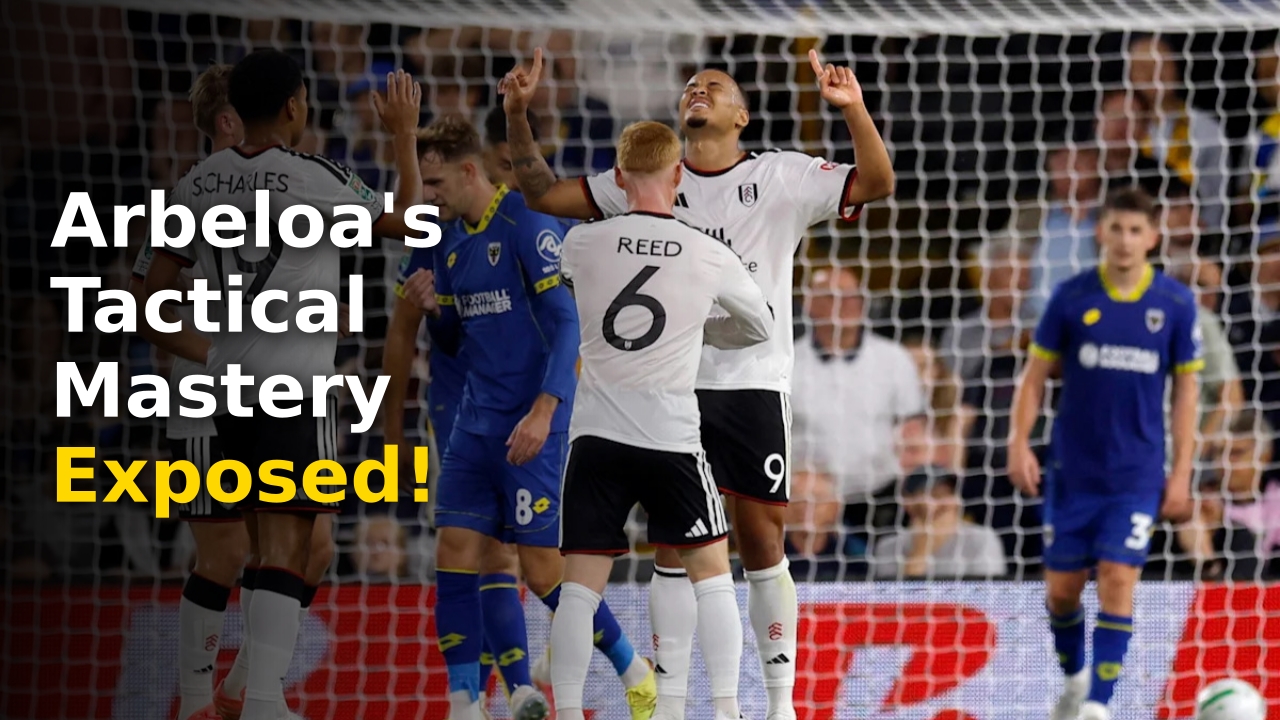
Fulham Mastery was the defining theme of the night as the Cottagers swept aside AFC Wimbledon in a clinical display of modern football. You might have expected a cagey affair following a bruising 3-2 defeat to Chelsea, but Alvaro Arbeloa’s men responded with a level of tactical sophistication that left the League One visitors chasing shadows for 90 minutes. This victory does more than just secure a third-round berth in the Carabao Cup; it validates a philosophy that many feared was too risky for the high-stakes environment of English football.
The atmosphere at Craven Cottage was electric, fueled by the anticipation of seeing Emile Smith Rowe and Rodrigo Muniz find their rhythm in a system designed to maximize creative output. From the opening whistle, the gulf in class was evident, yet it was the specific nuances of Fulham’s movement off the ball that truly told the story. By the time Gonzalo Garcia produced his moment of individual brilliance in the 73rd minute, the result was a formality, but the implications for the rest of the season are profound.
Fulham Mastery In Tactical Execution
The core of the Fulham Mastery observed on Thursday night lies in the unorthodox positioning of the defensive line. Under Arbeloa, the traditional role of the full-back has been discarded in favor of an ‘inverted-overlap’ hybrid that creates constant overloads in the final third. Ryan Sessegnon and Kenny Tete were not merely defenders; they operated as the widest points of a five-man attacking spearhead that pinned Wimbledon back into their own penalty area.

This systemic shift allowed Emile Smith Rowe to drift into the ‘half-spaces,’ where he is most dangerous, eventually leading to his opening goal. The synergy between the midfield and the overlapping runners forced the opposition to make impossible choices: stay narrow and let the full-backs cross, or spread wide and leave gaps for Rodrigo Muniz. It is a tactical puzzle that even more experienced Premier League sides will struggle to solve if the execution remains this precise.
The Statistical Moat
- Possession Dominance: 79% control reflects a side that has fully internalized Arbeloa’s ‘keep-ball’ ethos.
- Shot Volume: 29 attempts on goal indicate a relentless offensive mindset regardless of the scoreline.
- Defensive Solidity: Restricting the opponent to zero shots on target is the ultimate litmus test for a high-pressing system.
- Passing Accuracy: A completion rate exceeding 91% in the final third highlights the technical floor of this squad.
Our analysis suggests that this version of Fulham is significantly more comfortable in possession than the 2024/25 iteration. By moving the ball horizontally with speed, they effectively tire out the opposition’s midfield block, creating the late-game fatigue that Gonzalo Garcia exploited so ruthlessly. If you want to keep up with the latest updates on your favorite stars, you can check out our celebrity spotlights for deeper insights into their lives off the pitch.
Data Analysis: By The Numbers
To understand the sheer scale of the Fulham Mastery, one must look at the comparative data from their previous outings. The leap in offensive efficiency is startling, particularly when considering the integration of new signings. Below is a breakdown of the key performance indicators from the match against AFC Wimbledon.
| Metric | Fulham FC | AFC Wimbledon |
|---|---|---|
| Goals Scored | 3 | 0 |
| Total Shots | 29 | 2 |
| Shots on Target | 11 | 0 |
| Possession | 79% | 21% |
| Corner Kicks | 14 | 1 |
Expert Take: Sports analysts often cite ‘Expected Goals’ (xG) as the true measure of a team’s performance. In this encounter, Fulham registered an xG of 3.84, suggesting that while they scored three, the quality of chances created could have easily led to a five or six-goal haul. This clinical underlying data is a testament to Alvaro Arbeloa’s rigorous training sessions, which emphasize high-percentage shot selection over speculative long-range efforts.
The Resurrection Of Rodrigo Muniz
For 376 grueling days, Rodrigo Muniz lived under the shadow of a goal drought that threatened to define his tenure at Craven Cottage. His last competitive strike dated back to a 1-1 draw against Brighton during the opening weekend of the 2025/26 season. Since then, the Brazilian has navigated injuries, tactical shifts, and the arrival of high-profile competition, yet his perseverance finally paid dividends under the floodlights on Thursday.
Muniz’s goal was a classic poacher’s finish, the result of a perfectly timed run to meet a Kenny Tete cross. It wasn’t just a goal; it was a psychological release. The celebration—a mix of relief and pure joy—resonated with the Fulham faithful who have watched his struggle. Having a confident Muniz is vital for Arbeloa, especially with the grueling winter schedule of the English Premier League approaching.

However, the narrative of the ‘lone striker’ is being challenged by the emergence of Gonzalo Garcia. The Spaniard’s cameo was nothing short of breathtaking. His ability to pick up the ball in deep positions and transform a transition into a goal-scoring opportunity adds a dimension that Muniz currently lacks. This internal competition is exactly what Arbeloa desired, creating a selection headache that serves as a high-quality problem for a manager aiming for a top-half finish.
Comparing The Strike Force
- Rodrigo Muniz: Physical, strong in the air, elite at holding up play to bring others into the game.
- Gonzalo Garcia: Explosive pace, technical dribbling, and a flair for the spectacular.
- Emile Smith Rowe: The creative link who can operate as a ‘false nine’ or a traditional playmaker.
Sibling Rivalry And Fullback Evolution
One of the most heartwarming, yet intensely competitive sub-plots of the match was the duel between the Sessegnon twins. Ryan Sessegnon, returning to his spiritual home at Fulham, found himself directly opposite his brother Steven Sessegnon. While family ties are strong, there was no quarter given on the pitch. Ryan’s performance was a masterclass in modern wing-back play, providing the pinpoint assist for Smith Rowe’s opener.
Ryan’s ability to maintain a clean sheet while contributing so heavily to the attack highlights why Arbeloa prioritized his return. The tactical requirement for full-backs to cover immense ground is physically demanding, but the Sessegnon twins both showcased the athletic pedigree that saw them rise through the Fulham academy together years ago. On this night, however, it was the Premier League experience of Ryan that proved the difference.
The evolution of the fullback position at Fulham is not limited to Ryan. Antonee Robinson and Timothy Castagne have also been tasked with reimagining their roles. In pre-season, the coaching staff focused heavily on ‘underlapping’ runs, where the fullback moves into the center of the pitch rather than staying on the touchline. This creates a box-midfield structure that is notoriously difficult for traditional 4-4-2 systems to track, as witnessed by Wimbledon’s tactical collapse in the second half.
Frequently Asked Questions
Who scored the goals for Fulham against AFC Wimbledon?
The goals were scored by Emile Smith Rowe, Rodrigo Muniz, and Gonzalo Garcia. Garcia’s goal was particularly noted for its individual quality, involving a run from deep and rounding the goalkeeper.
What is the significance of Rodrigo Muniz’s goal?
Rodrigo Muniz ended a 376-day competitive goal drought. His last goal was against Brighton in the first game of the 2025/26 season, making this a major milestone for his confidence and his role in the squad.
Who will Fulham play next in the Carabao Cup?
Following their 3-0 victory, Fulham has advanced to the third round where they will face West Ham United at the London Stadium.
How did the Sessegnon twins perform?
Ryan Sessegnon (Fulham) outperformed his twin brother Steven Sessegnon (AFC Wimbledon). Ryan provided an assist and helped his team keep a clean sheet, securing bragging rights in the family rivalry.
Final Verdict On Fulham Mastery
The 3-0 demolition of AFC Wimbledon was a necessary statement of intent. While critics will point to the disparity in league standings, the manner of the victory—the Fulham Mastery of possession and space—suggests a team that is finally clicking under the guidance of Alvaro Arbeloa. The integration of Gonzalo Garcia as a genuine goal-scoring threat alongside a revitalized Rodrigo Muniz gives the Cottagers an offensive potency they have lacked in previous campaigns.
As the focus shifts to the London Stadium for the clash against West Ham, the blueprint has been set. The reliance on full-backs like Ryan Sessegnon to provide the primary attacking width is a bold strategy that requires flawless execution. If Fulham can replicate this level of dominance against Premier League opposition, the 2026/27 season could be a historic one for the club. For now, the fans can savor a night where everything went according to plan at the world-famous Craven Cottage.
More Like This
For more updates, check out our latest entertainment and sports news.