⚡ Key Takeaways
- Shibani Patnaik is a master of Odissi Dance, an ancient Indian art form originating in the temples of Odisha.
- The Patnaik sisters famously collaborated with global icons Madonna and Ricky Martin to bring classical Indian movement to the mainstream.
- Odissi training is incredibly rigorous, often involving six hours of daily practice during summer months under the guidance of a live-in guru.
- The upcoming Asian American Dance Festival features free community performances designed to bridge cultural gaps through movement.
- Odissi performance relies heavily on expressive eye contact and specific anatomical postures like the ‘Tribhangi’ S-curve.
You might think you understand the power of movement, but watching Shibani Patnaik perform Odissi Dance will shatter every preconception you hold about the limits of the human body and spirit. This ancient form is not merely entertainment; it is a living, breathing ritual that connects the 21st-century stage to the sacred temples of eastern India. As Patnaik glides across the stage, her every gesture serves as a bridge between the physical world and the divine.
For those unfamiliar with the classical arts of the Indian subcontinent, Patnaik’s presence is a masterclass in precision and storytelling. Her performance earlier this month at the LITVAKdance production in Encinitas left audiences spellbound, offering a rare glimpse into a tradition that has survived for millennia. Every flick of her wrist and every sharp movement of her eyes carries a weight of history that few modern art forms can claim to possess.
Odissi Dance: 7 Massive Secrets of Spiritual Transformation
The first secret to mastering Odissi Dance lies in the profound spiritual connection the dancer maintains with the unseen. During her tribute to Lord Shiva, the Hindu god of destruction and transformation, Patnaik utilizes her body as a vessel for ancient narratives. Shiva is often depicted with blue skin and a third eye, representing a level of consciousness that transcends ordinary human experience. By channeling this energy, the dancer invites you to witness a transformation that is as much internal as it is external.
Extravagant eye makeup is not just a cosmetic choice; it is a functional tool for emotional communication. Patnaik explains that the thick kajal lining her eyes allows the audience to see every subtle shift in gaze, which is essential for establishing a connection. In this tradition, the eyes are considered the windows to the soul, and through them, the dancer conveys complex emotions ranging from somber devotion to ecstatic joy. This eye contact is the primary mechanism through which the ‘Rasa’ or essence of the performance is transmitted to you.

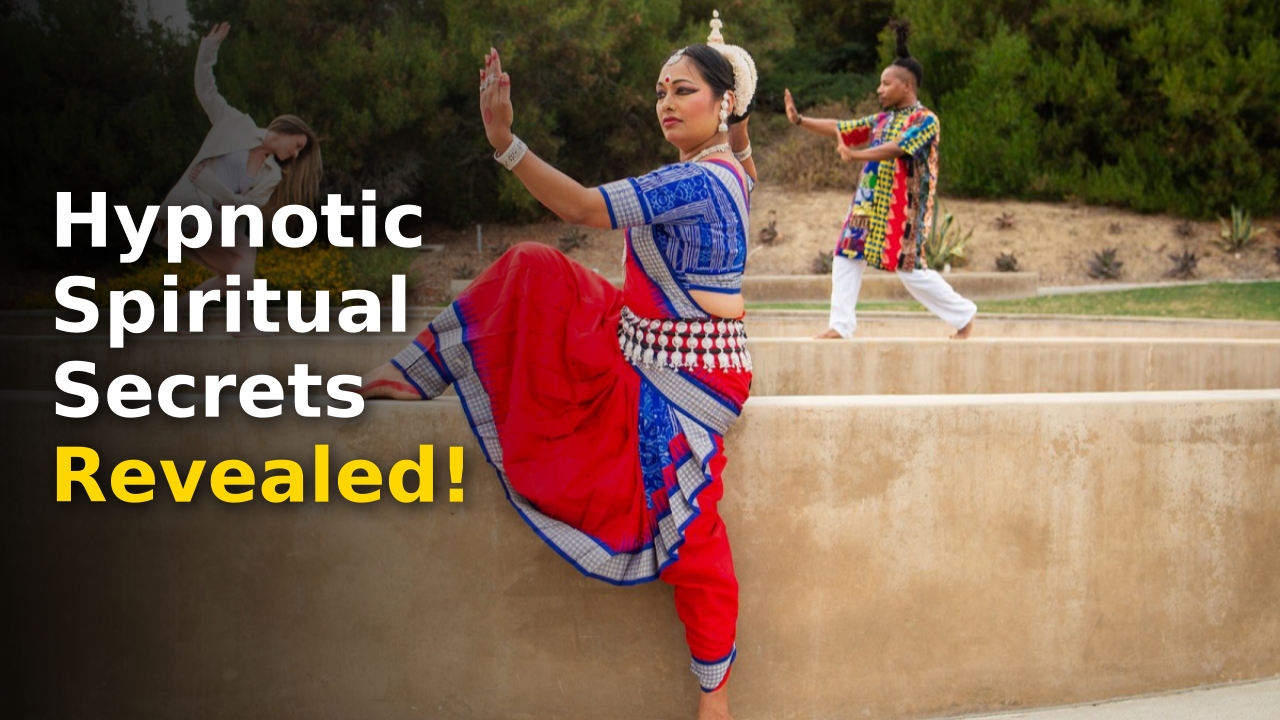
The attire worn by an Odissi performer is a spectacle of cultural symbolism and artisanal craftsmanship. Patnaik approaches the stage swathed in a coral silk sari, accented by silver jewelry that reflects light with every movement. These are not mere accessories; the three silver hip belts and the white headpiece, known as a mukut, are traditional requirements that ground the dancer in her lineage. The silver rings on her hands further draw your attention to the mudras, which are ritual hand gestures that function as a sophisticated sign language.
Expert Take: The Ritual Significance of Adornment
In the context of classical Indian arts, the ‘Aharya Abhinaya’ (costume and jewelry) serves a purpose beyond aesthetics. According to historical Vedic texts, the silver ornaments used in Odissi Dance are specifically designed to highlight the dancer’s rhythmic movements while paying homage to the silver-rich heritage of the Odisha region. This synthesis of geography, metalwork, and movement creates a multi-sensory experience that is unique to this specific classical form.
Another massive secret involves the intense physical demand hidden behind the dancer’s graceful facade. To achieve the hypnotic, sculptural poses seen on stage, a performer must possess core strength that rivals elite professional athletes. The transition from the symmetrical ‘Chauka’ stance to the fluid ‘Tribhangi’ requires a level of muscle control that takes years, if not decades, to perfect. When you see Patnaik holding a pose, she is not just standing; she is engaging in a high-stakes balancing act between physical tension and spiritual release.
The Data Behind the Dance: Comparing Indian Classical Forms
To truly appreciate the complexity of Patnaik’s work, one must understand where her art fits within the broader landscape of Indian performance. There are eight recognized classical dance forms in India, each with its own regional identity and technical vocabulary. While they all share roots in the Natya Shastra, the differences in posture and storytelling are profound. Odissi Dance is distinguished by its lyrical grace and its specific focus on the three-bend posture, which contrasts with the more linear movements of other styles.
| Dance Form | Origin State | Primary Posture | Key Theme |
|---|---|---|---|
| Odissi | Odisha | Tribhangi (S-Shape) | Devotion (Bhakti) |
| Bharatanatyam | Tamil Nadu | Araimandi (Half-Squat) | Religious Narrative |
| Kathak | North India | Straight Leg (Spins) | Storytelling/History |
| Kathakali | Kerala | Wide-Legged/Masked | Epic Dramas |
The data shows that Odissi’s reliance on the ‘Tribhangi’ pose—which involves bends at the neck, torso, and knee—creates a unique ‘S’ shape that is not found in the more rigid structures of Kathak or Bharatanatyam. This fluidity makes it particularly appealing to modern audiences who are used to contemporary dance’s emphasis on flow and organic movement. Despite its ancient origins, the aesthetic of Odissi feels remarkably fresh and accessible in a globalized world.
Beyond the technical stats, the geographical isolation of Odisha for many centuries allowed this dance form to develop a distinct musical accompaniment. The scores used by Patnaik often segue from somber, meditative passages to joyful, rhythmic crescendos. This musical variety supports the dancer’s journey through different emotional states, ensuring that the audience remains engaged throughout the entire performance cycle. It is a calculated, mathematical approach to emotion that has been refined over thousands of years.
The Long Journey from Odisha to Encinitas
Shibani Patnaik’s mastery was not a gift of luck; it was forged through a level of discipline that is rare in modern education. Born and raised in Encinitas, a coastal town in San Diego, Patnaik was subject to the high cultural expectations of her immigrant parents. To ensure their daughters remained connected to their heritage, the family invited a guru from India to live in their home for months at a time. This immersive learning environment meant that Patnaik practiced her craft for three hours every day after school.
During the summer months, the training intensified to six hours a day, a schedule that many teenagers would find grueling. Patnaik admits that the passion for the dance didn’t come naturally or overnight. It was a forced discipline that eventually blossomed into a deep, personal realization. As a young teenager, she recognized that hard work was the only path to mastering the complex technique and Sanskrit verses that underpin the art form.
This dedication eventually led her back to the source. After high school, Patnaik spent six months in India, immersing herself in the language and culture of her ancestors. This period was transformative, taking her dance experience to a level of maturity that only comes from understanding the social and historical context of the movements. It was during this time that she truly internalised the spiritual significance of performing for deities like Lord Jagannath and Lord Krishna.
By The Numbers: The Education of a Master
Research into traditional Indian pedagogy reveals that a ‘Guru-Shishya’ (teacher-student) relationship often spans over 10,000 hours of direct instruction before a student is considered a master. Patnaik’s childhood training, combined with her collegiate lectures at UC San Diego, places her in an elite tier of global practitioners. She now serves as a master instructor at the Center for World Music, ensuring that the next generation of dancers understands the weight of the tradition they are inheriting.
Global Icons and the Mainstream Breakthrough
While Patnaik is a purist in her teaching, she has played a pivotal role in bringing Odissi Dance to the highest echelons of Western pop culture. Alongside her sisters, known collectively as the “Patnaik Sisters,” she assisted the legendary Madonna in choreographing an Odissi-style segment for the 1998 MTV Video Music Awards. This performance of “Ray of Light” and “Shanti/Ashtangi” was a watershed moment, introducing millions of viewers to the aesthetics of Indian classical dance through a lens of modern electronic music.
The sisters didn’t stop there. Their ability to translate traditional movements into a commercial context caught the attention of Ricky Martin. They collaborated with the Latin pop star on an Odissi-inspired segment for his 2007 world tour, proving that the ancient movements of Odisha could harmonize with the high-energy demands of a global stadium tour. These collaborations served as a crucial bridge, demonstrating that classical arts are not museum pieces but vibrant, adaptable languages of motion.
For more insights into the lives of world-class performers and their impact on global culture, you can explore the archives at Bright Celebrity. Patnaik’s work exemplifies how traditional artists can navigate the tension between maintaining the sanctity of their art and engaging with the fast-paced world of modern entertainment. It is this balance that has made her one of the most respected figures in the Southern California arts scene.
Frequently Asked Questions
What is the history of Odissi Dance?
Odissi is one of the oldest surviving dance forms in India, with its origins traced back to the Hindu temples of Odisha. Historically, it was performed by ‘Maharis’ (temple dancers) as a form of worship. After a period of decline during colonial rule, it was revived in the mid-20th century and is now celebrated globally for its sculptural beauty and spiritual depth.
How long does it take to learn Odissi Dance?
Basic proficiency in Odissi typically requires 5 to 7 years of consistent study. However, reaching a professional or master level, such as that of Shibani Patnaik, usually involves decades of training, including immersive study in India and a deep understanding of Sanskrit and Hindu mythology.
Where can I see Shibani Patnaik perform in 2026?
Patnaik is scheduled to perform on October 3 during the Asian American Dance Festival’s Community Day in City Heights, San Diego. The event is free to the public and features a wide array of cultural performances, including K-pop, Polynesian dance, and Chinese classical dance.
What are mudras in Odissi Dance?
Mudras are ritual hand gestures that serve as a visual language in Indian classical dance. There are dozens of unique mudras, each representing specific objects, emotions, or deities. In Odissi, they are used to narrate stories from sacred texts, allowing the dancer to communicate complex ideas without speaking.
Preserving the Heart of Tradition in San Diego
As the Asian American Dance Festival continues its run through the summer and fall, the focus remains on the power of storytelling. Founded by Joyce Lien Kushner, the festival provides a vital platform for Asian and Islander Americans to share their unique perspectives. From the dance film screenings at the Museum of Contemporary Art in La Jolla to the collaborative residencies at Liberty Station, the event highlights the diversity of the Asian American experience through the universal language of movement.
Shibani Patnaik’s contribution to this festival is more than just a performance; it is an act of cultural preservation. By sharing the meditative forms and intricate expressions of Odissi Dance, she ensures that these ancient stories continue to resonate in a modern, multicultural society. Even if you do not understand every Sanskrit word or every specific mudra, the feeling of devotion and the quest for a peaceful, harmonious state is something that everyone can feel. It is this universal emotional resonance that makes Patnaik’s work truly essential viewing.
More Like This
For more updates, check out our latest entertainment and sports news.