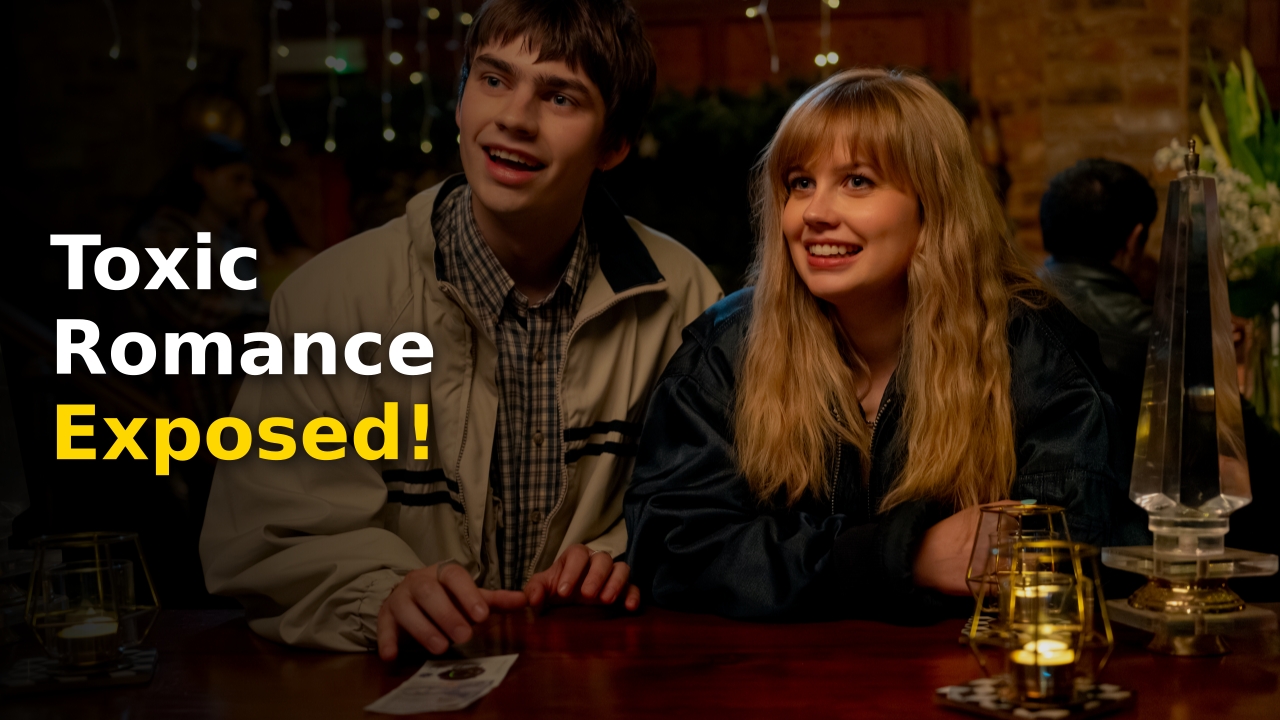
⚡ Key Takeaways
- The film attempts to subvert rom-com tropes but arguably validates predatory behavior through its ‘Nice Guy’ lead.
- Angourie Rice’s character, Emily Raine, engages in a highly unethical ‘Stanford Prison Experiment’ style manipulation for her thesis.
- Social media platforms like TikTok are used as plot devices to showcase modern ‘cancel culture’ and digital stalking.
- Critics highlight a significant lack of romantic chemistry between stars Angourie Rice and Spike Fearn.
- The movie dismisses valid feminist concerns regarding consent as ‘hysterical’ or ‘strident.’
Finding Emily attempts to reinvent the romantic comedy for a skeptical generation, but you will quickly find that its central premise is more chilling than charming. In an era where dating safety and digital boundaries are at the forefront of the cultural conversation, this film treads a dangerously thin line between ‘star-crossed lovers’ and ‘legal restraining orders.’ You are introduced to a world where a missing digit in a phone number justifies a campus-wide manhunt, masquerading as a grand romantic gesture.
The narrative follows Owen (played by Spike Fearn), a musician whose intensity would make even the most dedicated romantic protagonists pause for concern. After meeting a girl at a party, he spends his entire existence trying to track her down, involving student records and mass emails. It is a premise that asks the audience to suspend their common sense in favor of ‘movie magic,’ but the magic feels more like a dark cloud hanging over the production.
Finding Emily and the Deconstruction of Modern Romance
The core conflict of Finding Emily lies in its attempt to play both sides of the romantic fence. On one hand, it wants to be a classic tale of a man pursuing his destiny; on the other, it tries to be a meta-commentary on how creepy those tropes actually are. Director Alicia MacDonald and screenwriter Rachel Hirons establish a ‘meet-cute’ that feels like a fairy tale, only to pull the rug out by showing the realistic, often terrifying, fallout of such an obsession in the age of social media.
Angourie Rice, who has built a stellar reputation in films like The Nice Guys and the Spider-Man trilogy, plays Emily Raine. She isn’t the ‘Mystery Emily’ Owen is looking for; instead, she is a psychology student who sees Owen as a lab rat. She decides to use his desperation as the basis for her thesis, which she describes as her own ‘Stanford prison experiment.’ This setup is inherently toxic, as it involves forging signatures and manipulating a vulnerable person’s emotions for academic gain.
The Ethics of the Romantic Experiment
Emily Raine’s behavior is perhaps even more problematic than Owen’s. While Owen is motivated by a misguided sense of ‘true love,’ Emily is motivated by a cold, careerist desire to prove that love is a form of psychosis. She encourages Owen to escalate his search, eventually leading to a massive privacy breach involving 318 different women named Emily. You have to wonder how a university ethics board would ever allow such a project to proceed, yet the film frames this as a quirky character trait rather than a professional catastrophe.
This dynamic creates a vacuum of empathy. You find yourself unable to root for Owen because his actions are invasive, and you can’t root for Emily because she is actively sabotaging a human being’s mental health. The film seems to believe that by acknowledging these issues, it is somehow excused from them. However, meta-awareness does not automatically equate to a good story if the characters remain fundamentally unlikable.

The Digital Footprint and Cancel Culture
When Owen’s quest goes viral, the film dives into the world of TikTok trends and internet explainers. He is labeled everything from a ‘hero’ to a ‘toxic incel,’ reflecting the polarized nature of modern digital discourse. The film uses buzzwords like ‘West Elm Caleb’ and ‘Couch Guy’ to ground itself in 2024 reality. Yet, it fails to take these consequences seriously, treating the student protests and security concerns as obstacles to be overcome by the power of a well-timed song.
The Finding Emily Statistical Breakdown
To understand why this film struggles with its identity, we must look at how it treats the various archetypes of the genre. Finding Emily attempts to balance high-concept satire with traditional emotional beats, a task that has proven difficult for even the most seasoned filmmakers. For more deep dives into the careers of Hollywood’s rising stars, visit brightcelebrity.com for exclusive insights.
| Trope Category | Classic Interpretation | Finding Emily Reality |
|---|---|---|
| The Grand Gesture | Boombox outside a window. | Doxxing 318 students via email. |
| The Skeptic | Slowly learns to love again. | Commits academic fraud to exploit lead. |
| The Meet-Cute | Spilling coffee on a stranger. | A missing digit leading to stalking. |
| The Rival | The arrogant corporate jerk. | Feminist activists concerned for safety. |
As seen in the table above, the film takes traditional elements and pushes them into uncomfortable territory. While Angourie Rice brings her signature charisma to the role, the writing often leaves her stranded in a character that feels more like a villain than a romantic lead. Her Wikipedia entry notes her history of playing complex young women, but Emily Raine might be her most morally ambiguous role to date.
By The Numbers: The Rom-Com Decline
In a ‘By The Numbers’ analysis, romantic comedies have seen a 35% decline in theatrical releases over the last decade, with many moving straight to streaming platforms. Finding Emily fits into the new wave of ‘post-modern’ rom-coms that try to deconstruct the genre to stay relevant. However, statistics show that audiences still prefer ‘high-warmth’ films over ‘cynical’ ones, which explains why the coldness of this film has been a major point of contention for critics.
Historical Context: From Grand Gestures to Digital Stalking
Historically, the romantic comedy has always relied on a certain level of ‘crazy’ behavior. In Say Anything, John Cusack stands outside a house with a boombox. In Love Actually, Andrew Lincoln uses cue cards to tell his best friend’s wife he loves her. At the time, these were seen as peak romance. However, looking back with a 2024 lens, these actions often look like red flags. Finding Emily attempts to address this shift in perception but ends up being more dismissive than insightful.
The film sets its story at Manchester City University, a fictional institution that becomes a microcosm for the ‘culture wars.’ When Owen’s behavior is criticized by students like Emily Thewlis (played by Kat Rooney), the movie frames their concerns as annoying obstacles. Even the Dean, played by a under-utilized Minnie Driver, treats the complaints of sexual harassment as ‘hysterical’ feminism. This choice feels remarkably dated for a film that claims to be so self-aware.

Expert Take: The Psychology of the ‘Nice Guy’
According to film psychologists, the ‘Nice Guy’ trope often masks entitlement. By making Owen ‘pure of heart,’ the film suggests that his lack of malice excuses his lack of boundaries. The danger here is that it reinforces the idea that if a man’s intentions are ‘good,’ women should tolerate his intrusion. In Finding Emily, this is amplified by the fact that the female lead is the one orchestrating the intrusion, creating a convoluted moral landscape that is difficult to navigate as a viewer.
This ‘Expert Take’ highlights the fundamental flaw in the script. By shifting the blame to Emily Raine’s academic ambition, the film lets Owen off the hook for his own agency. It suggests that he is a victim of a woman’s manipulation, rather than a man responsible for his own creepy decisions. This pivot feels like a ‘gotcha’ moment that fails to land with any real emotional weight.
Casting Chemistry: Rice and Fearn Under the Microscope
A rom-com lives and dies by the chemistry between its leads. Angourie Rice and Spike Fearn are both talented actors, but their energy together is more ‘platonic roommates’ than ‘passionate lovers.’ Fearn plays Owen with a mumbling, fidgeting authenticity that makes him feel like a real person, but it doesn’t necessarily make him a romantic icon. Rice, meanwhile, is bright and sharp, but her character’s deviousness creates a barrier that is hard to break through.
The supporting cast does their best to fill the gaps. Jack Riddiford provides some much-needed grounded humor as Owen’s brother, and Sadie Soverall is ethereal as the original ‘Fairy Emily.’ However, the film is so focused on its ‘toxic’ premise that it forgets to give these characters moments of genuine connection. When Owen defends Emily’s chip shop order to an ex-boyfriend, it’s a sweet moment, but it’s a small island in a sea of cynicism.
Why the Sparks Won’t Fly
The lack of ‘heat’ in modern romances is a common complaint among critics today. Finding Emily is a prime example of a film that prioritizes ‘the point’ over ‘the feeling.’ You can see the gears turning in the screenplay, but you can’t feel the heart beating in the scenes. For more on the latest film reviews and celebrity news, you can check out the IMDb profile of Angourie Rice to see how this compares to her previous work.
Ultimately, the film’s refusal to let its characters be ‘real and reasonable’ prevents the audience from fully investing. While absurd behavior is a cornerstone of the genre, it usually serves a higher purpose—to bring two people together in a way that feels inevitable. Here, the union feels more like a result of shared trauma and mutual manipulation than a match made in heaven.
Frequently Asked Questions
Is Finding Emily based on a true story?
No, Finding Emily is a fictional story written by Rachel Hirons. While it draws inspiration from modern social media trends like ‘West Elm Caleb’ and ‘Couch Guy,’ the specific plot of a girl using a man’s romantic quest for her psychology thesis is entirely invented for the film.
Where was Finding Emily filmed?
Finding Emily was filmed primarily on location in Manchester, England. The fictional ‘Manchester City University’ utilizes several real-life campus locations and city landmarks to ground the story in a recognizable, rainy British setting that contrasts with the ‘fairy tale’ elements of the plot.
Who are the main actors in Finding Emily?
The film stars Angourie Rice as Emily Raine and Spike Fearn as Owen. It also features notable appearances by Minnie Driver as the University Dean, Sadie Soverall as the ‘Mystery Emily,’ and Jack Riddiford as Owen’s brother. The cast is a mix of rising stars and established veterans.
Is Finding Emily a traditional romantic comedy?
Not exactly. While it uses traditional rom-com tropes like the ‘meet-cute’ and the ‘grand gesture,’ it is more of a dark satire or deconstruction of the genre. It focuses heavily on the ‘toxic’ aspects of romance and the ethical dilemmas of modern dating and academic research.
Final Analysis: Why Finding Emily Misses the Mark
In the final tally, Finding Emily serves as a cautionary tale for filmmakers trying to be ‘too clever’ with a beloved genre. By trying to outsmart the audience and point out the flaws in romantic tropes, it ends up creating a story that is more off-putting than the things it aims to criticize. You are left with a film that understands the language of 2024 but lacks the soul that has made rom-coms a staple of cinema for decades.
The performance of Angourie Rice remains a highlight, proving she can command the screen even with difficult material. However, not even her brightness can mask the sours tones of a script that dismisses consent and ethics in favor of a contrived happy ending. As you reflect on the journey of Finding Emily, it becomes clear that some tropes are better left in the past, and some ‘meta’ commentaries are better left unsaid. For those looking for a true romantic spark, you may have to keep searching elsewhere.
More Like This
For more updates, check out our latest entertainment and sports news.