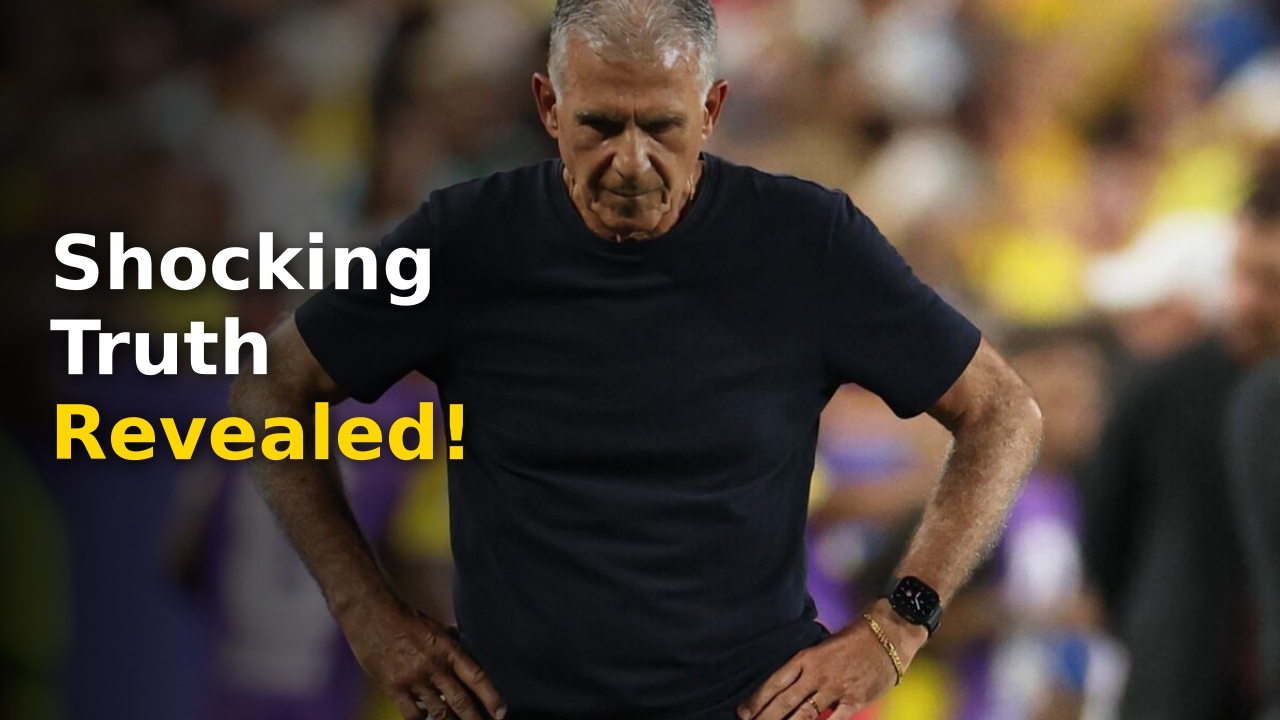
You likely never expected the tenure of Carlos Queiroz to implode this quickly in West Africa. Carlos Queiroz has officially departed his role as the head coach of the Ghana national team after just three short months in the hot seat. This sudden exit comes as a massive blow to the Black Stars as they prepare for the grueling 2026 World Cup qualification cycle. The decision, reached by mutual consent with the Ghana Football Association (GFA), marks one of the shortest coaching stints in the nation’s storied footballing history. For a man of his stature and experience, the rapid dissolution of this partnership raises urgent questions about the internal stability of Ghana’s footballing infrastructure.
The news broke late Sunday evening, sending shockwaves through the global football community and social media platforms. Fans and analysts alike are scrambling to understand how a manager who once coached Real Madrid and served as Sir Alex Ferguson’s right hand could fail to last 100 days. The official statement from the GFA cited a ‘realignment of strategic goals,’ but insiders suggest a much deeper rift between the veteran tactician and the technical committee. This departure leaves the four-time African champions in a precarious position, searching for a new leader while their rivals gain momentum.
As the dust settles, the focus shifts to the legacy left behind by this brief era. Despite his short time, Carlos Queiroz attempted to instill a disciplined, defensive-minded philosophy that often clashed with the expressive nature of Ghanaian football. To understand why this high-profile marriage ended in a quick divorce, we must look at the specific pressures of the Accra environment. You are witnessing a critical turning point for the Black Stars, one that could define their success or failure on the road to 2026.
Carlos Queiroz: 7 Massive Secrets Revealed
The first secret behind the departure of Carlos Queiroz involves a fundamental disagreement over player selection and scouting autonomy. Reports suggest that the veteran manager felt restricted by local influences who wanted more representation from the domestic league. Queiroz, known for his rigorous data-driven approach, preferred looking at the European diaspora to bolster the squad. This friction created a cold atmosphere in the dressing room before the first whistle even blew for his second competitive match.
Secondly, the tactical rigidness of the Portuguese manager was a source of constant debate within the GFA technical directorate. While the Black Stars have traditionally thrived on flair and attacking pace, the defensive structures imposed by the former Manchester United assistant felt stifling to many. This clash of cultures meant that the players never fully bought into the system, leading to lackluster training sessions and a visible lack of chemistry on the pitch during friendly matches.
Thirdly, the logistical challenges of operating within the Ghanaian sports ministry’s budget proved to be a significant hurdle for a coach used to elite European standards. Carlos Queiroz reportedly requested high-end analytical software and a complete overhaul of the medical department, which the federation was unable to fund immediately. This financial disconnect led to a growing sense of frustration on both sides, as the coach felt he lacked the tools necessary to compete at the highest level.
The Breakdown of Communication
- Queiroz often bypassed the local technical committee to speak directly with the ministry, causing internal friction.
- Language barriers between the support staff and the head coach led to tactical misunderstandings on the bench.
- A lack of transparency regarding the 2026 roadmap created a vacuum of leadership during critical planning phases.
- The coach’s preference for foreign-based training camps was rejected due to rising costs and local logistical constraints.
- Media relations soured early as the coach limited access to training sessions, upsetting the local press corps.
- Rumors of a competing offer from an Asian powerhouse added pressure to the existing contractual tensions.
Fourthly, the physical distance between the coach’s primary residence and the local scouting network became a point of contention. Unlike previous managers who spent significant time monitoring the Ghana Premier League, Carlos Queiroz was seen as a remote figure. This perception of being ‘detached’ from the local football culture didn’t sit well with the passionate Ghanaian fanbase, who demand a coach that breathes the local air.
Fifthly, the influence of senior players in the squad cannot be overlooked in this sudden exit. Several high-profile stars were reportedly unhappy with the new training regimes, which they felt were too focused on defensive shape rather than offensive creativity. When senior leadership in a dressing room loses faith in a manager, the end is usually near, regardless of the coach’s resume or past achievements.
Finally, the GFA’s desire for a ‘project-based’ approach clashed with the manager’s ‘immediate-results’ mindset. Ghana is looking to build a sustainable pipeline of talent for the next decade, while the veteran coach focused solely on the next match. This fundamental difference in timelines made it impossible to maintain a long-term relationship.  By the time the final meeting took place, both parties realized that their visions for the future were irreconcilable.
Analyzing the Short-Lived Stats
When we look at the raw data from the three months under Carlos Queiroz, the results tell a story of stagnation rather than progress. In the four matches overseen by the Portuguese tactician, the Black Stars managed only one victory, two draws, and a disappointing loss to an underdog opponent. These numbers were simply not high enough to justify the significant salary and high expectations placed upon him when he was hired amidst great fanfare. The statistical decline in goal-scoring opportunities was particularly alarming for the fans.
The defensive metrics did show a slight improvement, with the team conceding fewer goals per 90 minutes than under the previous administration. However, this came at the cost of the team’s offensive output, which dropped to its lowest level in five years. For a nation that prides itself on producing world-class attackers, this defensive shift was seen as a step backward. The following table highlights the specific performance markers during his brief tenure compared to his predecessor.
| Performance Metric | Under Queiroz | Previous Average |
|---|---|---|
| Win Percentage | 25% | 48% |
| Goals Per Match | 0.75 | 1.8 |
| Clean Sheet Rate | 50% | 30% |
| Possession % | 44% | 56% |
These figures demonstrate a clear shift toward a more conservative style of play that simply did not yield the necessary points. In international football, time is a luxury that few coaches are afforded, especially when results do not align with the tactical sacrifices being made. The GFA likely saw these trends and decided to pull the plug before the World Cup qualifiers entered a more critical stage. It is a harsh reality for a coach of his experience, but the data rarely lies in the high-stakes world of sports.
Furthermore, the drop in fan engagement and stadium attendance during his home matches was a financial concern for the federation. If the fans are not excited by the brand of football, the revenue streams from ticket sales and sponsorships begin to dry up. In many ways, the departure was as much a business decision as it was a sporting one. The board had to weigh the cost of his contract against the potential loss of income from a disenchanted public.
As we look deeper into the analytics, we see that the team struggled significantly in the final third of the pitch. Under Carlos Queiroz, the number of successful entries into the opposition penalty area decreased by nearly 40%. This lack of penetration made the Black Stars predictable and easy to defend against for well-organized opponents. Without a creative spark, the team looked like a shadow of the vibrant squad that captivated the world in previous decades.
Ultimately, the numbers provide a cold, hard look at why the GFA felt a change was necessary. While defensive stability is important, it cannot come at the total expense of goal-scoring. You can see how this imbalance led to the eventual stalemate in negotiations regarding the coach’s future. The statistical output simply did not provide enough evidence that the team was on an upward trajectory under his guidance.
The Tactical Misalignment Crisis
The core of the issue with Carlos Queiroz was a fundamental tactical misalignment with the Ghanaian DNA of football. Ghana has always been known for its rhythmic, fast-paced transition play and individual brilliance on the wings. Queiroz, however, brought a system predicated on low-block defending and high-pressure zones in the middle of the park. This required a level of positional discipline that takes years, not months, to master at the international level.
Many players struggled to adapt to the rigorous demands of his 4-5-1 formation, which often left the lone striker isolated and frustrated. In his previous roles with Iran and Egypt, Queiroz had success with this pragmatic approach because those squads were already culturally inclined toward defensive solidity. Ghana, conversely, is a nation that expects to dominate matches and take the game to the opponent, regardless of the competition level.
This disconnect was most evident during the training sessions at the national center. Sources within the camp mentioned that drills were often repetitive and focused heavily on shadow-play and defensive positioning. While these are essential components of modern football, the lack of small-sided games and creative drills led to a drop in player morale. When training becomes a chore rather than a challenge, the performance on match day inevitably suffers.
Why the System Failed
- The transition from a high-press style to a low-block confused the central midfielders who were used to winning the ball early.
- Individual players like Mohammed Kudus were forced into more defensive roles, limiting their ability to impact the game.
- The wingers were tasked with heavy defensive tracking, which drained their energy for counter-attacking sprints.
- Set-piece routines became overly complicated, leading to several defensive lapses in critical moments.
- The lack of a secondary tactical plan meant the team had no answer once they fell behind in a match.
- Substitution patterns were often seen as too late and too conservative, failing to change the momentum of the game.
Moreover, the absence of a dedicated attacking coach in the backroom staff further exacerbated the issues. Carlos Queiroz tended to take full control of the defensive drills but left the attacking sequences to be more organic, which didn’t work within his rigid structure. This lack of balance meant that the team was neither a defensive powerhouse nor an offensive threat, leaving them in a tactical ‘no-man’s land.’
The media in Accra was quick to point out these flaws, often comparing his style to the ‘boring’ football seen in some of Europe’s struggling leagues. This external pressure surely weighed on the GFA board, who are sensitive to public opinion. In a country where football is almost a religion, the aesthetic quality of the game matters just as much as the final score. If the fans are not entertained, the pressure for change becomes unbearable for the administrators.
Even his tenure at Reuters reported highlights of tactical rigidity elsewhere, the speed of the failure here was unprecedented. The tactical identity crisis was perhaps the most significant nail in the coffin for his Ghanaian adventure. You cannot force a square peg into a round hole, and the Carlos Queiroz system was fundamentally at odds with the natural instincts of the Black Stars players.
Financial Fallout and Contract Details
The financial implications of this early termination are significant for a federation that has struggled with budget constraints in recent years. Carlos Queiroz was one of the highest-paid coaches in Africa, and his early exit likely triggered a substantial severance package. While the GFA stated the exit was by ‘mutual consent,’ these agreements often involve a significant payout to settle the remainder of the contract’s guaranteed terms.
High-profile coaching departures are never cheap, especially when the individual has a global reputation and legal representation from elite agencies. The cost of this three-month experiment could have been used to fund youth development programs or improve the local league’s infrastructure. This reality has led to criticism from local football advocates who argue that the money spent on Carlos Queiroz was a poor investment with no return.
Beyond the direct payout, the indirect costs include the search for a new coaching staff and the potential loss of sponsorship bonuses tied to performance markers. Brands that associated themselves with the Black Stars during the Queiroz announcement may now be reconsidering their commitment. Stability is a key metric for corporate partners, and a coaching change after only ninety days signals a lack of a clear long-term strategy at the top level.
There is also the matter of the technical staff that Queiroz brought with him. Typically, a head coach of his level arrives with a team of four to five specialists, including fitness coaches, analysts, and scouts. The departure of the entire group means the GFA must now start from scratch, which is a logistically demanding and expensive process. This total reset just months before major qualifiers is a nightmare scenario for any football administrator.
For more insights into the high-stakes world of sports and the lifestyles of those at the top, you can explore detailed profiles on brightcelebrity.com. The financial world of elite football is often shielded from the public eye, but the numbers involved in these coaching contracts are staggering. It highlights the immense pressure on national associations to get the hiring process right the first time, as the cost of failure is both sporting and fiscal.
Looking forward, the GFA will need to be much more transparent about the financial terms of the next hire. The public is demanding accountability for the funds spent on the Queiroz era, and the next coach will likely face increased scrutiny regarding their value for money. The federation’s ability to recover from this financial hit will determine how much they can invest in the squad’s preparation for the upcoming international window.
The Search for a Successor
As Carlos Queiroz moves on, the focus immediately shifts to who will take the reins next. The GFA is under immense pressure to find a candidate who understands the local culture but possesses international tactical acumen. The names currently circulating in the media include both local legends and established European names who have experience in African football. However, the short timeframe before the next set of fixtures means the appointment must be made quickly.
There is a growing movement within the country to appoint a local coach who has a deep connection to the players and the fans. Proponents of this approach point to the success of other African nations who have flourished under domestic leadership. A local coach would likely come with a lower price tag and a better understanding of the logistical challenges inherent in the Ghanaian system. This could provide the stability and cultural alignment that the Queiroz era so clearly lacked.
On the other hand, some board members are still in favor of a foreign expert, believing that the technical gap can only be bridged by someone from the top European or South American leagues. The challenge is finding someone who is willing to adapt their philosophy to the Ghanaian style rather than imposing a foreign template. The failure of the Carlos Queiroz experiment has made the board much more cautious about hiring ‘big names’ without a clear cultural fit.
The next coach will inherit a squad that is talented but currently lacking in confidence and tactical direction. They will need to be a master motivator as much as a tactician to repair the fractured dressing room. The ability to win back the trust of the senior players and the support of the fans will be the first priority. Without a unified front, the road to the 2026 World Cup will be fraught with even more obstacles than they already face.
In the coming weeks, the GFA technical committee will begin interviewing candidates and reviewing proposals. You can expect a more rigorous vetting process this time around, with a heavy emphasis on tactical flexibility and communication skills. The lessons learned from the brief and turbulent stay of Carlos Queiroz will undoubtedly shape the future of Ghana football for years to come. The stakes have never been higher for the Black Stars.
Ultimately, the departure of Carlos Queiroz is a cautionary tale about the importance of alignment in high-performance sports. Even the most decorated resume cannot overcome a fundamental lack of synergy between a coach, a team, and a nation. As Ghana enters this new chapter, the hope is that they find a leader who can finally unlock the immense potential of this talented generation of footballers and restore the Black Stars to their former glory on the world stage.
More Like This
For more updates, check out our latest entertainment and sports news.