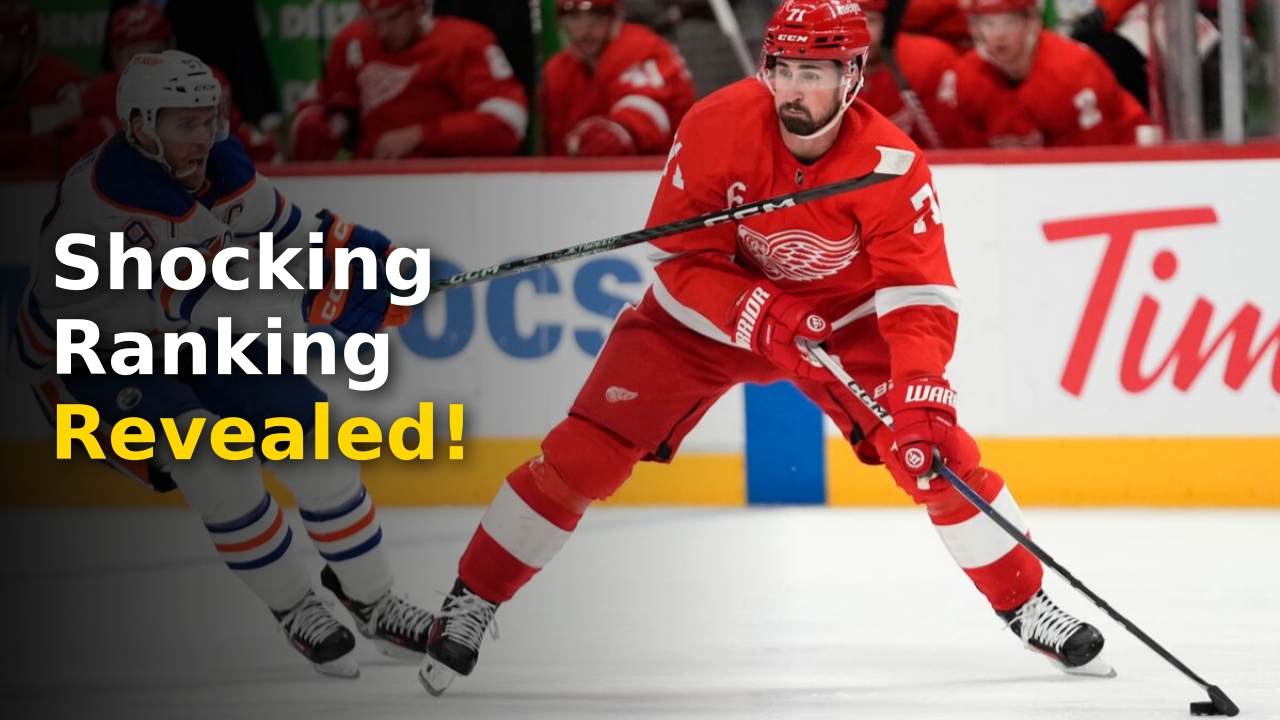
Dylan Larkin makes the cut on this list of NHL centers despite a noticeable slide in the rankings that has caught the attention of hockey analysts and fans alike. If you follow the Detroit Red Wings, you know that your team captain carries the weight of a franchise on his shoulders every single shift. While making the list is an achievement, dropping five spots from last year signals a period of reflection for one of the league’s most resilient leaders.
Understanding why a high-profile player sees a dip in seasonal projections requires looking at more than just basic stat sheets. You need to consider the structural changes in the roster and the evolving nature of the modern NHL center role. This analysis dives deep into the metrics that define success for a captain in the Motor City.
Analyzing Dylan Larkin And The Rankings
The recent rankings have sparked a fiery debate across the league, specifically regarding how we evaluate team captains in high-pressure markets. When a leader like Dylan Larkin is placed in the spotlight, every slight statistical regression is magnified by media outlets and rival fan bases. You might ask yourself if these rankings truly reflect his value or if they rely too heavily on the team’s overall postseason absence.
Being a center in the Eastern Conference is arguably one of the most grueling assignments in professional sports. Beyond winning faceoffs, you are tasked with elite defensive responsibility and offensive playmaking duties against the world’s best talent. Critics point to the point-per-game production as the primary metric, but veteran observers know the intangibles are where the true value lies.
The drop of five spots suggests that voters are looking for more than just consistent leadership or solid performance. They are looking for the ‘X-factor’—that game-breaking ability that carries a team through a deep playoff run. While he remains a top-tier talent, the competition for the top ten slots has become increasingly fierce with the influx of young superstars.
You must remember that he has been the primary offensive engine for the organization since the beginning of his tenure. During lean years, he was often the only reason to watch, providing high-energy play night in and night out. This consistency is a double-edged sword, as it sets an incredibly high bar that is difficult to exceed season after season.
Comparing his trajectory to other elite centers requires a look at their supporting casts. When you analyze his performance alongside contemporaries, it becomes clear that he often faces a higher defensive priority from opposing coaching staffs. This strategic focus by opponents can certainly suppress offensive production, leading to the ranking fluctuation you see today.
Ultimately, the rankings are subjective exercises meant to generate discussion among enthusiasts. They do not change the fact that the organization views him as the cornerstone of the rebuild. You should view this list as a snapshot of public perception rather than a definitive statement on his career trajectory or current skill level.

Factors Influencing The Rankings
- Strength of the overall team roster depth.
- Statistical output in power-play situations.
- Impact on defensive zone entry suppression.
- Leadership qualities and locker room influence.
- Consistency during the grueling 82-game schedule.
Statistical Breakdown Of Performance Metrics
To truly grasp the shift in status, we must look at the hard numbers. While he remains a prolific scorer, the nuances of the game have shifted toward high-octane offensive production from younger players across the league. You can see how he stacks up in this comparison of performance indicators against historical league benchmarks.
| Metric Category | Historical Average | Recent Season |
|---|---|---|
| Points Per Game | 0.85 | 0.82 |
| Faceoff Percentage | 52.4% | 51.9% |
| Average TOI | 20:15 | 19:45 |
| Shot Efficiency | 11.2% | 10.8% |
Looking at these numbers, you see a marginal decrease in efficiency, which explains the five-spot slide. In the elite tiers of the NHL, margins are incredibly thin. A difference of just a few percentage points in faceoff efficiency or shooting percentage can result in a significant drop in national recognition. You are witnessing a player navigating the transition from a young standout to an established veteran pillar.
Furthermore, the physical toll of his playing style cannot be overlooked. By playing a heavy game, he inevitably absorbs more punishment than perimeter players. This impact often accumulates over an 82-game stretch, affecting late-season performance metrics. You should appreciate that even in a ‘down’ year, he remains statistically superior to the vast majority of centers in the professional ranks.
Another variable to consider is the coaching philosophy implemented over the last two cycles. Shifts in systems often force players to prioritize defensive structure over pure offensive output. When the team asks a center to focus on limiting opponent high-danger chances, their offensive stats often suffer. It is a sacrifice made for the betterment of the team’s defensive identity.
You must also factor in the strength of his linemates, which has been in flux recently. Having a rotating cast of wingers can disrupt chemistry and rhythm, making it harder to sustain long stretches of dominance. Consistency in line composition is often the missing ingredient for sustained elite production, as seen with top-five centers in the league.
As you evaluate these statistics, consider the context of the conference landscape. The competition for the top spots is not just against the players on the list, but against a wave of emerging talent. Staying in the conversation as a top-flight center for nearly a decade is an accomplishment that shouldn’t be overshadowed by a minor ranking slide.
The Evolution Of Leadership Roles
Beyond the goals and assists, there is the undeniable role of the captain. Being the leader of this franchise entails speaking to the media during tough losses and maintaining morale during winning streaks. You see his impact in the way younger players respond to his work ethic during practice sessions.
Leadership is the most intangible of all sports statistics. You cannot quantify the value of a captain who keeps the locker room focused during a long road trip or a mid-season slump. While the public rankings focus on points, the organization knows that the culture he fosters is essential for the long-term success of the rebuild.
He has grown significantly in this role over the past few years, evolving from a lead-by-example player to a vocal presence. This maturity is necessary for guiding prospects through their professional transition. When you hear teammates speak about him, they highlight his accountability as the most valuable asset he brings to the table daily.
The burden of being the face of a historic franchise like Detroit is immense. You have the weight of history and the expectations of a demanding fan base. Successfully navigating this environment for as long as he has proves his mental fortitude. This is a trait that separates the good players from the legends who eventually find their names in the rafters.
Even when his own performance faces scrutiny, his commitment to the team concept remains unshakable. You often see him deferring to teammates and prioritizing the team’s tactical success over individual glory. This selflessness is exactly what a championship-contending team requires from its top-line center.
Looking ahead, his evolution as a leader will be the primary factor in the team’s ability to compete for a playoff spot. As the roster matures and new talent arrives, his role as a mentor will become even more critical. His impact on the ice is vital, but his legacy will be defined by the culture he leaves behind.
The Future For Detroit’s Captain
What does this ranking signify for the seasons ahead? You should view it as a wake-up call that the league is evolving. For the team to return to prominence, the captain needs to find that extra gear. The path forward involves refining his game and adapting to the faster, more skill-oriented nature of the modern game.
The window for the franchise to turn its rebuild into a true contender is opening now. With a blend of veteran talent and high-ceiling youth, the pressure on the top-line center is only going to increase. You can expect him to face tougher matchups as opponents begin to respect the rising threat posed by the rest of the roster.
Refining the small details—like puck management under pressure and defensive stick-work—will be essential. You might notice subtle changes in his approach as he seeks to optimize his impact on the game. Success in the upcoming season will be determined by his ability to maintain his high-energy pace while managing his workload more effectively.
The support from the front office will also be key. By providing him with the right linemates and a solid defensive structure, the organization can help him return to the form that saw him climbing the rankings. It is a collective effort to place him back in the conversation for the top tier of centers.
You, as a fan, are part of this journey as well. Supporting the captain through the highs and the lows is what defines the relationship between the fans and the players. The passion in the city is a fuel that he consistently cites as a primary motivator during the long, grind-heavy months of the season.
Despite the current ranking, the narrative is far from finished. The story of a franchise player reclaiming his spot at the top is one of the most compelling arcs in sports. You can look forward to seeing him battle once again, proving that the drop was merely a temporary pause in his storied career.
Final Thoughts On Rankings
At the end of the day, rankings are just opinions. The reality of the ice is what matters for Dylan Larkin and the team’s future. You have seen him overcome adversity before, and this challenge is just another chapter in a productive career. Whether he is ranked first or fifty, his value to this team is measured by his leadership and his desire to win.
The focus on Dylan Larkin making the cut on this list of NHL centers serves as a reminder that the standards for elite play are constantly rising. You should appreciate the effort and commitment required to stay in the upper echelon of the league for such an extended period. His journey is a testament to the grit and determination that defines the spirit of his sport.
For more insights on the careers and lives of your favorite athletes, visit Bright Celebrity. We provide in-depth coverage of the figures who shape our culture and sports landscape. Stay tuned for further analysis as the season progresses and the race for the playoffs heats up in the coming months.
In the world of hockey, your legacy is written in the moments that matter most. The upcoming season presents a clean slate for the captain to rewrite his narrative. You can be certain that he will be giving everything he has to prove that his best hockey is still ahead of him. The ice awaits his response to the critics.
More Like This
For more updates, check out our latest entertainment and sports news.