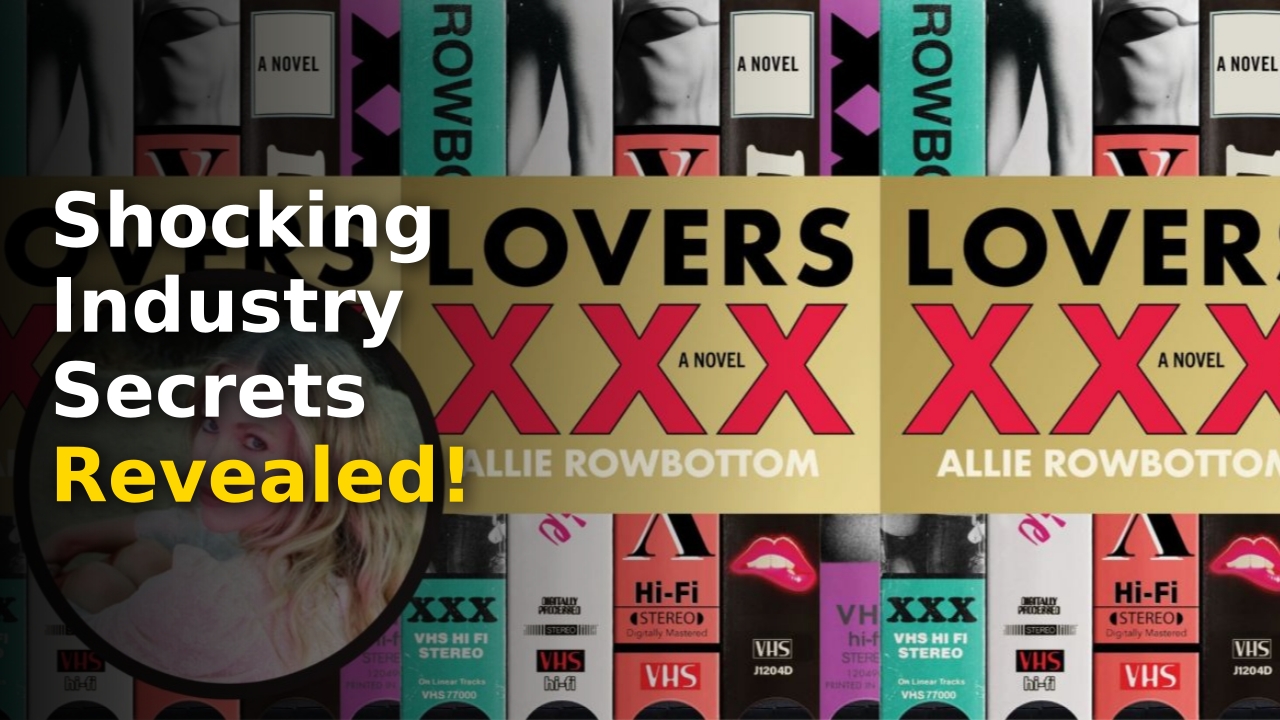
Lovers XXX represents a visceral shift in contemporary literature, moving from the folk-rock hills of Laurel Canyon into the neon-lit, high-stakes world of the 1980s adult film industry. You might think you know the story of the adult video revolution, but author Allie Rowbottom peels back the layers of technology, fame, and female agency in a way that challenges every preconceived notion you hold. The core reason Rowbottom pivoted to this subject was the realization that the porn industry served as a more immediate, high-pressure crucible for exploring how women navigate power structures built to disempower them.
By shifting her focus from singer-songwriters to adult performers, Rowbottom captures a unique moment in American history where technology and sexuality collided. The novel follows characters Jude and Winnie, two young women whose lives are transformed by the rise of the home video market. This transition wasn’t just about entertainment; it was about the democratization of media and the sudden, explosive promise of financial independence for women who had previously been sidelined by society. Lovers XXX dives deep into this ‘contradictory nexus’ of empowerment and exploitation, providing an answer-first look at the gritty reality of the 1980s San Fernando Valley.
The Genesis of Lovers XXX
The journey toward writing Lovers XXX began with a completely different creative vision that eventually felt too stagnant for the author’s ambitions. Rowbottom originally conceptualized an epic tale set in the 1960s, focusing on the rivalry and friendship between characters inspired by Joni Mitchell and Judee Sill. While the music industry offered a rich backdrop for themes of creativity and gender, Rowbottom found herself becoming increasingly bored with the historical safety of the folk era. She needed a setting where the stakes were higher and the tensions more palpable.
Everything changed when she began listening to Lili Anolik’s podcast, “Once Upon a Time … in the Valley,” which chronicles the life of Traci Lords. The story of a young girl navigating an industry that was both a gold mine and a minefield resonated deeply with Rowbottom’s interest in image culture. She realized that the porn industry of the early 1980s was the ultimate landscape to discuss women’s agency and the forces that seek to control it. The transition from Laurel Canyon to the adult film sets of Los Angeles allowed her to explore these themes with far more urgency and grit.
From Folk to Filth
- The original inspiration focused on the 1960s Laurel Canyon music scene and its inherent rivalries.
- Rowbottom felt the music industry tropes were becoming too academic and lacked immediate tension.
- Listening to the story of Traci Lords provided the necessary spark to pivot the narrative.
- The shift allowed for a deeper exploration of how women profit from their own objectification.
- Characters Jude and Winnie were born from the need to see the industry through the eyes of the young and ambitious.
The transition between these two worlds wasn’t just a change in setting; it was a change in the psychological depth of the manuscript. In the music industry version, the characters were fighting for a seat at a table that was already well-defined. In the adult industry version, the characters were building a new table entirely during a period of massive technological upheaval. This allowed Rowbottom to weave in elements of crime, suspense, and deep character study that the folk-rock setting simply couldn’t support.
Rowbottom’s previous work in memoirs like Jell-O Girls and her exploration of social media in Aesthetica prepared her for this deep dive. She has always been fascinated by how women’s bodies are used as currency in various markets. By choosing the 1980s, she could look at a time before the internet made everything hyper-accessible, focusing instead on the physical tapes and the tangible fame of the era. This grounding in history makes the fictional journey of Jude and Winnie feel remarkably authentic and grounded in real-world stakes.

VHS and the Technology Trap
Technology is a central character in the world Rowbottom builds within her fiction. In her previous novel, she tackled the vapid yet complex world of Instagram, and in this new work, she looks at the rise of the VHS tape. The early 1980s were a pivotal turning point because for the first time, pornography was entering the private living rooms of the American public. This democratization of content meant that the demand for new faces and new stories skyrocketed, leading to a gold rush for performers and producers alike.
For the female performers of this era, the promise of money and stardom was higher than it had ever been. There was a genuine belief among many that they could use the industry as a springboard to legitimate fame or at least financial security. Rowbottom explores this hope through Jude, who moves from small-town life to the strip clubs and film sets of Los Angeles. The sheer volume of tapes being sold created a new type of celebrity—one that was both household-famous and socially ostracized, creating a bizarre psychological space for these women to inhabit.
The Impact of Home Video
- VHS technology allowed for private consumption, which massively increased the market size.
- Performers were no longer limited to theatrical adult cinemas; they became stars in the home.
- The financial gains during this ‘Golden Age’ were unprecedented for many young women.
- This era created a ‘stardom promise’ that often collided with the harsh reality of the industry’s darker side.
- Technology served as both a liberator and a cage for the images of the women involved.
Rowbottom captures the ‘sticky and contradictory’ nature of this era with precision. She notes that while the performers were gaining financial power, they were also becoming more deeply entrenched in an image culture that prioritized their bodies over their personhood. This friction is where the novel finds its heart. It is not a simple story of victimhood; it is a complex analysis of how women try to win in a game where the rules are constantly shifting under their feet.
The author meticulously researched the period, looking at how the physical logistics of film sets changed with the move to video. The speed of production increased, and with it, the pressure on performers to deliver. This atmosphere of constant motion and ‘content creation’ mirrors our modern world in many ways. Rowbottom uses the 1980s as a mirror to show us that our current obsession with digital presence and personal branding has deep, analog roots in the adult film industry of forty years ago.
Researching the San Fernando Giants
To ensure the authenticity of the setting, Rowbottom immersed herself in a massive amount of historical material. She didn’t just look at the headlines; she went straight to the sources—the performers themselves. Reading memoirs by figures like Porsche Lynn and Jenna Jameson allowed her to see the industry through a lens of professionalism and personal pride. She was surprised to find how many performers insisted on how much they loved their work, a perspective that is often ignored in mainstream moralizing narratives.
One of the primary sources for her research was the massive tome “The Other Hollywood” by Legs McNeil. This oral history provides 700 pages of raw, unedited testimony from the people who lived through the pre-internet era of the industry. By focusing on these oral histories, Rowbottom was able to capture the specific slang, the atmosphere of the sets, and the complex relationships between the ‘Lynns’—the many performers who shared similar stage names and lives during that decade. This deep dive was essential for creating a world that felt lived-in and real.
| Historical Influencer | Role in History | Contribution to Research |
|---|---|---|
| Traci Lords | Iconic 80s Performer | Inspiration for the ‘underage’ entry scandal themes. |
| Legs McNeil | Author/Historian | Provided hundreds of oral histories in “The Other Hollywood”. |
| Andrea Dworkin | Feminist Activist | Represented the radical anti-porn opposition of the era. |
| Ashley West | Podcast Host | Documented first-hand stories in “The Rialto Report”. |
In addition to memoirs and books, Rowbottom utilized digital archives like “The Rialto Report,” a podcast project that serves as a historical record for adult performers. Hearing the voices of Christy Canyon, Ginger Lynn, and others helped her understand the varied career trajectories of these women. Some found immense empowerment and profit, while others faced tragic outcomes. Rowbottom felt a strong responsibility to honor both sides of that coin, ensuring that her characters weren’t just caricatures of ‘the fallen woman’ or ‘the empowered star.’
This level of detail extends to the secondary characters as well. The older man who convinces Jude to rob stores before her entry into the film world represents the dangerous fringe elements that hovered around the industry. Rowbottom’s research into the crime rates and the ‘drug money’ culture of early 80s Los Angeles adds a layer of noir to the narrative. It’s this blending of industry history with local crime lore that makes the book a standout in the genre of historical fiction.

The Political Crossfire of the 80s
While writing the novel, Rowbottom had to navigate the intense political landscape of the 1980s. This was the era of the Meese Report, a government-sponsored investigation into the effects of pornography on American society. At the same time, radical feminists like Andrea Dworkin and the group Women Against Pornography were mounting a massive campaign against the industry from the left. Rowbottom found herself writing a story that was caught in the middle of these two opposing but equally intense moral forces.
One of the biggest editorial challenges was including this historical context without letting it overwhelm the personal story of Jude and Winnie. Early drafts of the book contained more academic details about the Meese Commission and the legal battles of the time. However, Rowbottom realized that her primary goal was to tell a story through the eyes of the characters, not to write a textbook. She pared back the academic elements, leaving enough context to ground the reader in the reality of the era’s ‘culture wars’ while keeping the focus on the emotional journey of the protagonists.
Navigating the Moral Maze
- The Meese Commission represented the conservative government crackdown on adult content.
- Women Against Pornography provided a feminist critique that complicated the industry’s ’empowerment’ claims.
- Rowbottom avoided taking a pro- or anti-porn stance, choosing instead to ask questions.
- The author wanted to challenge readers to look past their preconceived moral notions.
- The tension between these political forces directly impacts the safety and careers of the characters.
The goal was to avoid moralizing at all costs. Rowbottom believes that the role of fiction is to invite readers to see an issue from multiple perspectives. By presenting the industry as neither purely evil nor purely good, she forces the reader to confront the humanity of the performers. This approach is particularly important when discussing the ‘sticky’ areas of the industry, where women were simultaneously making more money than ever before while being subjected to intense public scrutiny and legal threats.
The political pressure of the era also influenced the way the characters interacted with each other. The fear of being ‘caught’ or ‘shamed’ is a constant undercurrent in the lives of Jude and Winnie. Rowbottom uses this external pressure to build internal tension, showing how societal judgment can fracture even the deepest friendships. It’s a masterful use of historical backdrop to enhance the psychological stakes of a contemporary novel about celebrity and the price of fame in the public eye.
If you’re interested in how authors transition their real-life fascinations into best-selling novels, you can explore more about author trajectories and celebrity culture at brightcelebrity.com. Understanding the shift from memoir to high-concept fiction like this requires a deep look at how writers use their own interests in technology and social media to shape their narratives. Rowbottom’s ability to weave these complex threads together is what makes her one of the most compelling voices in modern literature.
The Romance of True Friendship
At its heart, the book is less about the mechanics of the adult film industry and more about the intense, often blurred lines of female friendship. The relationship between Jude and Winnie is the anchor of the story, spanning decades and surviving the many scandals that rock the L.A. porn scene. Rowbottom explores the idea that for many women, the most enduring and romantic relationships in their lives are not with the men who come and go, but with the women who stay by their side through the worst of times.
The intensity of their bond is particularly poignant in the first half of the book, when the characters are only eighteen years old. At that age, the lines between platonic love and romantic obsession can become thin. Rowbottom intentionally left the exact nature of their physical and emotional connection somewhat vague, allowing the reader to decide what their reunion at the end of the book truly means. This ambiguity reflects the complexity of real-life relationships, which rarely fit into neat categories like ‘just friends’ or ‘lovers.’
Winnie’s search for Jude years after her disappearance provides the narrative’s propulsive mystery. This quest is not just about finding a person; it’s about finding the lost part of herself that Jude represents. The industry they were part of is the background noise to this much larger story of loyalty and survival. Rowbottom notes that while men are often the catalyst for the conflict in the book—such as the man who convinces Jude to commit crimes—it is the bond between the women that provides the resolution.
The ending of the novel is designed to leave the reader questioning the future of these characters. Rowbottom wanted to honor the ‘romance of a true, deep, soul friendship’ without necessarily giving it a conventional happy ending. By leaving the logistical manifestation of their relationship unsaid, she invites the reader to project their own hopes and fears onto the characters. This level of reader engagement is a hallmark of Rowbottom’s writing, ensuring that her stories linger long after the final page is turned.
Final Thoughts on Lovers XXX
Ultimately, Lovers XXX is a bold and necessary exploration of a time period that is often simplified or dismissed. Allie Rowbottom has managed to create a work that is both a historical document and a deeply personal character study. By diving into the ‘Lynns’ of the 1980s, the technological revolution of VHS, and the political firestorms of the Meese Report, she has provided a panoramic view of an industry that remains one of the most powerful and misunderstood forces in American culture.
The success of the novel lies in its refusal to offer easy answers. It doesn’t tell you whether pornography is good or bad; instead, it asks you to look at Jude and Winnie as whole human beings who are trying to find their way in a world that wants to consume them. It is a story of agency, of the price of fame, and of the enduring power of female friendship. Whether you are a fan of historical fiction, a student of the 1980s, or simply someone interested in the complex dynamics of power and image, this book offers a wealth of insight.
In the end, Rowbottom’s shift from the singers of Laurel Canyon to the stars of the San Fernando Valley was a stroke of brilliance. It allowed her to tap into a more visceral, immediate set of themes that resonate with our modern digital age. Lovers XXX stands as a testament to the fact that the stories we tell about our bodies, our technology, and our friends are the most important stories of all. As we move further into a world dominated by image culture, the lessons of the 1980s porn boom—and Rowbottom’s fictionalized account of it—remain more relevant than ever.
More Like This
For more updates, check out our latest entertainment and sports news.