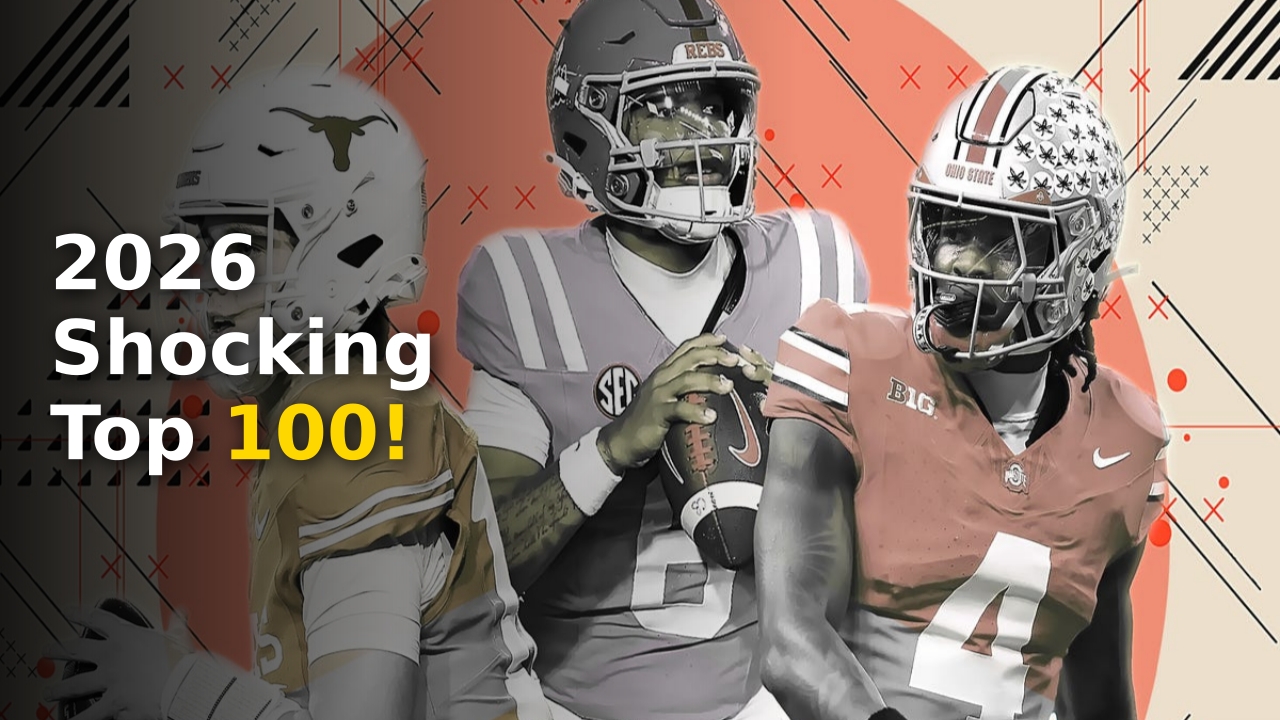
NCAA Stars are the lifeblood of the autumn season, and you are currently witnessing a seismic shift in how talent is evaluated on the collegiate gridiron. The latest release of the USA TODAY Sports Top 100 players for 2026 has sent shockwaves through locker rooms and fan bases alike, proving that yesterday’s benchwarmer is tomorrow’s Heisman Trophy winner. You only need to look at the meteoric rise of Fernando Mendoza to understand that the hierarchy of college football is more volatile than a fourth-quarter comeback.
The era of the predictable superstar is fading, replaced by a transfer-portal-fueled ecosystem where a single coaching change or a thumb injury can redefine a player’s entire professional trajectory. As you dive into these rankings, remember that these 100 names represent the elite 1% of the sport, yet even this list is far from a settled science. From the Manning family legacy in Austin to the defensive stalwarts in Norman, the landscape is shifting under our feet.
This year’s list isn’t just about raw stats; it’s about projected NFL draft stock, historical production, and the sheer ‘it factor’ that separates the good from the legendary. Whether you are a die-hard alum or a casual Saturday viewer, these players will dictate the headlines for the next twelve months. Let’s break down the chaos, the snubs, and the undeniable talent of these NCAA Stars.
NCAA Stars Dominating the 2026 Preseason Landscape
The conversation surrounding NCAA Stars starts and ends with the quarterback position, but the 2026 rankings show a surprising depth across the offensive line and secondary. You might recall how Fernando Mendoza went from a backup at Cal to the Heisman winner at Indiana, a journey that epitomizes the modern game. This volatility is exactly why the preseason Top 100 is so contentious; it attempts to bottle lightning before the storm even begins. The 2026 season promises to be a showcase of established veterans and sophomore sensations who are skipping the traditional learning curve.
One of the most intriguing aspects of this year’s rankings is the absence of true freshmen, despite the undeniable talent of players like Miami’s Jackson Cantwell. The committee focused instead on players with a proven track record or clear NFL potential, ensuring that the list remains a benchmark for professional scouts. You see this reflected in the inclusion of offensive guards like Tengesdahl from Cincinnati, who rarely receive such national accolades. His 89.7 run-blocking grade is a testament to the fact that the ‘trenches’ are finally getting their due in the national spotlight.
The transfer portal continues to be the great equalizer for these athletes. Look at Brown, who followed his coach from South Florida to Auburn, or Smothers, who transitioned from Oklahoma to NC State and finally to Texas. These moves are strategic plays to maximize exposure and NIL opportunities, proving that the modern athlete is as much a businessman as they are a ballplayer. When you analyze these moves, you realize that talent is no longer geographic; it is mobile and highly sought after by the highest bidders in the Power Four conferences.
Furthermore, the rankings highlight the importance of systems. Indiana’s sudden emergence as a quarterback factory under their offensive regime has turned the Hoosiers into a destination for elite passers like Hoover, who aims to fill Mendoza’s massive shoes. The synergy between a player’s skill set and a coordinator’s vision is often the difference between a top-10 ranking and being left off the list entirely. You can’t ignore the coaching factor when projecting who will actually live up to the hype once the whistle blows in late August.
In the SEC, the stakes are even higher, with players like Rhodes Jr. from Arkansas proving that you can be an elite prospect even on a struggling team. His 6-6 frame and eight sacks from last season make him a prototypical NFL edge rusher, reminding us that individual brilliance often transcends team win-loss records. As you scan the Top 100, notice how many of these athletes are multi-year starters, bringing a level of veteran savvy that was once rare in the age of early NFL departures.
Finally, the list serves as a reminder that the ‘walk-on’ dream is still very much alive in the hearts of these NCAA Stars. Bishop at Tennessee and Mestemaker at Oklahoma State both started their careers without scholarships, only to become some of the most prolific producers in the country. Their presence on this list is a psychological trigger for every underdog in the nation, proving that grit and determination are just as valuable as a five-star recruiting profile. You simply cannot quantify the heart of a player who has fought from the bottom to the very top.
The Quarterback Evolution
- Arch Manning (Texas): The most famous name in football is finally the face of the Longhorns, bringing a balanced attack of passing precision and sneaky mobility.
- Julian Sayin (Ohio State): After a third-place Heisman finish, his 77% completion rate makes him the most efficient distributor in the nation.
- Dante Moore (Oregon): Choosing to stay in college over the NFL, Moore’s 6-3 frame and 3,500-yard season place him at the top of many draft boards.
- Stockton (Georgia): A steady hand for the Bulldogs who limits mistakes and thrives in high-pressure SEC environments.

The High-Stakes Heisman Chase for 2026
When you talk about the Heisman Trophy, the name Jeremiah Smith must be at the top of your list. The Ohio State receiver has been a generational talent since he stepped onto campus, and his back-to-back 1,000-yard seasons are just the tip of the iceberg. Paired with Julian Sayin, Smith is poised to become the rare wideout who takes home the stiff-arm trophy, especially if he continues his trend of double-digit touchdowns. His size, at 6-3, makes him a mismatch for every secondary in the Big Ten, and his technical proficiency is already at an NFL level.
However, the competition is fierce, and Arch Manning is the primary challenger for the crown. The Longhorns’ quarterback showed immense growth during his first year as a starter, and with a supporting cast that includes transfers like Coleman from Auburn, Manning has all the tools to lead Texas to a national title. The narrative of the Manning legacy is a powerful psychological trigger for voters, but Arch has proven he has the arm talent and the rushing ability to win on his own merits. You are looking at a player who could define an entire era of Texas football.
Don’t sleep on the ‘Houdini’ of the backfield, Chambliss from Ole Miss. Thrust into the starting role due to injury, he never looked back, leading the Rebels to the CFP semifinals with nearly 4,000 passing yards and 500 rushing yards. His dual-threat capability makes him a nightmare for defensive coordinators, and Lane Kiffin’s system is designed to maximize his explosive playmaking. If Ole Miss remains a top-five team throughout the season, Chambliss will likely be standing in New York City in December.
In the ACC, Darian Mensah is the name on everyone’s lips after his move to Miami. As the reigning ACC Offensive Player of the Year from his time at Duke, Mensah now has the weapons of a championship-caliber roster at his disposal. Throwing to Malachi Toney and Mark Fletcher Jr., Mensah could easily surpass his 3,900-yard mark from a year ago. The ‘U’ is looking for its first Heisman since the early 2000s, and Mensah represents their best chance in decades to reclaim national relevance.
Defensive players rarely win the Heisman, but Colin Simmons from Texas and Moore from Notre Dame are the types of athletes who could break the mold. Simmons, with 21 career sacks in just two seasons, is the most feared pass rusher in the country. If he can replicate his late-season dominance from 2025, where he tallied five sacks in five games, he will be impossible to ignore. Meanwhile, Moore’s five interceptions and All-American status at Notre Dame make him the gold standard for defensive backs.
Ultimately, the Heisman race is about moments, and the 2026 season is packed with high-profile matchups that will serve as the perfect stage. Whether it is a game-winning drive by Stockton in Athens or a record-breaking performance by Hardy (if he returns to full health), the winner will be the player who thrives when the lights are brightest. You can feel the tension building already as these athletes prepare for a season that will immortalize one of them in college football history.
Statistical Breakdown of Top Tier Talent
To truly understand the dominance of these athletes, one must look at the cold, hard numbers that define their careers. The gap between a Top 10 player and the rest of the field is often found in the advanced analytics—pressures created, yards after contact, and completion percentage under pressure. For instance, Lubin from Louisville wasn’t just a sack specialist; he led the nation with 64 quarterback pressures, a metric that scouts value more than raw sack totals. This type of production is what moves a player from a Day 3 draft pick to a first-round lock.
The rushing game has also seen a resurgence, with players like Lacy from Ole Miss carrying a workload that would break most humans. His 306 carries led the country, proving that the ‘bell-cow’ back isn’t extinct yet. Similarly, Hawkins at Oklahoma State set an NCAA freshman record with 25 rushing touchdowns, a feat that seems almost impossible in the modern era of shared backfields. These statistics provide a clear picture of who can be trusted when the game is on the line and the offense needs to churn out clock.
On the perimeter, the numbers for Malachi Toney are staggering, especially considering he played his freshman season at 17 years old. With over 100 catches and 1,200 yards, his production rivals that of seasoned seniors. This efficiency is a hallmark of the 2026 class, where young players are arriving on campus more physically and mentally prepared than ever before. You can see the influence of specialized training and 7-on-7 circuits in the way these receivers handle complex coverage schemes.
The defensive side of the ball is equally impressive, with Smith from Minnesota leading the Big Ten with 12.5 sacks. His 6-6, 285-pound frame allows him to overpower tackles while maintaining the speed to chase down mobile quarterbacks. In the secondary, Pollock from Texas Tech and Brown from Alabama have turned the ‘no-fly zone’ into a reality, combining for double-digit interceptions. These players don’t just stop drives; they flip the field and create scoring opportunities for their offenses, as evidenced by Brown’s multiple pick-sixes in high-stakes playoff games.
| Player Name | Position | 2025 Key Statistic | 2026 Projection |
|---|---|---|---|
| Jeremiah Smith | WR | 1,211 Yards | Biletnikoff Winner |
| Arch Manning | QB | 36 Total TDs | Heisman Finalist |
| Colin Simmons | EDGE | 12 Sacks | SEC Def. Player of Year |
| Darian Mensah | QB | 3,973 Pass Yards | CFP Lead Seed |

The Impact of Coaching and Transfer Culture
You cannot discuss NCAA Stars in the current era without acknowledging the massive influence of coaching stability and the transfer portal. The movement of Umanmielen from Nebraska to Ole Miss and then to LSU is a prime example of how elite players are searching for the perfect defensive scheme to highlight their talents for NFL scouts. Lane Kiffin has perfected the ‘portal-first’ mentality, but Brian Kelly at LSU is now reaping those rewards. This constant shuffling means that team chemistry is harder to build, but raw talent is more concentrated than ever before.
Coaching changes at major programs like UCLA and Texas A&M have also shifted the power dynamics of the Top 100. Knight following Bob Chesney from James Madison to UCLA shows the loyalty players have to the mentors who helped them break out. Despite being undersized, Knight’s 1,300-yard season proves that a familiar system can overcome physical limitations. Similarly, Craver at Texas A&M is expected to flourish under a new passing attack that prioritizes his explosive speed. These coach-player relationships are the invisible threads that hold these rankings together.
The ‘Indiana Renaissance’ is perhaps the most shocking story in recent years. By recruiting transfers like Marsh from Michigan State and Hoover from TCU, the Hoosiers have transformed from a Big Ten bottom-feeder into a destination for elite offensive talent. Their offensive line, anchored by Smith, is now one of the most respected units in the country. This proves that with the right leadership and a smart transfer strategy, any program can produce NCAA Stars who compete on a national stage.
However, there is a downside to this culture. The pressure to perform immediately is immense, and players who don’t see the field right away are quick to look for new opportunities. This has led to a lack of depth at some traditional powerhouses, as second-stringers opt to start at mid-tier schools rather than wait their turn. For the fans, it means you need a program to keep track of your own team’s roster from week to week. For the players, it means every game is an audition for the next step in their career, whether that’s the NFL or a better NIL deal.
Despite the chaos, some programs like Georgia and Ohio State have managed to maintain a core of homegrown talent. Bolden at Georgia and Sayin at Ohio State represent the traditional path—enrolling, developing, and eventually dominating. These schools use the portal sparingly, choosing instead to build through elite high school recruiting. This balance between ‘old school’ development and ‘new school’ acquisition is what separates the championship contenders from the one-year wonders. You can see this reflected in the consistent presence of Bulldogs and Buckeyes at the top of the list.
Ultimately, the 2026 season will be a test of which philosophy wins out. Will it be the assembled ‘Super Teams’ built through the portal, or the established programs with deep-rooted systems? As you watch these athletes compete, remember that their journey to the Top 100 was likely paved with difficult decisions and multiple zip codes. The modern player is an island, and the coaches are just trying to navigate the choppy waters of the new collegiate economy.
Defensive Dominance and the 2027 Draft Outlook
While the Heisman conversation is dominated by quarterbacks, the 2027 NFL Draft will likely be defined by the defensive NCAA Stars currently patrolling the collegiate ranks. Moore from Notre Dame is already being touted as a top-five lock, thanks to his ability to play both corner and safety with equal proficiency. His unanimous All-American nod wasn’t just about stats; it was about his ability to erase an entire side of the field. Scouts compare his instinct to that of legendary defensive backs, and another dominant season will only solidify his status.
In the trenches, Uiagalelei at Oregon continues to be a nightmare for left tackles. With 18.5 career sacks, he possesses the rare combination of a quick first step and the power to bull-rush through 300-pound linemen. Even when his sack totals dipped slightly last season, his ‘pressure rate’ remained among the highest in the country, forcing quarterbacks into bad decisions that led to turnovers. He is the anchor of an Oregon defense that many expect to carry the Ducks deep into the College Football Playoff. You should keep a close eye on his matchup against elite Big Ten tackles this fall.
Oklahoma’s defense, led by Lewis, is another unit that scouts are watching with intense interest. Lewis has a knack for the ‘big play,’ including pick-sixes and late-game sacks against top-tier SEC competition. Under Brent Venables, Lewis has developed into a versatile linebacker who can blitz, cover tight ends, and lead the team in tackles. His veteran presence is invaluable for a Sooners team looking to make a statement in their new conference. He represents the kind of ‘glue guy’ that every NFL roster desperately needs.
Down in Tuscaloosa, Hubbard has emerged as the next great Alabama safety. A former high school quarterback, he sees the field differently than most defenders, allowing him to jump routes and force fumbles with uncanny timing. His 79 tackles and four interceptions in 2025 are elite numbers for a defensive back, and his leadership in the secondary is a major reason why Alabama remains a top-tier defensive unit. According to ESPN, Hubbard is currently the highest-rated safety prospect for his class.
The Big 12 also features elite defensive talent in the form of Roberts at Texas Tech. Filling the shoes of a legend is never easy, but Roberts’ 90 tackles and four interceptions suggest he is more than up to the task. He is the heart of a Red Raiders defense that surprised many last season with its toughness and discipline. If Roberts can lead the Big 12 in tackles for a second consecutive year, he will likely find himself in the conversation for the Butkus Award, given to the nation’s best linebacker.
As you look ahead to the next few years, it’s clear that the defensive side of the ball is undergoing a revolution of its own. Players are becoming more specialized, with ‘star’ positions and hybrid roles becoming the norm. The NCAA Stars on this list are the ones who have mastered these complex roles, proving they have the mental acuity to match their physical gifts. For more insights into the lives of these elite athletes, you can visit Bright Celebrity for the latest updates on their off-field lives and NIL successes.
The Final Verdict on 2026 NCAA Stars
As the dust settles on the preseason rankings, the reality of the 2026 season begins to take shape. You have seen how names like Arch Manning and Jeremiah Smith carry the weight of expectation, while dark horses like Fernando Mendoza prove that the rankings are merely a starting point. These NCAA Stars are more than just numbers on a screen; they are the result of years of sacrifice, strategic transfers, and elite coaching. The Top 100 list serves as a roadmap for the season, but the true legends will be forged in the heat of conference play and the pressure of the playoffs.
Expect the unexpected as you follow these athletes through the autumn months. A single injury can derail a Heisman campaign, and a single breakout performance can turn a three-star recruit into a first-round draft pick. The psychological warfare of college football—the home-field advantages, the rivalry trophies, and the national spotlight—will test these players in ways that a preseason list never could. You are in for a front-row seat to the most exciting era of college football yet, where the talent is deeper and the stakes are higher than ever before.
In the end, the 2026 season will be remembered for the players who rose to the occasion when their teams needed them most. Whether it’s Colin Simmons sacking a rival quarterback to clinch a win or Darian Mensah leading a game-winning drive in the rain, these are the moments that define NCAA Stars. As you fill out your watchlists and set your Saturday schedules, keep these 100 names in mind. They are the architects of the next great chapter in the history of the gridiron, and you won’t want to miss a single play of the action.
College football is a sport of passion and unpredictability, and the 2026 class embodies that spirit perfectly. From the blue-blood programs to the rising mid-majors, the talent is undeniable and the stories are compelling. As the season kicks off, keep an eye on the movers and shakers in the rankings, and remember that today’s Top 100 is just the beginning of the journey toward football immortality. The stage is set, the lights are on, and the stars are ready to shine.
More Like This
For more updates, check out our latest entertainment and sports news.