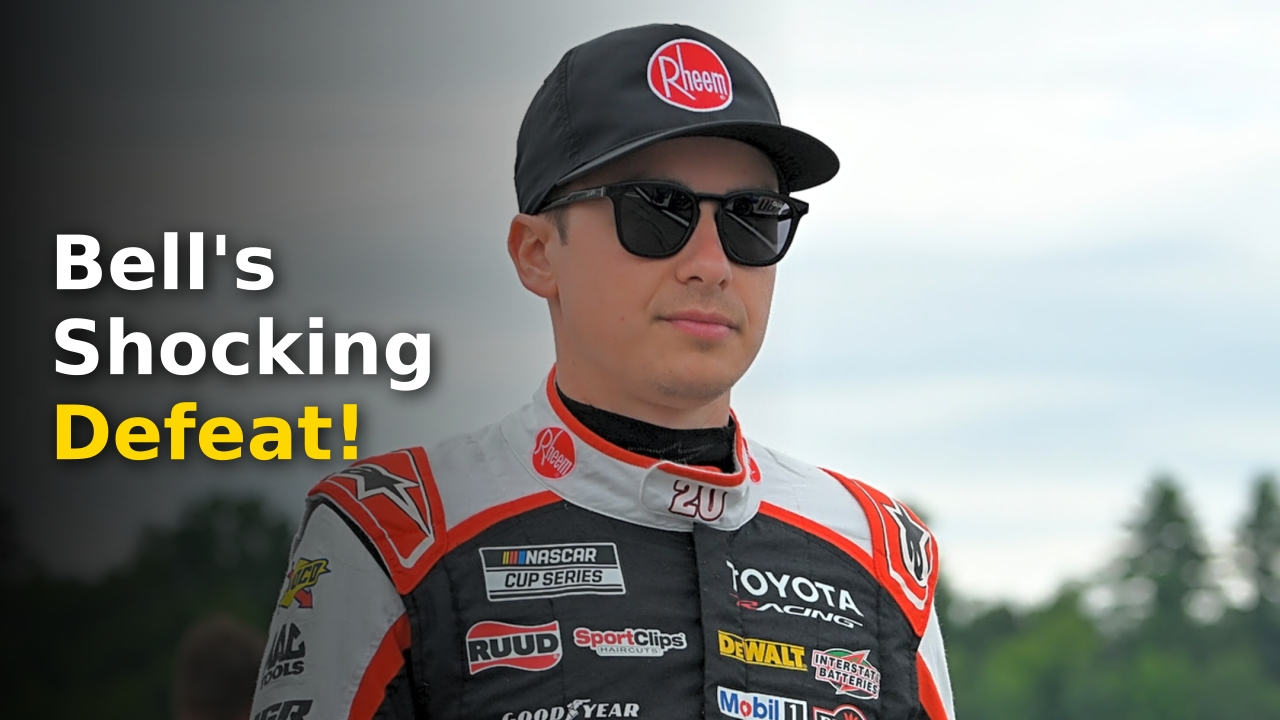
Christopher Bell entered the New Hampshire Motor Speedway as a heavy favorite, yet you saw him struggle to find the terminal velocity required to capture the checkered flag. While the driver of the No. 20 Toyota Camry XSE managed a respectable fourth-place finish, the raw speed needed to dominate the ‘Magic Mile’ was missing when the stakes were highest. Despite his legendary status at this specific oval, Bell’s performance showcased a rare gap in his short-track dominance that left fans and analysts questioning the No. 20 team’s current setup trajectory.
The direct answer to his performance gap lies in a combination of aerodynamic inconsistencies and a critical pit road mishap that forced the team into a recovery mode rather than a leading one. While Christopher Bell showed flashes of brilliance by finishing second in the first stage, his car’s balance shifted as the track rubbered in, leaving him unable to match the long-run pace of Ryan Blaney or the surprising surge from Josh Berry. This fourth-place result, while statistically solid, highlights a concerning 32-race winless streak for one of NASCAR’s most naturally gifted wheelmen as the series barrels toward the playoffs.
Christopher Bell at the Magic Mile
When you think of the New Hampshire Motor Speedway, Christopher Bell is often the first name that comes to mind for modern racing fans. This 1.058-mile asphalt oval requires a specific finesse that Bell, an Oklahoma native with deep dirt-racing roots, has mastered over his career. His ability to manipulate the throttle and find grip where others find wall-contact has earned him two previous victories at this venue, making his lack of winning pace this Sunday particularly jarring.
The No. 20 Joe Gibbs Racing team arrived in Loudon with high expectations, hoping to break a winless slump that has haunted them for nearly a full season. In the early stages of the race, it appeared that the magic was still there as Bell navigated the flat corners with precision. However, as the sun began to bake the track surface, the handling of the Toyota shifted from ‘neutral’ to ‘loose,’ a condition that Christopher Bell struggled to overcome during the final green-flag runs.
History shows that Christopher Bell often finds his rhythm in the second half of the season, but the 2024 campaign has been a test of patience for the entire organization. Joe Gibbs Racing has historically been the gold standard at New Hampshire, often utilizing high-downforce packages that favor Bell’s aggressive entry speed. On Sunday, however, the gap between the Gibbs cars and the Penske Fords was wider than anyone in the Toyota camp anticipated.
Analyzing the performance of Christopher Bell requires looking at the technical evolution of the Gen-7 car, which has leveled the playing field significantly on short tracks. The ‘Magic Mile’ no longer rewards pure horsepower as it once did; instead, it demands a perfect marriage of mechanical grip and aerodynamic stability. For the No. 20 team, that marriage seemed to be going through a rough patch as the race reached its climax under the shifting New Hampshire sky.
You have to consider the psychological toll of being a favorite who cannot find the lead. Christopher Bell noted in his post-race interviews that while the finish was ‘good and solid,’ the lack of winning speed was palpable from the cockpit. This admission is rare for a driver of his caliber, indicating that the team may be searching for answers regarding their short-track aero-shunts and tire wear models as they prepare for the post-season.
Despite the speed deficit, Bell’s fourth-place finish actually bolstered his position in the series standings. He currently sits fifth overall, a testament to his consistency even when the car isn’t the fastest in the field. According to Wikipedia, the championship format rewards this type of grit, but Bell knows that to win a title, he must find a way to outpace the Fords of Penske and the Chevrolets of Hendrick Motorsports.

Analyzing Christopher Bell Pace Metrics
The technical data suggests that Christopher Bell lacked the ‘short-run’ burst necessary to take control of restarts, which were frequent and chaotic during the Sunday afternoon showdown. While his lap times on old tires were competitive, he could not generate the immediate heat required to clear traffic and establish a gap. This forced him into defensive driving maneuvers, rather than the offensive charges he is known for at the New Hampshire Motor Speedway.
During Stage 2, Bell slipped from the front of the pack down to 10th position, a slide that many attributed to a bad set of tires or a miscalculation in air pressure. The No. 20 crew, led by veteran crew chief Adam Stevens, attempted several wedge adjustments to tighten the car up, but the adjustments seemed to delay the inevitable rather than fix the core issue. Christopher Bell fought through these handling woes, proving why he is considered one of the elite talents in the sport today.
Key Performance Indicators
- Stage 1 Result: 2nd Place (Strong initial balance)
- Stage 2 Result: 10th Place (Loss of lateral grip)
- Final Result: 4th Place (Strategic recovery)
- Laps Led: Minimal (Inability to clear the leader)
- Pit Road Rank: 12th (Affected by a late-race mishap)
Another factor to consider is the performance of Bell’s peers within the Toyota TRD family. Bubba Wallace, driving for 23XI Racing, often showed more raw speed in the dirty air than Christopher Bell, suggesting that the setup philosophy between the two teams has diverged significantly. This internal competition within the manufacturer ranks puts additional pressure on the No. 20 team to innovate before the next short-track appearance.
The ‘Magic Mile’ is famous for its long, sweeping corners that demand a car to ‘rotate’ in the center without losing rear-end stability. When Christopher Bell commented on ‘lacking a little bit right now,’ he was likely referring to this specific rotation. If the car doesn’t turn effortlessly, the driver is forced to use more steering input, which kills the front tires and leads to a massive speed drop-off over a 40-lap stint.
For fans following the Christopher Bell narrative, this race was a reminder that even the best in the business have off-days where the equipment doesn’t perfectly match the driver’s intent. You can find more about the lives and earnings of top drivers at Bright Celebrity, where the business of racing meets the glamor of the paddock. Understanding the pressures these athletes face helps contextualize a ‘disappointing’ fourth-place finish.
Pit Road Drama and Recovery
A significant portion of the conversation surrounding Christopher Bell this weekend centered on a mishap during a critical pit stop. NASCAR races are often won or lost in the 14 seconds it takes to change four tires and add fuel, and the No. 20 crew had a rare lapse in execution. A fumbled lug nut cost Bell valuable track position, miring him in the mid-pack during a segment of the race where passing was notoriously difficult.
The resilience shown by Christopher Bell after this setback was nothing short of elite. He did not let the frustration of the pit road error affect his focus, picking off cars one by one as the race wound down. This mental toughness is what separates the championship contenders from the also-rans, and Bell’s ability to ‘persevere and finish about where we should have’ is a silver lining in an otherwise frustrating day.
Crew chief Adam Stevens and Christopher Bell have a rapport that allows for blunt honesty during the race. Over the radio, Bell was clear about the car’s deficiencies, and Stevens was equally transparent about the strategy needed to salvage a top-five. By staying out during a late-race caution while others pitted, they were able to reclaim the track position lost earlier, setting Bell up for his final charge into the fourth spot.
The speed of the pit crew is often a reflection of the team’s overall confidence. While the No. 20 has been one of the fastest on pit road all year, the pressure of the winless streak might be starting to show. For Christopher Bell to succeed in the Chase, he needs a flawless performance from his ‘over-the-wall’ athletes, especially when the car isn’t the fastest one on the property.
Interestingly, Christopher Bell noted that the car felt better in traffic than it did in clean air, a phenomenon that sometimes happens with the current aerodynamic package. This suggests that the team’s simulation data might have been slightly skewed toward a race lead that they never quite captured. Adjusting these simulations will be a top priority as the team heads back to the shop in Huntersville, North Carolina.
In the high-stakes world of NASCAR, every second counts. Christopher Bell knows that his margin for error is shrinking as the regular season finale at Daytona approaches. While he is safe in the points, the lack of playoff points from race wins could be his undoing if he doesn’t find the winner’s circle soon. His perseverance at New Hampshire was a masterclass in damage control, but fans are hungry for a victory celebration.

New Hampshire Race Statistics
To truly understand the gap between Christopher Bell and the leaders, we must look at the hard data from the event. The following table illustrates the performance of the top five finishers and how they compared in terms of manufacturer and lap consistency throughout the afternoon at the Magic Mile. It is clear that while Bell was consistent, he lacked the ‘peak’ speed of the race winner.
| Driver Name | Finish Position | Manufacturer | Laps Led |
|---|---|---|---|
| Ryan Blaney | 1st | Ford | 148 |
| Josh Berry | 2nd | Ford | 32 |
| Bubba Wallace | 3rd | Toyota | 15 |
| Christopher Bell | 4th | Toyota | 2 |
| Kyle Larson | 5th | Chevrolet | 8 |
The stats don’t lie: Ryan Blaney was the dominant force, leading over 40% of the race. For Christopher Bell, leading only two laps is a startling statistic given his history of dominance at this track. This suggests that the No. 20 Toyota was essentially a ‘top-five car’ but never truly a ‘winning car’ on this particular Sunday. The data serves as a wake-up call for the Joe Gibbs Racing engineers as they analyze the telemetry.
Wait, there is more to the story than just lap times. If you look at the green-flag speed averages, Christopher Bell actually ranked 6th overall, meaning his 4th place finish was a result of superior driving and strategy rather than raw mechanical advantage. He maximized his equipment’s potential, which is the hallmark of a veteran driver even if he still feels like a young gun in the garage.
The points battle is also heating up. With his top-five finish, Bell secured his spot in the upper echelon of the standings, but the gap between him and the regular-season championship lead remains significant. To close that gap, Christopher Bell will need to find the winner’s circle before the playoffs begin. The pressure is mounting, and every race without a trophy adds to the weight on his shoulders.
The Road to the Playoffs
As the NASCAR Cup Series moves toward the regular-season finale on August 29th at Daytona International Speedway, the focus for Christopher Bell shifts toward momentum. Daytona is a wild card where anything can happen, and Bell will be trying to hold onto his No. 5 seed in the Chase. The ‘Magic Mile’ was supposed to be his stronghold, and failing to secure a win there means he must look toward other tracks for that much-needed boost.
The winless streak, now sitting at 32 races, is a statistic that Christopher Bell is undoubtedly aware of. While consistency is great, wins are the currency of the playoffs. Each victory provides five crucial playoff points that carry through the rounds, and without them, a driver can be easily eliminated after one bad race in the Round of 16 or Round of 12. Bell’s team needs to find that ‘winning edge’ immediately.
Joe Gibbs Racing has a history of peaking at the right time, and Christopher Bell is the cornerstone of their future. With veterans like Martin Truex Jr. nearing the end of their careers, the mantle of leadership is falling squarely on Bell’s shoulders. His performance at New Hampshire, while not a win, showed the leadership and grit required to carry an organization through a competitive drought.
Looking ahead, the upcoming schedule features several tracks where Christopher Bell has excelled in the past. From the high banks of Bristol to the technical road courses, there are plenty of opportunities for the No. 20 team to rebound. The speed deficit at New Hampshire might just be a blip on the radar, or it could be a sign that the competition has caught up to the Gibbs short-track program.
You can bet that the debrief sessions this week will be intense. Christopher Bell and Adam Stevens will be pouring over every data point to figure out why the car ‘faded’ in the mid-sections of the race. Their ability to diagnose and fix handling issues is legendary in the garage, and few would bet against them finding a solution before the next green flag drops.
Ultimately, the NASCAR season is a marathon, not a sprint. Christopher Bell has proven time and again that he can compete with the best in the world. While New Hampshire didn’t yield a trophy, it provided a valuable lesson in perseverance and a healthy haul of points. For a driver of Bell’s caliber, the next win is always just one perfect setup away.
Christopher Bell Championship Outlook
In summary, the performance of Christopher Bell at New Hampshire was a complex mixture of early promise, mid-race struggle, and late-race recovery. He remains one of the most dangerous drivers in the field, capable of winning on any given Sunday despite the current pace concerns. His 4th place finish is a testament to his skill, but the ‘Magic Mile’ speed gap remains a puzzle that the No. 20 team must solve to ensure a deep playoff run.
The 32-race winless streak is a heavy burden, but Christopher Bell has the temperament to handle the pressure. He isn’t a driver who panics; instead, he doubles down on his preparation and trusts his team to provide the tools he needs. As we head toward Daytona, keep a close eye on the No. 20 Toyota. The speed might have been missing this week, but the heart of a champion is clearly still beating strong.
As you follow the rest of the season, remember that racing is as much about the lows as it is the highs. Christopher Bell is navigating a challenging chapter in his career, but his trajectory remains upward. With the support of Joe Gibbs Racing and his own undeniable talent, the drought will eventually end, likely in spectacular fashion at a track where no one expects it.
Whether it’s the pit road mishaps or the handling woes, every obstacle is an opportunity for growth. Christopher Bell has shown that he can handle the heat of the ‘Magic Mile’ and come out with a top-five. Now, the goal is to turn those top-fives into victories and bring a championship home to Oklahoma. The journey continues, and the racing world is watching every move of the No. 20 team.
Stay tuned for more updates on Christopher Bell and the entire NASCAR Cup Series as the playoffs draw near. The battle for the championship is wide open, and Bell is right in the thick of it. With a little more pace and a bit more luck, he could very well be the one standing on the stage in Phoenix at the end of the year, holding the ultimate prize in American motorsports.
Finally, the resilience of the 20 team is their greatest asset. Christopher Bell may have lacked the pace this time, but his spirit is undeterred. As the series moves forward, the lessons learned at New Hampshire will be the foundation for future success. You won’t want to miss a single lap as this elite driver fights to reclaim his place at the front of the pack.
More Like This
For more updates, check out our latest entertainment and sports news.