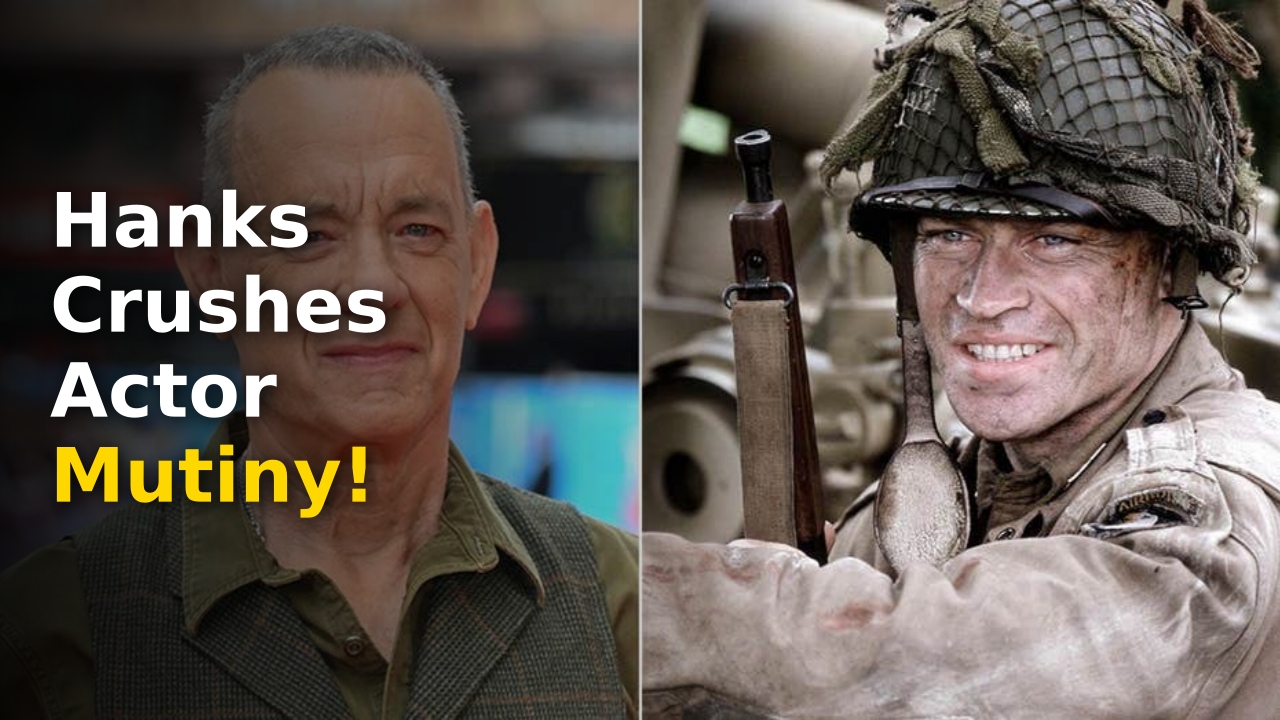
Hanks Mutiny events aren’t exactly what you expect when you sign up for a Hollywood production, but the cast of HBO’s legendary miniseries found out the hard way that war is hell, even on camera. You might think being an actor involves trailers and lattes, but for the stars of Band of Brothers, it meant mud, blood, and a total psychological breakdown. Neal McDonough recently pulled back the curtain on how a group of future A-listers nearly walked off the job before the boss intervened.
You have to understand the pressure these men were under during the year 2000. Executive producers Tom Hanks and Steven Spielberg were coming off the massive success of Saving Private Ryan and wanted to push the boundaries of television. They didn’t just want actors; they wanted soldiers who could breathe the history of the 101st Airborne Division. This commitment to realism led to one of the most grueling pre-production phases in cinematic history.
The intensity of the training was designed to forge a bond that couldn’t be faked. However, five days into a relentless boot camp, the pressure cooker finally exploded. The actors, exhausted and physically battered, reached their breaking point, leading to a confrontation that would define the rest of the production. This was the moment the legend of the Hanks Mutiny was born on the muddy fields of the United Kingdom.
The Massive Hanks Mutiny Revealed
The Hanks Mutiny started when the cast realized that the “boot camp” wasn’t just a marketing gimmick for the press. Under the iron thumb of Dale Dye, a retired Marine Captain, the actors were treated like actual recruits. They were living in damp barracks, eating subpar rations, and performing tactical maneuvers for twenty hours a day. By day five, the “American guys,” as McDonough puts it, were ready to revolt against the military advisor.
Imagine being Damian Lewis or Donnie Wahlberg, accustomed to the comforts of fame, and suddenly finding yourself sleeping in a trench. McDonough recalled that many of the actors felt they hadn’t signed up for actual physical torture. The resentment toward Dale Dye peaked when the group collectively decided they had enough of the screaming and the physical degradation. They wanted out, and they wanted the production to change its methods immediately.
Just as the rebellion reached its fever pitch, a helicopter descended onto the Army base like a scene from a blockbuster movie. Out walked Tom Hanks, but he didn’t look like the clean-cut star from Big. He arrived with his massive beard and wild hair from the filming of Cast Away, looking like a man who had actually been stranded on an island. His presence alone was enough to silence the group of complaining actors.
Hanks didn’t come to offer lattes or apologies for the rough conditions. He gathered the men and delivered a speech that reframed their entire purpose for being there. He reminded them that they weren’t just making a TV show; they were honoring the men of Easy Company who actually died for the freedoms they enjoyed. He told them the least they could do was work their tails off to tell the truth of those heroes.
This reality check worked better than any threat of a lawsuit or firing ever could. McDonough admitted that the cast felt almost “brainwashed” by the gravity of Hanks’ words. They realized that their temporary discomfort was nothing compared to the D-Day landings or the Battle of the Bulge. The mutiny died right then and there on that airfield, replaced by a renewed sense of duty to the veterans.
The shift in mindset was instantaneous and permanent across the entire cast. You can see the result in every frame of the series, where the exhaustion on their faces isn’t makeup—it’s real. The Hanks Mutiny serves as a reminder of how high-stakes storytelling requires more than just talent; it requires a deep, painful commitment to the source material. Without that intervention, the show might never have achieved its status as a cultural touchstone.

Key Figures in the Rebellion
- Neal McDonough: Played the legendary 1st Lt. Lynn “Buck” Compton.
- Dale Dye: The Marine advisor who intentionally became the “common enemy.”
- Damian Lewis: The lead who had to balance the morale of the cast.
- David Schwimmer: Faced significant pressure portraying the unpopular Capt. Sobel.
- Tom Hanks: The executive producer who ended the Hanks Mutiny with a single speech.
Brutal Realism of Easy Company
The dedication to the Hanks Mutiny era of training is why Band of Brothers remains the gold standard for war dramas. When you watch the series today, you are seeing a group of men who actually knew how to move as a tactical unit. They weren’t just holding props; they were carrying weighted gear that caused real injuries. Neal McDonough himself suffered a broken toe and had his teeth smashed during the exercises.
The training wasn’t just about physical fitness; it was about psychological warfare. Dale Dye knew that for these actors to play a “Band of Brothers,” they had to hate someone together. By acting as a tyrant, Dye forced the actors to rely on each other for emotional support. This manufactured animosity toward the instructor created a genuine bond among the actors that lasted for decades after the cameras stopped rolling.
McDonough recalls getting hit in the mouth by a .30 cal during a simulated house envelopment. Blood was pouring down his face, and he turned to his co-star Shane Taylor, who played the medic Doc Roe. In a moment of pure method-acting delirium, McDonough demanded Taylor stitch him up. Taylor famously replied that he was an actor, not a doctor, but the intensity of the moment forced him to perform field first aid anyway.
The injury became so infected that McDonough was eventually ordered to a local hospital in the United Kingdom. In a testament to how deep the training went, he refused to give his real name to the medical staff. He checked in as “Lynn Compton,” his character’s name, because he wanted the military report to reflect the reality of the unit. This level of immersion is almost unheard of in modern television production.
When McDonough returned to the barracks at 4:00 AM with his hospital paperwork signed as Compton, Dale Dye was waiting for him. Seeing the actor’s commitment to his role brought the hardened Marine to tears. This interaction solidified the respect between the “knucklehead actors” and the military advisors. It was no longer about a paycheck; it was about the legacy of the 506th Parachute Infantry Regiment.
Even future superstars like Tom Hardy and Michael Fassbender were subjected to these conditions in smaller roles. They were all part of a machine that demanded total submission to the historical narrative. If you look at the archives on Wikipedia, you will see the massive scale of the production that required this level of discipline. The Hanks Mutiny was the final hurdle before they could capture the true essence of WWII.
Detailed Production and Cast Data
To understand the scope of the project that nearly led to the Hanks Mutiny, you have to look at the numbers. This wasn’t just a television show; it was a massive financial and creative undertaking. The budget was unprecedented for the time, and the cast was one of the largest ever assembled for a single narrative arc. You can find more deep dives into these production secrets on leading celebrity news platforms that track television history.
| Category | Detail | Impact |
|---|---|---|
| Total Budget | $125 Million | Highest for a miniseries at the time |
| Filming Duration | 8 to 10 Months | Exhaustive schedule for the main cast |
| Boot Camp Length | 14 Days | Led to the infamous Hanks Mutiny |
| Emmy Awards | 7 Wins | Validated the intense realism of the show |
| Main Cast Size | Over 50 Speaking Roles | Launched dozens of Hollywood careers |
The scale of the production meant that any delay caused by a Hanks Mutiny could have cost the studio millions. This is why Tom Hanks took the situation so seriously. He wasn’t just managing actors; he was managing a massive logistical operation that involved vintage aircraft, period-accurate weaponry, and thousands of extras. The stakes were incredibly high for everyone involved, from the producers to the lowest-ranking background actor.
McDonough notes that the show has become even more popular in the 25 years since its release. It is frequently cited as the greatest miniseries ever made, beating out modern heavyweights. This longevity is attributed directly to the authenticity that the actors fought against during those first few days of training. Their physical pain translated into a timeless performance that continues to resonate with veterans and civilians alike.
Neal McDonough Sustains Serious Injury
You might think Neal McDonough is just another tough guy on screen, but his experience during the Hanks Mutiny era proved he is built differently. Getting your teeth smashed by a heavy weapon is enough to make most people quit, but McDonough used the pain to fuel his portrayal of Buck Compton. His commitment was so deep that it actually worried the military advisors who were supposed to be the “tough” guys on set.
The actor’s decision to seek medical help while in character is one of those legendary Hollywood stories that usually gets exaggerated over time. However, in this case, the facts remain consistent. He was so “gung ho” after the Tom Hanks speech that he viewed himself as a soldier first and an actor second. This blurring of lines is exactly what Steven Spielberg and Tom Hanks were hoping for when they greenlit the project.

McDonough’s relationship with the real Buck Compton also added a layer of responsibility. He met the veteran before filming and they remained close friends until Compton’s death in 2012. Knowing the man he was portraying made the physical hardships of the boot camp seem trivial. McDonough even named his son “Little Buck” in honor of the war hero, showing just how much the project impacted his personal life.
The injury wasn’t the only life-changing event during the production. McDonough also met his wife, Ruvé Robertson, while filming in the United Kingdom. He famously met her on St. Patrick’s Day in 2000, and they have been together ever since. It’s ironic that a production defined by war and a Hanks Mutiny would lead to the most stable and loving part of his life.
He often reflects on how fortunate he was to be cast in the show. He was just a “lughead actor” at the time, but the experience transformed his career and his worldview. The discipline he learned from Dale Dye and the perspective he gained from Tom Hanks helped him navigate the ups and downs of a notoriously difficult industry. For McDonough, Band of Brothers was more than a job; it was a rebirth.
The actor has since gone on to star in Yellowstone and Minority Report, but he always returns to the lessons of the boot camp. He credits the intensity of those months for his ability to handle any challenge on a modern set. The Hanks Mutiny wasn’t just a conflict; it was the crucible that forged some of the most reliable actors in the business today.
Legacy of the Greatest Miniseries
Why does Band of Brothers still dominate the conversation? You can point to the writing or the directing, but the core reason is the authenticity born from the Hanks Mutiny struggle. The show didn’t sanitize war. It showed the boredom, the terror, and the petty internal conflicts of men pushed to the edge. This wasn’t a superhero story; it was a human story told with visceral detail.
The series also benefited from the involvement of the actual veterans. Each episode began with interviews with the real men of Easy Company, which kept the actors grounded. They knew that if they gave a lazy performance, they would have to answer to the men who actually lived through the Siege of Bastogne. This created a level of accountability that is rarely seen in entertainment.
As we look back 25 years later, the impact on the cast is undeniable. Tom Hardy was just a young man when he appeared in the series, and yet you can see the seeds of his future intensity in those early scenes. The same goes for Michael Fassbender and James McAvoy. The show acted as a masterclass for an entire generation of performers who were all shaped by the same brutal boot camp.
The production also set a new standard for technical accuracy. From the way the soldiers held their M1 Garand rifles to the specific jargon they used, everything was vetted by Dale Dye. This meticulousness was what the actors initially rebelled against, but it is ultimately what they became most proud of. They realized that the Hanks Mutiny was just a symptom of their own growth into the roles.
Today, the miniseries is used in leadership courses and history classes. It has transcended its status as entertainment to become a tool for understanding the American experience in WWII. The story of the Hanks Mutiny only adds to the mystique, proving that greatness often requires a moment of total breakdown before a breakthrough can occur.
You can see the influence of Band of Brothers in every war movie that followed. From The Pacific to Masters of the Air, the template remains the same: find the truth through hardship. The actors who survived that boot camp in 2000 are now the veterans of the industry, carrying the lessons of Easy Company into every project they touch.
Final Lessons from the Hanks Mutiny
The Hanks Mutiny serves as a powerful reminder that the best work often comes from the most difficult circumstances. When Tom Hanks stepped off that helicopter, he didn’t just save a production; he saved the integrity of the story. He taught a group of young men that their egos were secondary to the mission of honoring the past. This is a lesson that applies far beyond the world of Hollywood.
Neal McDonough’s willingness to share these stories highlights the human side of legendary productions. We often see the finished product and forget the blood and sweat that went into every frame. The dental injuries, the broken toes, and the near-rebellions are all part of the fabric of Band of Brothers. It’s a testament to the vision of Hanks and Spielberg that they never wavered in their demand for excellence.
If you ever find yourself facing a daunting task, remember the Hanks Mutiny. Remember that even the most successful people in the world face moments of doubt and rebellion. The difference is how you handle the intervention. By choosing to listen to the truth and refocus on the mission, the cast of Band of Brothers turned a potential disaster into a timeless masterpiece.
The show remains a beacon of quality in an era of disposable content. It reminds us that some stories are worth suffering for. As the veterans of Easy Company slowly fade into history, the work of these actors ensures that their names and their sacrifices will never be forgotten. That is the true victory of the Hanks Mutiny and the men who fought through it.
Ultimately, the bond between the actors became as real as the bond between the soldiers. They went through hell together, and they came out the other side as a unit. This is the enduring power of Band of Brothers, and why we will still be talking about it another 25 years from now. You can’t fake that kind of chemistry; you have to earn it through the fire of boot camp and the wisdom of a leader who knows what’s at stake.
The Hanks Mutiny is no longer a secret of the set—it is a badge of honor for everyone who stayed. It proved that Tom Hanks was right all along. They owed it to the heroes to work their hardest. And because they did, they gave the world a piece of history that will live forever. You don’t get that kind of results without a little mutiny along the way.
More Like This
For more updates, check out our latest entertainment and sports news.