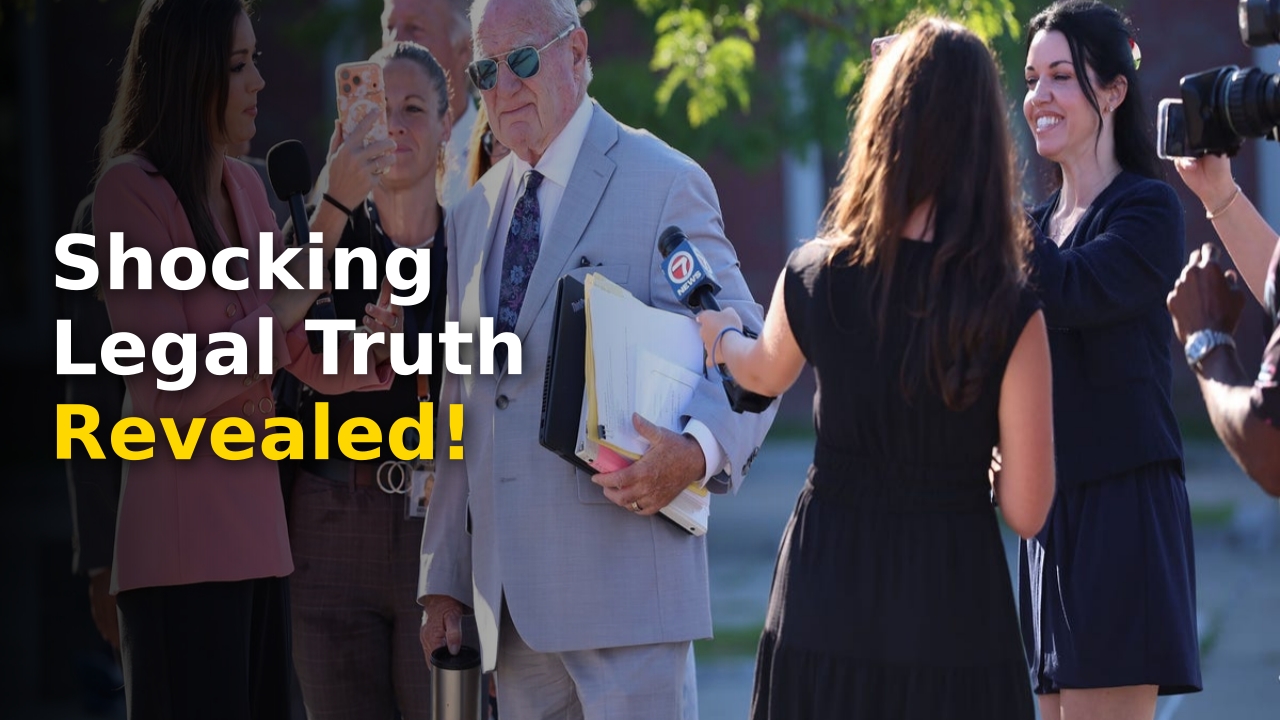
Kevin Reddington is the man currently at the center of a national media firestorm, as his tactical brilliance in the Lindsay Clancy defense trial has catapulted him into the spotlight of a new digital age. You have likely seen his face circulating on social media, where this motorcycle-riding, plain-speaking attorney has become an unlikely icon for millions of trial-watchers across the United States. In an era where courtrooms are now televised and scrutinized on TikTok and Instagram, his ability to simplify complex psychological arguments has transformed him from a veteran Massachusetts lawyer into a household name.
While the case itself involves the harrowing tragedy of a mother accused of killing her three small children, the public fascination with Reddington’s legal maneuvers is unprecedented. He operates with an old-school charm, yet he navigates the contemporary court of public opinion with a level of ease that even the most seasoned digital-native publicists might envy. Whether you sympathize with his client or not, you cannot ignore the raw impact of his courtroom performance.
The Kevin Reddington Phenomenon Revealed
For decades, Kevin Reddington has quietly navigated the gritty world of high-stakes criminal defense. At 75, he doesn’t just represent his clients; he embodies their struggles, often literally holding their hands as graphic, heart-wrenching testimony fills the courtroom. This human-centric approach is what separates him from the traditional image of a cold, calculated defense attorney.
His career is defined by a series of notable, often controversial cases that have tested the limits of the American judicial system. From representing Boston Red Sox star Mo Vaughn in 1998 to the complex legal web involving James “Whitey” Bulger’s girlfriend Catherine Greig, he has seen it all. These experiences have forged a lawyer who is not easily rattled by intense media pressure or aggressive prosecutorial tactics.
What truly sets him apart in the Lindsay Clancy trial is his ability to distill the complex nature of postpartum psychosis into something a jury can grasp. Legal experts, such as Martin Weinberg, have compared his expertise to that of a specialized surgeon. When you are facing the ultimate test of your life, you don’t want a novice; you want the veteran who has walked this path hundreds of times before.
His aesthetic outside the courtroom adds another layer to his mythos. A well-circulated photo of him riding a Harley-Davidson, wearing leather and displaying an arm tattoo, creates a stark contrast to his presence in the courtroom. It suggests a man who is unapologetically himself, refusing to conform to the polished, sterilized expectations often placed on legal professionals.
You might wonder if this stardom is distracting, but those close to the trial suggest the opposite. The memes and videos circulating online have actually helped humanize the defendant, potentially softening the perspective of jurors who are exposed to the same digital landscape as the rest of the world. He has mastered the art of being both a legal warrior and a relatable figure.
For those interested in the broader impact of celebrity legal figures, you can read more at current legal news trends. His career trajectory proves that the law is not just about statues and codes; it is about narrative, humanity, and the ability to connect with people on a deeply visceral level.

Understanding the Legal Strategy
- Focusing on mental condition defenses when dealing with homicide charges.
- Utilizing plain-spoken language to simplify complex psychological testimony.
- Humanizing the client through constant, supportive physical gestures.
- Contrasting the defense narrative against the prosecution’s often rigid tone.
Key Legal Milestones and Historical Data
To understand why he is so effective, one must look at the specific wins and losses that shaped his philosophy over the last 35 years. His acquittal of Therese Rogers remains a cornerstone of his reputation, proving his capability to handle cases involving severe PTSD and mental health crises. This win wasn’t just a verdict; it was a career-defining moment that opened the doors to the elite American College of Trial Lawyers.
However, his record is not spotless, which is a testament to the reality of the criminal justice system. When representing Michael “Mucko” McDermott, he attempted an insanity defense that ultimately failed to persuade the jury. This reality makes his current work with Lindsay Clancy even more compelling to watch. He knows the sting of defeat, and that knowledge informs every question he asks a witness today.
The current climate of the courtroom has seen dramatic shifts, particularly during the testimony of Susan Clancy. When prosecutor Shanan Buckingham introduced the concept of religion and mortal sin into the proceedings, the room reacted with a visceral shock. Reddington’s ability to remain calm and steer the conversation back to his client’s psychological state during that moment was pivotal.
Supporters outside the courthouse often cheer for him, shouting words of encouragement for Lindsay Clancy. He acknowledges them with a humility that contrasts sharply with his formidable courtroom presence. He has clearly stated that he has no plans for retirement, finding a genuine purpose in the work he does.
His approach is a referendum on how we view postpartum health in the justice system. By presenting evidence of her role as a mother, he forces the jury to reconcile the image of a loving parent with the horrific actions of a person in the throes of a mental health crisis. This is the ultimate test of his career-long mission to provide a voice for those who cannot speak for themselves.
You can find more detailed archives regarding high-profile trials at Reuters, which tracks the evolution of landmark judicial decisions. The integration of technology in modern trials, like the use of large poster boards for evidence, shows that he is willing to adapt his tried-and-true methods for a 2026 jury.
| Case Name | Year | Legal Outcome |
|---|---|---|
| Therese Rogers | 1990 | Acquittal (Insanity) |
| Mo Vaughn | 1998 | Acquittal |
| Catherine Greig | 2012 | Guilty Plea |
| Michael McDermott | 2000 | Conviction |
The Future of Courtroom Advocacy
As the trial nears its conclusion, the focus shifts to the jury’s final deliberations. The impact of Reddington’s presence has been felt far beyond the physical courtroom walls, influencing public perception and potentially setting a precedent for how mental health cases are defended in the future. His career is a roadmap of resilience and tactical ingenuity.
We are watching a master at work, one who understands the nuance of communication better than almost anyone else in his field. By using the ‘7 C’s’ of communication—clear, concise, concrete, correct, coherent, complete, and courteous—he has built a defense that resonates with both the jury and the public. Whether or not he wins, his impact on the legal landscape is undeniable.
If you have been following the trial closely, you understand why his name keeps popping up in trending searches. It is not just about the fame; it is about the substance. Kevin Reddington represents the last of a dying breed of trial lawyers who combine street-smart intuition with deep legal strategy, and his work in the Lindsay Clancy trial is likely to be studied for years to come.
The defense of Lindsay Clancy has become more than just a trial; it is a cultural moment that challenges our collective empathy and our understanding of human fragility. You are witnessing a legacy being solidified in real-time, as an attorney who spent decades in the trenches finds himself under the brightest lights of his life.
Regardless of the final verdict, his journey from a motorcycle-riding private practitioner to a nationally recognized figure of the defense bar is a story of grit and unwavering conviction. You have seen how Kevin Reddington manages to navigate these tumultuous waters, ensuring that every piece of evidence, every witness statement, and every emotional appeal is delivered with precision.
As we wait for the final outcome, we can reflect on the lessons he has taught us about the power of advocacy. In a world that often demands quick judgment, he asks us to pause, to look closer, and to consider the unseen forces of human psychology that drive our most tragic moments. Ultimately, his career remains a testament to the fact that everyone, regardless of their actions, deserves a dedicated defense.
More Like This
For more updates, check out our latest entertainment and sports news.