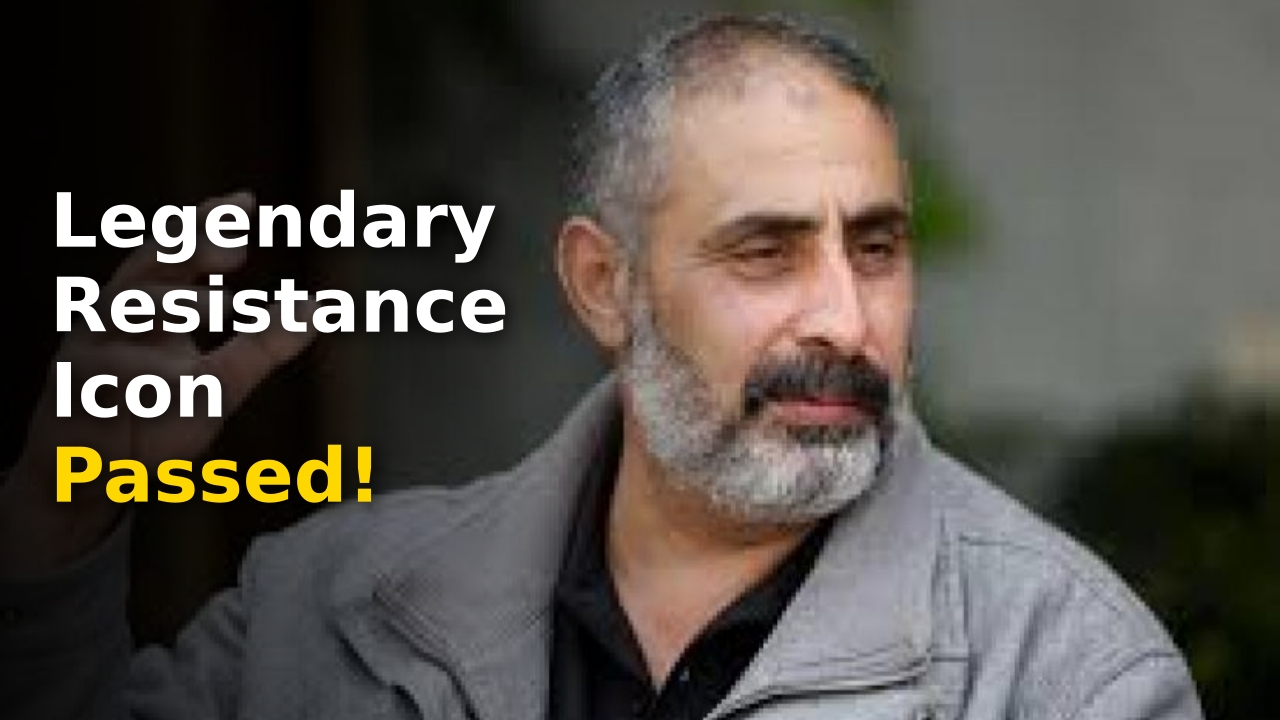
Did you know that some leaders become global symbols of defiance not by seeking power, but through sheer survival and tragedy? The sudden passing of Abu Raad, born Fathi Khazem, has sent shockwaves across the West Bank as a defining symbol of Palestinian resistance. For years, this resilient father captured the hearts of millions by standing tall against relentless military operations and immense personal loss. As the geopolitical landscape shifts rapidly, his departure marks the end of an era and the beginning of an unpredictable new chapter. You must understand the deep psychological impact his journey leaves on the collective memory of Palestine.
Abu Raad and Legendary Resistance
The Genesis of Defiance
Abu Raad did not choose a life of constant evasion; it chose him. Rising from the crowded streets of the Jenin Refugee Camp, he became a prominent figure in local security circles. His early life was defined by the harsh realities of military occupation and the constant struggle for basic human rights. Over the years, his influence grew far beyond his official military rank within the Palestinian Authority forces. He transitioned into a spiritual and community anchor for disillusioned youth who felt completely abandoned by mainstream political systems. His words carried immense weight because he lived the exact pain he spoke about daily.
The Price of Leadership
To understand his historic journey, you must look at the massive personal sacrifices he endured. His sons, Raad Khazem and Abdrgman Khazem, became central figures in the active armed struggle. Their high-profile actions made the entire household a primary target for specialized elite units. Following major security incidents in Tel Aviv in April 2022, the pressure on the family escalated to unprecedented levels. Houses were demolished, family members were detained, and survival became a daily miracle. Yet, through every raid, he refused to break or abandon his community, choosing the dangerous path of a fugitive.
Evasion and Survival Tactics
Living on the run in the northern West Bank requires incredible support networks and sharp instincts. Abu Raad spent years sleeping in secret locations, avoiding all digital communication to bypass tracking systems. He relied entirely on trusted couriers and the tight-knit solidarity of local villagers. This level of survival turned him into a living legend, frustrating intelligence agencies for months. His ability to remain visible yet untouched boosted the morale of a population desperate for strong role models. His survival was seen not just as a personal victory, but as a collective act of resistance.

The Battle of Jenin
A Symbol of Resilience
The Jenin Refugee Camp remains the beating heart of armed resistance in the northern West Bank. This densely populated square kilometer has withstood dozens of massive military incursions over three decades. You cannot talk about this area without mentioning how local brigades organized defense networks. They utilized improvised explosive devices and strategic surveillance to defend their territory. During these intense standoffs, Abu Raad served as a vital unifying voice. He bridged ideological gaps between various factions, including Fatah, Hamas, and Islamic Jihad.
The Strategy of Attrition
Military analysts often study how small, poorly equipped groups hold off advanced armies. The resistance in Jenin relies heavily on intimate knowledge of the labyrinthine alleyways. High-tech drones and armored bulldozers are constantly deployed to dismantle this infrastructure. The physical destruction of roads and water networks is a common tactic to pressure civilians. Despite the immense pressure, the local population continues to offer deep logistical and emotional support to active fighters. This symbiotic relationship makes the camp incredibly difficult to pacify.
The Rise of Localized Brigades
In recent years, a new phenomenon has reshaped the security landscape: the rise of cross-factional groups. Young fighters are no longer waiting for orders from distant political bureaus. They form localized defense units, sharing resources and intelligence dynamically. This organic shift has caught security agencies off guard, as there is no single point of leadership to target. The spiritual mentorship of figures like Abu Raad provided these young units with a sense of historical continuity. His presence validated their struggle, transforming local clashes into a broader national movement.
Timeline of Historic Conflicts
To fully comprehend the scale of this conflict, we must examine the key historical milestones. These moments of escalation have permanently altered the socio-political terrain. The following detailed timeline highlights key confrontations, strategic shifts, and critical losses in the region. You can explore more fascinating stories of global figures and their impact on history by visiting exclusive celebrity insights. These events showcase how local figures became global symbols of resistance.
| Year | Key Event | Strategic Impact |
|---|---|---|
| 2002 | Battle of Jenin | Defined a generation of resistance fighters. |
| 2022 | Dizengoff Street Attack | Brought the Khazem family into the global spotlight. |
| 2023 | Operation Home and Garden | Massive air and ground assault on Jenin infrastructure. |
| 2024 | Passing of Fathi Khazem | Marks the loss of a major unifying spiritual symbol. |
A Family Paying Ultimate Prices
The Tragic Loss of Sons
The story of Abu Raad is inseparable from the ultimate sacrifice of his children. His eldest son, Raad Khazem, carried out a high-profile attack in Tel Aviv before being killed in a standoff. Just months later, his second son, Abdrgman Khazem, was killed during a massive military raid on their home. The sight of the father eulogizing his sons with stoic pride became an iconic image. This immense grief did not break his spirit; instead, it solidified his status as the Father of Martyrs. You can feel the deep psychological weight of a man who outlived his lineage for a cause.
The Struggle of the Left-Behind
Beyond those who fell, the surviving family members face endless harassment and displacement. Their family home was systematically demolished as a punitive measure. Such actions are criticized by international human rights groups as forms of collective punishment. Yet, the local community immediately rallied to rebuild the structures, showing absolute solidarity. The constant state of mourning combined with high-alert survival created a unique psychological pressure cooker. Through it all, the family remained a beacon of hope for their neighbors.
Global Impact of the Khazem Name
The name Khazem has transcended local politics to become a symbol of global discussion. Activists worldwide use their story to highlight the human cost of prolonged military occupations. Documentary filmmakers and international journalists have detailed their struggle, bringing global attention to Jenin. This international spotlight has placed immense pressure on diplomatic channels to address human rights violations. The family’s tragedy is no longer a localized issue; it is a key case study in modern resistance literature.

The Rising West Bank Crisis
Systemic Land Seizure
The backdrop of this personal tragedy is the rapid expansion of illegal outposts and settlements. Over 700,000 settlers now live in the occupied West Bank and East Jerusalem. This geographic fragmentation makes the creation of a contiguous Palestinian state nearly impossible. Settler violence, often protected by active military units, has reached historic highs according to reports from Reuters journalists. Farmers are routinely blocked from harvesting their ancient olive groves during critical seasons. The resulting economic strangulation leaves many families with zero options for survival.
Political Impasse and Leadership Void
Many Palestinians feel completely abandoned by their official administrative representatives. The Palestinian Authority faces a massive crisis of legitimacy due to security coordination with occupying forces. This deep political vacuum has allowed localized, non-affiliated armed groups to emerge rapidly. Young people, seeing no diplomatic future, increasingly turn to active confrontation. The passing of unifying figures like Abu Raad leaves a dangerous leadership void. Without respected elders to guide the movement, the risk of chaotic, uncoordinated escalation increases dramatically.
The Economic Strangulation
The ongoing crisis is not fought with weapons alone; economic policies play a massive role. High unemployment, restricted movement, and frozen tax revenues have crippled the local economy. Businesses in major cities struggle to stay afloat due to unpredictable closures and military checkpoints. This economic despair fuels the fire of unrest, leaving young men with few options. Many feel they have nothing left to lose, making the call of resistance even more appealing. The collapse of the local economy directly correlates with the rise of active security incidents.
The Unfading Legacy of Abu Raad
In the end, the physical departure of Abu Raad does not mean his message is lost. His life story has already been woven into the rich fabric of Palestinian folklore and national identity. He showed that even when stripped of land, resources, and family, dignity remains non-negotiable. His words will continue to echo through the narrow alleys of Jenin for generations to come. As the region stands on the precipice of a dangerous new phase, his memory serves as a reminder of the human cost of unresolved conflict. The struggle for the land, the culture, and the survival of a people continues unabated under his lasting shadow.
More Like This
For more updates, check out our latest entertainment and sports news.